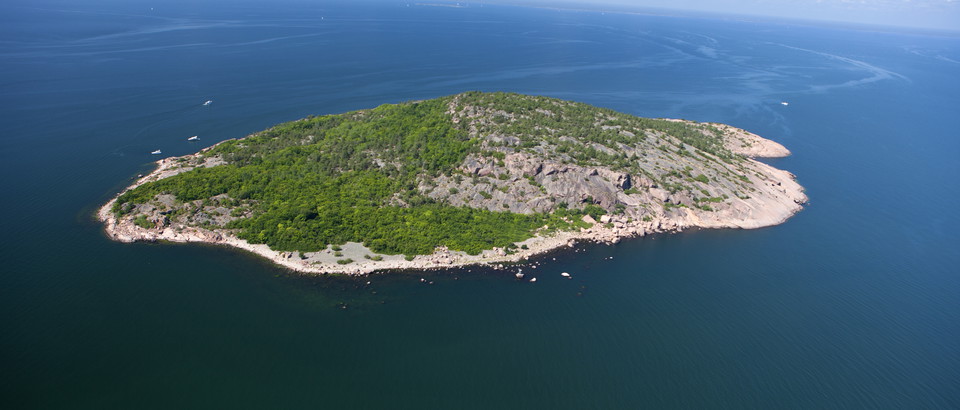

This reserve protects around 80 islands, islets and skerries. The archipelago is entirely made up of moraine left by the ice sheet. Moraine archipelagos are rare in Sweden, so you have come to a very special place!
The islands of the reserve are mainly pine forests. But here and there there are also oak forests, such as on Sandö, Taktö and Eneskär. The old pine and oak forests are valuable habitats for insects, fungi, birds and many others. For example, the sparrowhawk, which pecks out its nest hole in the old pines. The decaying wood of the trees is also full of insect larvae and other bugs, which the woodpecker and other woodpeckers feast on.
As early as the Late Iron Age, people came here to fish. Around the 14th century, the islands had a permanent population. The islanders lived mainly from fishing but also from farming. From the 16th century until 1930, they also made a living as pilots. Piloting meant helping passing ships to navigate.
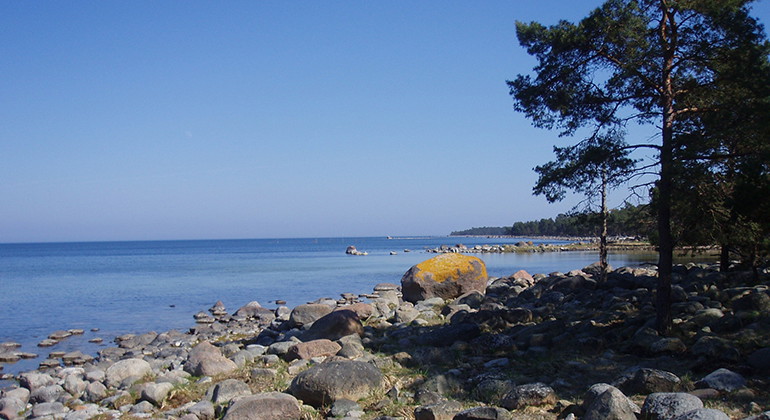
Islands in Sweden's archipelagos are usually made up of bedrock. The islands of the Vållö archipelago, on the other hand, are entirely made up of moraine, which covers the bedrock. The moraine consists of sand, gravel and stones left behind by the ice sheet. In other words, there are no polished rocks for bathing, only pebble beaches! Pure moraine archipelago is only found in two places in the whole country, here and in the Haparanda archipelago.
If you walk along the road towards Vållöromp, you will pass a couple of fine sandy beaches. There are also grazed beach meadows with exciting plants such as snake's tongue, coastal arum and clover. On the eastern side of the island you look out over Kalmarsund, with Öland in the far east. On all the large islands except Eneskär, fallow deer graze.
On central Vållöromp there is a large shingle field. The stones were left here by the ice sheet. Then the sea waves washed away sand and gravel and ground the stones round. Several of the islands have clearings, in the form of low stone walls. Archaeologists have dated these to the Late Iron Age. These are simple houses used by seasonal fishermen. If you go up to the highest point of Taktö or Vållö, you will see burial grounds in the form of stone cairns.
Decision year: 1973 and 2020
Area: 2735 hectares of which 593 hectares are land area
Municipality: Mönsterås
Landowner: Individual
Administrator: Kalmar County Administrative Board
The reserve is located just northeast of the town of Mönsterås. Svartö, which is located about 8 km from the E22 (exit road towards Torp about 4 km north of Mönsterås), is the nearest harbor. There is no regular boat traffic, but there is a jetty for the public at Estenäs.A longer sandy beach suitable for swimming is located on the southern part of Vållöromp. There are two smaller bathing areas on the western and eastern shores of Sandön.There are no marked trails, but there are several farm roads and smaller paths suitable for walking.There are toilets and a waste bin on the outer part of Vållöromp at the bathing beach.
In the nature reserve you are not allowed:
If you have permission from the County Administrative Board, you may:
**Regulations according to Chapter 7, Section 30 of the Environmental Code on the right to travel and stay and on order in general within the nature reserve
It is forbidden to enter the reserve:
It is forbidden to do so without the permission of the County Administrative Board:
Per Markus Jönsson
Please be aware that some of these texts have been automatically translated.

Ask a question to other Naturkartan users.
0 reviews
No user images yet. Be the first to share!