
• Fotograf: Mats Lindeborg
    Fotograf: Mats Lindeborg
    Photo: Mats Lindeborg

Grytsjön, Naturreservat

  • Nature reserve
of 5 stars

Actions

Description

Butterfly enthusiasts from all over the country flock to Grytsjön to look for rarities such as the Russian hightail and the rose-breasted fritillary. As many as 600 species of large butterflies have been observed in the area. That's more than 60% of Sweden's known butterfly fauna, making Grytsjön one of the most species-rich places in the country!

Traces of fire

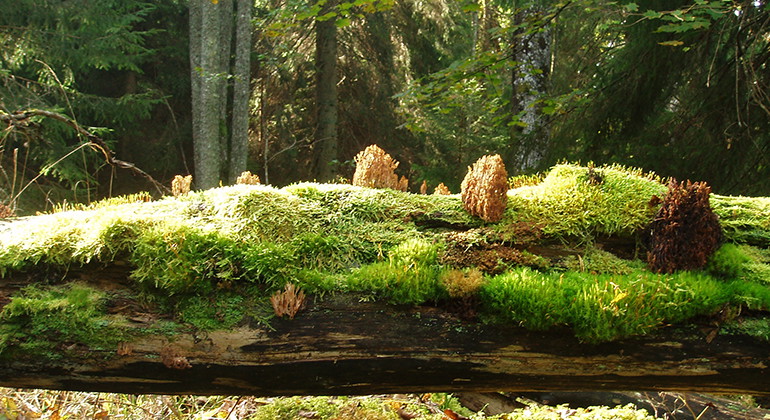
The nature reserve's forest is characterized by fire. The fires have exposed the very rocky ground and favored the regeneration of aspen and birch. The last time it burned was in the early 1900s and since then deciduous trees have dominated, although conifers are on the rise. These areas are called deciduous burns and until the 19th century they were common in the forest landscape.

Rams and woodpeckers

It's not just butterflies that thrive in aspen-rich forests. Many beetles appreciate soft aspen wood and dead trees, of which there are plenty in Grytsjön. During a small inventory of beetles in 1994, entomologists found 137 different species, of which about 20 were rare. And if there are plenty of beetles, they will attract woodpeckers, such as the woodpecker.

Why so rich in species?

Little impact of modern forestry, plenty of aspen and a favorable microclimate are conditions that contribute to the nature reserve's species richness. The special microclimate is due to the fact that the sun's rays find their way to the tree trunks and soil in the sparse forest. There are many rays, in this part of Sweden there are many hours of sunshine and little rainfall!

Weather forecast (at 12:00)

Loading...

Get here by public transport

Activities And Facilities

  • Nature reserve

Facts

Year of decision: 1995

Area: 139 hectares

Municipality: Nybro

Landowners: Swedish Environmental Protection Agency and individuals

Administrator: Kalmar County Administrative Board

Directions

The reserve is reached via a forest road starting at Kättilstorp, and there is a long forest road with several detours. The road passes the old railroad bank - DO NOT DRIVE IN on this but continue straight ahead. There is a turnaround at the end of the road.Parking with information board is located next to the game enclosure in the northern part of the reserve.

Regulations

In the nature reserve you are not allowed:

  • Drive a motorized vehicle, bicycle or other means of transport outside designated roads or paths.
  • Park a vehicle, caravan or trailer in a place other than designated parking spaces.
  • Putting up a caravan or similar.
  • Camping.
  • Bring a dog or other animal that is not on a leash.
  • Put up a board, sign, poster or similar device or make inscriptions.
  • Make a fire.
  • Damage or remove fixed natural objects or surface formations.
  • Collecting loose rocks or removing pieces of bedrock.
  • Picking or damaging mosses, lichens or wood fungi.
  • Digging or pulling up vascular plants.
  • Damage ancient monuments (e.g. stone walls, cairns, etc.).
  • Damage or remove trees, stumps, bark, branches, bushes or reeds that are growing or dead.
  • Hunting, killing, capturing or harming wild mammals, amphibians, reptiles or birds.
  • Remove or damage eggs or nests.
  • Deliberately disturbing wildlife.
  • Marking trails or organizing orienteering competitions.
  • using the area for competitions or exercises
  • Carrying out commercial activities.

Full regulations

C. Regulations according to Chapter 7, Section 30 of the Environmental Code on the right to travel and stay in the reserve and on order in general.

In addition to what otherwise applies, it is forbidden to

  1. drive a motorized vehicle or other means of transport other than on specially designated roads,
  2. park a motor vehicle or trailer other than on specially designated roads and places,
  3. camp or set up a caravan,
  4. bring an unleashed dog or other loose pet,
  5. affix a board, sign, inscription, poster or similar device,
  6. make a fire
  7. destroy, remove or damage a fixed natural object or surface formation
  8. collect loose stones or remove pieces from the bedrock
  9. digging up or picking vascular plants, wood fungi, mosses or lichens
  10. damage fixed ancient monuments
  11. damage or remove growing or dead trees, stumps, bark, branches, bushes or reeds
  12. hunt, kill, capture or injure wild mammals, amphibians, reptiles or birds, remove or damage eggs or nests or otherwise disturb wildlife
  13. mark out tracks or organize orienteering
  14. use the area for competition or training purposes
  15. carry out commercial activities.

Contact

Email address

Per Markus Jönsson

per-markus.jonsson@lansstyrelsen.se

Please be aware that some of these texts have been automatically translated.

I’ve been here

I want to go here 2

Questions & Answers

Ask a question to other Naturkartan users.

Reviews

0 reviews

of 5 stars

5 :
0.0%
4 :
0.0%
3 :
0.0%
2 :
0.0%
1 :
0.0%

Users images

No user images yet. Be the first to share!

Naturkartan

Open this in the app