-
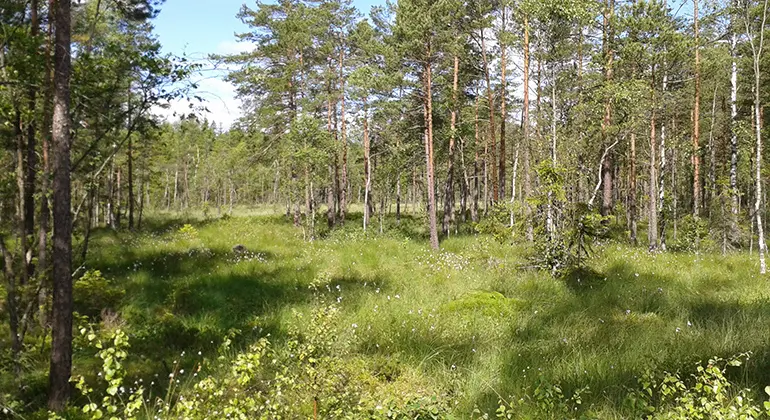
Photo: Elisabet Wallsten -
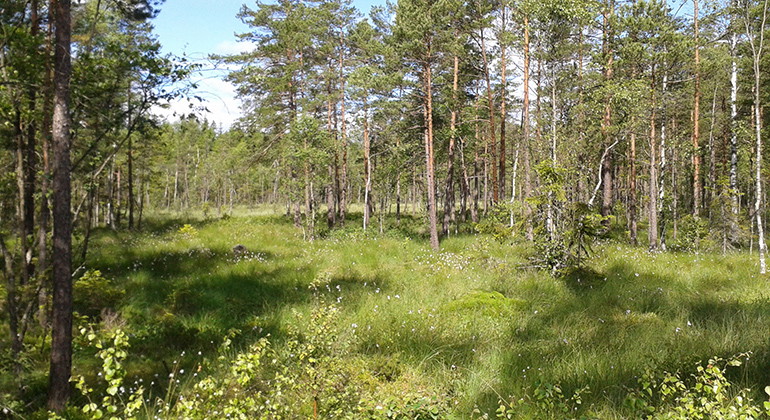
Photo: Elisabet Wallsten
Albertas myr, Naturreservat
- Nature reserve
- County: Blekinge län
Actions
Description
Activities And Facilities
- Nature reserve
Facts
Year of protection: 2015
Municipality: Olofström
Character: Marshes, pastures, ancient cultural landscape
Area: 34 hectares, of which 33.9 hectares are land and 0.1 hectares water
Landowner: Private
Manager: Blekinge County Administrative Board
Type of protection: Nature reserve and Natura 2000
Directions
Albertas myr is quite inaccessible and you reach the nature reserve via road 15 between Vilshult and Lönsboda. A gravel road leads in from road 15 on the Scanian side of the county border. After a few hundred meters, a narrow gravel road turns right. You can get to the nature reserve by bus from Lönsboda or Olofström, line 562, and get off at Rönhult. The bus stop is located along road 15 and is about 3 kilometers from the nature reserve.
Regulations
You are welcome to visit the Alberta marsh, but please note that it is not allowed to
- damage land, destroy or damage any fixed natural object or surface formation
- prospect for minerals
- damage stone walls, cairns or other cultural and historical remains
- disturb wildlife
- damage living or dead trees and bushes and remove or burn dead wood
- picking mosses, lichens or wood-living fungi, more than is reasonably necessary for species identification
- capture or collect plants, fungi or animals in such a way as to damage or destroy their habitats or breeding grounds
- planting plant or animal species alien to the area, or breeds and types alien to the area
- bring an unleashed dog other than for herding livestock or hunting
- drive vehicles or ride horses other than on existing roads within the nature reserve
- set up a motor home or caravan for overnight stays
- camping for more than one day
- light a fire anywhere other than on a specially prepared fireplace.
Without permission from the county administrative board, you may not
- conduct scientific research involving sampling, marking, trapping, installation of equipment or any form of impact on plant or animal life
- use the area for competitions, camps or exercises that may disturb nature or the public's outdoor life
- put up a board, poster, poster, sign or similar other than temporarily, for a maximum of one week, and then in connection with hunting or in connection with organized outdoor activities.
Contact
Email address
Länsstyrelsen Blekinge
Organization logotype
Please be aware that some of these texts have been automatically translated.
I’ve been here
I want to go here 1
Questions & Answers
Ask a question to other Naturkartan users.
Reviews
0 reviews
- 5 :
- 4 :
- 3 :
- 2 :
- 1 :
Users images
No user images yet. Be the first to share!