
-
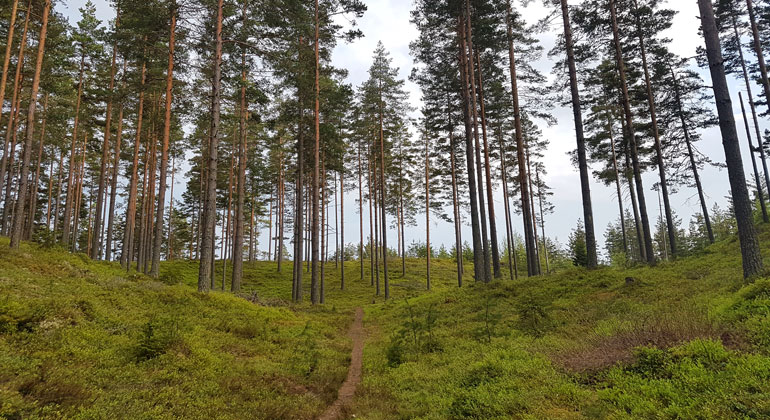
Photo: Johanna Malmgren, Länsstyrelsen i Dalarnas län
Flygsandfältet vid Dammsjön, Naturreservat
- Nature reserve
- County: Dalarnas län
Actions
Description
The area around Dammsjön is of great geological value. It is home to southern Dalarna’s best-formed wind-blown sand dunes, with distinct, gentle dunes. The shifting sandy soil supports a unique flora and fauna that have adapted to these conditions. For example, the centimeter-long antlion and the pasqueflower thrive here. The primary purpose of the reserve is to preserve the area’s geological value, along with its unique flora and fauna. The area is part of Gustafsfältet, which has been designated a national heritage site.
The dune field is a clear example of wind-blown sand formations from the period immediately following the retreat of the inland ice sheet approximately 9,000 years ago. The area provides a good illustration of what sand dunes typically look like. With the help of the wind, sand was set in motion and accumulated to form the dune field. The dune field is also widely used as a field trip site for geological education.
The Antlion
The antlion (Myrmeleon formicarius) is a 60–80 mm-long net-winged insect. It is found on sandy ground near pine forests in southeastern Sweden, on Öland, and on Gotland. We do not know much about the adult dragonfly.
It spends the early period after hatching high up in the tree canopy. The larva (the antlion) is a predator and digs a pit in the sand. It then lies hidden at the bottom of the pit, waiting for ants or other insects to fall into the loose sand. By flinging sand onto its prey, the antlion prevents it from escaping the pit. It sucks out its prey using powerful jaws. The antlion moves backward through the sand just below the surface when it is ready to dig a new pit.
It takes two to three years for the antlion to pupate in the ground and transform into a dragonfly.
Activities And Facilities
- Nature reserve
Facts
Established: 1980
Size: 92 ha
Municipality: Säter
Administrator: County Administrative Board
Directions
The area is located 2.5 km southwest of Solvarbo, north of Lake Dammsjön.
Regulations
The following activities are not permitted within the reserve:
- lighting fires,
- driving motor vehicles except on designated roads,
- parking except in designated areas,
- camping.
Click on the nature reserve’s name and select the “Documentation” tab to view the documents.
Contact
Address
Email address
Organization logotype

Please be aware that some of these texts have been automatically translated.
I’ve been here 3

I want to go here 2
Questions & Answers
Ask a question to other Naturkartan users.
Reviews
0 reviews
- 5 :
- 4 :
- 3 :
- 2 :
- 1 :
Users images
No user images yet. Be the first to share!