
-
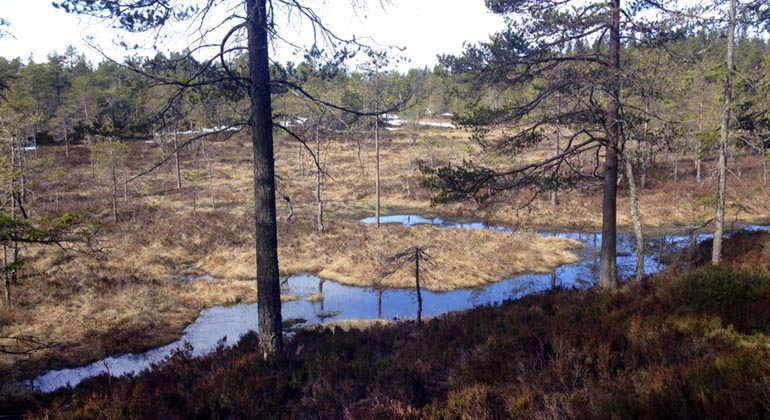
Djupdalshöjden.
Photo: Kjell Store -
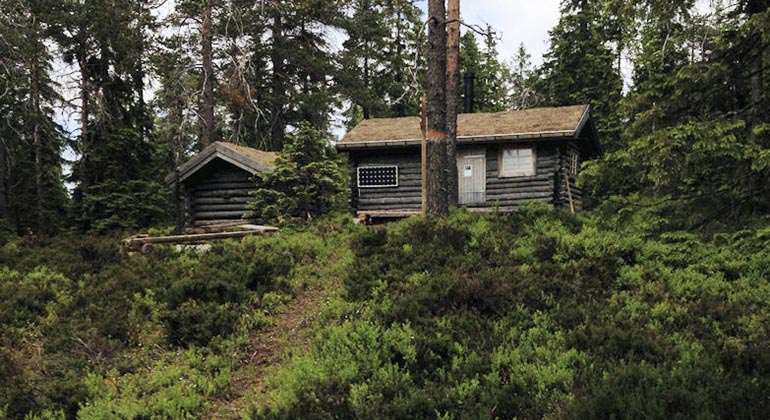
Raststugan vid Hjortebärmossen.
Photo: Kjell Store -
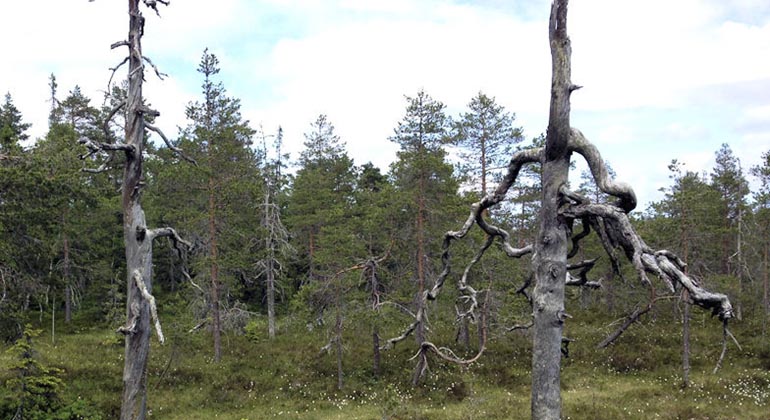
Djupdalshöjden.
Photo: Kjell Store -
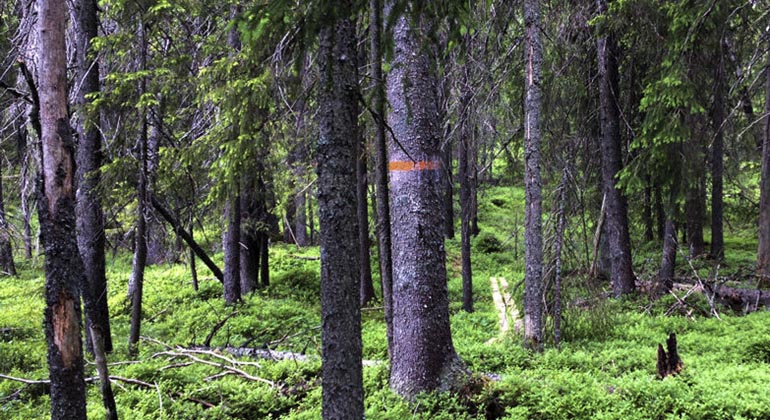
Djupdalshöjden.
Photo: Kjell Store -
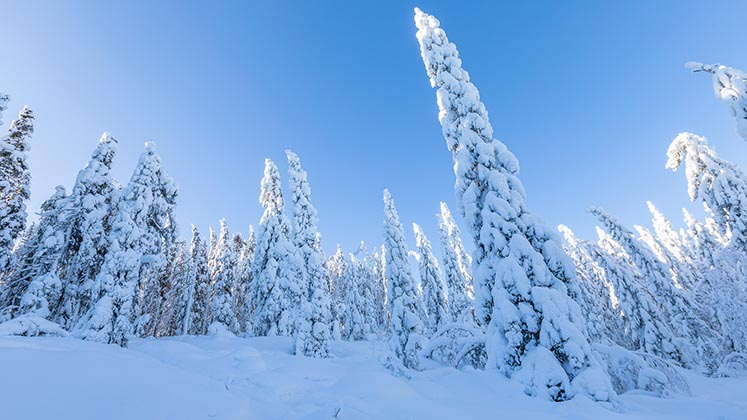
Djupdalshöjden i vinterskrud.
Photo: Kjell Store
Djupdalshöjden, Naturreservat
- Nature reserve
- County: Örebro län
Actions
Description
The Djupdalshöjden nature reserve is one of the county's highest points and is sometimes called the "roof of Örebro County". The forest is characterized by a barren climate and long, snowy winters. Cranky trees with tops broken by snow contribute to the wild character of the area. In this wilderness, you rarely hear anything other than the sound of the wind in the trees. With a little luck, you may see traces of wolves, bears and lynx.
Many old trees
Djupdalshöjden is one of the county's larger forest and bog reserves. The harsh climate and nutrient-poor soil cause the trees to grow slowly. Seemingly small and frail trees can therefore be very old. Almost all the forest in the reserve is over 100 years old. The oldest trees are 300 years old, maybe more. A mosaic of coniferous forests, swamp forests and bogs spreads between the wooded hills. The bogs are home to tufa, cloudberry and dwarf birch.
Mushrooms that like dead wood
There are plenty of dead trees of different sizes and stages of decomposition. This provides the conditions for an interesting and species-rich flora of wood-living fungi. Fungi, especially wood-boring fungi, are as natural a part of the forest as the trees. The fungi both kill and decompose the trees in an ongoing cycle. The black tick is one of the reserve's rarest species. Other examples of rare, wood-living fungi are the scented skin, cream tick and woolly tick. Star thorn grows as a spiny, reddish-brown skin on the underside of damp and decaying spruce or pine trees, known as flames. But most unique is the old spruce toadstool, a very small toadstool that grows on the bark of old spruces. It is often found in swampy forests with high humidity, for example next to marshes or rivers.
Woodpecker trail
The wildlife in Djupdalshöjden also has a clear wilderness character. Barn owls, pearl owls and barn owls nest regularly, as do capercaillie and the rare three-toed woodpecker. The presence of the three-toed woodpecker is revealed by typical so-called drinking rings - ring-shaped hack marks on the trunk. Other exciting features are the wolf and lynx. Both occur at least occasionally in the area, which is mainly revealed during periods of tracked snow.
Traces of crofts and charcoal kilns
During the 17th-18th centuries, mining was the lifeblood of the area. The production of coal for the area's smelters and mines has left traces in most forests. In the reserve there are remains of a few coal pits and coal mines. There are also traces of some crofts and huts, including west of Älgtjärnsmossen and at the eastern part of Djupdalshöjden.
Accessibility
In Djupdalshöjden there is about a mile of marked trail and opportunities for overnight stays in both shelters and well-equipped rest cabins. At both the cabin and the shelter there are fireplaces where you can grill.
Is there firewood?
Firewood is available at the fireplaces and at the rest cabin. Remember to burn in moderation, so that the wood is enough for future guests. Firewood is replenished regularly but we cannot guarantee availability at all times. If you want to be sure to be able to make a fire - bring your own firewood. It is not allowed to burn sticks and branches from the forest in the reserve.
Rest hut at Hjortebärsmossen
The overnight cabin can accommodate a maximum of 6 people. There are 4 beds with mattresses and 2 benches with simple sleeping pads. In the cabin there is a wood stove, simple pots and pans for cooking as well as plates, cutlery, etc. However, there is no drinking water, only stream water 100 northeast of the cabin. Please note that the cottage cannot be booked, so it is important to get along with any guests who are already in place or connecting. Don't forget to clean up after yourself and take all the trash home!
Djupdalshöjden in winter
As its name suggests, Djupdalshöjden is located high in the landscape and offers long, snowy winters. It is probably the most snow-safe nature reserve we have in the county. When the snow has thawed away from Närkeslätten, it often remains for quite a while in Djupdalshöjden. Here you can ski between the cranky old trees and out over open moorland. If there is fresh snow, you may find traces of both wolf and lynx. The terrain is hilly, so take your time. The western entrance at Älvhöjden is easiest to get to in winter and is sometimes plowed (subject to availability).
Sign language interpreted information
Natural opportunities - the business guide to nature reserves
Activities And Facilities
- Nature reserve
Facts
Municipality: Ljusnarsberg
Year established: 2007, expanded in 2017
Area: 563 hectares
Landowner: Swedish Environmental Protection Agency
Manager: County Administrative Board
Reserve creator: County Administrative Board
Directions
From Kopparberg: drive towards Skäret, then keep right and continue north for about 8 km, turn left and drive northwest for about 1 mile. Pass Älvhöjden, drive another 1 km and you are at the parking lot. From Grängesberg: Drive road 50 south and turn right towards Hörken. At the turnoff at Hörken, turn right and drive just over 1 mile. At the turnoff towards Yxsjöberg, turn left and after 5 km you have arrived.
Regulations
In the nature reserve it is forbidden to:
- Remove or damage dead trees or tree parts
- Driving snowmobiles
Contact
Email address
Organization logotype

Please be aware that some of these texts have been automatically translated.
I’ve been here
I want to go here 23







Questions & Answers
Ask a question to other Naturkartan users.
Reviews
0 reviews
- 5 :
- 4 :
- 3 :
- 2 :
- 1 :
Users images
No user images yet. Be the first to share!