
Kärrekusa
- Natural history
- County: Kalmar län och Öland
- 6932.96 km away from you
Actions
Description
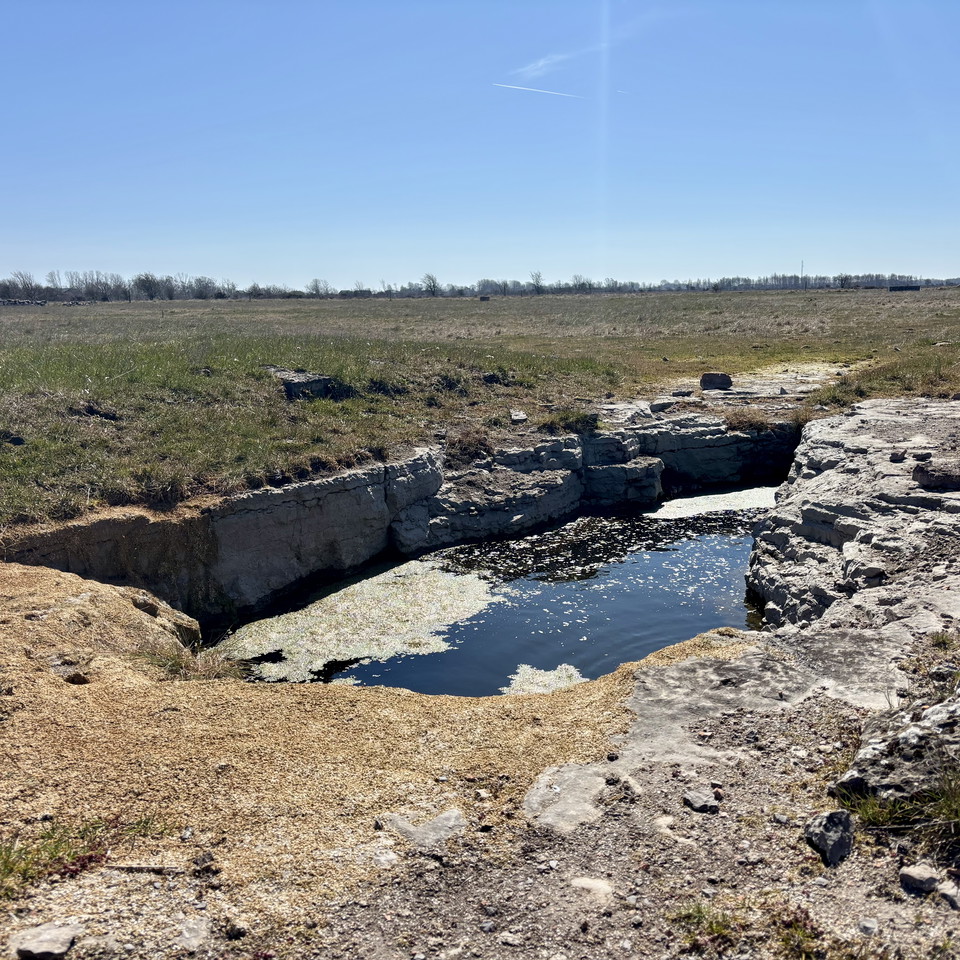
Kärrekusa or Kärringakusan is a spring that Linnaeus described as follows during his voyage to Öland in 1741:
"One marveled, when one
see, how nature plays. We admire the shell, which
called Cunnus marinus and that stone
called Hysterolithus, because both
so accurately depict a birth-lobe to its external parts, that no sculptor
could imitate it better; but the Carrecusa is a far greater wonder.
A spring on the flat
made by nature, with an oblong rima a fathom long
a fathom long, a cubit wide in the middle, drawn together at both ends, 1.½ cubits
deep, slightly convacted on the sides inside.
Under the northern sinus of this rima, more than a fathom's length of hole descends or slopes down to the
the rock with a hollow, in which moisture and water never fail.
May nature better
and more accurately imitate labia valva,
rimam, vagina?
Among all the antras,
which are described, may any be more rare?"
Activities And Facilities
- Natural history
Contact
Email address
Matheus Tholin
Organization logotype

Please be aware that some of these texts have been automatically translated.
I’ve been here
I want to go here
Questions & Answers
Ask a question to other Naturkartan users.
Reviews
0 reviews
- 5 :
- 4 :
- 3 :
- 2 :
- 1 :
Users images
No user images yet. Be the first to share!