-
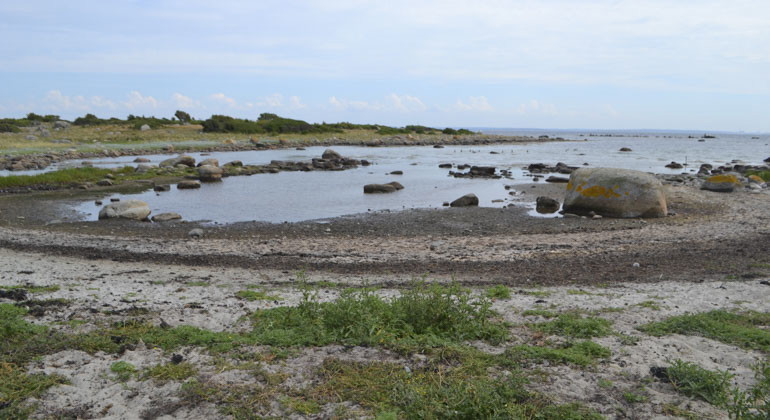
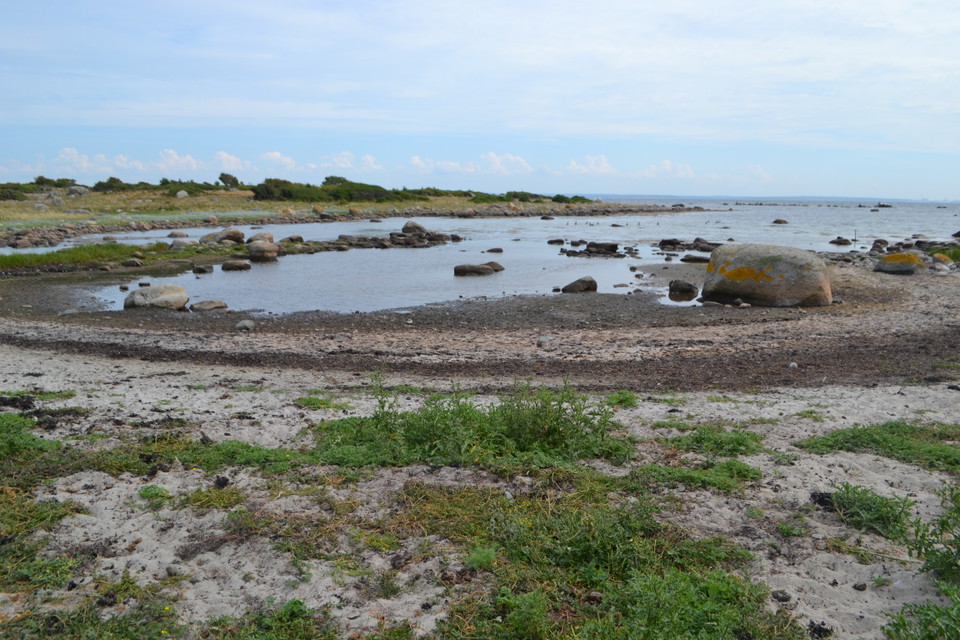
stening strandkant -
-
-
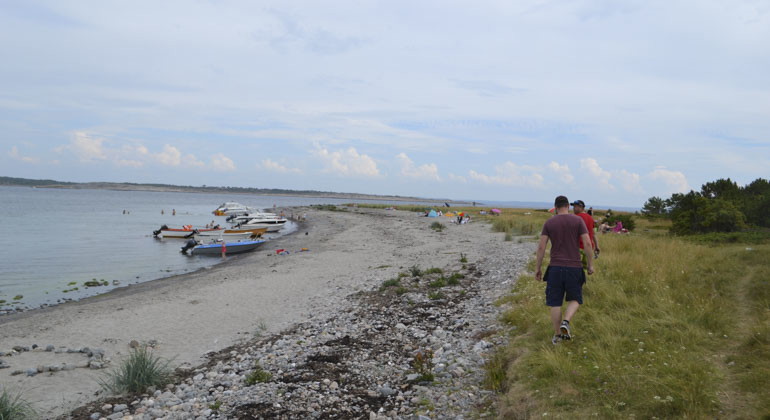
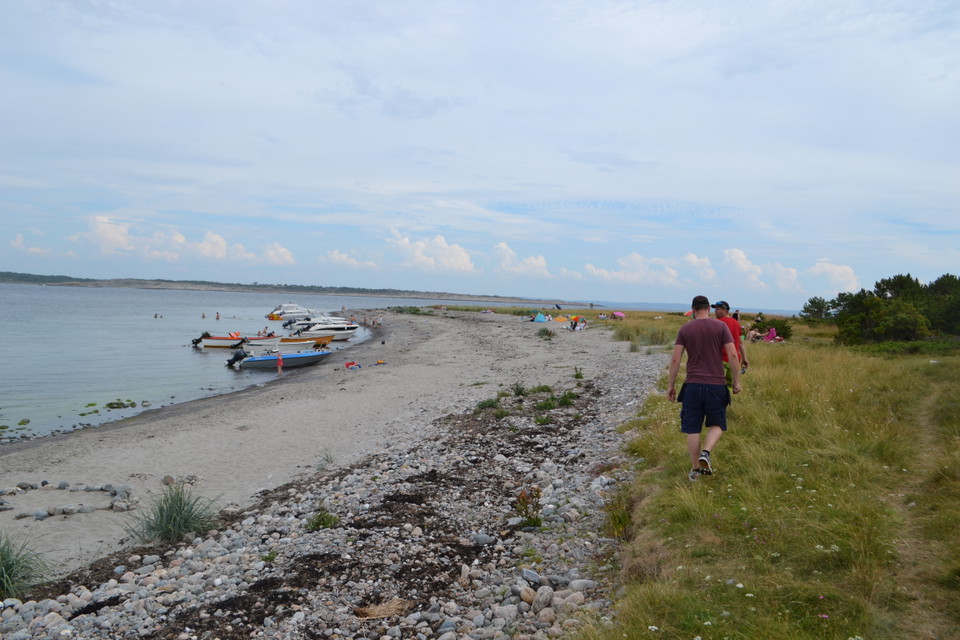
två personer som går längst med strandkanten -
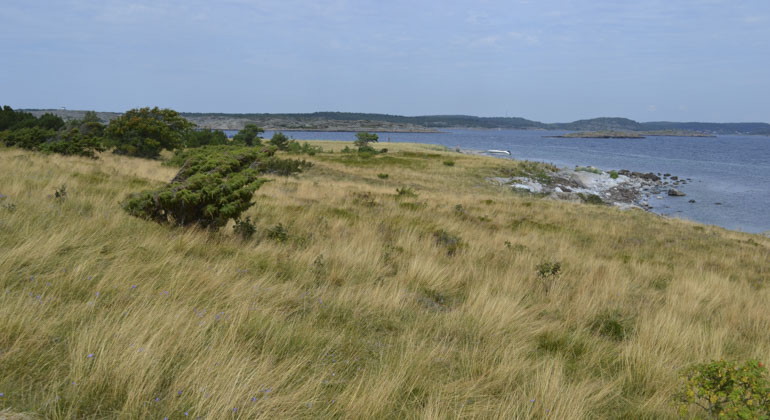
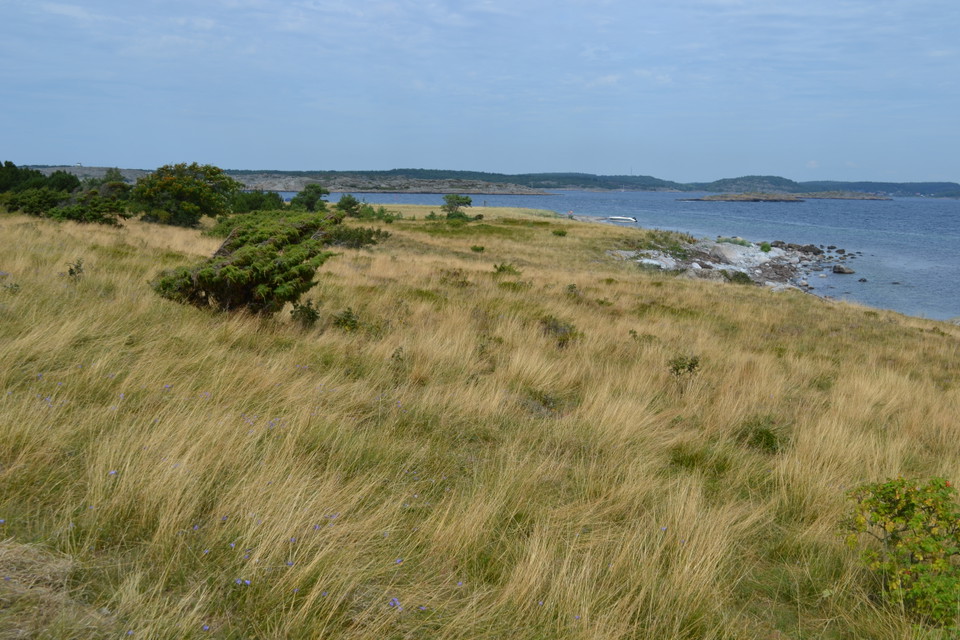
vy från land över hav och klippiga öar -
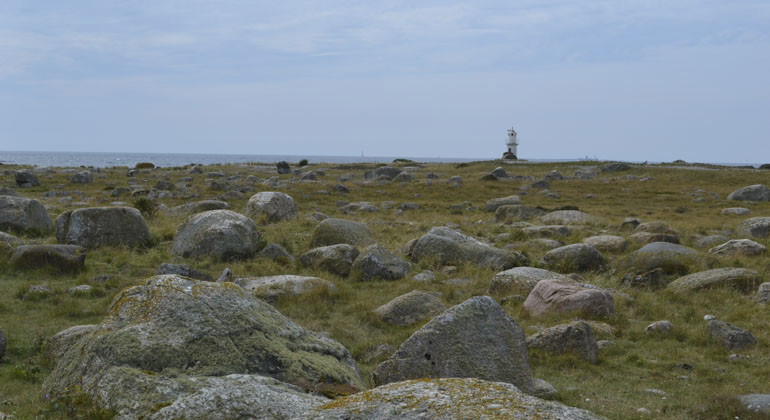
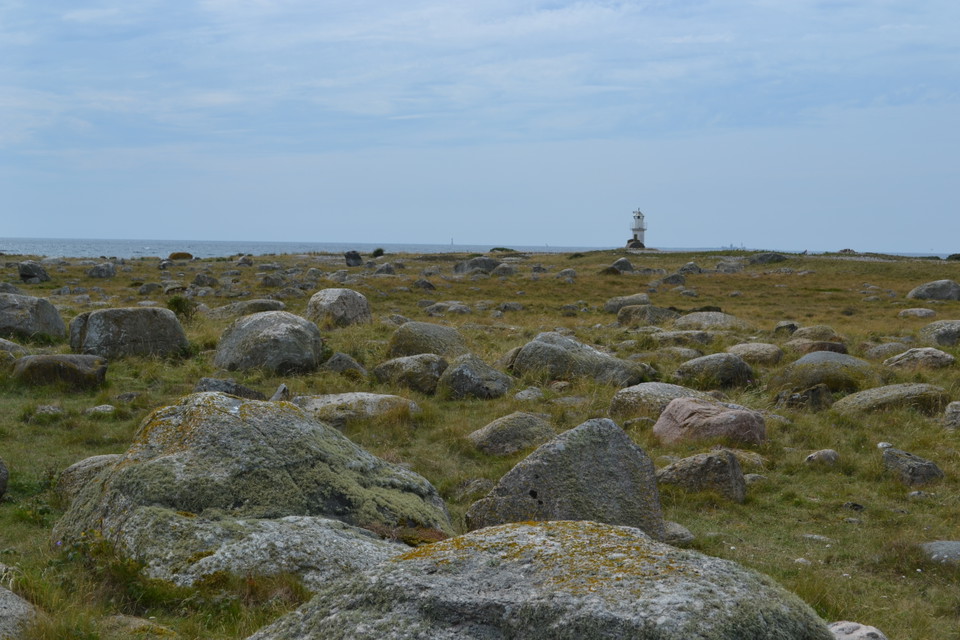
stora stenar i gräset -
-
Malön, Naturreservat
- Nature reserve
- County: Hallands län
Actions
Description
Malön is a barren, flat island consisting of grassy heaths and large shingle fields. Bird life is rich, especially in the fall and spring when small birds rest in large numbers. The area can only be reached by boat and a suitable mooring point is the sandy beach on the eastern side.
It is the shingle fields (beach moths) that give the island its name. The vegetation on the island consists mainly of sedges and grasses. In the spring, there are lots of wild violets, trift and almond flowers. More unusual features are coastal rue, beach wormwood and marrisp. In the northeastern part of the island there is a grove of planted mountain pine, with some pine, aspen, birch, rowan, bramble and oxel.
Rich bird life
The island's bird life is rich, including an impressive colony of oystercatchers as well as colonies of herring gulls and grey gulls. Other breeding birds include the Sandwich tern and the avocet. During the fall and spring, large numbers of birds migrate across Malön, mainly kittiwakes, pigeons and waders. Some species that occur in relatively large numbers are the little ringed plover, the dunlin, the coastal pipit, and the curlew and dunlin. Among the island's other wildlife, special mention should be made of the magnificent macaune butterfly. The water vole is the island's only permanent mammal.
Traces of the past
There are several ancient remains on the island. In the northeast there is a large Bronze Age cairn called Malöros. On the island there are also several smaller stone cairns and so-called tomtningar, which are remains of simpler buildings probably used in connection with fishing and catching. In the middle of the northern part there is also a place called the Danish cemetery, where three small stone walls are placed in a row. It is possible that this is an old cemetery for drowned Danish sailors washed up on the shores of Malön.
Harvesters lived on the island
Historically, Malön has mainly been used as grazing land. But in 1890, the island came into Tjolöholm's ownership, and for a few decades afterwards the island was also used for hunting. The game was outplanted forest hares and to favor these, the mountain pine grove was planted on northeastern Malö. To protect the desirable animals, there was also an employed hare keeper who lived on the island during this time.
Traces from the ice age
The islands of Kungsbackafjord are remnant mountains. But Maön is the top of a moraine ridge, which is probably an end moraine. End moraines were formed during the Ice Age when the ice retreated. Large amounts of moraine were left behind in front of the ice edge, and if the ice edge remained in the same place for a long time, large ridges, known as end moraines, were formed. These consisted of materials of different sizes, from clay to large stones. The sea has since washed away the fine-grained material from Malön and what remains is now swollen moraine. This provides a poor substrate for vegetation, which is why most of the island is covered by grass and sedges.
Activities And Facilities
- Nature reserve
Facts
Dominant habitat types: Open heath and shingle fields
Municipality: Kungsbacka
Area: 107 hectares
Protected since: 1965
Owner: Onsala Parish Parish Council and the Swedish Property Agency
Trustees: Onsala sockens skifteslag
Directions
Malön is located in Kungsbacka municipality. Directions: The area is only accessible by boat.
Regulations
To protect the nature reserve, the County Administrative Board has decided on special regulations, including those that you as a visitor to the area must follow and respect.
In addition to what applies under other legislation, it is forbidden to:
- damage or disturb wildlife, damage vegetation, for example by digging up plants,
- bring an unleashed dog
- damage the island's bedrock or loose soil
- camping and
- making fires.
Contact
Address
Kontakta reservatsförvaltningen för frågor, synpunkter och felanmälan.
Email address
Länsstyrelsen i Hallands län
Organization logotype
Please be aware that some of these texts have been automatically translated.
I’ve been here 1

I want to go here
Questions & Answers
Ask a question to other Naturkartan users.
Reviews
0 reviews
- 5 :
- 4 :
- 3 :
- 2 :
- 1 :
Users images
No user images yet. Be the first to share!