
-
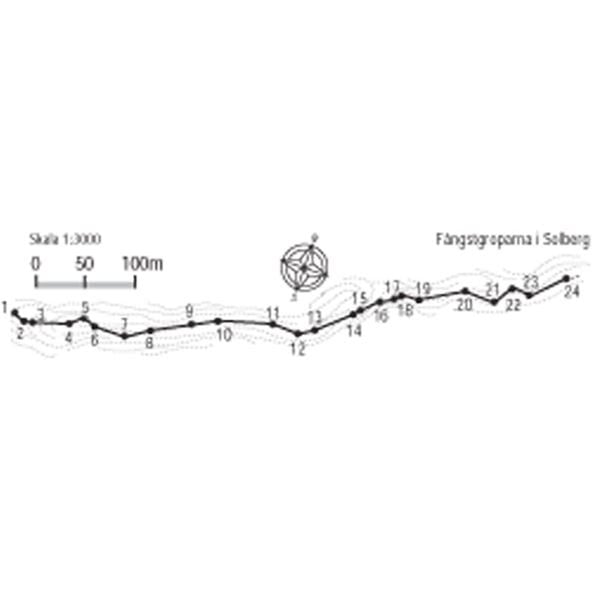
Numrering av fångstgropar -
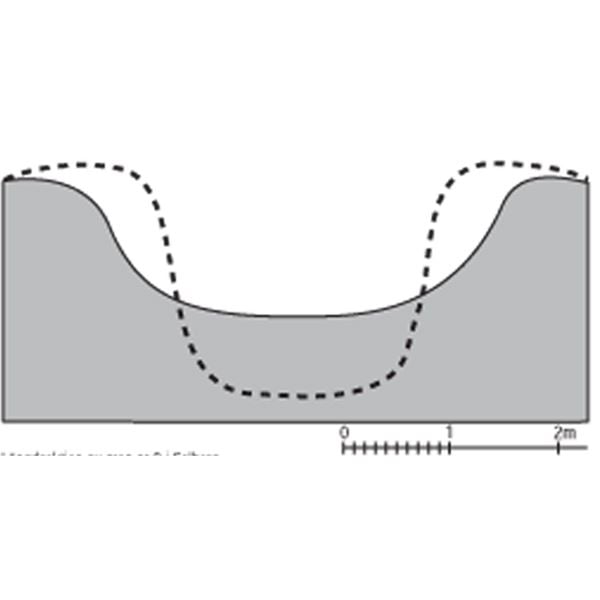
Längdsektion av Fångstgrop -
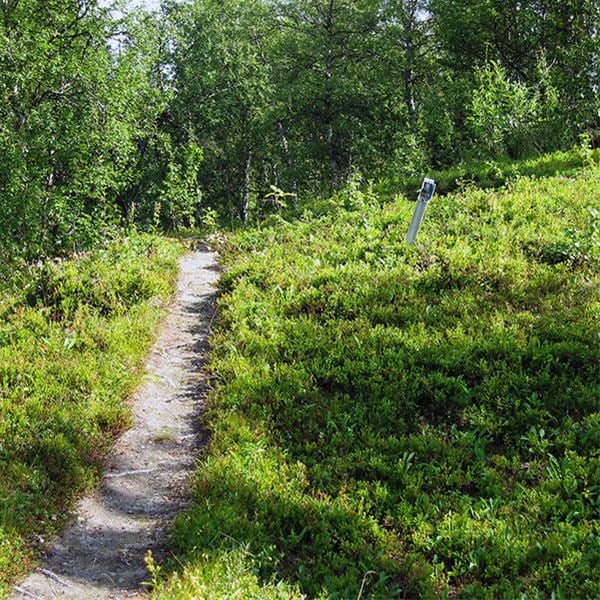
Stig till fångstgrop -
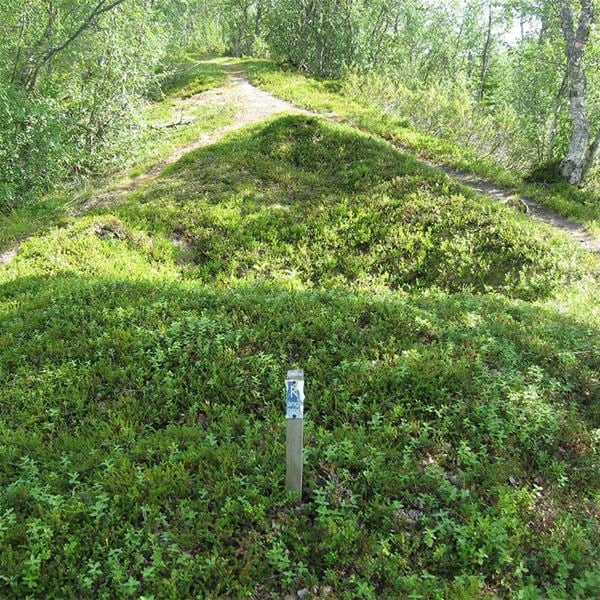
Utmarkerad fångstgrop
Fångstgropar i Solberg
- Archaeological
- Culture
- Valuable nature
- Attraction
- County: Västerbottens län
- 6374.29 km away from you
Actions
Currently
Skyltarna för att hitta fångstgroparna har försvunnit eller är av dåligt skick. Därför kan fångstgroparna vara svåra att finna.
Description
Wild reindeer and elk used to be caught in trapping pits. The oldest pits are dated to 5000 BC. The trapping method was then used until the 1st century AD.
Here in Solberg there are 24 trapping pits that are easily accessible from Laisholmsvägen. Dry fine path barely 1 km. On a sand ridge is a system of 24 pits. Each pit was once about 2 x 3 m wide and 2-2.5 m deep. The pits are dug in a sand ridge that extends across the reindeer migration route. A fence of branches was built between the pits. The pits were covered with brushwood and leaves, which gave way when the reindeer ran across.
Picture of the longitudinal section of pit no. 9 in Solberg. The solid line shows the present profile, the dashed line the original.
Picture of all the trapping pits numbered. Pit no. 17 is particularly important. Here, in 1951, it was possible to determine the age of the construction of a pit. The sand from this pit was thrown out onto the marsh just below during excavation.
Today this sand lies 30 cm below the surface. The C-14 method showed that the sand was thrown out onto the bog in the late 8th century AD. Whether it was the predecessors of the Sami or hunters from the Norwegian coast who hunted in the mountains during the summer is still unknown.
You can read more about trapping pits in Ernst Manker: Fångstgropar och stalotomter, 1960.
Activities And Facilities
- Culture
- Valuable nature
- Attraction
- Archaeological
Directions
If you drive E12 towards Tärnaby, turn off towards Solberg just before the bridge over Tärnaån. After about 1.5 km, turn towards Laisholmsvägen and Solberg. There, after the road, there is a trail up to the trapping pits.
Contact
Address
+46 (0)954-140 33
Email address
Turistinformation Hemavan Tärnaby
Please be aware that some of these texts have been automatically translated.
I’ve been here
I want to go here
Questions & Answers
Ask a question to other Naturkartan users.
Reviews
0 reviews
- 5 :
- 4 :
- 3 :
- 2 :
- 1 :
Users images
No user images yet. Be the first to share!