Vi hanterar ett driftsproblem just nu på onsdag em.

Felet bör lösas inom kort! Vi ber om ursäkt för röran när vi bygger om!

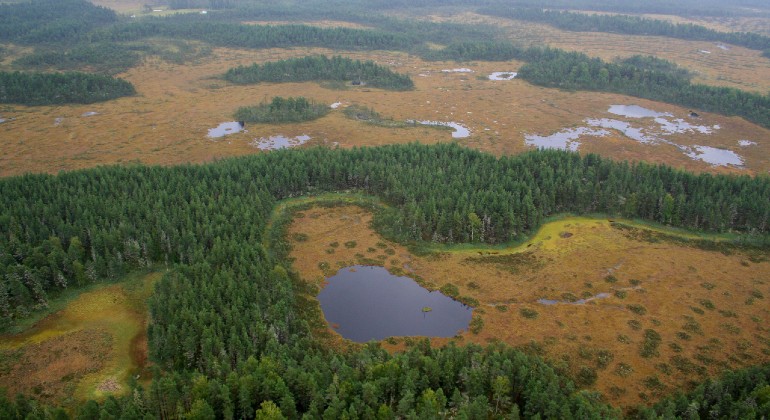
  • Flygbild från norr över Geijersdalsmossen.
    Flygbild från norr över Geijersdalsmossen.
    Photo: Länsstyrelsen Värmland

Geijersdalsmossen, Naturreservat

  • Nature reserve
of 5 stars

Actions

Description

Geijersdalsmossen is a large, untouched bog with sand dunes. The seemingly barren wilderness environment has a characteristic bird life.

The area is part of Brattforsheden's mighty marginal delta, which was formed when the ice sheet melted. The entire bog rests on sand, which is particularly noticeable in the flying sand dunes that stretch across the southern parts of the bog. The dunes were formed when the flat delta surface rose above sea level. The wind then affected the surface and high sand dunes were formed.

Geijersdalsmossen is a bog complex where most of it consists of bogs, while other parts are marshes. One only receives water from precipitation, while the marsh is in contact with the groundwater in the soil. Few plant species that live on the bog are adapted to the extremely nutrient-poor environment of the bog. In contrast, a more species-rich and lush vegetation can develop in the fens, as the nutrient supply is better.

The reserve was created to preserve the mire landscape with its surface forms, flora and fauna and to provide the public with opportunities to study these natural conditions. The area is part of the EU's Natura 2000 network of valuable nature sites.

Animals and plants

Geijersdalsmossen is a so-called gölmosse, which means that the area has a lot of small "ponds" with open water. Together with the marsh areas, this means that birds such as the little ringed plover, whooper swan, golden plover, curlew, lapwing, greenfinch, black grouse and crane thrive on the bog. Among the birds you will find mainly yellow wagtails, meadow pipits and chiffchaffs.

The vegetation is species-poor and consists mainly of white mosses, which also build up the entire bog. Examples of typical plant species are heather, hemlock, roselle, tufted down, reed canary grass and cold grass.

Facilities

The Brattfors trail (24 kilometers), which is the area's large circular trail, goes straight through Geijersdalsmossen. During the walk you walk on a long sand dune, Långa manen, which runs in a north-south direction. From the back of the dune there is a good overview of the area. In early summer there is a good chance of seeing and hearing the birds of the bog.

Weather forecast (at 12:00)

Loading...

Get here by public transport

Activities And Facilities

  • Nature reserve

Facts

Established: 1984

Size: 316 hectares of which land area 310 hectares

Landowners: Companies

Manager: County Administrative Board of Värmland

Directions

Location: Värmlands län, Filipstads kommun, about 2 kilometers southeast and east of the southern tip of Lake Alstern. Take road 63 between Karlstad and Filipstad. Road signs are available to the reserve about 1.5 kilometers south of Brattfors.

Regulations

In the reserve it is forbidden to:

  • drive a car or off-road motor vehicle
  • set up a caravan or camp,
  • make open fires,
  • damage the vegetation, e.g. by breaking branches, felling or otherwise damaging living or dead trees,
  • picking plants, mosses, lichens, fungi or algae
  • disturbing wildlife, for example by staying at nests or letting dogs or other pets loose
  • using a radio, music system or similar in a disruptive manner.
  • Scientific studies of the natural conditions of the area must be carried out in consultation with the reserve manager.

Contact

Email address

Maila Länsstyrelsen Värmland

naturvard.varmland@lansstyrelsen.se

Please be aware that some of these texts have been automatically translated.

I’ve been here

I want to go here

Questions & Answers

Ask a question to other Naturkartan users.

Reviews

0 reviews

of 5 stars

5 :
0.0%
4 :
0.0%
3 :
0.0%
2 :
0.0%
1 :
0.0%

Users images

No user images yet. Be the first to share!

Naturkartan

Open this in the app