
-
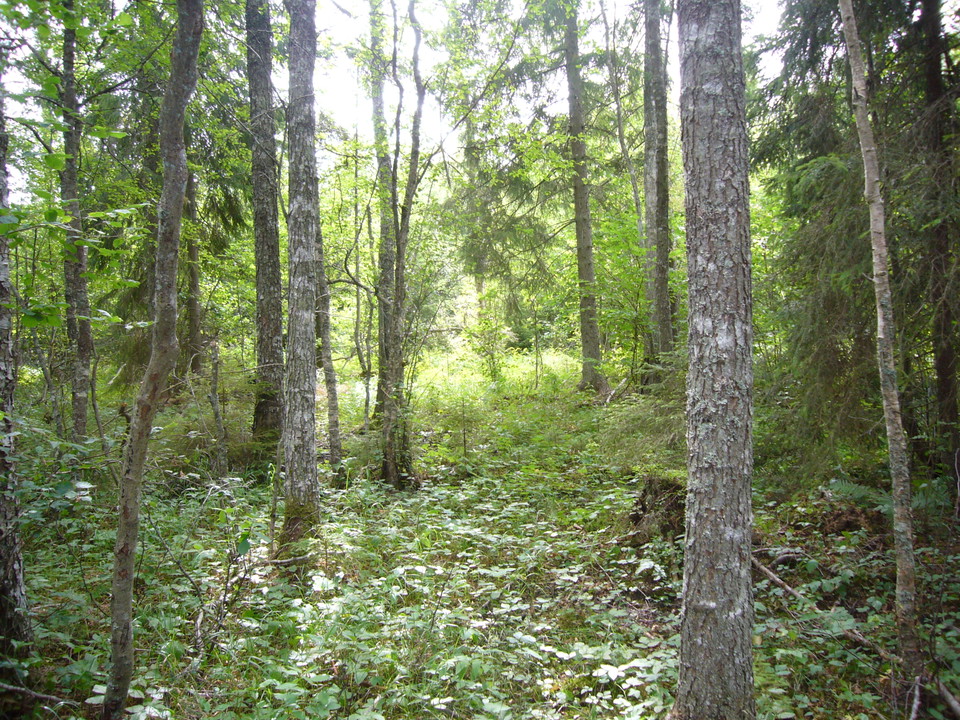
Photo: Länsstyrelsen Stockholm
Rimsjöskogen
- Nature reserve
- County: Stockholms län
Actions
Currently
The nature reserve has areas affected by spruce bark beetle. Many spruce trees have died and may fall over time. Please be cautious and avoid visiting during windy weather.
The beetles only attack living trees and do not remain in dead wood. Dead trees are left in place to support biodiversity, as they provide important habitats for wildlife, mosses, and lichens.
Description
Rimsjöskogen consists largely of old mixed coniferous forest. Some of the spruces here are 100–200 years old. The forest has been left undisturbed for a long time and shows no recent signs of forestry. Many species thrive here that have disappeared or become rare in other, more intensively managed forests. Several of the species you may encounter here are red-listed.
For example, there is a fascinating flora with several unusual orchids and mosses, as well as fungi, clubmosses, and ferns.
Among the birds are species typical of older forests, such as tits, woodpeckers, hazel grouse, Eurasian pygmy owl, and three-toed woodpecker.
There are no hiking trails or other visitor facilities in the reserve. You are welcome to wander freely.
Activities And Facilities
- Nature reserve
Facts
Protected since: 1996
Size: 30 hectares
Character: coniferous forest, mixed forest
Municipality: Norrtälje
Administrator: County Administrative Board
Form of protection: nature reserve
Other: Natura 2000 area Rimsjöskogen SE0110051
Directions
Rimsjöskogen is located about 800 metres southwest of the village of Rimsjö, approximately 10 kilometres west of Norrtälje. From the visitor parking area, a footpath leads to the reserve boundary, about a 200-metre walk.
Regulations
In the reserve it is forbidden to
- destroy or damage rock, soil or stone by drilling, hacking, blasting, carving, digging, painting or similar
- break branches, fell or otherwise damage living or dead trees and shrubs or otherwise damage vegetation by digging up plants such as rice, herbs, mosses or lichens or removing woody fungi
- disturbing wildlife (e.g. by climbing nest trees, trapping or killing mammals, birds, reptiles and amphibians)
- trapping and collecting invertebrates
- bringing an unleashed dog or other domestic animal
- riding a horse or bicycle
- camping
- making a fire
- put up a board, poster, poster, sign or similar device
- drive a motorized vehicle.
Contact
Email address
Länsstyrelsen i Stockholm
Organization logotype

Please be aware that some of these texts have been automatically translated.
I’ve been here 1

I want to go here
Questions & Answers
Ask a question to other Naturkartan users.
Reviews
0 reviews
- 5 :
- 4 :
- 3 :
- 2 :
- 1 :
Users images
No user images yet. Be the first to share!