
-
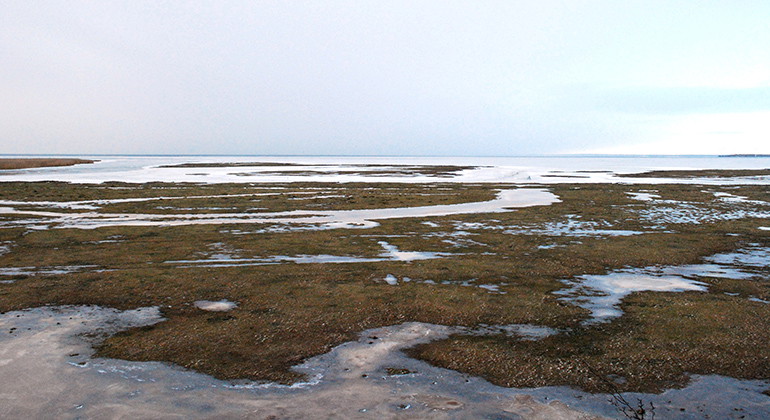
Strandängarna vid Saxåns utlopp.
Photo: Mattias Engman -
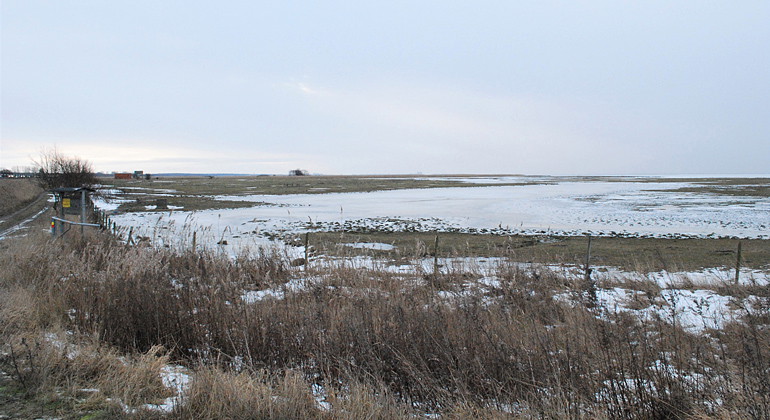
Photo: Mattias Engman -
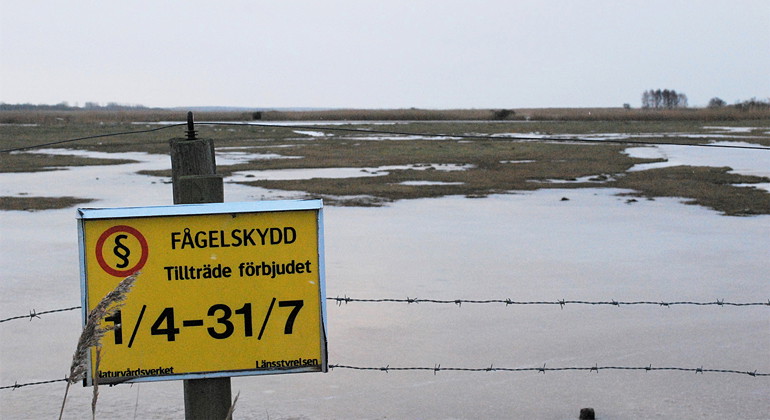
Fågelskyddsområde.
Photo: Mattias Engman -
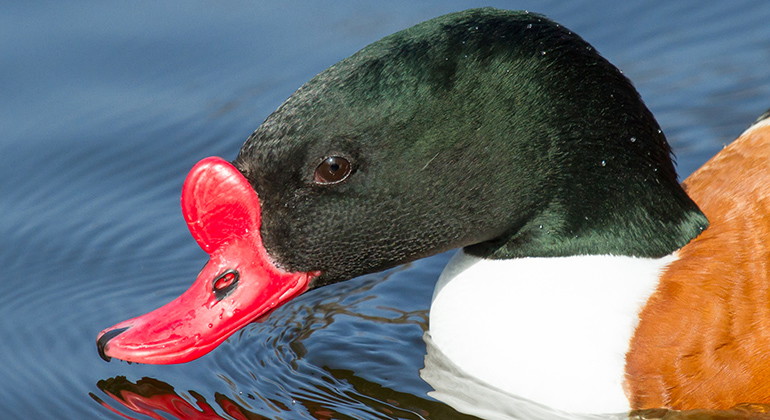
Gravand. En fågelart som dyker upp tidigt om våren.
Photo: Mostphotos -
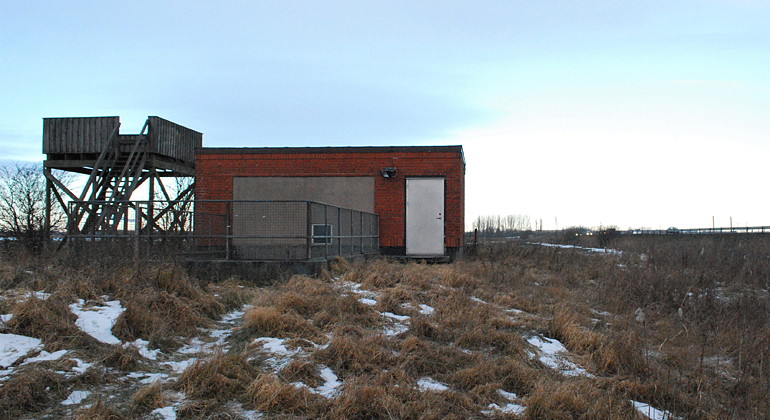
Fågeltorn.
Photo: Mattias Engman
Lundåkrabukten, Naturreservat
- Nature reserve
- County: Skåne län
Actions
Description
The Lundåkrabukten nature reserve with Osen and the outlet of the Saxån river consists largely of sea, but also of river and grazed meadows. Where the fish-rich Saxån river flows into the sea, marine species meet those that otherwise live in lakes and rivers. The name Osen comes from the fact that the river has two estuaries, known as os. You can view the rich bird life of the meadows from the bird tower. Especially during spring and summer when it is forbidden to walk in the meadows. This is so that the ground-nesting birds do not become stressed and leave their eggs or chicks. In the southeast, Lundåkrabukten borders the popular Järavallen recreation area.
Seabed with eelgrass beds
The seabed in the reserve consists of sand. On shallower bottoms, at a depth of about 1-7 meters, eelgrass grows. A plant that in large quantities forms eelgrass beds that serve as hiding places for small fish and fry. Examples of fish that use these underwater meadows as nurseries are herring, mackerel, cod, eel, sea trout and several species of flatfish.
Popular with porpoises and seals
Harbour porpoises and harbor seals are often seen in the Lundåkrabukten reserve. There is a particularly good chance of seeing harbor seals at Skabbarevet in the northern part of the bay. The gray seal is a rarer guest in the area.
The fish-rich Saxån river
The calmly flowing Saxån river is very rich in fish, with species such as perch, pike, id and trout. But there are also small fish such as minnow, sandpiper and brook lamprey. The latter are sensitive species that also indicate the river's high water quality. In the outlet, where salt and fresh water mix, a particularly rich environment with unusually well-grown fish is created. The good availability of food is also reflected in a rich bird life. During spring and fall, the Saxån outlet is an important site for resting migratory birds. Eurasian curlew, marsh pipit, black-tailed godwit and golden plover are some of the species that usually stop in the reserve during migration.
Flat meadows with wading birds
The reserve's flat coastal meadows have been used for grazing and cultivation since the Stone Age. The proximity of the meadows to the sea and Saxåna means that they are often flooded, both by fresh and salt water. The long narrow depressions in the area fill with water at high tide. They are called skonas and are clearly visible from the birdwatching tower, where you can go even when the meadows are off-limits during April-July. Both the well-grazed coastal meadows and the shallow sea with its sandy reefs mean that many wading birds such as lapwings and avocets find food and good nesting sites here.
The coast is also rich in seabirds. Lundåkrabukten, together with the Falsterbo-Fotevik area, is the most important area for wintering seabirds on the Swedish side of the Sound.
Outdoor life
Lundåkrabukten is an excellent reserve for those who want to see seabirds and wading birds. From the bird tower you can watch all year round, but out in the beach meadows only in the fall-winter due to a ban on entry during the birds' nesting. Skåneleden (SL5 Öresund, stage 8) passes just outside the reserve. There is a parking lot next to the bird tower. Remember to take your rubbish home. It is about 3.5 km to both Landskrona station and Häljarp station, where you can get there by train.
**To protect the bird life, there is a ban on entering the reserve from 1/4 to 31/7. The bird tower is accessible all year round.
In English
Welcome to Lundåkrabukten and Järavallen Nature Reserves
Some 7000 years ago, powerful waves from the Littorina Sea threw up sand, stones and flints. This is how the Litorinavallen (Littorina Ridge), also called Järavallen was formed. It can be seen inland of the flat coastal meadows. Sand dunes spread out further inland from the ridge. The Littorina Sea got its name from the common periwinkle snail (Litorina litorea). The inner part of the Lundåkrabukten bay is a shallow marine area with ridges which are exposed at low water.
Many wading birds, such as avocet (Recurvirostra avosetta), rest and search for food in the shallow water along the shore while others, such as oyster catchers (Haematopus ostralegus), like the well grazed coastal meadows. The natterjack toad (Bufo calamita) is good at digging and running and breeds in the shallow pools, which can be slightly salty. The many rabbits like the sand, which is easy to dig, and when they have moved out, the common shelduck (Tadorna tadorna) nests in the holes.
A walk up from the shore area leads into a pine woodland, planted in the 1800s to stop sand drift. If you keep going in a northerly direction you come to open, dry meadows and heath. The humble grasses such as common bent and wavy hair grass grow on the dry, sandy meadows. Honeysuckle (Lonicera periclymenum) winds like vines around bushes and trees and gives the woodland in the western part of the reserve a special character. The flowers, which smell lovely when they come into bloom in June, are followed by red berries.
West of the highway, by the yellow trail and down by Kustvägen (the coastal road), the remains of old banks made from a mixture of grass sods and eel grass. The banks were created in the 1600s as fences when there was a lack of timber and stone. North of the pine woodland you can sense the history and you can take a walk along a well conserved drove road. These can be very old and have been formed as a result of years of erosion from hooves and feet.
Fågelsjön and Hofterup mosse; a large unmanaged wetland, can be found on the other side of the bridge over the highway. It is an excellent area for birds such as lesser spotted woodpecker.
Regulations
Within LUNDÅKRABUKTEN Nature Reserve it is forbidden to:
- during the period 1 April to 15 July enter or remain in area A. It is, however, permitted to walk on the designated path and to take the shortest route by boatthrough the area to and from the river Saxån.
- kite or windsurf in area B
- during the period 1 October to 30 April kite or windsurf in area C
- operate watercraft at sea at speeds exceeding 7 knots
- operate or launch water scooters, jet skis, or similar watercraft
- start or land with aircraft, or fly remote control aircraft (including model aircraft) at heights below 120 meters above sea level, or fly kites
- ride within area D
- organize competitions which could disturb the natural environment
- bring dogs unless on a physical leash
- dig, drill, paint, or in any other way damage the ground, rocks, blocks, or the sea bottom
- erect any form of construction or place out objects alien to the nature reserve
- drive or park motorized land vehicles other than on designated roads or parking areas. Road refers to made-up public roads or jointly owned roads
- hunt in public waters.
Furthermore, without written permission from the County Administrative Board, it is forbidden to:
- catch or collect insects, spiders, gastropods, or other invertebrate animals other than by netting, hand picking, or other selective method with subsequentreintroduction within the nature reserve. The requirement for reintroductiondoes not apply to individual voucher specimens of each species on conditionthat the record is logged in the reporting system Artportalen, and that the collection is not contrary to the species protection regulations,
- carry out scientific or investigations that can disturb the natural environment.
Within JÄRAVALLEN Nature Reserve it is forbidden to:
- dig, drill, paint, or in any other way damage the ground, rocks, or natural objects
- park caravans, campers, or similar between midnight and 5 a.m.
- light fires/grill other than in designated places. The use of camping stoves is allowed within the nature reserve
- bring dogs or other pets unless on a physical leash
- fall or in any other way damage living or dead standing or fallen trees and shrubs
- in a disturbing or loud manner use music or sound equipment
- drive motorized vehicles other than on roads or parking areas
- park outside designated parking areas, see map.
Furthermore, without written permission from the County Administrative Board, it is forbidden to:
- put up tents or other overnight equipment
- place out or put up boards, placards, signs, posters
- place out or put up paper strips, orienteering control points, or similar devices other than temporarily, no more than 10days, on condition that contact details and date of placementare attached to the placed out objects. The reserve manager should be informed beforehand
- catch or collect white admiral (Limenitis camilla)
- catch insects, spiders, gastropods, or other invertebrate animals other than by netting, hand picking, or other selective method that does not destroy the animal's habitat, with subsequent reintroduction within the nature reserve. The requirement for reintroduction does not apply to individual voucher specimens of each species on condition that the record is logged in the reporting system Artportalen, or similar national database for endangered species, and that the collection is not contrary to the species protection regulations.
Activities And Facilities
- Nature reserve
Facts
Established: 2022
Size: 3690 hectares
Municipality: Kävlinge and Landskrona
Manager: County Administrative Board of Skåne
Protection type: Nature reserve and Natura 2000
Directions
Walk, cycle, take public transport or drive here. Map and directions via Google maps or coordinates (WGS84).
Regulations
**Within the area, special rules and restrictions apply to the right of public access.
For example, it is forbidden to:
- have a dog unleashed
- enter area A on the map during the period April 1 - July 15 (except for designated paths)
- kite or windsurf in area B on the map
- drive or launch jet skis/water scooters
- ride in area D on the map
In the southeast, Lundåkrabukten borders Järavallens nature reserve, here other regulations apply.
Map and regulations, Lundåkrabukten Pdf, 1.1 MB, opens in new window
Map and regulations, Lundåkrabukten and Järavallen Pdf, 1.3 MB, opens in new window
Contact
Address
Under LÄNKAR kommer du till aktuell reservatssida på Länsstyrelsens webbplats, med fördjupande information som kartor, broschyrer och hänvisning till relevanta aktörer. Här finns även en rapportfunktion för dig som vill lämna uppgifter om naturreservaten som vi förvaltar.
Email address
Organization logotype
Please be aware that some of these texts have been automatically translated.
I’ve been here
I want to go here 1
Questions & Answers
Ask a question to other Naturkartan users.
Reviews
0 reviews
- 5 :
- 4 :
- 3 :
- 2 :
- 1 :
Users images
No user images yet. Be the first to share!