
-
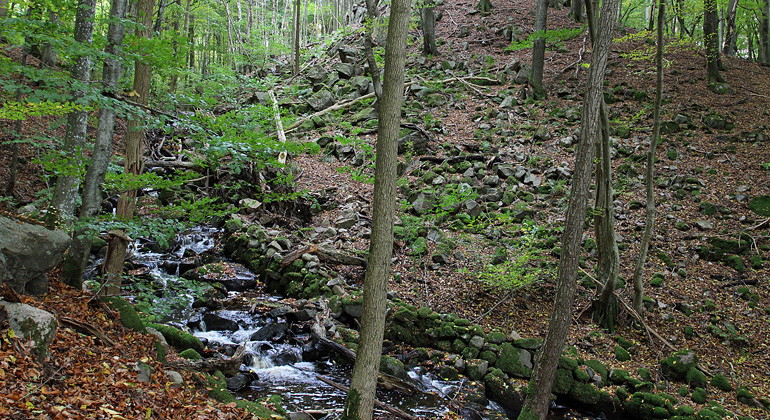
Killebäcken.
Photo: Mats Sjöberg -
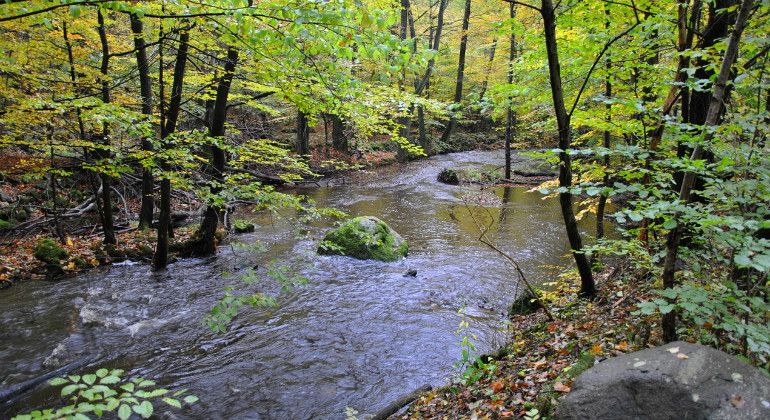
Photo: Mats Sjöberg -
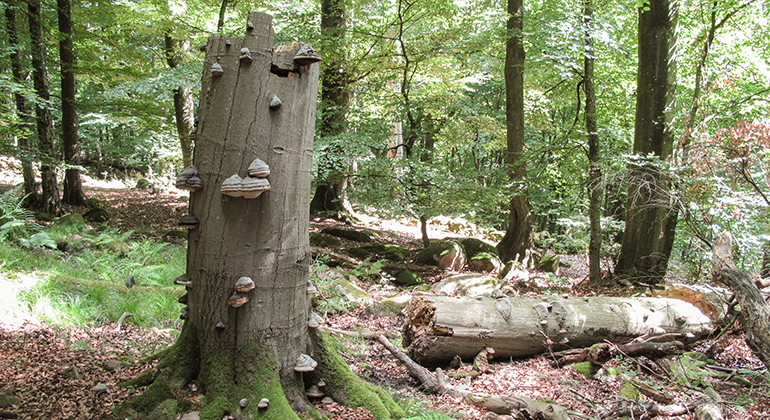
Photo: Johan Johnmark -
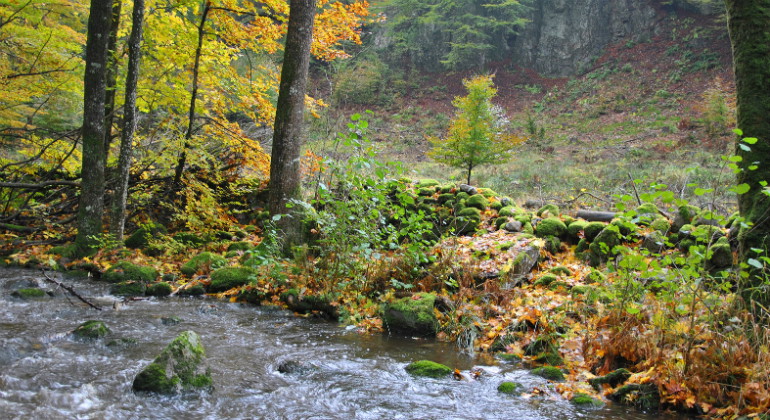
Photo: Mats Sjöberg -
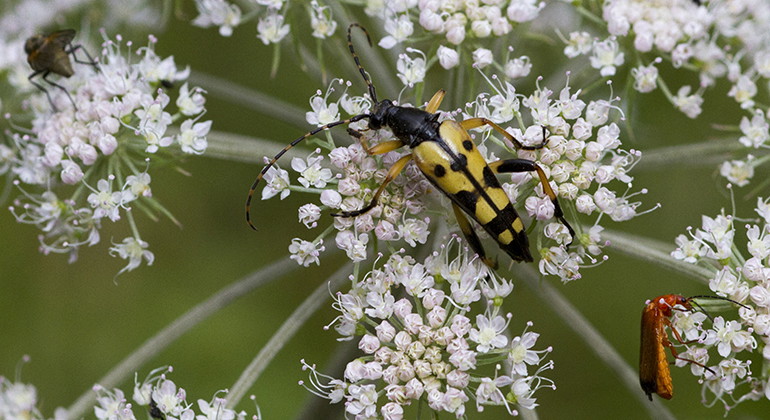
Fläckig blombock.
Photo: Alex Regnér -
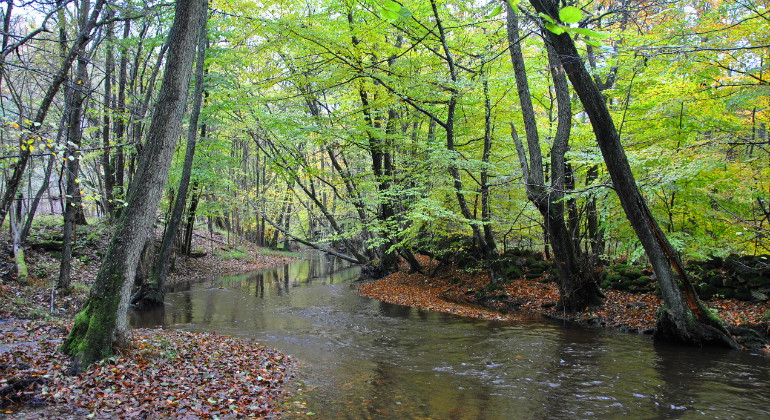
Photo: Mats Sjöberg -
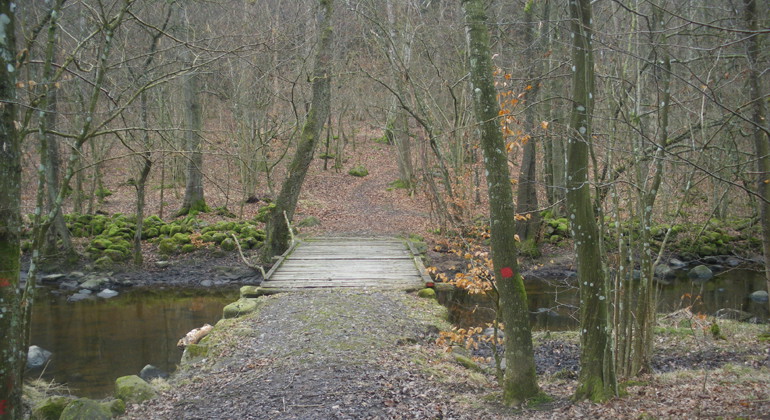
Photo: Johan Johnmark -
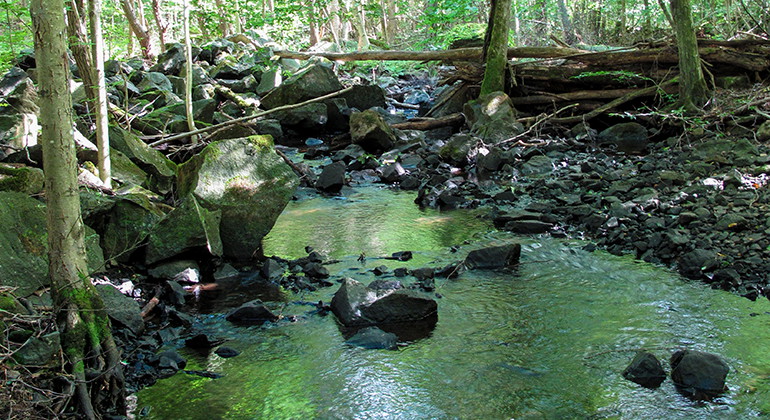
Photo: Johan Johnmark -
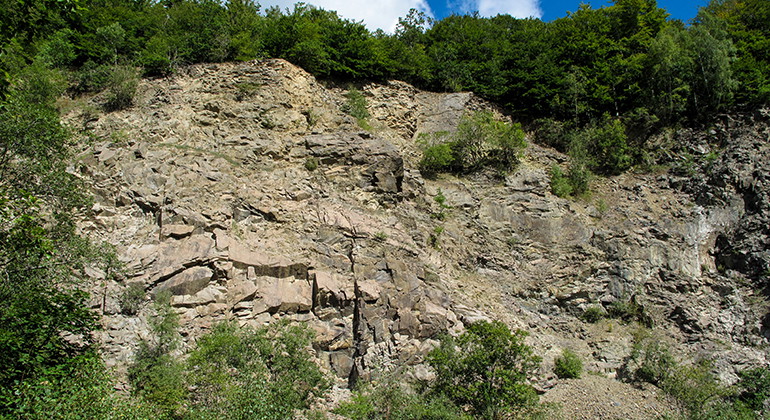
Bergtäktsbrant.
Photo: Johan Johnmark -
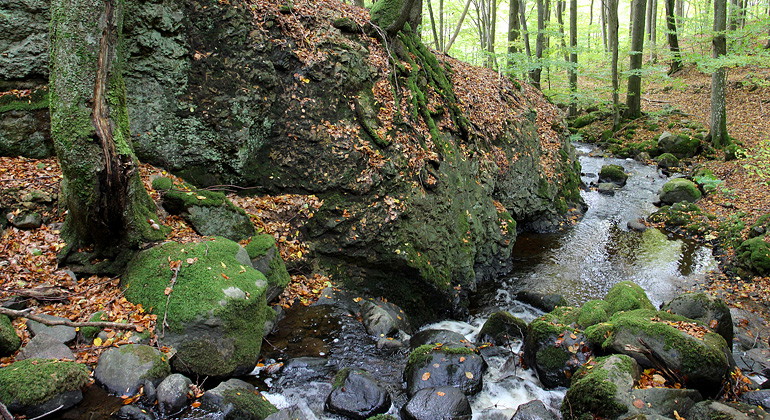
Killebäcken.
Photo: Mats Sjöberg -
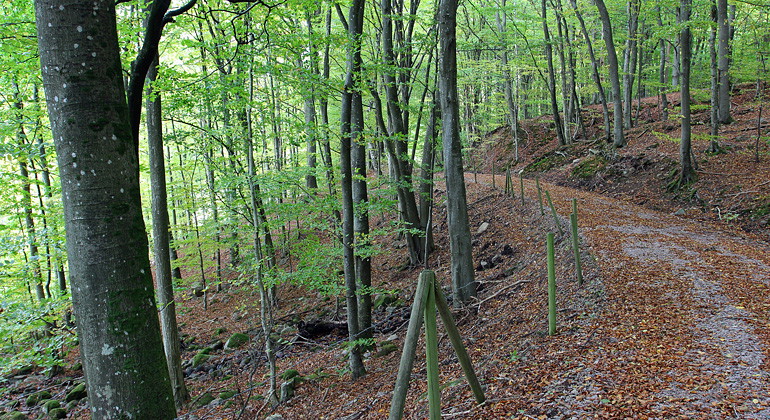
Photo: Mats Sjöberg -
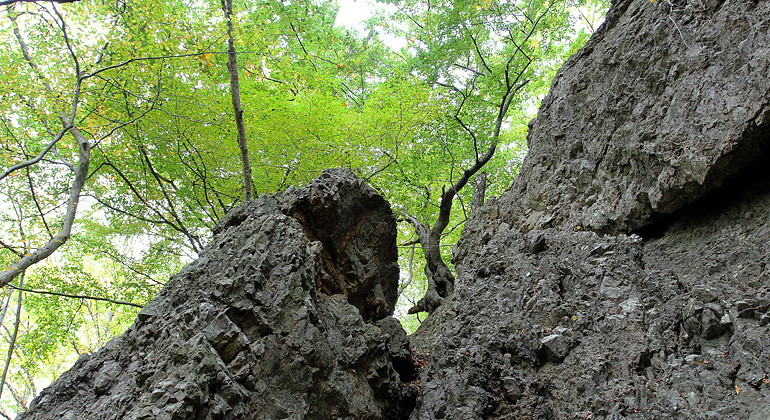
Photo: Mats Sjöberg -
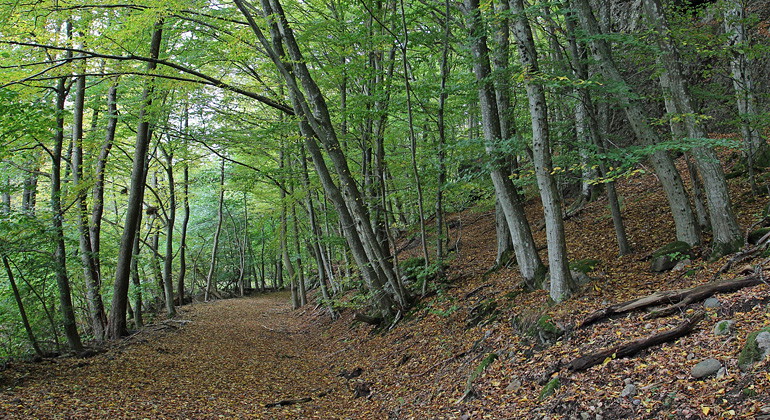
Photo: Mats Sjöberg -
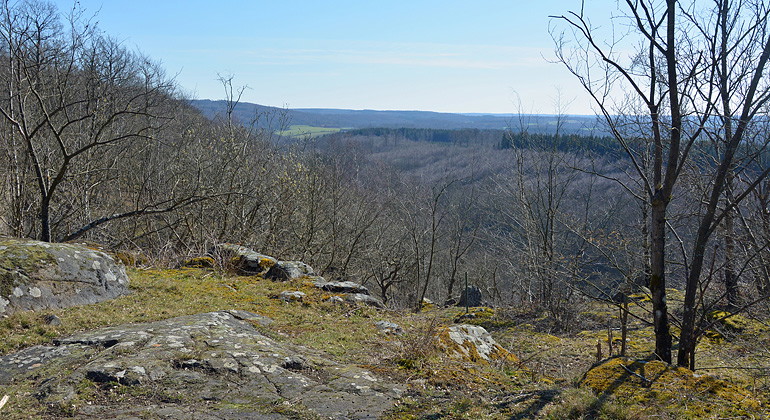
Photo: Mats Sjöberg
Hallabäckens dalgång, Naturreservat
- Nature reserve
- County: Skåne län
Actions
Description
Hallabäckens valley is located on the south side of Söderåsen. Here you are greeted by rippling water, species-rich deciduous forest and damp pastures. The area is very steep in parts with height differences of 70-90 meters. The valley bears traces of old-time diabase mining and the sandstone cliff Stora Älehallen or Elhall sits at the top. At the bottom of the valley, Hallabäcken flows on its way to Skälderviken. You can see trout spawning in the clear water of the stream and a variety of butterflies fly in the flower-rich slopes. There is parking and small unmarked paths lead into the valley.
Species-rich broadleaf forest
Large parts of the nature reserve are covered by forest. Beech and hornbeam grow on the slopes, and in the valley the stream is shaded by ash, oak and alder. There is a lot of dead wood here, which benefits both fungi and insects. The uncommon fungus violet-headed fungus lives here, as does the lichen pincushion lichen. The valley is also home to many rare mosses associated with damp environments. No less than 70 different bird species nest in the valley. If you're lucky, you might see the white-tailed deer looking for food along the stream.
Steep valley sides
The mountainside in the northern part of the reserve is among the steepest parts of Söderåsen. During the mid-20th century, diabase was mined in the area. Today, three open mountain slopes and occasional piles of material remain. In the central parts of the reserve, the mighty sandstone cliff Stora Älehallen, or Elhall, rises high up the valley side. This sandstone is one of the oldest sedimentary rocks in Skåne.
Butterflies and wood-boring beetles
The basic rock type diabase in combination with the open, sun-warmed slopes favors a diversity of flowers and shrubs, which makes the area very important for butterflies and bees. The red-listed species of the elm bark butterfly and the violet-edged goldenwing are some of the butterfly species that have been found in the reserve. Wood-dwelling insects are also dependent on nectar and pollen during parts of their life cycle and benefit from the rich plant life.
Unusually rich in flowers
In total, no less than 600 different vascular plants have been found in the valley. Some of these include the unusual forest veronica and the orchids green-white night-flowering violet and true persimmon. At the far southeast is Orrödskärret. It is a so-called rich marsh, which means that it is rich in lime, but poor in nutrients. The calcareous groundwater that seeps out, together with haymaking and grazing animals, has led to today's floral splendor. Among other things, mayweed, marsh marigold and water primrose grow here.
In the valley bottom there are also traces of older farming in the form of stone walls, croft ruins and hollow ways that have been worn by the crofters' wagons, feet and cattle's footsteps.
Outdoor life
The reserve runs along the Hallabäckens valley, from Åvarp in the northwest to Stubbaröd in the southeast. Small unmarked paths start at each end. The paths run along the stream and further into the valley. They never meet, but are separated by wet areas and rocky cliffs in the middle of the area. If you walk from the northwest, the path is mainly surrounded by beech forest, while the path from the southeast also passes pastures. On both hikes you will see the remains of old quarries where diabase was mined. Of particular geological interest is the sandstone cliff Stora Älehallen (Elhall), which you reach via the path from Stubbaröd. The cliff consists of the oldest sedimentary rock in Skåne. In the northwest, the reserve borders Åvarps nature reserve Link to another website and Åvarps fälads nature reserve Link to another website. Here is a smaller parking pocket at the road barrier (must not be blocked). In the southeastern part there is a parking a few hundred meters north of Stubbaröd's farm that has room for 3-4 cars. Remember to take your trash home.
In English
Welcome to Hallabäckens dalgång Nature Reserve
You are standing in the fault zone where the horst Söderåsen was forced up some 150-200 million years ago. The fertile plains with pastures and fields stretch out below. In the middle of the Reserve, the mighty escarpment of Älehallen looms up. It looks as though the gnarly beech trees grow directly out of the gray sandstone escarpment.
The number of trees was at its lowest in the 1800s on the slopes of the ridge. There were several crofts in the area and the animals grazed in the outlying woodlands. Wet meadows lay alongside the stream, from which hay was cut.
Hallabäckens Dalgång (Hallabäcken Valley) is full of life. There are more than 600 different species of vascular plants here. The unusual and small wood speedwell and the magnificent great butterfly orchid and early purple orchid thrive in the nutrient rich soil. Orrödskärret lies furthest to the southeast. The calcareous water along with scythes and grazing animals have created a rich fen full of flowers such as bird's eye primrose, marsh helleborine and common butterwort.
Even if the woodland on several occasions has been heavily exploited, the trees on the slopes have been left. This is why there are rare lichens and fungi here, such as Opegrapha vermicellifera and pig's ears, which thrive in old broadleaved woodland.
Some 70 species of bird breed in the valley. If you are lucky you may see a grey wagtail looking for food along the stream or a hawfinch crushing a cherry seed with its powerful beak.
Regulations
Within Hallabäckens dalgång nature reserve it is forbidden to:
- damage natural objects or geological formations, by digging up or in any other way damaging boulders, stones, scree slopes, formations or stone walls,
- climb up the cliff which is marked on the map, between 1st February and 15th September,
- park up or stay overnight in a caravan, camper van or equivalent,
- bring dogs or other pets not on a lead,
- dig up plants, pick mosses, lichens or wood-living fungi,
- remove wood, break branches, fell or in any other way damage living or dead, standing or fallen trees and bushes,
- light a fire other than in designated places,
- cycle or horseride other than on designated roads,
- plant out foreign (for the site) plant or animal species,
- intentionally disturb or have an impact on wildlife, such as by chopping or moving decaying wood.
Without permission from the County Administrative Board it is forbidden to:
- put up signs, posters, plaques, tape, notices or any other equivalent items.
Without written permission from the County Administrative Board it is also forbidden to:
- catch invertebrates, such as beetles or mussels,
- put out foreign objects (e.g. geocaches or equivalent).
Activities And Facilities
- Nature reserve
Facts
Established: 2014
Size: 234 hectares
Municipality: Bjuv, Svalöv
Administrator: County Administrative Board of Skåne
Protection type: Nature reserve and Natura 2000
Directions
Walk, cycle, take public transport or drive here. Map and directions via Google maps or coordinates (WGS84).
Regulations
**Within the area, special rules and restrictions apply to the right of public access.
For example, it is forbidden to:
- having a dog unleashed
- setting up a caravan/camping car
- make fires
- climbing the rock face marked in Appendix 2, between February 1 and September 15
Appendix 2 Hallabäckens dalgång, local climbing ban Pdf, 138.8 kB, opens in new window
It is important to note that this is only a selection of the rules.
Full regulations for visitors
In addition to regulations and prohibitions in other laws and regulations, it is forbidden to:
- damage any fixed natural object or surface formation, by digging or otherwise damaging boulders, rocks, cliffs, landforms or stone walls,
- climbing on the rocky slope marked on Appendix 2, during the period February 1 to September 15,
- set up or stay overnight in a motorhome, caravan, or equivalent,
- bring dogs or other pets that are not kept on a leash,
- dig up plants, pick mosses, lichens or wood-living fungi,
- remove wood, break branches, fell or otherwise damage living or dead standing or lying trees and shrubs.
- make fires other than in a place specifically designated by the manager
- ride a bicycle or horse other than on roads designated by the manager,
- planting plant or animal species alien to the area
- deliberately disturb or affect wildlife, for example by chopping or moving decaying wood,
It is prohibited without the approval of the manager to:
11. affix a board, sign, carving, inscription, poster or similar device,
Furthermore, it is prohibited without the permission of the County Administrative Board:
12. collect invertebrates, such as beetles or mussels. However, individual specimens may be collected provided that it does not violate the conservation regulations and that traps are not used.
13. placing foreign objects (such as geocaches or similar).
Appendix 2 Hallabäckens dalgång,, local climbing ban Pdf, 138.8 kB, opens in new window
Regulations updated 2018-07-31
Contact
Address
Under LÄNKAR kommer du till aktuell reservatssida på Länsstyrelsens webbplats, med fördjupande information som kartor, broschyrer och hänvisning till relevanta aktörer. Här finns även en rapportfunktion för dig som vill lämna uppgifter om naturreservaten som vi förvaltar.
Email address
Organization logotype

Please be aware that some of these texts have been automatically translated.
I’ve been here 3

I want to go here 4
Questions & Answers
Ask a question to other Naturkartan users.
Reviews
0 reviews
- 5 :
- 4 :
- 3 :
- 2 :
- 1 :
Users images
No user images yet. Be the first to share!