
-
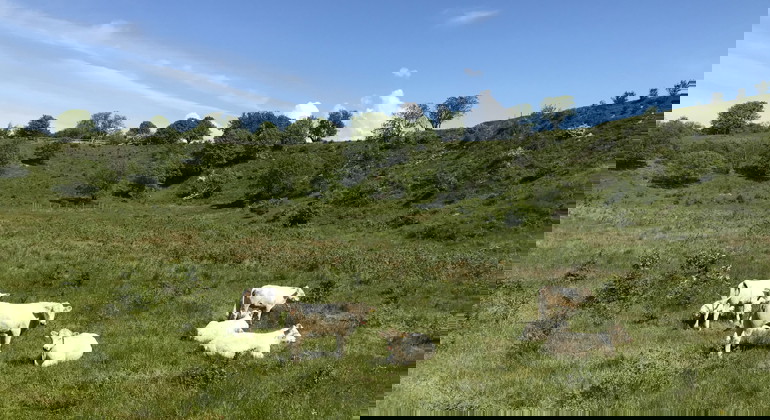
Photo: Sanna Persson -
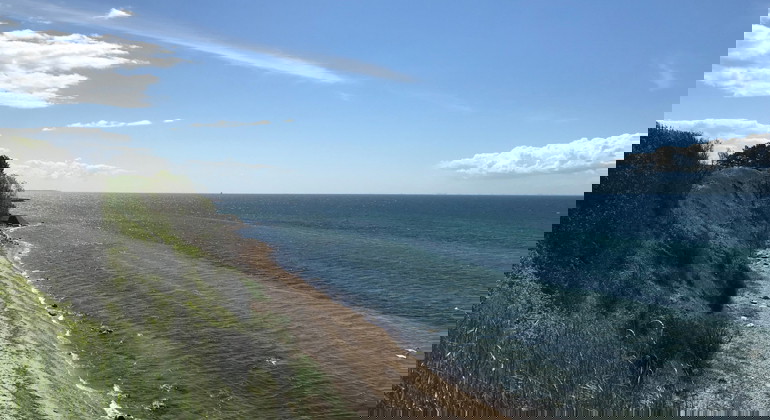
Photo: Sanna Persson -
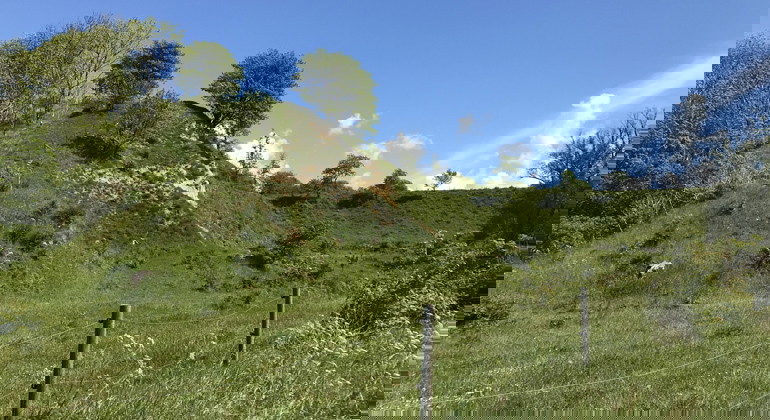
Photo: Sanna Persson -
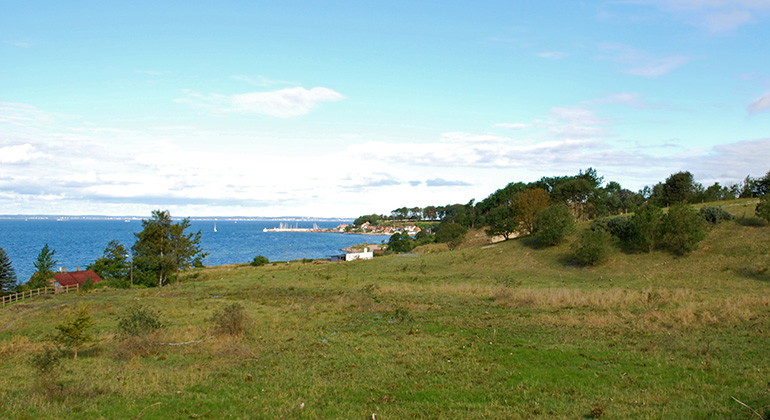
Photo: Jörgen Nilsson -
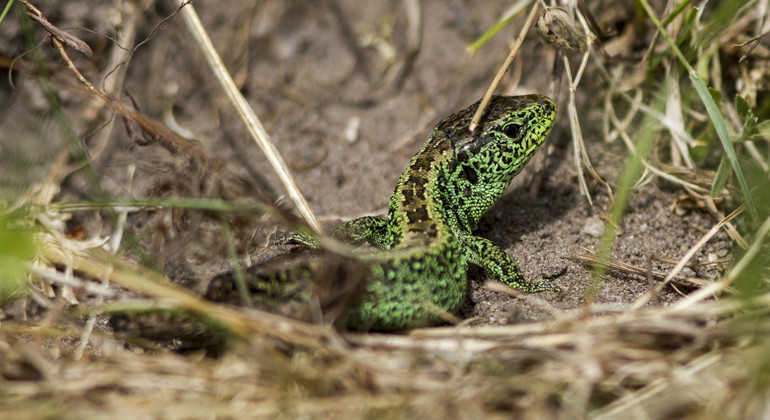
Sandödla.
Photo: Alex Regnér -
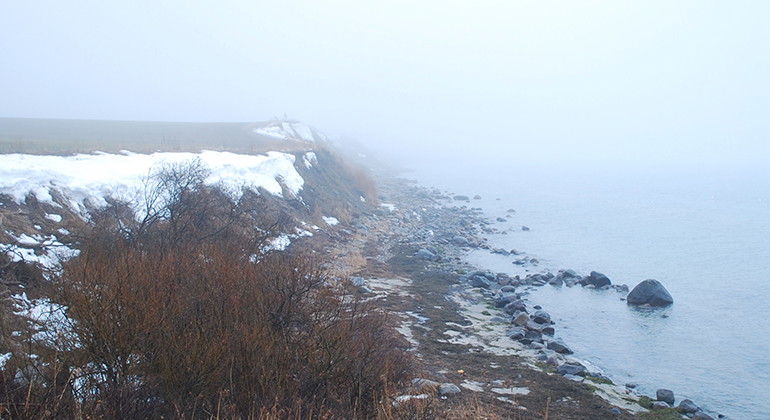
Photo: Jörgen Nilsson -
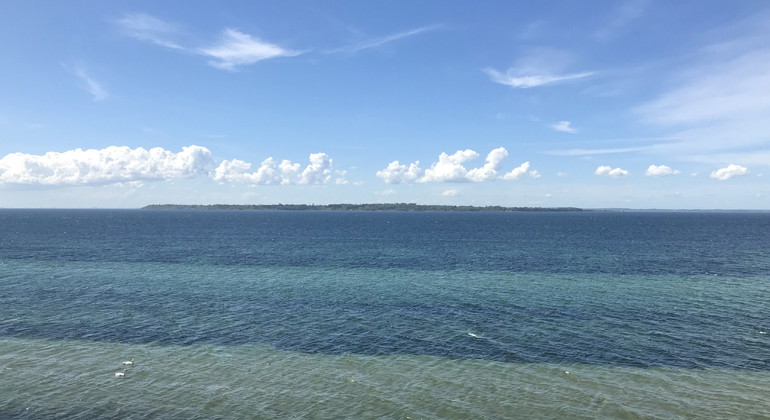
Utsikt över Öresund och Ven i fjärran.
Photo: Sanna Persson -
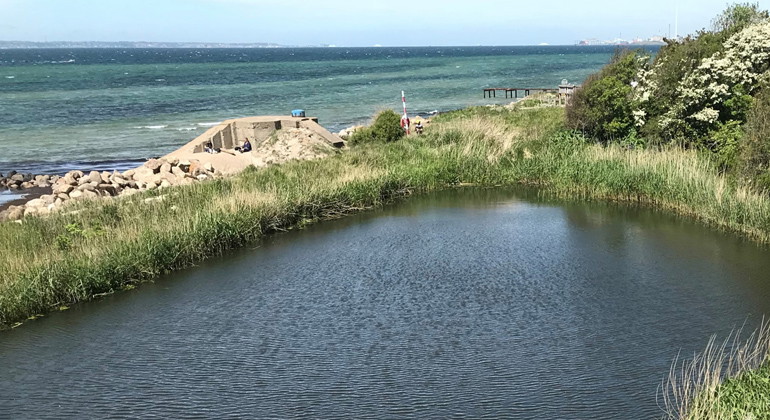
Gammal lertäkt.
Photo: Sanna Persson -
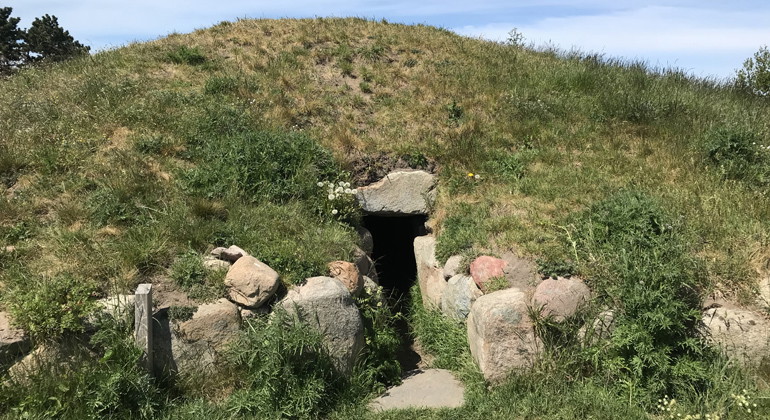
Stenåldersgraven Örenäs gånggrift.
Photo: Sanna Persson -
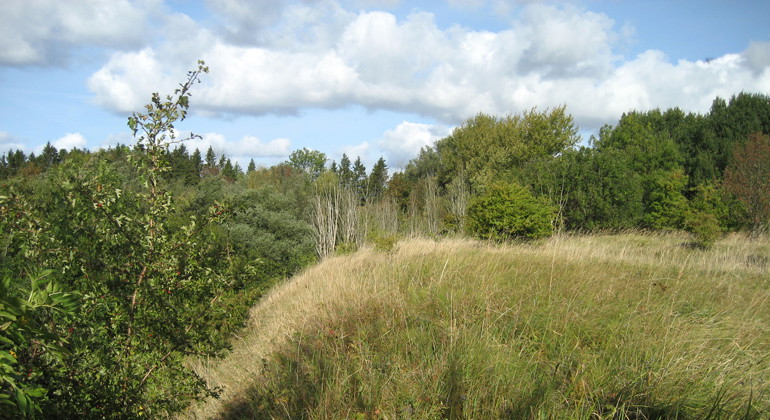
Tegelbruksområdet.
Photo: Jörgen Nilsson -
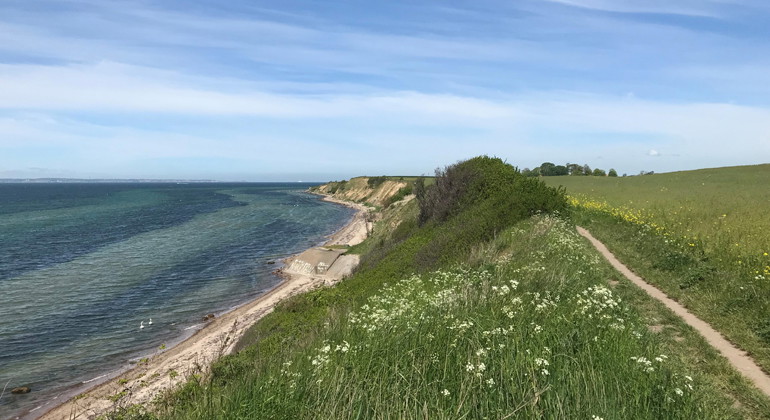
Sandiga branter längs kusten.
Photo: Sanna Persson
Glumslövs naturvårdsområde, Naturvårdsområde
- Valuable nature
- County: Skåne län
Actions
Description
In Glumslöv nature conservation area, you are greeted by a rolling agricultural landscape with views of Öresund and Ven. On the steep slopes towards the sea, the humpback swallows can be seen flying outside their nests in summer. Down along the rocky shore there are brick remains from brick making that began as early as the 18th century. The area is rich in ancient remains. Örenäs gånggrift is one of the most well-preserved. Örenäs Castle is another attraction if you walk the Skåneleden trail along the reserve's multifaceted cliff coast.
From grazing to cultivation
The open agricultural landscape is characterized by rolling fields and scattered farms. There is a long history of farming in the area, but it was not until the 19th-century land reforms that the landscape began to resemble what we see today. At that time, the farms were given their current locations from previously having been gathered in villages. The vast pastures that surrounded the villages were plowed up into fields.
Interesting ancient remains
Örenäs gånggrift - one of the country's best-preserved Stone Age graves - is one of many ancient remains in the nature conservation area. There is an information sign at the ancient monument. It tells about the passageway and the Trattbägar culture, the country's first farmers, who had the grave built about 5000 years ago.
Blooming coast with humpback swallows
The sandy cliffs by the sea are home to spearmint and fragrant spearmint. If you're lucky, you'll find the plant spearwort, which lacks chlorophyll and therefore lives as a parasite on the spearwort. If you look closely at the cliff, you will discover lots of small, round holes. They are built by humpback swallows - the smallest swallows in our country. The emerald green sand lizard also thrives on the sandy soils.
Brick and clay
There are large quantities of discarded bricks of imaginative shapes and colors on the shore. The bricks are remnants from various brickworks. The oldest, Kronotegelbruket in Sundvik, started in the 1740s. The brick industry in the area ceased in the 1960s. Today the old clay pits are overgrown. There is now an exciting plant and animal life here, with several rare species, including the giant fern.
Örenäs castle
Örenäs Castle was built in 1914-1918 and is thus one of the country's youngest castles. It is built in the German Baroque style and surrounded by a beautiful park. The pump house houses a small museum with an exhibition about the writer Amelie Posse.
Outdoor life
Glumslöv nature conservation area is located along the coast between Helsingborg and Landskrona. It borders in the south to Hilleshögs dalar Opens new window. which also has part of the famous Glumslöv slopes. In both areas, the highland and hilly landscape meets sharp precipices down to the shoreline, so-called cliffs or hillsides. These sandy cliffs are often inhabited by hill swallows. The Skåneleden trail follows the coast, sometimes up along the crest, sometimes down along the shoreline. There are two entrances to Glumslöv nature conservation area, one at Solvik and one in the northern part of Ålabodarna. There is parking here and just next door is Örenäs gånggrift. Örenäs Castle and bathing place are in the southern part of Ålabodarna. Along the coast you can see traces of brick making, such as bricks and water-filled clay roofs. Remember to take your rubbish home.
In English
Welcome to Glumslöv Nature Conservation Area
In Glumslöv Nature Conservation Area, you can walk on the crest of
the unique steep sandy cliffs, between the sea and extensive arablefields. Whatever your mode of transportation, there is much to discover along the roads, or footpaths. Welcome!
This dramatic stretch of coastline has been a popular area for settlements since the Stone Age. The 5000 year old grave, Örenäs chambered tumulus, is proof of this. Many thousands of years later Örenäs manor house was built. Completed in 1918, it is one of the most modern manor houses in the country.
The steep sandy cliffs that plunge into the Öresund are unique to this area. The flora is rich and varied, attracting wild bees and butterflies, many of which are rare.
In addition to the huge layers of sand, there is also clay which is perfect for making bricks. Along the coast between Helsingborg and Landskrona alone, there were almost 40 brickworks. Some of the abandoned clay pits are now filled with water andhave become a haven for the rare European green toad.
Regulations
With Glumslöv Nature Conservation Area it is forbidden to:
- remove, dig, bore, paint, or in any other way damage the ground, stones, stonewalls, natural features, archaeological features or the sea bed,
- camp or put up any other equipment for sleeping overnight, or park up a caravan, camper van, or equivalent,
- light a fire other than in designated places. The use of a camping stove is permitted,
- cycle other than on a road or designated cycle track,
- intentionally disturb grazing animals,
- intentionally disturb the bird life and breeding amphibians,
- bring a dog or other pet not physically held on a lead,
- dig up plants,
- put out or put up notices, plaques, signs, posters, or equivalent,
- park other than in the designated parking spaces,
- introduce plants (by planting or sowing seeds) or animals.
Without written permission from the County Administrative Board it is also forbidden to:
- organize competitions or equivalent activities within the hatched area marked on the map ,
- catch insects, spiders, snails, or other invertebrates other than with nets, by hand, or other selective methods, which does not destroy their habitat, with subsequent re-release within the nature conservation area. This require mentdoes not apply to one-off specimens of species which are difficult to identify, on the basis that the record is registered in Artportalen, or equivalent database for threatened species, and that the collection does not contravene any wildlife protection regulations.
Activities And Facilities
- Valuable nature
Facts
Established: 1987
Size: 669 hectares
Municipality: Helsingborg, Landskrona
Manager: County Administrative Board of Skåne
Protection type: Nature conservation area
Directions
Walk, cycle, take public transport or drive here. Map and directions via Google maps or coordinates (WGS84).
Regulations
Full regulations for visitors
In addition to regulations and prohibitions in other laws and regulations, it is forbidden to:
- remove, dig, drill, paint or otherwise damage soil, stone, stone walls, natural objects, cultural relics or the seabed
- camp or set up equipment for overnight stays, or set up a caravan, motorhome or similar,
- make a fire other than in a designated place. The use of open-air kitchens is permitted,
- ride a bicycle other than on a road or designated bicycle path,
- deliberately disturbing grazing animals,
- deliberately disturbing bird life and spawning amphibians,
- bringing dogs or other pets that are not kept on a physical leash
- digging up plants
- place or put up a billboard, sign, poster, or similar,
- park outside designated parking areas,
- planting or sowing plants or putting out animals,
Furthermore, it is prohibited without the written permission of the County Administrative Board:
12. organize competitions or similar events within red-dashed areas on map appendix 2 ,
13. catch insects, spiders, shells or other invertebrates other than by scooping, hand picking or other selective method that does not destroy the animal's habitat, with subsequent release within the nature conservation area. The requirement for re-release does not apply to single specimens of difficult-to-determine species of each species, provided that the findings are registered in the Species Portal, or equivalent database for endangered species, and that the collection does not violate the protection provisions.
Contact
Address
Under LÄNKAR kommer du till aktuell reservatssida på Länsstyrelsens webbplats, med fördjupande information som kartor, broschyrer och hänvisning till relevanta aktörer. Här finns även en rapportfunktion för dig som vill lämna uppgifter om naturreservaten som vi förvaltar.
Email address
Organization logotype

Please be aware that some of these texts have been automatically translated.
I’ve been here 1

I want to go here 1

Questions & Answers
Ask a question to other Naturkartan users.
Reviews
0 reviews
- 5 :
- 4 :
- 3 :
- 2 :
- 1 :
Users images
No user images yet. Be the first to share!