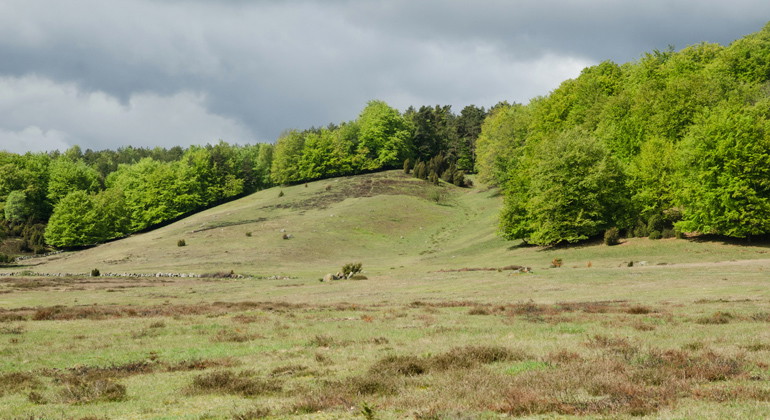
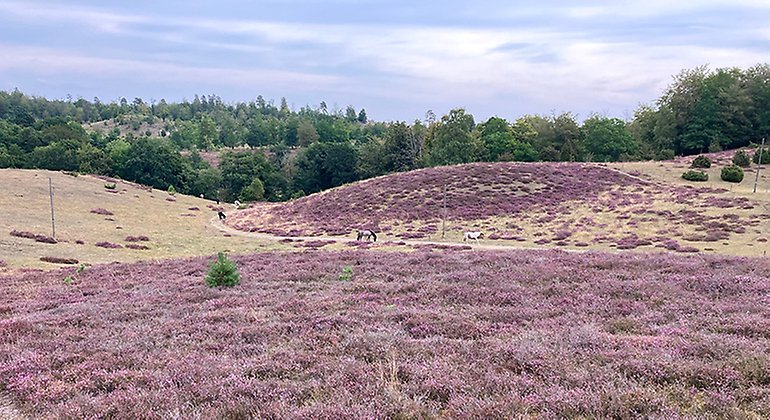
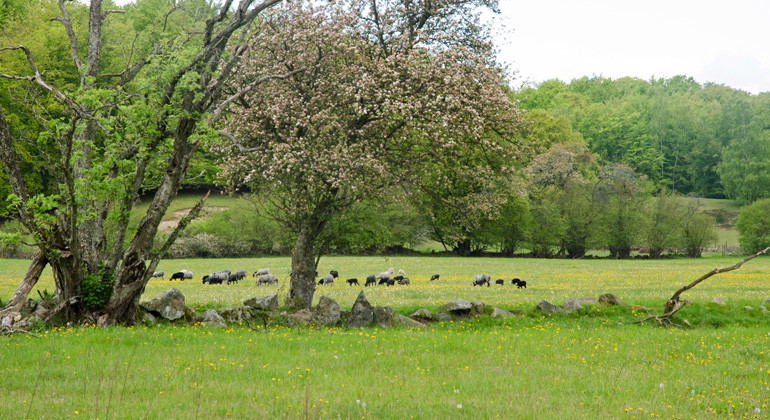
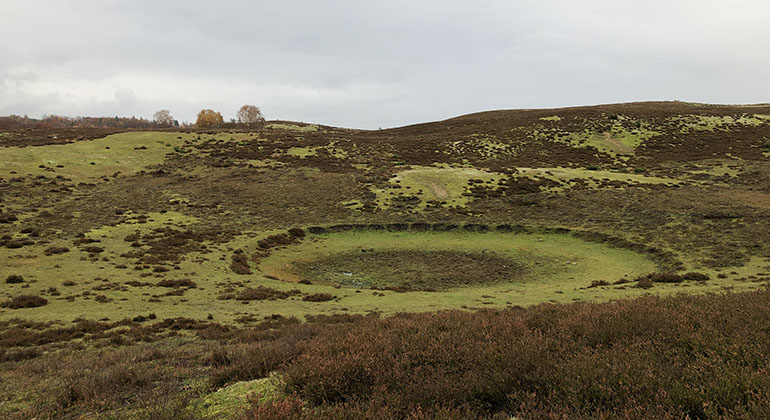
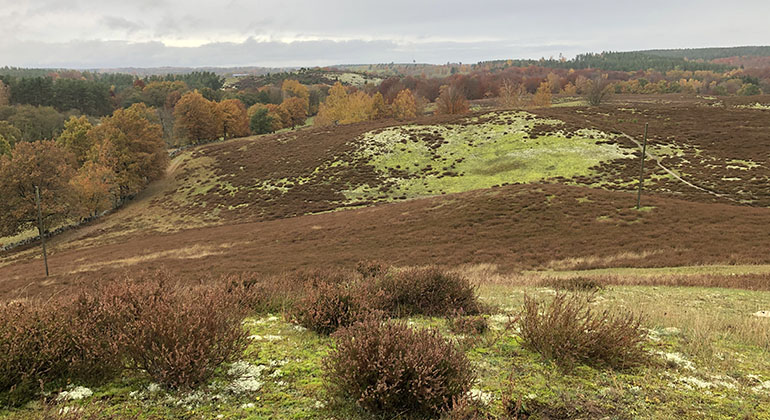
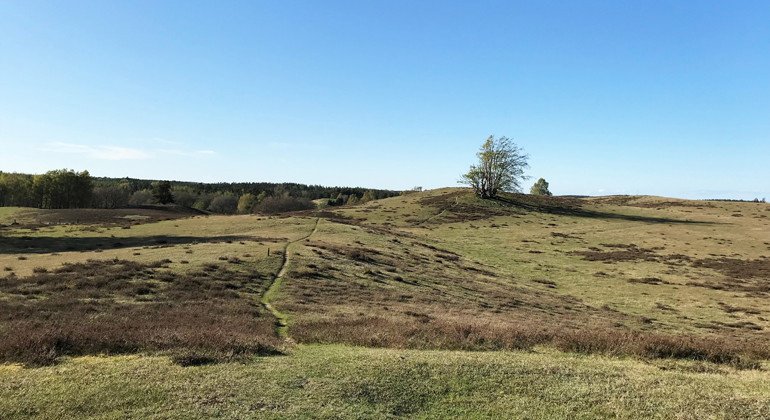
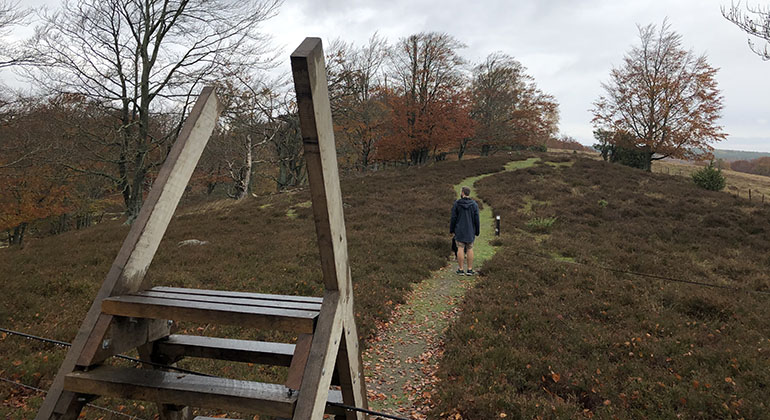
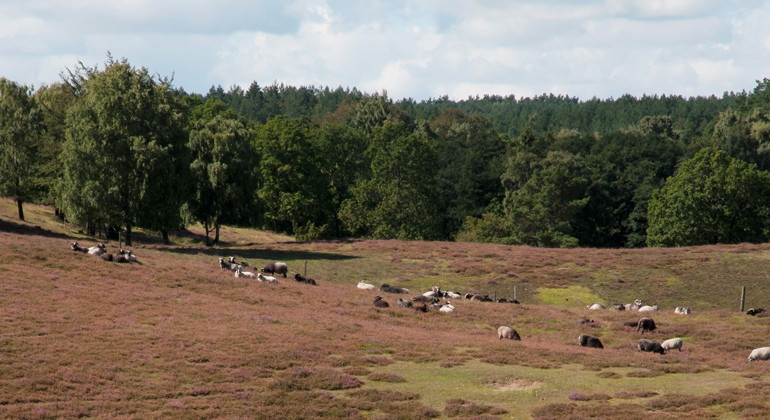
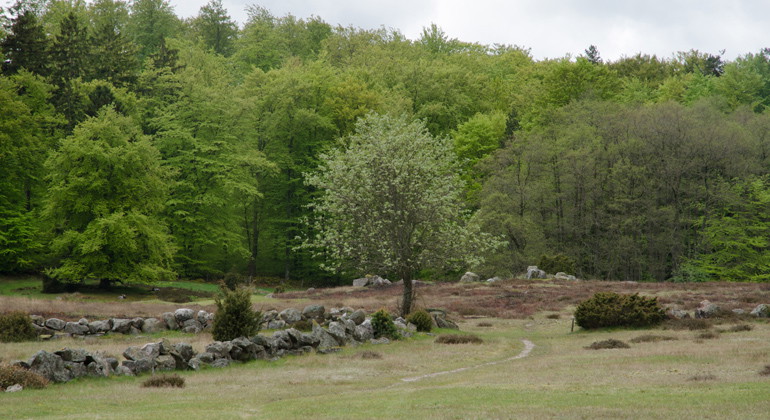
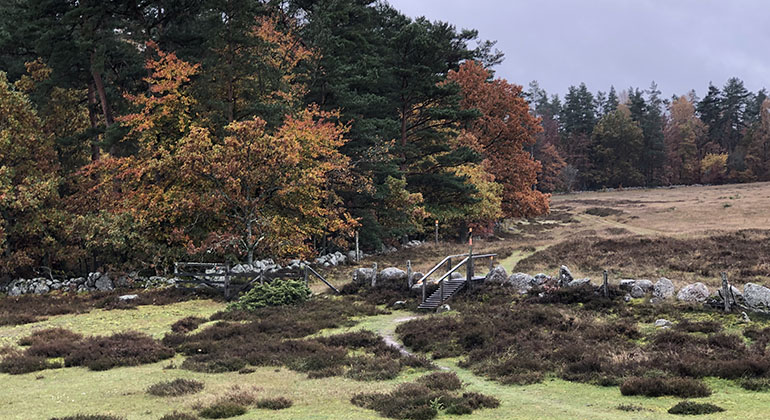
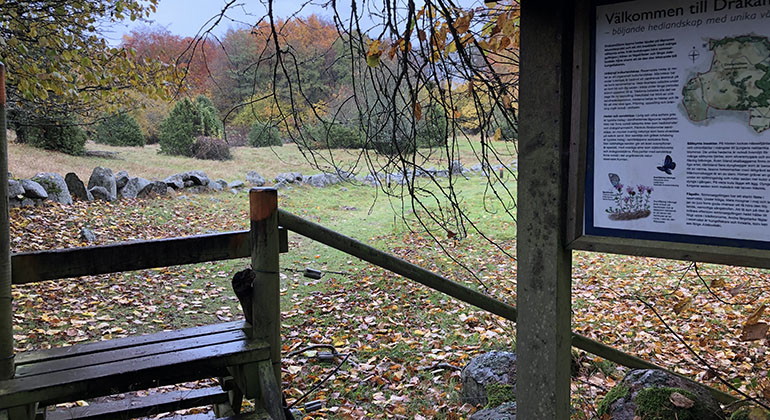
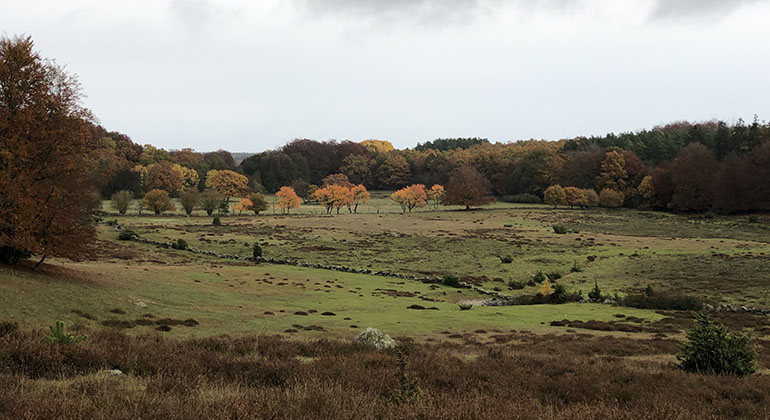
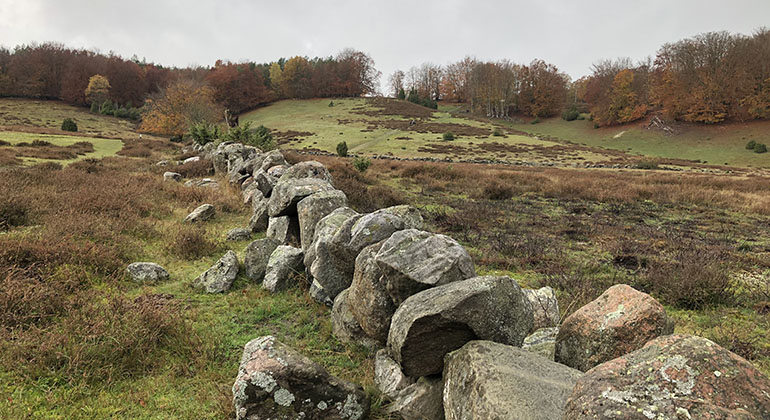
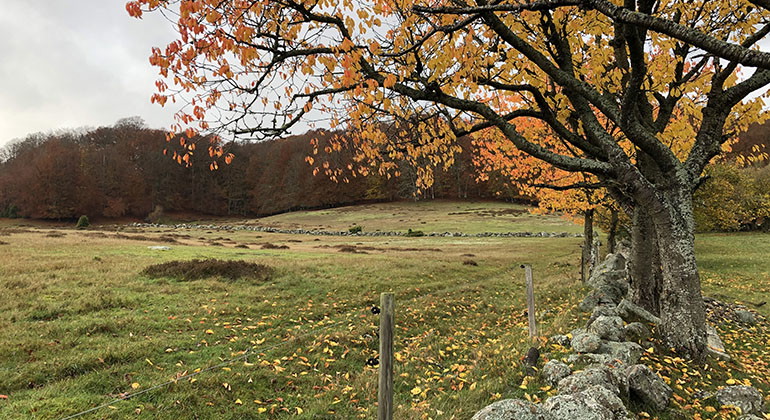
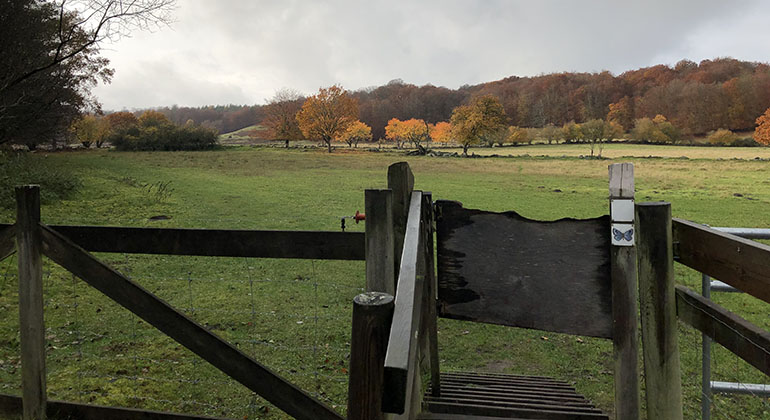
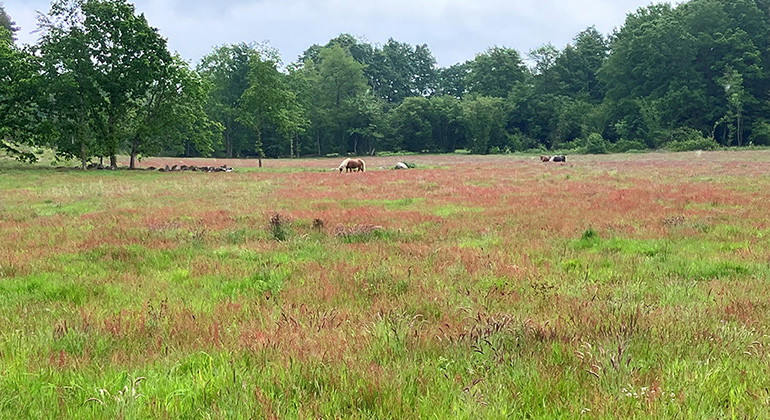
Drakamöllan and the adjacent Kumlan reserve form a wonderful grazing landscape. Here you will find vast grasslands, unique sandy steppe environments and groves of lush beech forest. An ancient farming system with long periods of rest has created a unique natural environment with very special flora. Fragrant sand lilies bloom on the slopes, and in late summer the heath glows with the purple flowers of the heather. A 3-kilometer loop shows the way. If you choose the 9-kilometer Blåvingeleden trail instead, you can also experience the neighboring reserves. Fence crossings and grazing animals can make it difficult to walk with dogs in the fields.
Avoid congestion during weekends
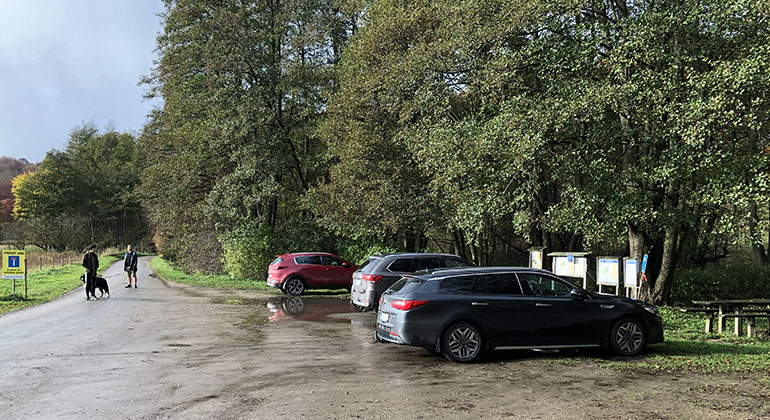
The parking lot is often full during weekends. Maybe cycle or take the bus here or do a long walk through the area?
We would also like to draw your attention as a visitor to the reserve to the fact that the continuation of the road is private (no vehicles) and that you always have a dog on a short leash so that the grazing animals in the reserve are not frightened. Thank you for your consideration!
Planned conservation burning in March-April
Sometimes the meadow must burn, so that species do not disappear! Therefore, the County Administrative Board is carrying out planned conservation burning in several protected areas during March-April, including here.
Ancient agriculture created life in the hills
The sandy hills that gently undulate were formed when the ice sheet melted away. Humans learned early on to use the easy-to-work land for farming. And when the trees were cut down to keep the alum mill in Andrarum alive, the area became even more open.
But the soil was not nutrient-rich enough to be cultivated every year. Instead, tree farming was introduced where, after a few years of rye and buckwheat, the area was allowed to rest. Sometimes these dormant periods could last up to 10-20 years, during which the area was used as pasture.
The result was a species-rich environment, where plants, fungi and animals that thrive in the mosaic of open sandy areas and flowering vegetation were given a place to live. Nectar-filled flowers attract butterflies and here you will find, among other things, the rare black-spotted blue wing. To prevent the heather from growing too big and taking over the open grasslands, a section of the heath is burned every year.
Sand and warmth bring life
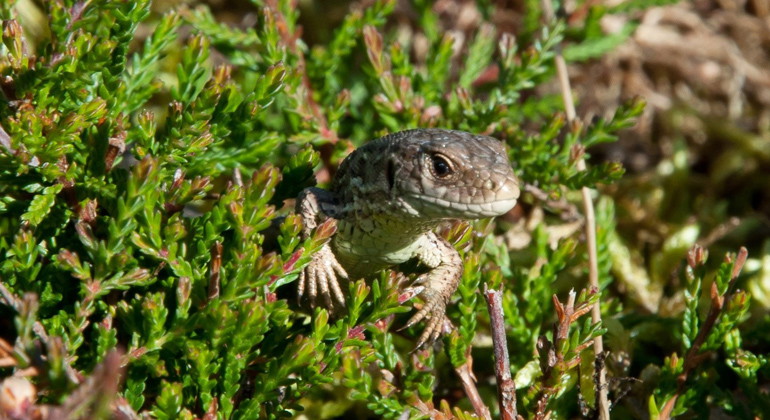
The sandy soils have their own special species - not least in the names. Sand lily, sand lizard and sand bee are species that thrive in Drakamöllan and the neighboring reserve Kumlan. Dung beetles such as the moonhorn beetle are also sand lovers, but require grazing animals on the land. Dung beetles use dung as food and bury it in tunnels under the dung.
On calcareous areas in Drakamöllan and Kumlan, there is the unique habitat type of sandy steppe. It consists of dry, treeless land on calcareous sandy soil. Sandwort, sand lily and sand thyme grow here. But if the soil is not stirred, the lime is leached out and the species disappear.
Land of the summer chicken
Here at Drakamöllan you have a good chance of seeing the summer wren. This yellow-black bird feels almost too exotic for our latitudes. Unfortunately, it can be difficult to spot, so you may have to settle for its characteristic whistle. It is mainly in the deciduous forest areas and along the river that you can find the summer wren. Along the Julebodaån river, in the eastern part of the reserve, there are other colorful birds, such as kingfishers and white-tailed kites.
Outdoor life
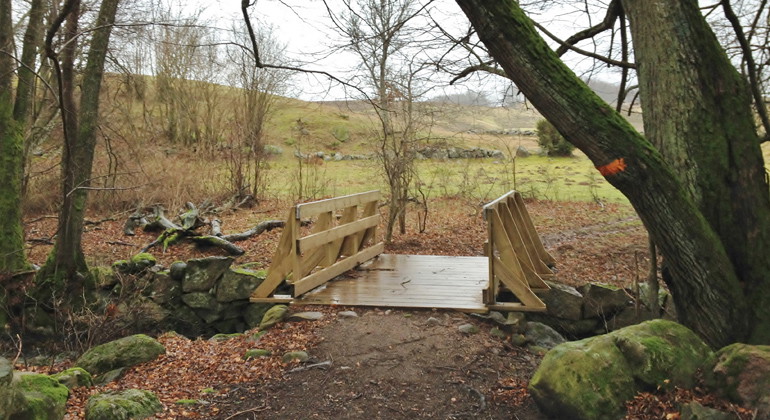
In the gently undulating pasture landscape there is a white-marked hiking trail (3 km). Start and parking are along the entrance road to Drakamöllan's farm hotel. Please respect that the road is private after the reserve parking lot. At the reserve parking lot there are tables and benches and a dry toilet. Remember to take your rubbish home. Two sub-trails of Skåneleden (SL3-Ås till ås and SL 6-Vattenriket) pass through the area, as does Blåvingeleden. Blåvingeleden is a 9 km long circular trail that also passes through the nearby reserves Lillehem Link to another website., Maglehem Link to another website. and Kumlan Link to another website.. Several fairly high fence crossings connect the grazing areas of the different reserves. Keep in mind that dogs and grazing animals should be kept separate.
**OBS: The trails here and in the surrounding reserves have been damaged by past high water and storms and are still difficult to access in places. We are trying to fix this as soon as we can, but the work is extensive and takes a long time. We regret this.
In English
Welcome to Drakamöllan Nature Reserve
Drakamöllan and the adjoining reserve Kumlan is a fabulous landscape with expansive grass heaths, unique sandy grassland habitats and groves of lush beech woodlands. An archaic system of cultivation, involving long periods of fallowness, has created a unique natural environment with a very special flora in this place. Sweet-scented St. Bernard's Lily bloom on the hillsides, and in late summer the heath is radiant with purple heather flowers.
Archaic Agriculture Created Life in the Hills
The gently rolling sandy hills were created when the inland ice sheet melted away. People learned early on how to utilize the easily-worked soil for cultivation. And when the trees were cut down in order to keep the alum works in Andrarum alive, the area became even more open.
But the soil is not sufficiently rich in nutrients to permit gowning each year. Instead, shifting cultivation was introduced, which involved allowing the area to lie fallow after a couple of years of rye and buckwheat cultivation. Sometimes these fallow periods would last up to 10-20 years, during which the area was used as pasture.
The result was an environment rich in species, where plants, fungi and animals that thrive in the mosaic of open exposed areas of sand and flowering vegetation have been given the space to live. Nectar-filled blossoms attract butterflies, among them the rare large blue. A section of the heath is burned each year to prevent the heather growing too high and taking over the open grass heaths.
Sand and Warmth Give Life
The sandy ground has its own specific species; St. Bernard's lily, sand lizards and mining bees are those that thrive in Drakamöllan and Kumlan. Dung beetles such as the horned dung beetle are also sand-lovers, but require there to be grazing animals on the land. Dung beetles utilise dung as food and bury it down in passageways under the dung.
On lime-rich sections of Drakamöllan and the adjoining reserve, Kumlan, you'll find the unique sandy grassland habitat, which consists of dry, treeless ground on lime-rich sandy soil. Blue Hair Grass, St. Bernard's Lily and Sand Cat's-Tailgrow here. However, if the ground is not disturbed, the lime leeches from the soil and these species vanish.
Land of the Golden Oriole
There is a good chance of catching sight of a Golden Oriole at Drakamöllan. This yellow and black bird feels almost too exotic for our latitudes. Unfortunately they can be hard to see, so perhaps you'll just have to be satisfied with hearing their characteristic whistle. They are mainly found in the broad-leaved woodland areas and along the river. Other colorful birds you might encounter within the reserve are the kingfisher and the grey wagtail.
Regulations
Within Drakamöllan Nature Reserve it is forbidden to:
-
remove, dig, bore, paint or in any other way damage the ground, stones or natural objects,
-
camp or park caravans, campers or similar overnight
-
light fires,
-
during the period April 1 to November 30 ride or lead horses
-
cycle other than on roads
-
deliberately disturb grazing animals
-
bring dogs or other pets unless on a physical leash
-
pick, dig up or in any other way damage plants, mosses, lichens and wood-living fungi
-
park outside designated parking areas
-
introduce or release species alien to the reserve
Furthermore, without written permission from the County Administrative Board, it is forbidden to:
-
hold or organize competitions or similar events,
-
catch insects, spiders, gastropods or other invertebrate animals other than by netting, hand picking or other selective method which does not destroy their habitat, with subsequent reintroduction within the nature reserve. The requirement for reintroduction does not apply to individual voucher specimens of species which are difficult to identify, on condition that the record is logged in the reporting system Artportalen, or an equivalent national database for threatened species, and that the collection is not contrary to the species protection regulations,