
-
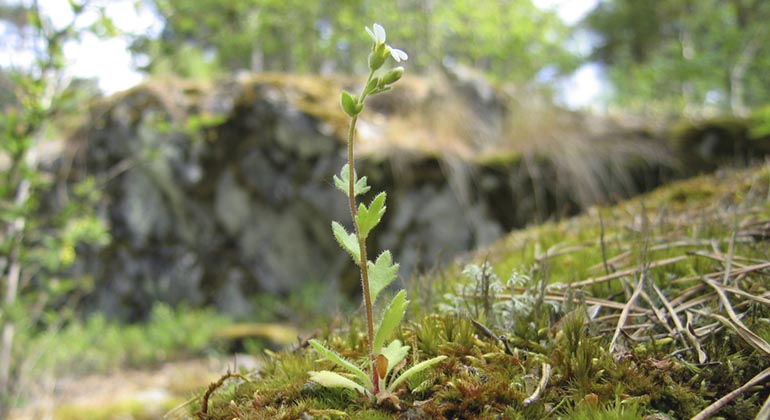
Hällebräcka, Tåsta.
Photo: Daniel Gustafson -
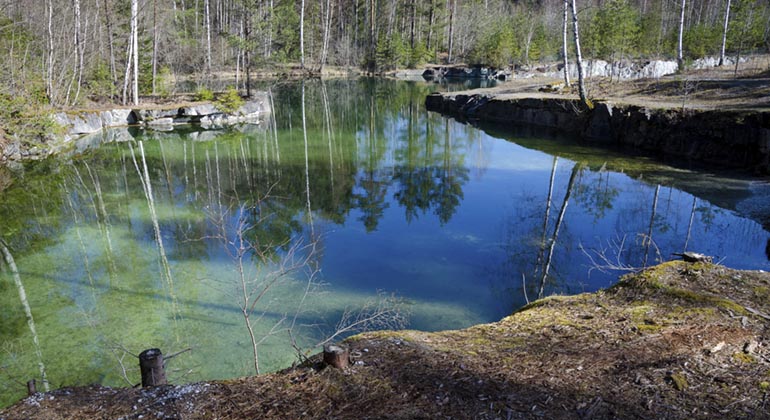
Tåsta.
Photo: Daniel Gustafson -
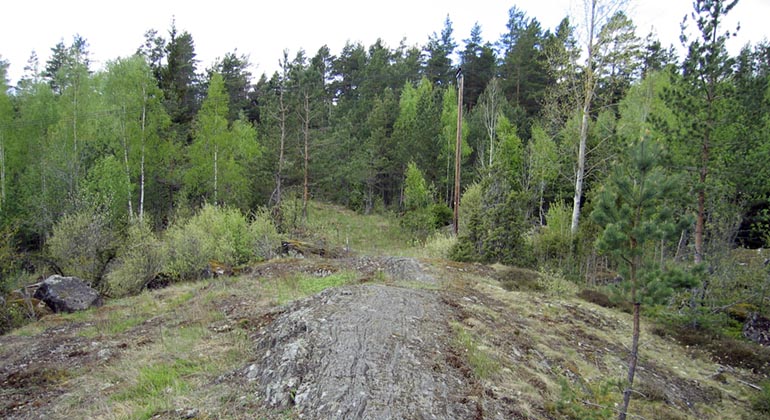
Tåsta.
Photo: Daniel Gustafson
Tåsta, Naturreservat
- Nature reserve
- County: Örebro län
Actions
Description
In the mountainous forest of the Tåsta nature reserve, you will find many discerning plants and fungi that benefit from the limestone-rich soil. In the reserve there are several clear traces of limestone and marble quarries that are now popular watering holes for the greater newt. Remember to keep your dog on a leash in the pastures!
Barren but still rich in species
In several places in the reserve, the mountain is exposed with rocks and cliffs. Only really hardy species can survive in this dry and hot environment. Despite the harsh environment, these rocks are very species-rich environments. Here you will find many specially adapted plants that can cope with the alkaline and nutrient-poor environment provided by the limestone, such as the heelwort, mountain mint, black bracken and forked bracken.
Among orchids and mushrooms
The species diversity is also great among both fungi and orchids. Keep an eye out for violet mushrooms, ragwort and velvet mushrooms, as well as orchids such as night violet, woodland knotweed and spiderwort. The lime also affects the small marshes in the area, known as rich marshes. Species such as snake's tongue and the small orchid knotweed grow there.
Marble quarries and Iron Age graves
Thousand-year-old graves in the eastern part of the reserve show that this area has been inhabited by humans since the Iron Age (500 BC-1050 AD). The many water bodies conceal ancient limestone and marble quarries. Initially, the white stone was quarried mainly for lime production. By the 1950s, the stone became sought after as building stone, marble. The last marble was quarried in the reserve as late as 1998. Silver ore was mined in the Eternal Mine in the 18th century. A wolf pit in the middle of the reserve tells us about wolf hunting in earlier times.
Old forest and forest grazing
The majority of the forest in the reserve is left to manage itself and become natural forest. Over time, both dead wood and old trees will increase in the reserve, to the delight of a variety of fungi, lichens, insects and birds. In the past, cattle from nearby villages grazed freely in the forest. Today, parts of the reserve are grazed to create open and sunlit environments. Varied grazing benefits a number of unusual plants and fungi in the reserve.
Take the bus to the reserve
You can get to Tåsta with the help of Länstrafiken's bus 322, which stops just west of the reserve, at the stops Hagaby skola or Backa.
Sign interpreted information
Activities And Facilities
- Nature reserve
Facts
Municipality: Örebro
Year established: 2006
Area: 121 hectares
Landowners: Swedish Environmental Protection Agency and individuals
Manager: County Administrative Board
Natura 2000: parts of the area are part of the EU network for protected nature, SE0240094 Tåsta
Directions
From Örebro, take the E20 towards Stockholm. Turn off towards Myrö and Rynningeåsen, then drive towards Fellingsbro. After about 3.5 km, turn left towards Fellingsbro. Continue for about 7 km and turn right towards Nyttinge, after the turn-off towards Glanshammar. After another 2 km, a small gravel road leads left towards the reserve's parking lot, just before the spruce plantation on the left and the Skala farm.
Regulations
In the nature reserve it is forbidden to:
- remove or damage dead trees or parts of trees
- make a fire
Contact
Email address
Organization logotype

Please be aware that some of these texts have been automatically translated.
I’ve been here
I want to go here 2

Questions & Answers
Ask a question to other Naturkartan users.
Reviews
0 reviews
- 5 :
- 4 :
- 3 :
- 2 :
- 1 :
Users images
No user images yet. Be the first to share!