
-
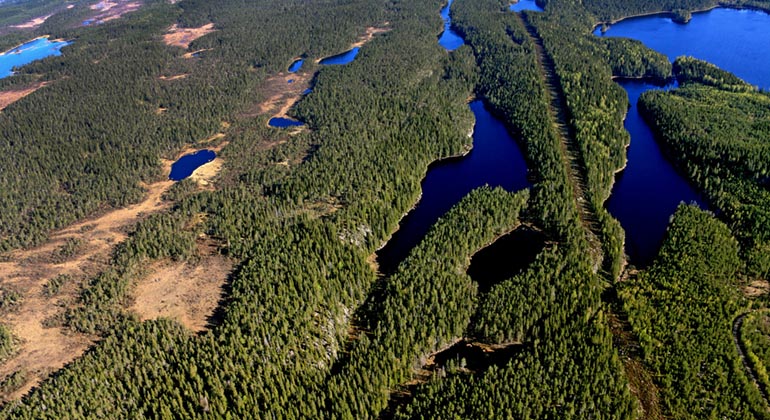
Murstensdalen.
Photo: Bergslagsbild
Murstensdalen, Naturreservat
- Nature reserve
- County: Örebro län
Actions
Description
The Murstensdalen nature reserve is the second largest and most wilderness-like of the nature reserves in Örebro County after Kindla. It is a quiet and untouched wilderness with deep ravines, plateaus with old pine forests, stretches of marshes, ponds and lakes. It is a roadless country where you can often be all to yourself.
Highland area
Murstensdalen is the second largest and most wilderness-like of the nature reserves in Örebro County after Kindla. It is a quiet and untouched wilderness with deep ravines, high plateaus with old pine forests, stretches of marshes, ponds and lakes. It's a roadless land where you can often be left to your own devices. The reserve consists of a high plateau, Mosserudsplatån, which in the east ends in crevice valleys with mountain ridges, the actual Murstensdalen. The highest point in the area is 306 meters above sea level and the lowest about 190 meters. To the west of the area is Lokadalen. The bedrock consists of granite.
In the southwest, the area borders the nature reserve Blecktjärnsskogen and in the south to the nature reserve Djupa dalen
Use of the forest
The forest in Murstensdalen was partly utilized during the heyday of mining from the 17th to 19th centuries. After the mining era, forestry took off. However, the area was considered to have too little timber to be worth extracting, so the forest was left untouched. The reserve has been virtually uninhabited, and only one croft, Karlbo, is known. The forest in the reserve will be allowed to develop freely to become an old natural forest again. However, several of the small young forests will be burned when they reach a suitable age. There are around thirty small and large lakes, ponds and bogs in the area. The lakes are nutrient-poor, and many have been naturally fishless. Three of them have names that refer to this.
Forest fires - important for many species
The forests of Bergslagen have generally been affected by recurrent forest fires. There are clear traces of fires in many places in the reserve. An inventory of the fire history in Murstensdalen shows that when the area was untouched natural forest, large fires occurred about five times a century. From the beginning of the 17th century, the Swedes and the mining industry played a major role in the area, and forest fires increased to about ten per century. Since 1809, there have been no major forest fires in the area. It is a major departure from nature that forest fires produce such species-rich forests. One of the oldest living pines in Murstensdalen sprouted in 1545. The oldest dead pine stump still standing that has been dated sprouted in the 13th century and probably died in the great fire of 1575. The annual rings show what the pine has been through and how many fires have occurred over the centuries in the place where the tree lived.
Species richness in the natural forest
The forest in the reserve grows on poor soil. There are large, sparse and slow-growing pine forests alternating with rocky areas and bogs. To the east, a valley runs in a north-south direction with nutrient-rich soil, and fertile spruce forest grows here. The ground is covered with brushwood, including hemlock and dwarf birch. The rocky areas provide conditions for many different lichens to live. Several unusual fungi live and grow near and on the old or dead trees. A number of specialized bird species thrive in the old coniferous forest. Capercaillie has a very good population in the area, and several breeding sites are known. One of the few pairs of three-toed woodpeckers in the area nests here. It leaves clear traces in the form of notched rings around the spruce trunks, in its hunt for sawdust. At some of the smaller ponds there are, among other things, little grebes and cranes.
Three of the four large predators
Of Sweden's four large predators, three are temporary or permanent guests in the area. The lynx has a strong population here, and the area is occasionally visited by bears and wolves. Fishing is currently carried out in some of the lakes by Karlskoga sport fishing club. They are working to maintain the weak trout population in the area. However, the public is not allowed to fish within the reserve. Hunting is conducted to a normal extent within the reserve.
Explore Murstensdalen in winter
Perhaps the best time to discover Murstensdalen is in winter, when you can easily cross the snow on skis or snowshoes. This way you can get to places where paths and hiking trails do not reach. There are both grouse and capercaillie in the area. If you're lucky, you'll bump into one of them, which will fly away with a terrifying roar. There are shelters and fireplaces in several places in the reserve.
Accessibility
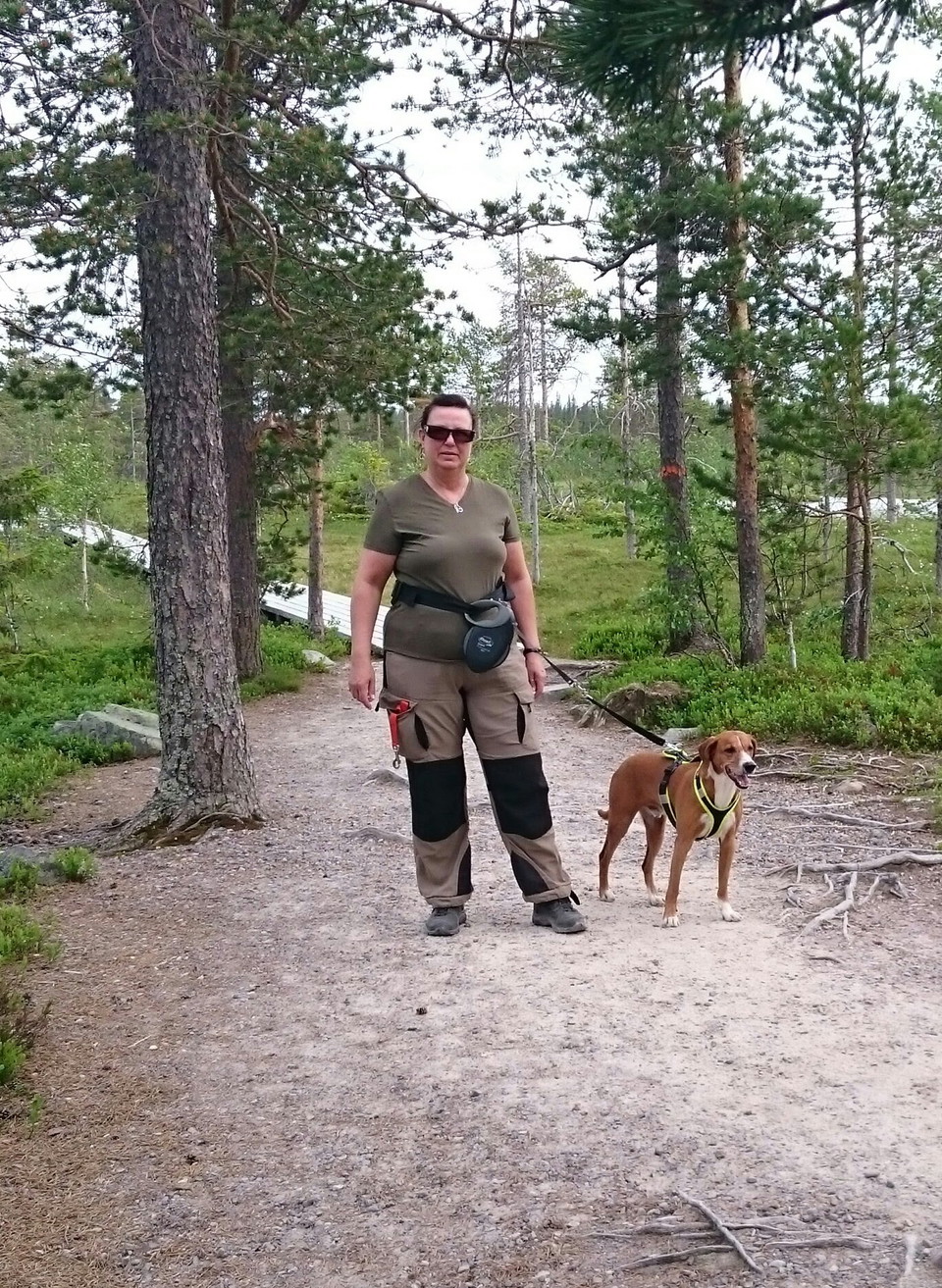
There is a parking lot in the northern part of the area. Two marked circular trails start from it, which are about 5 and 12 kilometers long. The trails are time-consuming and sometimes hilly to walk. Camping is allowed for a maximum of one day at Lake Lången. The reserve has two shelters with fireplaces and another fireplace.
Is there firewood?
Firewood is available at the fire pit. Remember to burn in moderation, so that there is enough wood for future guests. The firewood is replenished regularly, but we cannot guarantee availability at all times. If you want to be sure to be able to make a fire - bring your own firewood. It is not allowed to burn sticks and branches from the forest in the reserve.
Sign interpreted information
Winter excursions in the brick valley
Quiet forests in the Mursten Valley
Activities And Facilities
- Nature reserve
Facts
Municipality: Hällefors
Year established: 2001
Area: 763 hectares
Landowner: Swedish Environmental Protection Agency
Manager: County Administrative Board
Reserve creator: County Administrative Board
Natura 2000: the area is part of the EU's network of protected nature, SE0240034 Murstensdalen
Directions
The nature reserve is located 25 km north of Karlskoga and south of Loka. There are signs from road 205 between Grythyttan and Karlskoga. The parking lot is located in the northern part of the reserve.
Regulations
In the nature reserve it is forbidden to:
- disturb animals and damage plants
- pick flowers, lichens or wood fungi with an unleashed dog; you may, however, pick berries and edible mushrooms
- rock climbing on the slopes
- making fires other than in designated places and with designated wood
- stay overnight other than in a shelter or tent at the rest area near Lake Lången, and then only for one night at a time
- drive a motor vehicle or
- ride a bicycle in the reserve
- put up a board, poster or similar
- organize orientation checks or marked trails
Contact
Email address
Organization logotype
Please be aware that some of these texts have been automatically translated.
I’ve been here 9


I want to go here 16




Questions & Answers
Ask a question to other Naturkartan users.
Reviews
1 review
- 5 :
- 4 :
- 3 :
- 2 :
- 1 :
Users images
No user images yet. Be the first to share!