-
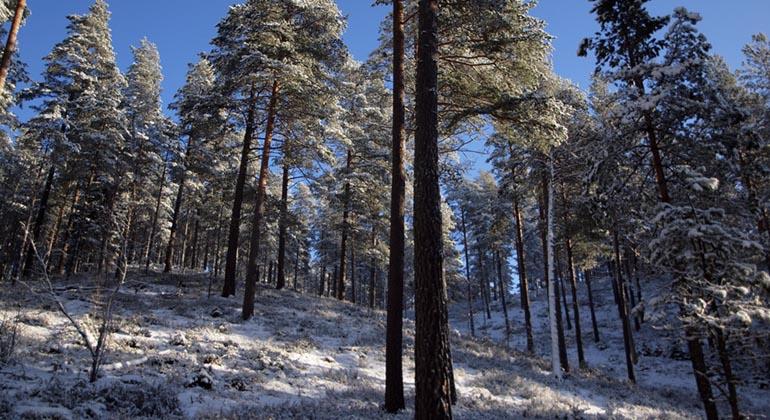
Lidetorpsmon.
Photo: Länsstyrelsen -
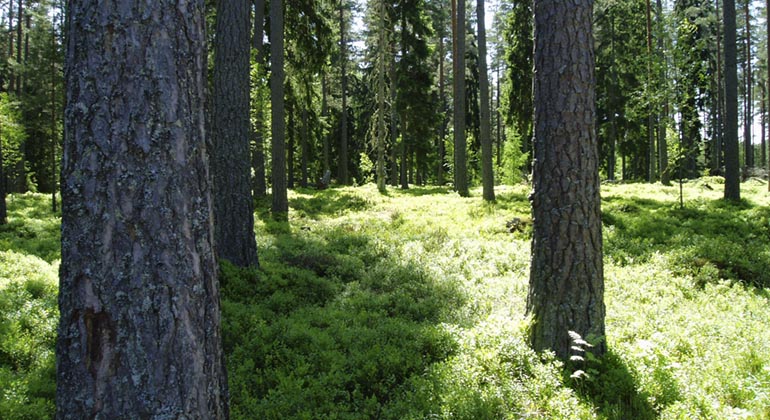
Lidetorpsmon.
Photo: Eva Ekholm-Pehrson -
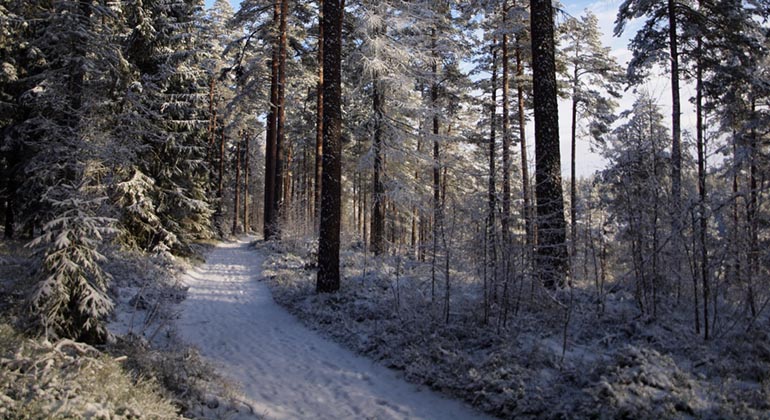
Lidetorpsmon.
Photo: Länsstyrelsen -
Lidetorpsmon.
Photo: Länsstyrelsen -
Lidetorpsmon.
Photo: Länsstyrelsen
Lidetorpsmon, Naturreservat
- Nature reserve
- County: Örebro län
Actions
Description
The Lidetorpsmon nature reserve is part of a pebble ridge, Lokaåsen, which was formed at the end of the last ice age. It is high and mighty here, with a relatively flat eastern slope and a much steeper western slope. At the top of the hill is one of Sweden's largest, deep and dry dead ice pits, Djupa hålet. A marked path leads through the area. There are also two picnic areas. The nature reserve is owned and managed by Degerfors municipality.
Traces from the ice age
The nature reserve consists mainly of Lidetorpsmon, a 40 m high detached ice river deposit within Lokaåsen. Up on the hill there is a 46 meter deep, completely dry dead ice pit - Djupa hålet. Lidetorpsmon is a distinctive ice river deposit and Djupa hålet is one of the deepest and at the same time dry dead ice pits in the country. The first decision did not protect the forest, but by 2018 the pine forest had aged and become interesting from a conservation biology perspective. A supplementary decision now also protected the forest within the nature reserve.
Deep hole ─ a large dead ice pit
Dödisgropen Djupa hålet Djupa hålet is a dead ice pit formed 10,000 years ago, when the last ice sheet began to melt in our area. The edge of the ice remained stationary for a long time here in the Lidetorpsmon area. Large quantities of clay, sand, gravel and stones flowed out of the ice rivers. At the mouth where the ice river met the sea, the ice river material was sorted. The coarsest material sank to the bottom nearest the ice edge and the finer and lighter material was carried a little further out to sea. The deep hole was formed when a large iceberg got stuck right here and was embedded in the advancing ice sheet sediment. As the ice melted, a 46-meter deep pit with steep sides was formed. Most dead ice pits are now lakes, but the Deep Hole is completely dry.
The forest was protected afterwards
The Lidetorpsmon nature reserve was established in 1970 to protect the area's geological values and provide an area for outdoor recreation. The decision did not include any protection for felling the forest. However, the forest was allowed to remain, and after more than 40 years it turned out that the pine forest had also become interesting in terms of its natural values. A new decision was therefore taken in 2018, which also protected the forest.
Soon a real ancient forest
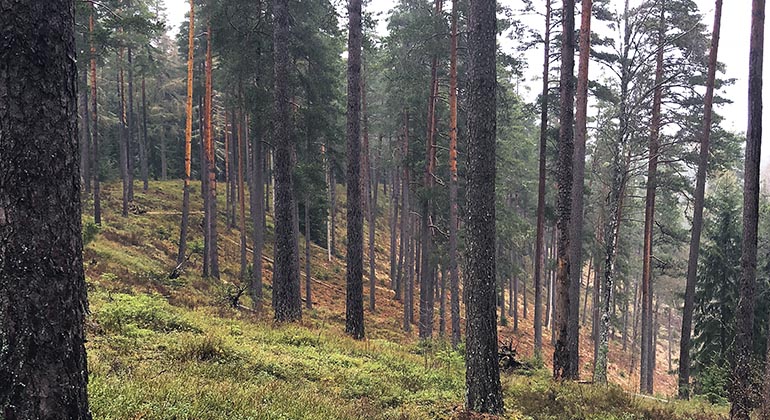
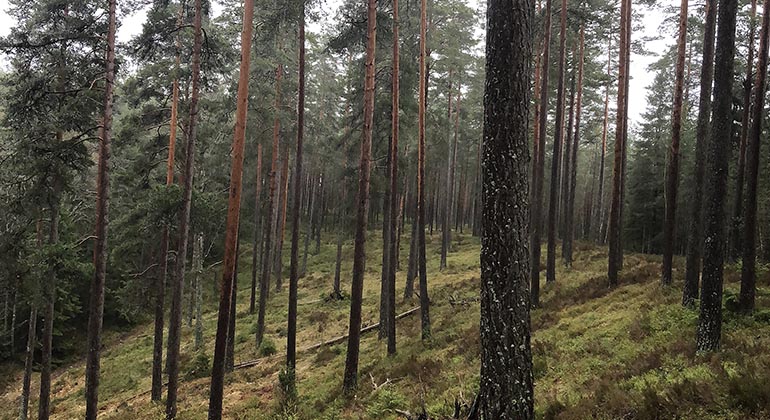
The forest in the reserve is dominated by conifers, mainly pine in the southern and central parts, and in the northern part mostly spruce. There are also a few larch trees. Parts of the reserve's forest have been left unmanaged for many years and are beginning to approach the structure of the natural forest, with many old trees, trees of different ages as well as dying and dead trees. In Djupa hålet, the sparse old pine forest is tall and rough. Within the reserve there are several exciting fungi, such as the cauliflower mushroom, pine shoot and various spider mites. Among the plants we find, among other things, knotweed, green pyrola, pig's root, backvial and cat's foot. The area is also home to a number of threatened and rare forest birds such as the greater and lesser crossbill, green wren, black grouse, nightjar, woodcock, raven, nutcracker and sparrow owl.
Conservation burning
Conservation burning will be carried out in the reserve as a management measure to benefit the natural values of the open pine forest. Among other things, we hope that the rare marsh fritillary will find its way back to the area.
Activities And Facilities
- Nature reserve
Facts
Municipality: Degerfors
Year established: 1970, amended 2018
Area: 83 ha
Landowner: Degerfors municipality
Manager: Degerfors municipality
Reserve creator: County Administrative Board
Natura 2000: the area is part of the EU's network of protected nature, SE0240072 Lidetorpsmon
Directions
Lidetorpsmon is located along road 243 halfway between Degerfors and Åtorp. Signposted from the road.
Regulations
In the nature reserve it is forbidden to:
- destroy or damage fixed natural objects or surface formations
- camping or pitching a caravan
- cycling or driving motorized vehicles other than on roads
- park other than in designated parking lots
- littering
- felling, removing or otherwise damaging living or dead, standing or fallen trees and bushes
- burn wood other than that brought with you or provided by the reserve manager in designated places,
- damage vegetation, e.g. by digging up plants such as rice, grass, herbs, mosses or lichens and fungi,
- collecting plants, animals, lichens or fungi without the permission of the County Administrative Board
- without the permission of the County Administrative Board, put up a permanent board, sign, poster or similar device, or make tracks,
- without the permission of the County Administrative Board, use the area for organized competitions or exercises, camp activities or similar,
- without the permission of the County Administrative Board, carry out scientific or other studies or conduct environmental monitoring that involves marking, collection, trapping or other impact on the natural environment.
But it is permitted to:
- pick flowers, berries and edible mushrooms for your own use, but not protected or red-listed species.
Contact
Email address
Organization logotype
Please be aware that some of these texts have been automatically translated.
I’ve been here 2

I want to go here 3

Questions & Answers
Ask a question to other Naturkartan users.
Reviews
0 reviews
- 5 :
- 4 :
- 3 :
- 2 :
- 1 :
Users images
No user images yet. Be the first to share!