
-
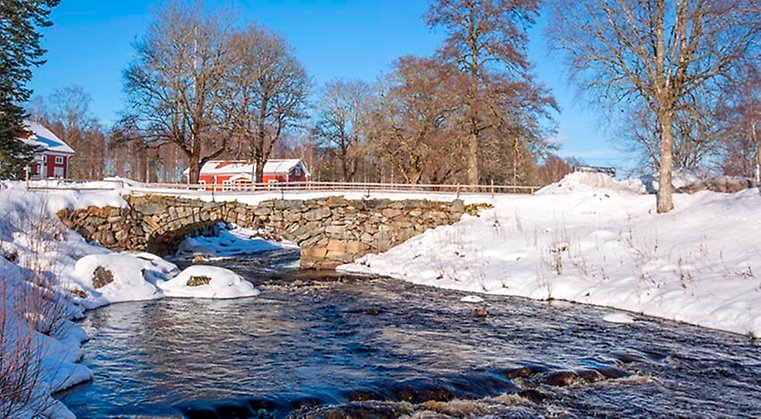
Rastälven vid Grängshyttan.
Photo: Kjell Store
Grängshytteforsarna, Naturreservat
- Nature reserve
- County: Örebro län
Actions
Description
The Grängshytteforsarna nature reserve has the longest stretches of rapids in the county, after Järleån. Here the Rastälven takes off and forms a three kilometer long stretch of rapids before it calms down again. The Rastälven downstream of Grängshyttan is practically unregulated, which is unusual in our county, where over 80 percent of the flowing water is tamed with hydropower plants.
Unregulated stretch of rapids
The Grängshytteforsarna nature reserve has been established to protect an unusually long, unregulated stretch of rapids and its wildlife. The Rastälven river south of Grängshyttan is largely unregulated but has been cleared of stones in connection with older water activities. In order for the endangered river pearl mussel to thrive better in the river, various restoration measures need to be implemented in the watercourse. For example, the removed stone needs to be put back to recreate natural spawning areas for fish and mussels. The Grängshytte rapids are also home to the long-tailed char and the white-breasted starling.
The rapids gave power
It is the power of the rapids that created the village around Grängshyttan. The smelter dates back to at least the middle of the 15th century, from which written sources exist. The smelter was closed in 1888 and demolished. The power of the rushing water has also been used to grind grain in a mill. The old cinder block mill building still stands. A beautiful stone arched bridge leads over the river and several magnificent mountain mansions from the 18th and 19th centuries show the importance of iron for the village.
Rare mussel dependent on the trout
The river pearl mussel is known for its ability to form pearls inside its shell to protect it from grains of sand or small parasites that cause damage. The mussel depends on the trout for reproduction and also requires very good water quality to thrive. Millimeter-sized larvae of the mussel attach themselves as parasites to the gills of the trout and live there for 9-11 months. The tiny larvae then develop into a small, tiny mussel and let go to burrow into the bottom of the stream. After 15-20 years, the mussel is sexually mature and can reproduce. The oldest river pearl mussel found in Sweden was no less than 280 years old. In the past, the river pearl mussel was heavily fished in search of pearls, but the mussel is now protected and fishing has been banned since 1994.
Activities And Facilities
- Nature reserve
Facts
Municipality: Hällefors
Year established: 1998
Area: 5 hectares
Landowners: Grängshyttans byalagssamfällighetsförening and Nora Bergslags Energi AB
Reserve creator: County Administrative Board
Manager: County Administrative Board
Natura 2000: parts of the area are part of the EU's network of protected nature, SE0240073 Grängshytteforsarna
Directions
The reserve is located near central Grängshyttan. Signs and parking are available. No marked trails.
Regulations
In the nature reserve it is forbidden to:
- fishing and taking mussels within the reserve
- digging up or picking flowers and aquatic plants
- collecting mosses and lichens or breaking branches of trees and shrubs
- drive a motor vehicle or motorboat
- start a fire
Contact
Email address
Organization logotype

Please be aware that some of these texts have been automatically translated.
I’ve been here
I want to go here 1

Questions & Answers
Ask a question to other Naturkartan users.
Reviews
0 reviews
- 5 :
- 4 :
- 3 :
- 2 :
- 1 :
Users images
No user images yet. Be the first to share!