
-
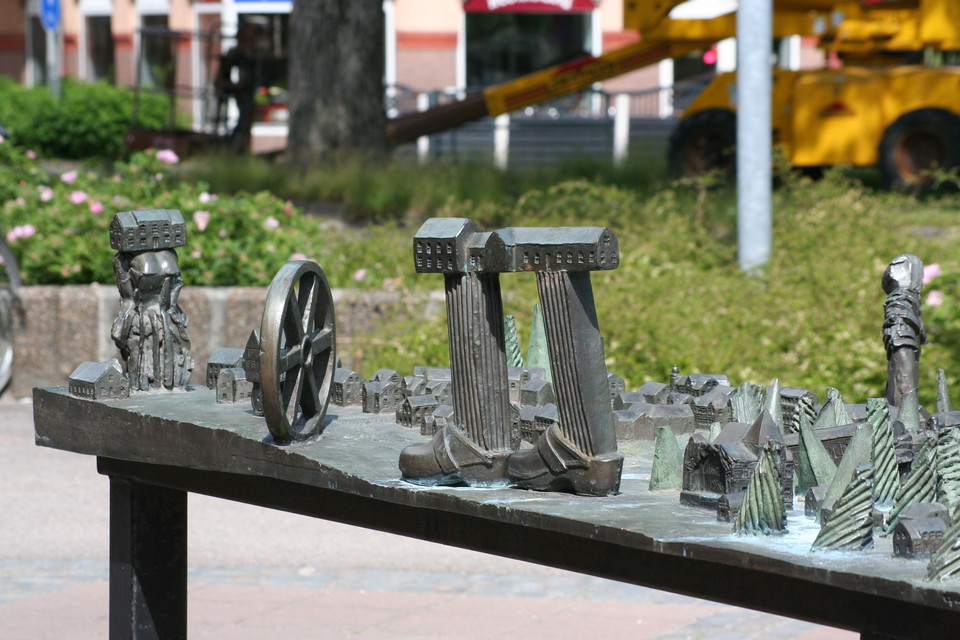
Photo: Foto: Ljungby kommun -
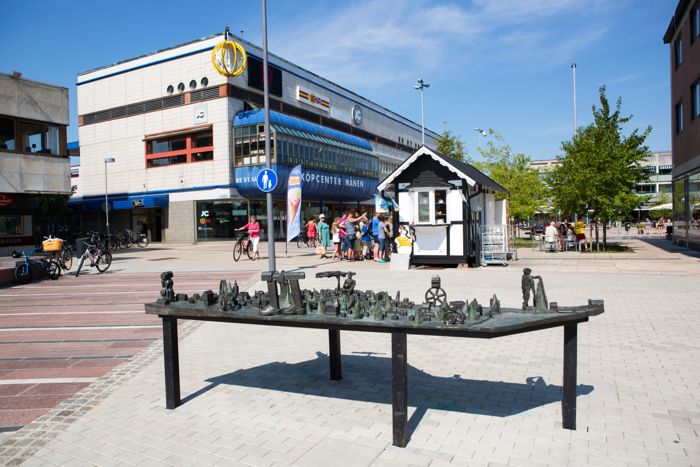
Photo: Foto: Tomas Magnusson
Konstverk Staden
- Art
- County: Kronobergs län
- 6767.35 km away from you
Actions
Description
The artwork “Staden” (translated as “The City”) by artist Lasse Andréasson (1924 - 2007) is located in Ljungby, specifically at Stora Torget (the main square). Created in 1992, this sculpture is a fascinating depiction of Ljungby’s history and its people.
Here are some key elements represented in the sculpture:
- Ljungby Church: The sculpture portrays Ljungby Church, which stands near Storgatan and the main square. The church is an integral part of the town’s history.
- Märta Ljungberg: The woman with a house on her head represents Märta Ljungberg, who ran Gästgivargården (an inn) on the old square during the 1600s. Since no portraits of Märta exist, the inn serves as her symbolic head.
- Garveriet (Tannery): Depicted with wheels underneath, Garveriet represents one of Ljungby’s oldest craft industries. The wheels symbolize the tannery’s relocation to its current position on Ljungby’s old square.
- The Large Wheel: This wheel symbolizes the old wagon wheel factory that supplied wheels across the country.
- Horse Head and Acrobats: These figures represent places where residents could encounter traveling circus performers and horse traders.
- Damen with an Egg: The lady holding an egg represents the lively market square of the past. Unfortunately, many of the buildings she sits on were destroyed during the 1953 fire that ravaged central Ljungby.
- Tellushuset: The distinctive onion-domed Tellushuset is also part of the sculpture.
- The Little Train with Wings: Symbolizing the Skåne Smålands Railway hub, which was closed in the 1960s.
- Köpingsgården: The house wearing slippers has a rich history, serving as a cultural school today. Previously, it was a wooden clog factory, tannery, Ljungby’s first public bathhouse, a meeting place for politicians, a meat inspection bureau, and a library (though not all at once).
- Grand: Depicted as it looked when built in 1905 by the IOGT NTO (Godtemplarna), Grand later became a theater and cinema.
- Cosmorama: The little house rolling on a large wheel represents the Cosmorama cinema, which was demolished in the 1950s. The cinema’s wings were saved from destruction by artists Sven and Sigge Ljungberg and are now displayed at Ljungbergmuseet.
- Kringlan: Symbolizing a dormant sports association formed by young boys in the 1920s, who often held meetings in an older lady’s cottage. Perhaps she offered them kringlor (a type of pastry)?
- The Large Man: Standing at the top of the sculpture, the large man represents a foundry worker, symbolizing Ljungby Stålgjuteri (Ljungby Steel Foundry).
- The Mill and Elverket: Depicted nearby, the mill and Elverket (power station) were significant landmarks in Ljungby’s history1.
This text is AI-generated.
Activities And Facilities
- Art
Contact
Email address
Organization logotype
I’ve been here
I want to go here
Questions & Answers
Ask a question to other Naturkartan users.
Reviews
0 reviews
- 5 :
- 4 :
- 3 :
- 2 :
- 1 :
Users images
No user images yet. Be the first to share!