Vinö kalv, Naturreservat
- Nature reserve
- County: Kalmar län och Öland
Actions
Description
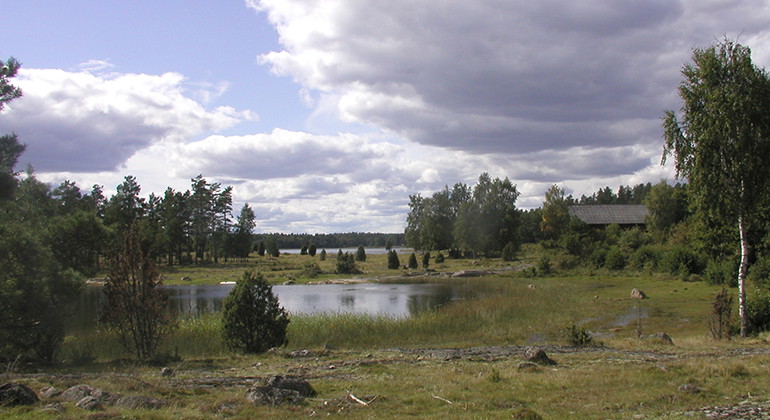
Vinökalv rises from the sea with several peaks up to 30 meters high. The coniferous mountains surround the island's open meadows and pastures, protecting them from the elements. People have lived and worked here since ancient times.
Old archipelago home
Vinökalv has probably been inhabited since the 1400s and 1500s. During these centuries, Sweden's population grew rapidly. Many people therefore sought out the archipelago, which offered good fishing waters and rich pastures and meadows. For a long time, the archipelago population lived from fishing, hunting and herding. It was not until the 19th century that larger fields began to be cultivated.
Flowering pastures
There is no longer any living agriculture on Vinökalv, but the island is still grazed by cattle from a neighboring island. The cattle keep the land open to the delight of plants and animals that want light and sunshine. Examples of some of the plants that benefit from the grazing are buckwheat, sedge and maidenhair.
Old pine trees and insects
Pine is the most common tree on the reserve's sparse rocky areas, although there are also unusually many deciduous trees. Sunlit old pines are valuable for many warmth-loving beetles, including the flower beetle and the rare relict beetle.
Ancient grave
To the east of Vinökalv's village there is a ship's settlement, a Bronze Age grave shaped like a ship. During the Bronze Age, people lived seasonally in the archipelago to hunt and fish. The grave is probably 3,000 years old.
Activities And Facilities
- Nature reserve
Facts
Year of decision: 1971
Area: 139 hectares
Municipality: Västervik
Landowner: Individual
Administrator: Kalmar County Administrative Board
Directions
Vinökalv is located in the inner part of Gudingefjärden, about 11 km northwest of Västervik. The island is separated from the mainland by a strait about 100 meters wide. There is no regular boat traffic to the island, but near Oxhagelyckan on the western side of the reserve, and at Hampskogen on the eastern side, as well as in several places around the island, there are good bathing spots.
Regulations
In the nature reserve you are not allowed:
- Damage or remove fixed natural objects or surface formations.
- Damage or remove growing trees, bushes or plants.
- Pick flowers.
- Hunt, kill, capture or harm wild mammals, birds or their young.
- Remove or damage eggs or nests.
- Deliberately disturbing wildlife.
- Fishing.
- Bringing dogs that are not on a leash.
- Damaging or removing fencing (for example, fences or barriers).
- Camping or putting up a caravan.
- Make a fire.
- Leaving rubbish or littering.
- Disturbing the environment with loud noises such as music, video or radio.
Full regulations
- The public must observe the following within the nature reserve.
It is forbidden to
- destroy or damage fixed natural objects or surface formations
- to damage or remove trees, bushes or plants, including flower picking
- hunting, killing, capturing or injuring wild animals or birds or their young, or appropriating birds' eggs or nests, or taking any other action likely to disturb wildlife
- to fish
- to carry an unleashed dog
- damaging or removing existing fencing
- camping or pitching a caravan
- setting fire
- cutting down with sheet metal, plastic, paper, waste or the like; and
- using radios, gramophones, tape recorders and the like in a disruptive manner.
Contact
Email address
Per Markus Jönsson
Organization logotype
Please be aware that some of these texts have been automatically translated.
I’ve been here
I want to go here
Questions & Answers
Ask a question to other Naturkartan users.
Reviews
0 reviews
- 5 :
- 4 :
- 3 :
- 2 :
- 1 :
Users images
No user images yet. Be the first to share!