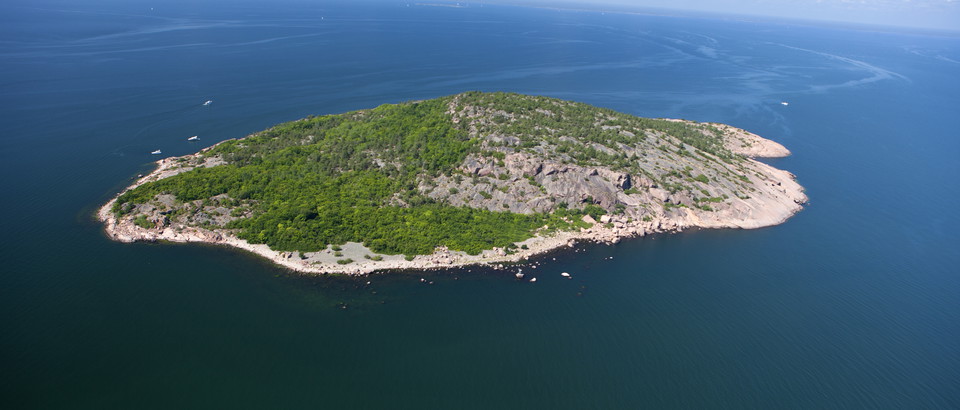

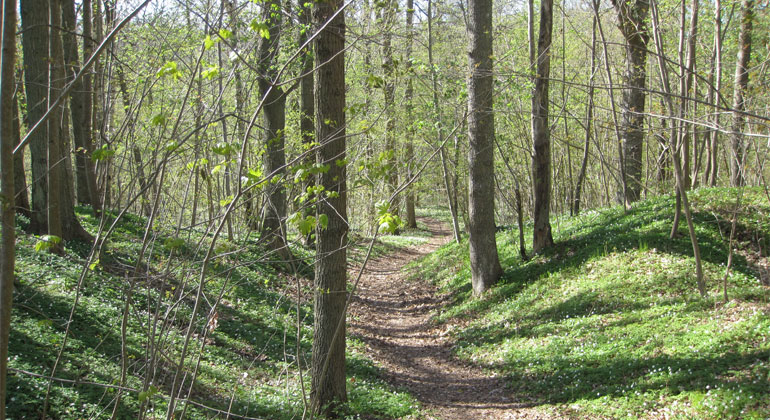
Rälla-Ekerum is a popular nature area that is appreciated by many, from walkers and dog owners to berry and mushroom pickers. Plants and animals also thrive here. The nature reserve's delicate deciduous forests, lush swamp forests, sandy pine forests and aquatic environments are home to a diversity of species.
The broadleaf forests in Rälla-Ekerum are a remnant of a five-mile long deciduous forest belt that once stretched from Borgholm down to Kastlösa. The forest was called Strandskogen and was used as pasture for hundreds of years. The pasture near the shore belonged to the king's hunting grounds until the 19th century, just like all the outlying land on Öland. In 1723, King Fredrik planted some 50 wild boars in the area. Even today, there are traces of what are believed to be trapping pits where the boars were forced down during the hunt.
In Rälla-Ekerum's broadleaf forests there are plenty of large, hollow oaks. These trees are vital for a wide range of birds, bats, insects, lichens and fungi. Many of the species are rare and also live in the nearby nature reserve. But in Halltorp, the oaks are much older, and younger trees are missing. The idea is that the oaks here in Rälla-Ekerum will replace Halltorp's old oaks in the future.
The reserve's lush swamp forests are home to many mosses, fungi and plants. Beautiful pale green downy moss grows here, as well as the orchid, the helleborine, which lacks chlorophyll and is therefore brown. In the fall, the fragrant red-yellow trumpet mushroom appears in the thick moss mats.
In the middle of the reserve, a 25 meter high cliff rises from north to south. The cliff marks the western edge of Rällafältet or Rälla tall, one of Öland's largest ice river deposits. The sandy glacial river material was deposited in front of the melting ice edge at the end of the last ice age. In some places the sand has blown together to form sand dunes.
On the dry, lean sandy soils of the reserve, pine is a characteristic species. Some of the pines are very old and have been listed since the 1920s. The pine tick and the relict buck are examples of species that need these old pines to survive. Adjacent to the golf course there are also open sand heaths, where bees and other insects thrive. There are plenty of flowers here that provide insects with nectar and pollen. And in the sun-warmed sandy areas, bees can dig out their nests.
Rälla-Ekerum also protects shallow marine areas with extensive eelgrass beds. These underwater meadows are where fish go to spawn. The meadows are also valuable for young fish, as they provide a protective environment that is also rich in food.
Decision year: 2020
Area: 603 hectares of which 251 hectares are land
Municipality: Borgholm
Landowners: Individuals
Manager: Kalmar County Administrative Board
The reserve is located on the western side of central Öland at the height of Rälla village. If you go here by car, there is parking at the Halltorps hage nature reserve, which connects to Rälla-Ekerum. You can also park at the entrance to Rälla farm in the eastern part of the reserve, at the memorial grove and at the windmill on Ljungheden.By bus: Bus stops are located along road 136, including in Rälla. Contact Kalmar länstrafik for timetables.
In the nature reserve you are not allowed:
If you have received permission from the County Administrative Board, you may:
C. Regulations according to Chapter 7, Section 30 of the Environmental Code on the right to travel and stay and on order in general within the nature reserve.
It is forbidden to enter the reserve:
It is forbidden to do so without the permission of the County Administrative Board:
Per Markus Jönsson
Please be aware that some of these texts have been automatically translated.

Ask a question to other Naturkartan users.
0 reviews
No user images yet. Be the first to share!