
-
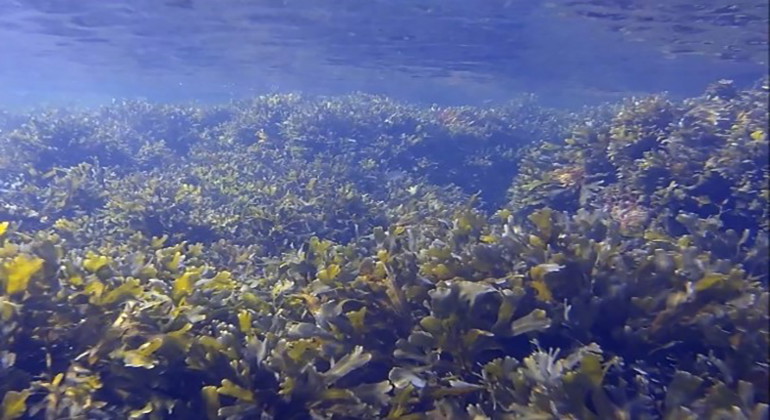
Photo: Magnus Danbolt
Ottenby rev, Naturreservat
- Nature reserve
- County: Kalmar län och Öland
Actions
Description
Beneath the surface at the southern tip of Öland lies a rich underwater world. Here you’ll find dense kelp forests, mussel beds, and lush eelgrass meadows. The vegetation-covered seabeds serve as ideal nurseries for fish. For seabirds and seals, the reef offers a well-stocked pantry. The reserve also protects shallow coves and sandbars that are highly valuable to wading birds.
Protection of Valuable Marine Environments
The Ottenby Reef consists of shallow marine environments surrounding Öland’s southern tip. Active
fishing in the sea off the tip has largely not taken place since the Middle Ages. Since then, human impact on the local marine environment has been minimal. This makes the Ottenby Reef a healthy ecosystem rich in everything from microscopic algae to
harbor seals!
Algae in brown, green, and red
The limestone plateau on which Ottenby rests continues southward underwater. The reef, nearly a mile long, makes up large parts of the reserve’s seabed. The reef is essential for algae to grow here, as they need a hard surface to attach to. The seaweed forests are lush and dense down to a depth of 10 meters, which is unique to both Kalmar County and its neighboring counties. This is because the water is so clear that light penetrates deep into the water. Seaweed needs light, just like plants on land.
Living Reefs
Large quantities of blue mussels grow on and around the reef. These mussel beds are called biogenic reefs—that is, reefs built up by living organisms. Like the limestone slabs, the mussels provide a place where algae can grow. The nooks and crannies of the mussel beds
are also perfect homes for small marine animals.
Sandbars and lagoons
The reserve contains several shallow bays and sandbars. The largest, Sandviksreveln, lies along the eastern side of Öland’s southern headland. The sandbar is composed of sand and
is constantly changing due to flowing water and storms. It is now so long that a lagoon has formed between the sandbar and the headland’s shores. In the lagoon’s sheltered waters, seagrass beds—primarily eelgrass—spread out.
Small Invertebrates, Fish, and Seals
The reserve’s underwater beds are highly valuable habitats. They are home to a multitude of small invertebrates such as sea shrimp, pond snails, and Arctic isopods. For small fish, they offer a sheltered environment where they can hide and find food. A total of fourteen different fish species have been recorded in the reserve. The abundance of fish attracts harbor seals and gray seals, which can take a rest on one of the islets or skerries after dinner.
Food for Birds
The reserve’s rich marine flora and fauna attract many birds. The lagoon offers plenty of food for wading birds, just a stone’s throw from their nesting sites on Sandviksreveln. Even migratory birds stop by the lagoon for a meal and a rest. Mussel beds in deeper waters are important for seabirds such as eiders, velvet scoters, and long-tailed ducks.
Activities And Facilities
- Nature reserve
Facts
Year of decision: 2020
Area: 12,766 hectares
Municipality: Mörbylånga Municipality
Landowners: The Swedish State, represented by the Swedish Environmental Protection Agency, and Allmänt vatten
Administrator: Kalmar County Administrative Board
Directions
The nature reserve is entirely marine and borders the waters of the Ottenby Nature Reserve on the southern tip of Öland. It is accessible only by boat. The nearest parking is in Ottenby.
Regulations
In the nature reserve, you must not:
- Intentionally disturb wildlife.
- Moor or anchor a boat in the same spot for more than 24 hours.
- Fly or land an aircraft.
- Damage the seabed, land, boulders, or reefs.
- Leave trash behind or litter.
- Discharge sewage from land or vessels.
- Hunt.
If you have obtained a permit from the County Administrative Board, you may:
- Use the area for competitions, exercises, or other events.
- Cut trails or set up orienteering checkpoints.
- Erect signs, posters, or similar devices, or make inscriptions.
- Place buoys, snorkeling lines, or similar items.
Complete Regulations
C. Regulations pursuant to Chapter 7, Section 30 of the Environmental Code regarding the right to travel and stay, as well as general order within the nature reserve.
It is prohibited within the reserve to:
- Disturb wildlife.
- Moor or anchor a boat in the same place for more than 24 hours.
- Take off or land with a manned or unmanned aircraft.
- Above or below water, to dig ditches, build dams, dredge, excavate, fill in, dump, blast, drill, fill with soil, or otherwise damage the seabed, land, boulders, or reefs.
- Store, dump, or fill in water, on the seabed, or on land.
- Conduct activities using equipment that disturbs or otherwise damages the seabed or aquatic plant and animal communities within the water area.
- Discharge untreated wastewater or tank washwater into water from land or from vessels.
- Hunt
It is prohibited without a permit from the County Administrative Board to:
- Hold sports competitions or sporting events.
- Place buoys, signs, boards, posters, works of art, carvings, markings, snorkeling lines, or similar items.
Contact
Email address
Per Markus Jönsson
Organization logotype
Please be aware that some of these texts have been automatically translated.
I’ve been here 3

I want to go here
Questions & Answers
Ask a question to other Naturkartan users.
Reviews
0 reviews
- 5 :
- 4 :
- 3 :
- 2 :
- 1 :
Users images
No user images yet. Be the first to share!