Mörbylånga - Öland
Welcome to the world heritage of southern Öland!

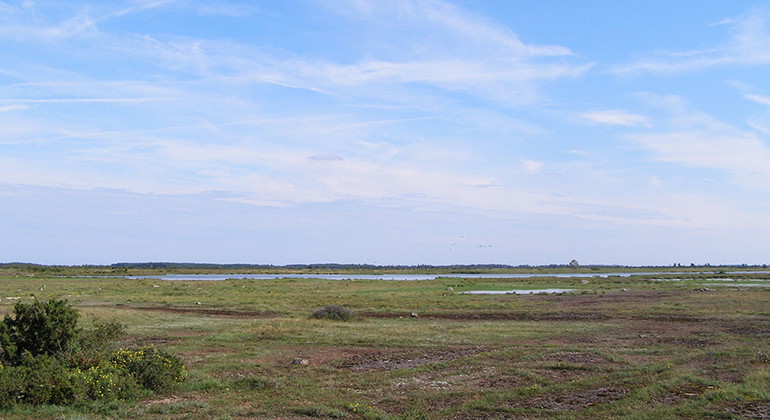
This part of Stora Alvaret is open, characterized by thin soils and millennia of grazing. In the eastern part of the area is Möckelmossen, well known for its rich bird and insect life.
The area north of the road has periodically been ungrazed, which has allowed the juniper bushes to spread. The former grazing between horses, cattle and sheep has created conditions for a great diversity of species. There is an abundance of rock crab, small sand lily, mountain carnation, woolly ranunculus and soapwort. In early summer there are some of Öland's best orchid habitats here. But there are also a number of rare species here, such as honeyflower and small thistle. Alvarmalört and ölandssolvända are examples of endemic species, i.e. plants that only occur on Öland.
The alvar south of the road is well grazed by sheep. This is how most of Stora Alvaret looked until the 1950s. The vegetation is dominated by thin soils of weathering gravel, known as sheep fescue alvar, but there are also rocky areas and wet meadows. The sheep's fescue, and the bow fescue unique to Öland, are abundant. Other species include axveronica, field bindweed, cat's-foot, almond blossom, red clover and St. John's wort.
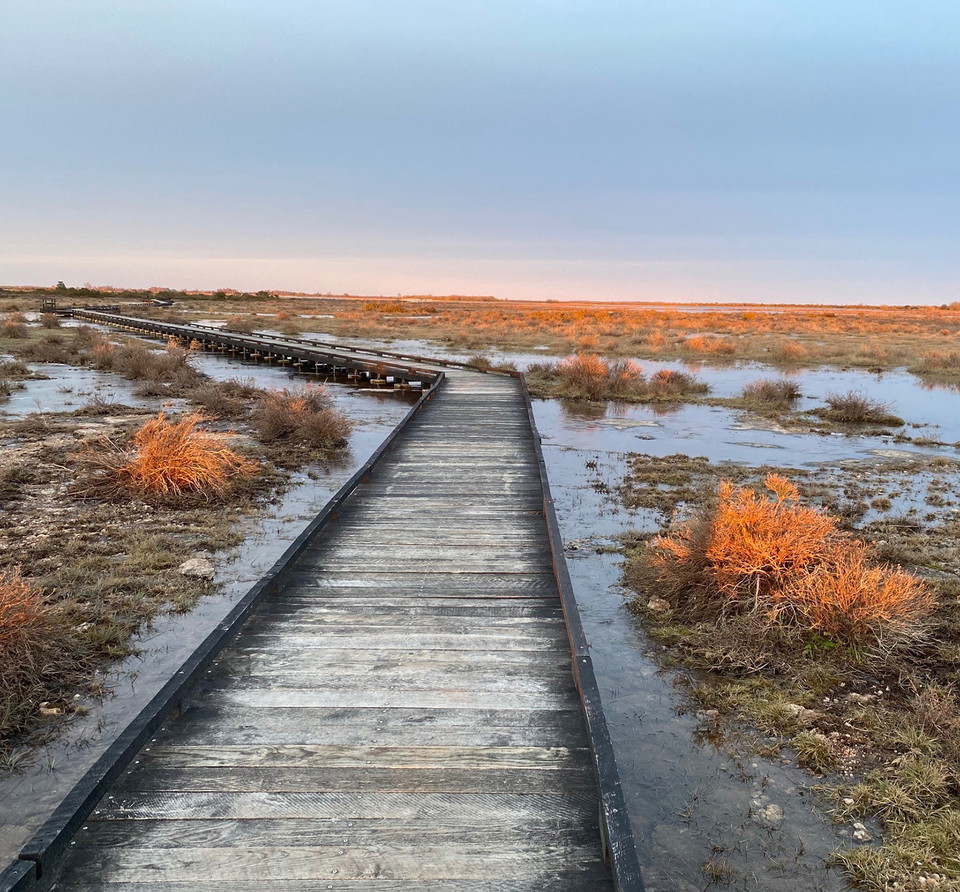
Möckelmossen is Stora Alvaret's largest lake and is home to a rich bird population. The heath pipit with its melancholy whistle is found here. Skylark, curlew, shoveler and pintail are common, and there is a good chance of seeing meadow hawk. In September and October, thousands of cranes come to roost and in winter it is not unusual to see white-tailed eagles in the area. The area around Möckelmossen is also an interesting place for insects. There is a rich butterfly population here, including a couple of endemic small butterfly species.
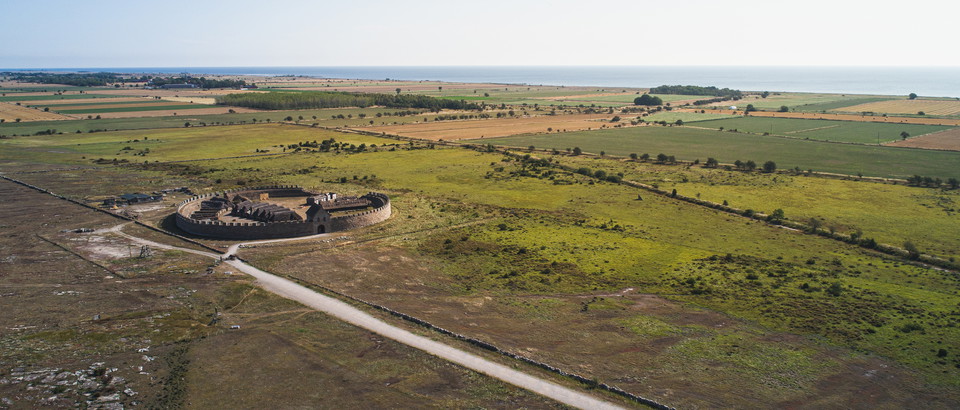
There are remains from ancient times in the area. An exciting example of these is located a few hundred meters south of the alvar road, in the eastern part of the area. Here are the remains of five houses from the Iron Age.
The agricultural landscape of Southern Öland is included on the UNESCO World Heritage List. The World Heritage Site covers the entire landscape with villages, fields, lakes and Stora Alvaret.
Stora Alvaret has been characterized by grazing for several thousand years and the purpose of the nature reserves here is to maintain the unique grazing-dependent cultural landscape, vegetation types that are representative of alvar land and to benefit both the typical and the rare plant and animal species that live in these environments. The aim is also to preserve and make visible Stora Alvaret's cultural and historical remains and to facilitate the public's opportunities to experience its natural and cultural values.
Decision year: Gynge 1997 and Mysinge 1992 Area: Gynge 922 hectares, Mysinge 331 hectares Municipality: Mörbylånga Landowner: Individual Administrator: Kalmar County Administrative Board
Turn east in Resmo, the rest area is about 5 km out on the alvar along the road. The rest area at Möckelmossen is a good starting point for visits to Gynge-Mysinge. There is parking and a toilet here and it is easy to get out onto the alvar and to Möckelmossen.
In Mysinge nature reserve you are not allowed:
Per Markus Jönsson
Please be aware that some of these texts have been automatically translated.

Ask a question to other Naturkartan users.
0 reviews
No user images yet. Be the first to share!