Mörbylånga - Öland
Welcome to the world heritage of southern Öland!
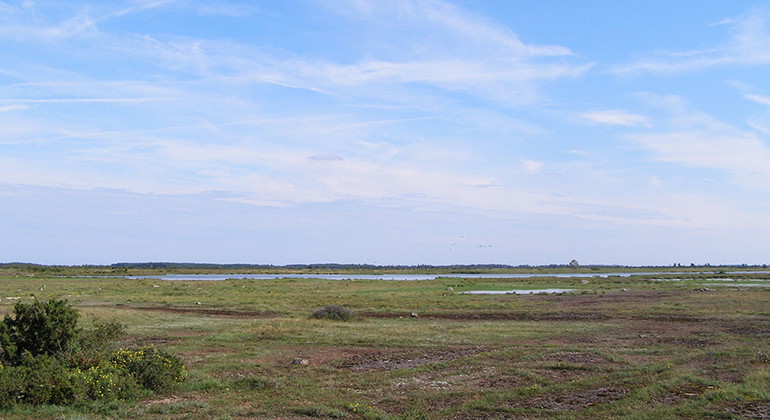
The Gynge and Mysinge nature reserves offer magnificent views of the open alvar landscape. Many of Stora Alvaret's typical plants and animals live here. You are welcome to discover magnificent orchid fields, ancient crustaceans and a teeming bird life.
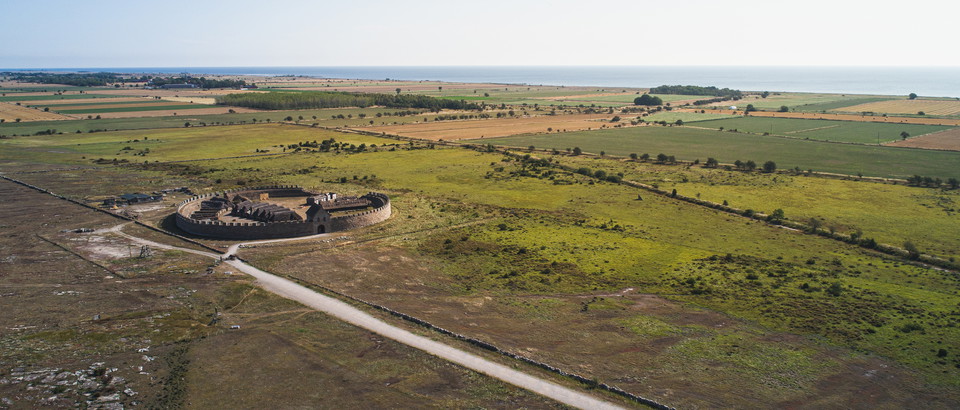
In the eastern part of the Mysinge reserve there are the foundations of a farm. The farm is one of around fifty that were established on the Alvar during the Iron Age. When archaeologists excavated the foundations, they found the bones of cattle, horses, sheep, goats and pigs. The finds tell us that the Iron Age islanders practiced cattle herding but also modest agriculture.
So grazing animals have been grazing on Stora Alvaret for thousands of years. The grazing, combined with limestone-rich bedrock, has created a very special environment with peculiar plant life. In the Gynge and Mysinge reserves you can see many of the herbs that are typical of the alvar - rock crab, small sand lily, mountain carnation and soapwort. Some of them, such as alvar wormwood and island sunflower, are only found on the island's alvar.
If you want to feast on orchids, you've come to the right place. North of the road in the Gyngereservatet, the alvar is colored in yellow-white and pink in May, when lots of orchids Adam and Eve and Saint Peter's keys bloom. Later in the season, you can find honey flowers in the wetlands and purple coneflowers in the alvar.
Möckelmossen is the largest lake in Stora Alvaret. For many years there were no grazing animals around the lake and the land became overgrown, causing many birds to disappear from the area. At the end of the 1990s, bushes and undergrowth were cleared away and cattle were once again released to graze. The restoration has paid off. For example, a colony of black-headed gulls has returned. Greater sandpipers and redshanks are nesting in greater numbers than before. In early fall, thousands of cranes rest around the lake, and in winter you have a good chance of seeing white-tailed eagles.
The alvar is home to a rich diversity of bugs. Experiencing this diversity requires a little patience and attention to the ground. The Alvarstylt fly is the only one in the world to be found on the island's alvars. During the summer, it runs on long legs over the rocks in search of its favorite food, mites. The endangered horseshoe crab is an ancient crustacean that can grow up to 11 centimeters in size, including the spat. It lives in fishless, sun-exposed small waters that dry up during the summer.
A trail leads from the parking lot to Möckelmossen and the viewing platform. The trail is reinforced with both a wooden footbridge and graveled sections to increase accessibility. The viewing platform is equipped with a ramp and picnic table.
At Möckelmossen's parking lot and rest area there is a toilet with a ramp, a picnic table and a grill for burning firewood. At the information point in the parking lot you can read more about the reserves, southern Öland's trails and outdoor life. You can also learn more about the World Heritage Site of Southern Öland's cultivated landscape and about the uniqueness of Stora Alvaret's geology, history and natural values.
Decision year: Gynge 1997 and Mysinge 1992
Area: Gynge 922 hectares, Mysinge 331 hectares
Municipality: Mörbylånga
Landowner: Individual
Administrator: Kalmar County Administrative Board
The reserves are located within the World Heritage Site of Southern Öland's cultivated landscape
Turn east in Resmo, the rest area is about 5 km out on the alvar along the road. The rest area at Möckelmossen is a good starting point for visits to Gynge-Mysinge. There is parking and a toilet here and it is easy to get out onto the alvar and to Möckelmossen.
In Gynge nature reserve you are not allowed:
After consultation with the County Administrative Board, you may:
In Mysinge nature reserve you may not:
C. Regulations according to Chapter 7, Section 30 of the Environmental Code on the right to travel and stay in the reserve and on order in general.
Within the area it is forbidden to
Investigations or research carried out in consultation with the county administrative board may be exempted from C5, C7 and C8.
C. Regulations under Section 10 of the Nature Conservation Act on what the public must observe in the nature conservation area.
Within the area it is forbidden to:
Per Markus Jönsson
Please be aware that some of these texts have been automatically translated.

Ask a question to other Naturkartan users.
0 reviews
No user images yet. Be the first to share!