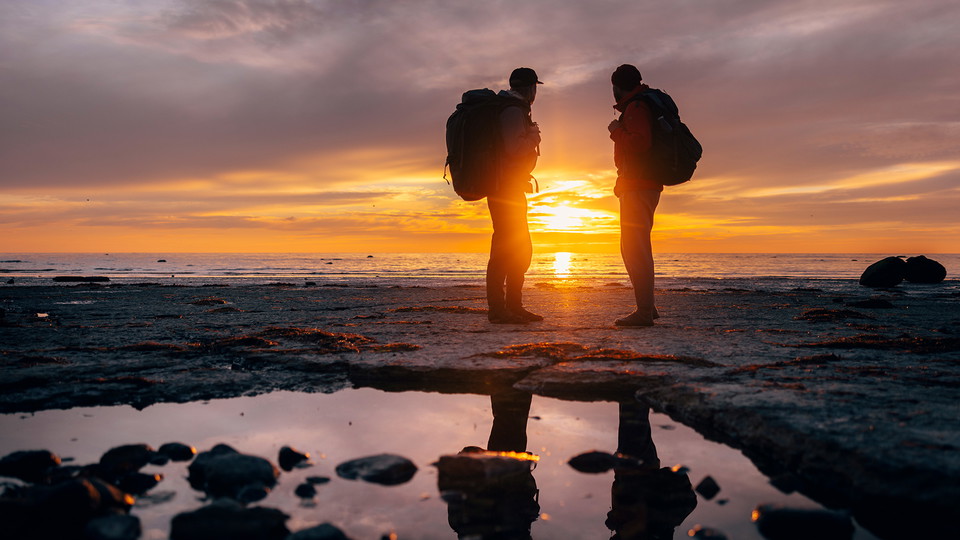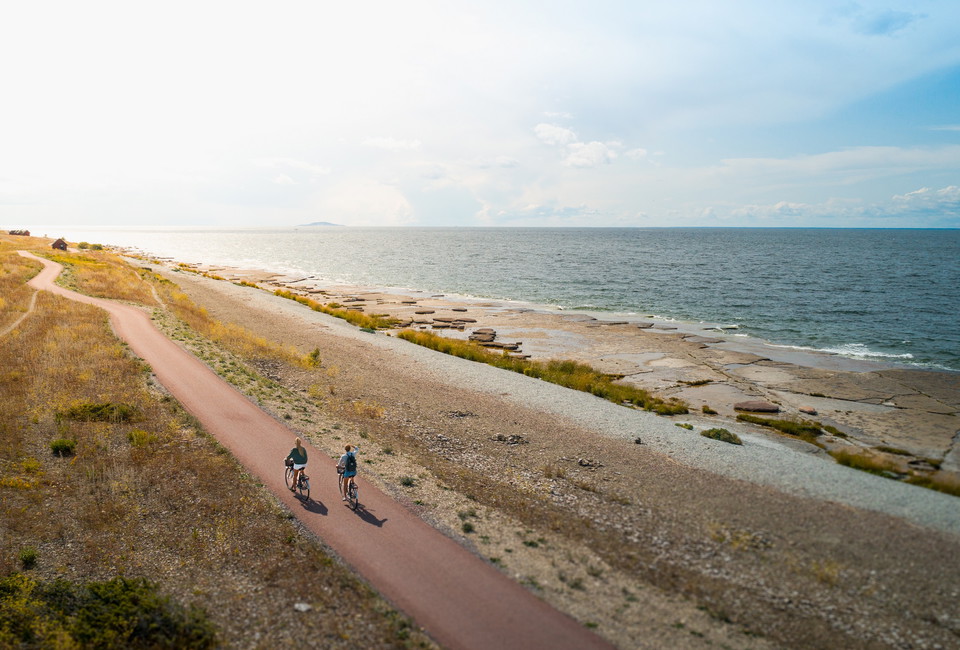
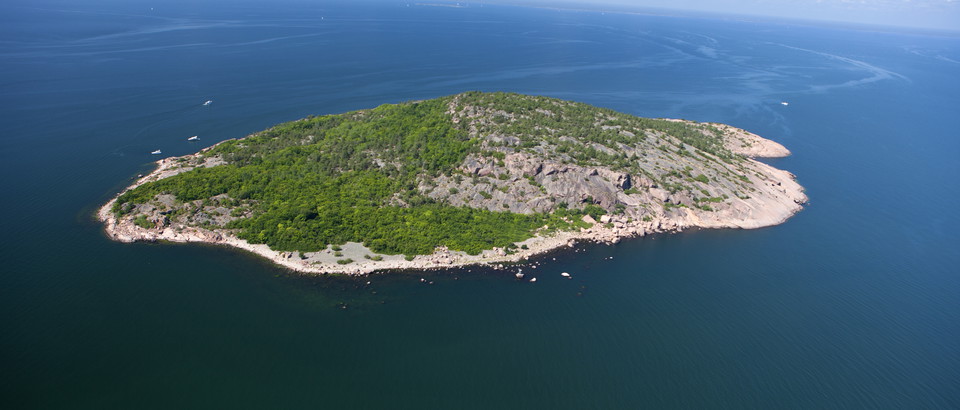

In Borga hage, also known as Slottsskogen, you can stroll through lush deciduous forest, past flowering meadows and along the sea. An environment worth preserving, right? But not just for our sake. It's also because the reserve is home to an unusually large number of rare fungi, beetles and plants.
Silver violet, eelgrass, false devil's mushroom, long-legged frog and red-legged eyebug - these are the names of Borga Hage's wealth. The fact that more than a hundred rare species have been recorded shows an extraordinary diversity. Some belong in the deciduous forest with its old and dead trees. Others in the open meadows and marshes. And then there are the species that live below the surface, in the sea.
A few hundred years ago, this part of the coast looked different. From Färjestaden in the south to Borgholm in the north, deciduous forests spread out. The forest was bright and full of clearings, because animals grazed here. There were also deciduous meadows, where the trees were even sparser. Over time, the landscape has changed, land has been cultivated and built on. But in some places, like here in Borga hage, it is still possible to experience the coastal broadleaf forest.
Large parts of Borga hage are now home to lush broadleaf forest with plenty of oak and hazel. But the area has a history as a wooded pasture, stretching back to at least the 16th century. For the last 100-150 years, the land has not been grazed. As a result, the forest has become dense and in some places almost impenetrable. But that is about to change!
The reserve is home to many species that have had a hard time as the forest has become denser. The oak needs a lot of light to grow and age. Several of the reserve's exclusive fungi can only live in sun-warmed places. And there are beetles that live in sunlit branches and trunks. This is why grazing animals are once again in the forest, and bushes and shrubs are cleared when necessary. But parts of the forest are left to fend for themselves. After all, the species that prefer the dense forest should also have somewhere to go!
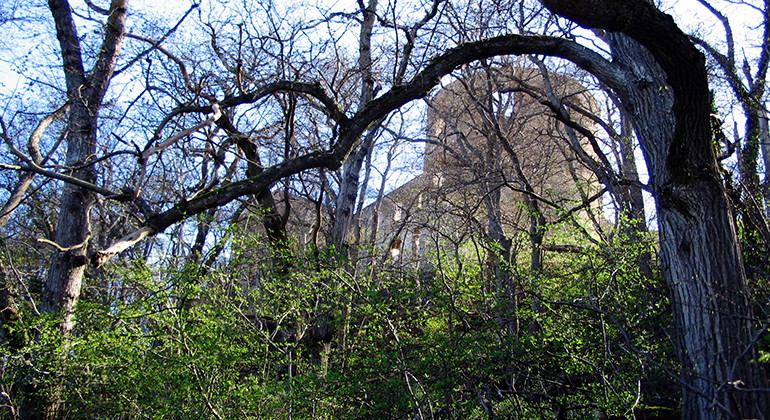
The slope up to the castle ruins has changed shape, from a lush deciduous forest to a naked slope with tree skeletons. Is it a storm that has arrived? No, it's actually Dutch elm disease that has caused the mess as it has killed all the elms. Dutch elm disease is caused by a fungus that stops the transportation of water and nutrients in the elms. You could say that the trees are slowly being strangled.
How did the fungus get here, to the elms on the slope? It got a free ride on the elm splinter borer, a half-centimeter long beetle that inadvertently carries the fungal spores. As it flies from tree to tree, it brings the fungal disease with it.
There is no cure for Dutch elm disease. So the fate of elms, both here and in the rest of the country, looks very bleak. Some of the elms here in Slottsskogen are still alive, but there is a high risk that these trees will also be affected. New elms will eventually sprout, but elm disease will probably affect them too.
The transformation that has taken place here on the slope is dramatic. But it is nature that has taken its course. And it will continue to do so. Elderberry, hawthorn and hazel have already sprouted on the sunny slope. With each passing year, new trees and shrubs will appear. Who will win the race for space and light on the slope remains to be seen.
The dead elms have been left here for a reason. High stumps and lying trunks are often sought-after homes and larders for a range of organisms. Take a closer look at the wood. Perhaps it has been chipped by a hungry woodpecker looking for wood-boring beetle larvae. If the bark has fallen off, the beautiful patterns left by the larvae will be revealed. If you find small round holes in the wood, these are hatching holes where the adult beetles have gnawed their way out of the wood.
Borga hage was part of the LIFE project Bridging the gap 2016-2022. Follow the link here to read more about the project.
LIFE Bridging the gap Link to another website, opens in new window
Year of decision: 1932
Area: 163 hectares of which 108 hectares is land
Municipality: Borgholm
Landowners: Borgholm municipality and the National Property Board
Administrator: Kalmar County Administrative Board
Borga hage borders Solliden and the castle ruins. From road 136 you turn off to the castle ruins just south of Borgholm. It is also possible to enter the reserve from the north, from Borgholm along the beach road. There are parking lots at Borgholm sports ground, at Solliden and Kaffetorpet and at Borgholm Castle.
In the nature reserve you are not allowed:
After consultation with the County Administrative Board, you may:
If you have received permission from the County Administrative Board, you may:
C. Regulations according to Chapter 7, Section 30 of the Environmental Code on the right to travel and stay in the reserve and on order in general
It is forbidden within the reserve
Regulations C1 and C5 do not apply to owners and holders of special rights to property.
Regulation C1 does not apply to authorized motor vehicle traffic on Strandvägen between Borgholm and Solliden's northwestern border.
Per Markus Jönsson

Please be aware that some of these texts have been automatically translated.

Ask a question to other Naturkartan users.
0 reviews
No user images yet. Be the first to share!