
You are in one of Sweden's largest areas of drifting sand. In the 19th century, coniferous forest was planted here to bind the drifting sand that choked the farmers' crops. Today, the forest is home to a wide range of plants and animals that are linked to old trees and sandy environments.
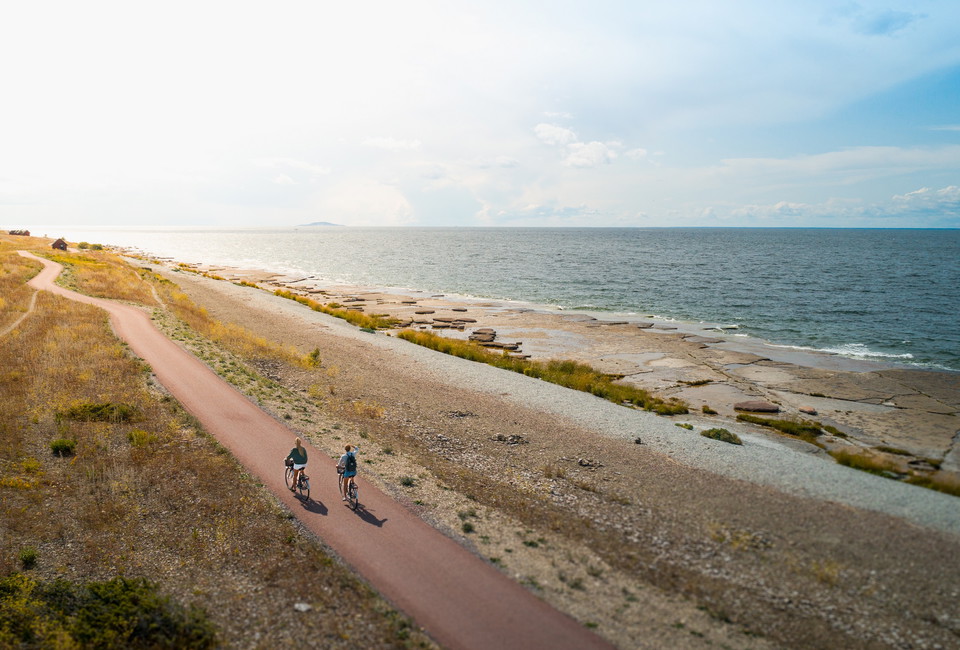
The sandy environments of the Böda coast were formed after the last ice age. The sand comes from both land and the Baltic Sea and has been transported here by wind and waves. In the eastern parts of the reserve there is a flying sand field with high sand dunes. The dunes run parallel to the road that runs through the reserve and between the dunes are small, elongated marshes. To the west of the road, the sand field turns into calcareous moraine soils.
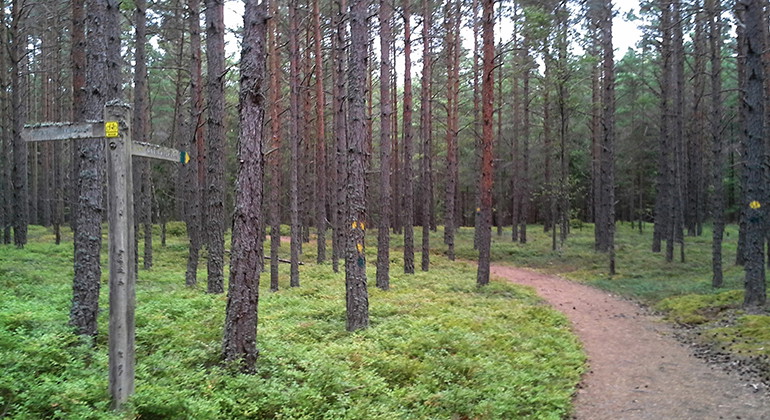
The reserve is dominated by older coniferous forests. Some of the forest was planted in the 1800s to prevent the sand from escaping. So in addition to pine and spruce, you may also come across non-native species such as thuja, Douglas fir and weymouth pine. Oak, maple, beech, yew and hazel also grow here and there.
The forests of Böda slope are rich in plant and animal life. The nightjar thrives in the sparse forest, where it can hunt insects in the glades at night. Other birds in the area include the osprey and the robin. The blue-footed sponge is one of several unusual fungi that grow in the calcareous soils of the older coniferous forest. Rare lichens such as ring lichen and wire lichen grow on old trees in damp conditions.
Böda slopes is a popular area for outdoor activities. There are opportunities for hiking along the Böda Trail, which runs through the reserve area, or on one of the smaller trails and jogging tracks. It is close to the sandy beaches of the Böda coast and there are plenty of blueberries among the dunes.
Year of decision: 2000
Area: 179.5 hectares
Municipality: Borgholm
Landowners: Sveaskog AB and individuals
Administrator: Kalmar County Administrative Board
Immediately north of Böda village. Parking lot and information board are on the east side, opposite the old sawmill.
In the nature reserve you are not allowed:
After consultation with the County Administrative Board, you may:
If you have received permission from the County Administrative Board, you may:
C. Regulations according to Chapter 7, Section 30 of the Environmental Code on the right to travel and stay in the reserve and on order in general
In addition to prohibitions and regulations in other legislation, it is prohibited to
Per Markus Jönsson

Please be aware that some of these texts have been automatically translated.


Ask a question to other Naturkartan users.
0 reviews
No user images yet. Be the first to share!