
Fallet, järnåldersgård
- Archaeological
- County: Gotlands län
- 6959.84 km away from you
Actions
Description
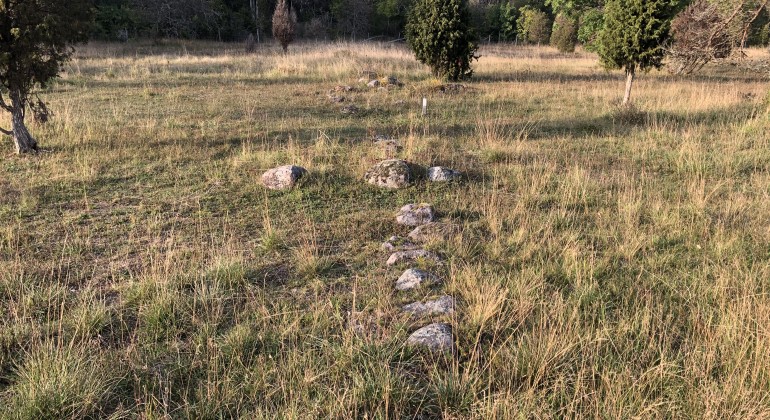
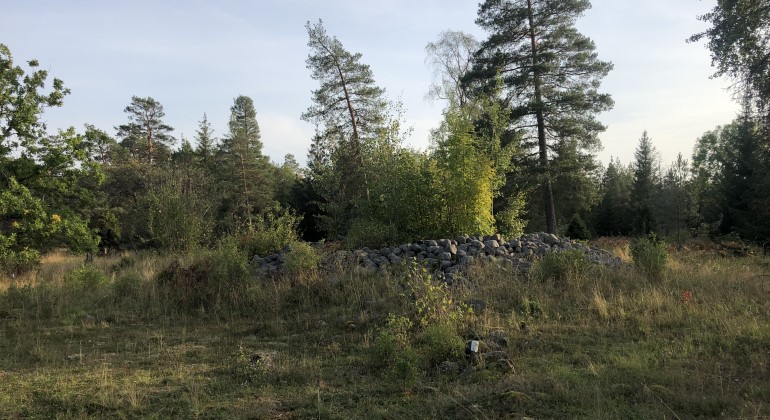
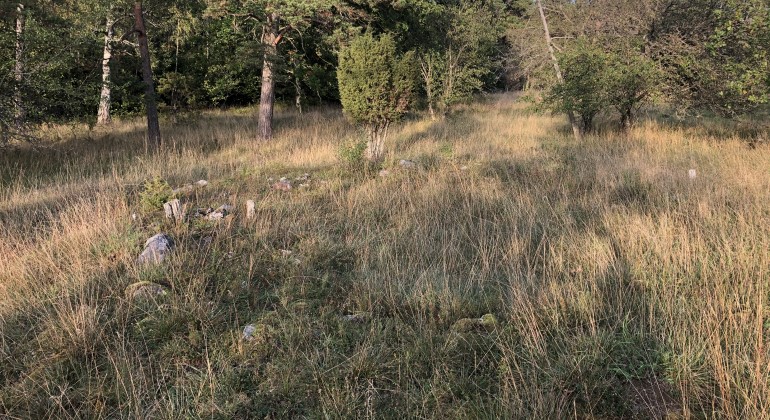
Tucked away in a vast landscape of rocky outcrops is an isolated Iron Age farm. Here you can see the remains of several Iron Age houses, enclosures and burial grounds. The remains here give us knowledge of what an Iron Age village may have looked like and how people used the landscape from the Early to the Late Iron Age.
In this barren landscape, an isolated ancient village has been located. Today we can see about ten preserved house foundations from what probably constituted three farms. Six of the house foundations are located inside the probably original yard, enclosed by a stone fence. Two of the houses have been built at an angle, which is an unusual building form on Gotland during the Iron Age. To the north and west were the arable fields and to the south is the burial ground.
The sill stones for wooden houses that have been found may indicate that the site was continuously inhabited until the Middle Ages.
The houses were built of sturdy stone walls with roofs supported from the floor by sturdy posts. The roofs may have been covered with turf, reeds or ag. The entrance is usually found on the gable of the house. There were no windows, but there were small openings to let out the smoke from the hearth.
The valuable farmland was enclosed by stone walls (stone fences) to prevent animals from eating the harvest.
- There is no signpost from the highway. Parking is available but there is no designated parking lot.
- At the information board there is leaflet to the cultural trail that leads through the area.
- The area is privately owned and grazed by lambs. Remember to show consideration and respect the animals.
- To get to the remains you need to pass the stile.
Activities And Facilities
- Archaeological
Facts
Parish: Tingstäde
Character: House site, cultural trail
Landowner: Private
Type of protection: Ancient monument
Regulations
The ancient remains are protected under the Cultural Environment Act (1988:950), Chapter 2.
Under the Cultural Environment Act, permission from the County Administrative Board is required to disturb, remove, excavate, cover, alter or damage an ancient monument.
Remember that a land area around each ancient monument is also protected. Even a newly discovered ancient monument has immediate protection.
Contact
Email address
Länsstyrelsen i Gotlands läns naturvårdsförvaltning
Organization logotype

Please be aware that some of these texts have been automatically translated.
I’ve been here 1

I want to go here 1

Questions & Answers
Ask a question to other Naturkartan users.
Reviews
0 reviews
- 5 :
- 4 :
- 3 :
- 2 :
- 1 :
Users images
No user images yet. Be the first to share!