
-
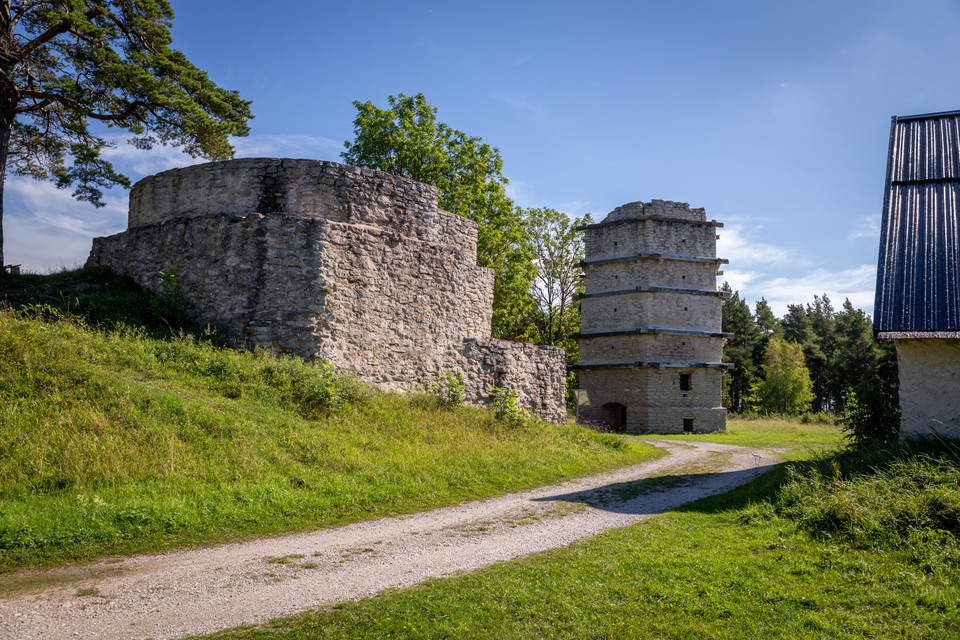
Den framträdande sexkantiga kalkugnen från 1882 och närliggande byggnad.
Photo: David Skoog/Länsstyrelsen i Gotlands län -
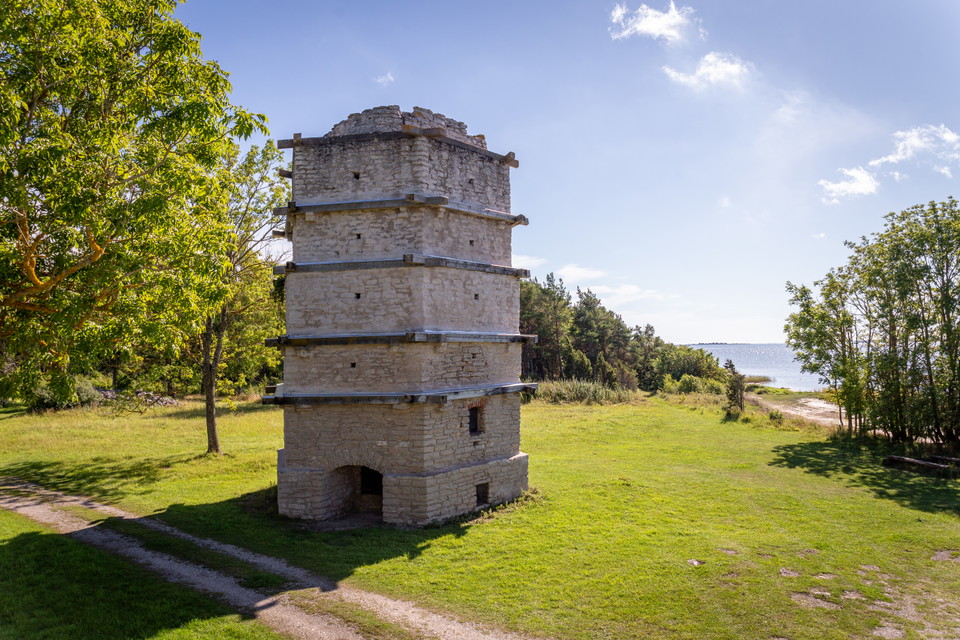
Den framträdande sexkantiga kalkugnen från 1882.
Photo: David Skoog/Länsstyrelsen i Gotlands län -
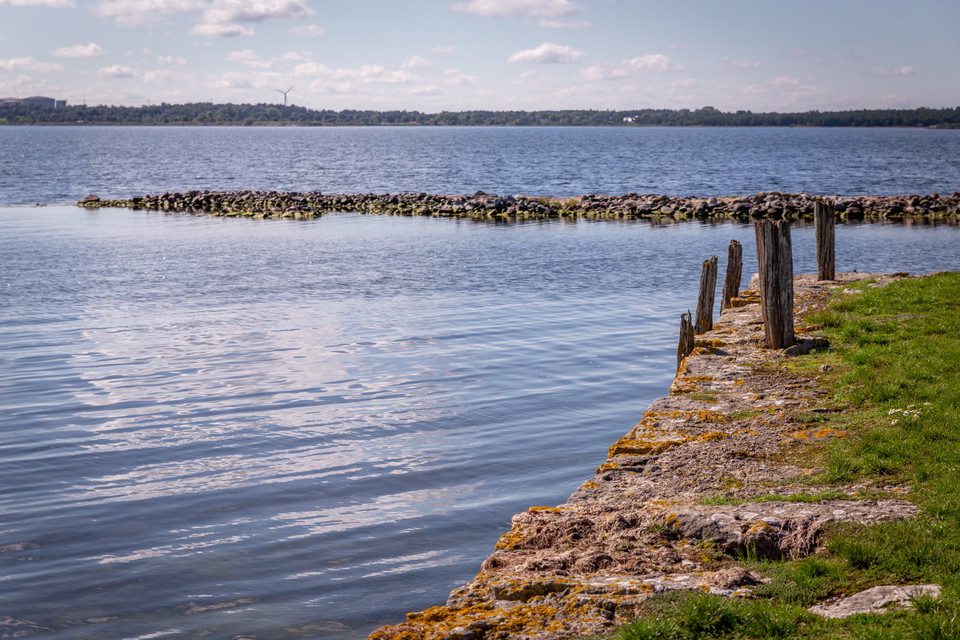
Här finns en gammal kaj. Numera finns en stege ner för den som vill känna på vattnet.
Photo: David Skoog/Länsstyrelsen i Gotlands län -
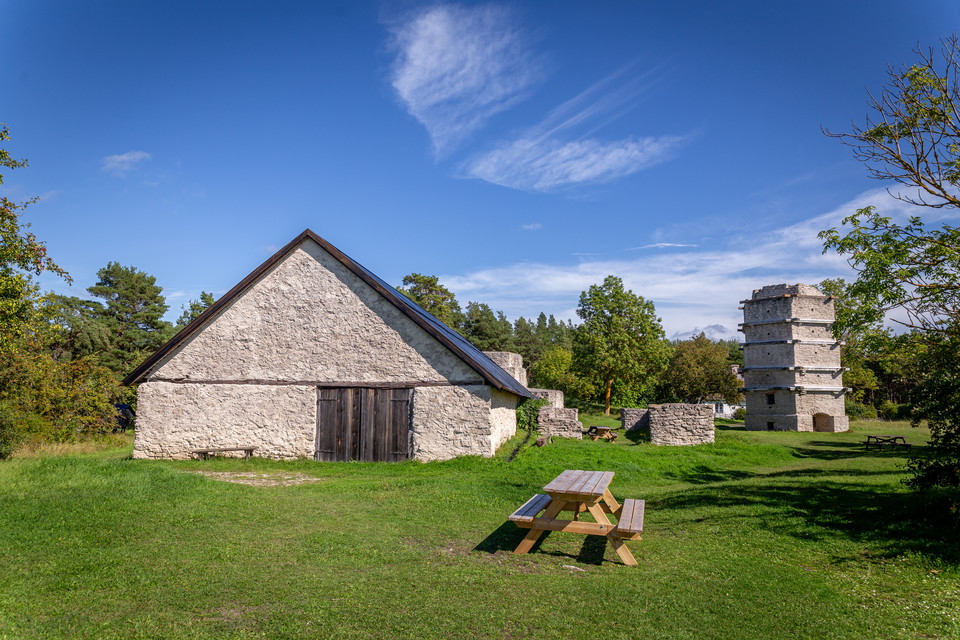
Här finns en bevarad kalklada och resterna av ytterligare en kalklada.
Photo: David Skoog/Länsstyrelsen i Gotlands län -
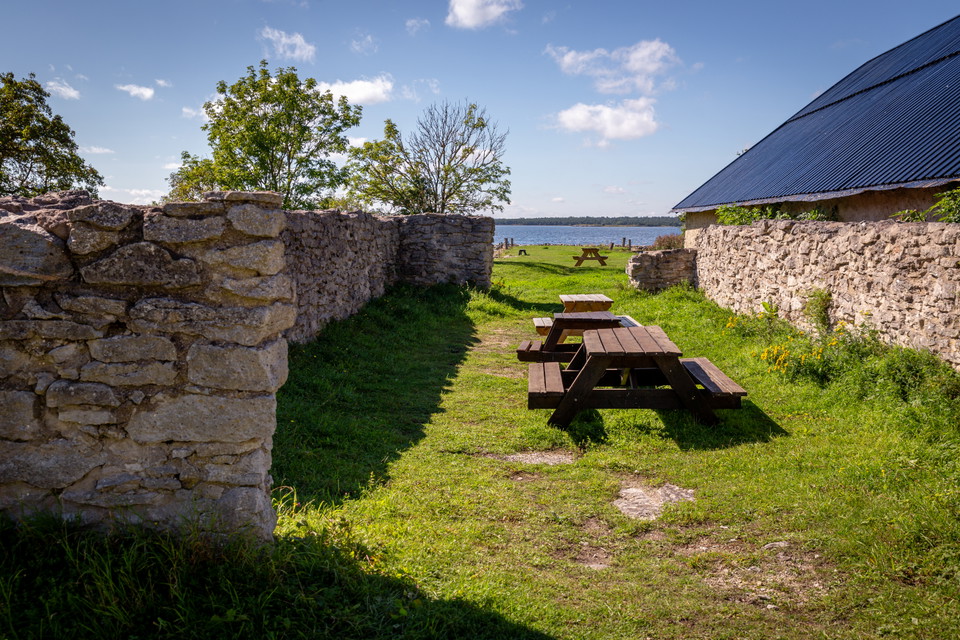
Bänkbord finns på flera platser i området för att fika vid.
Photo: David Skoog/Länsstyrelsen i Gotlands län -
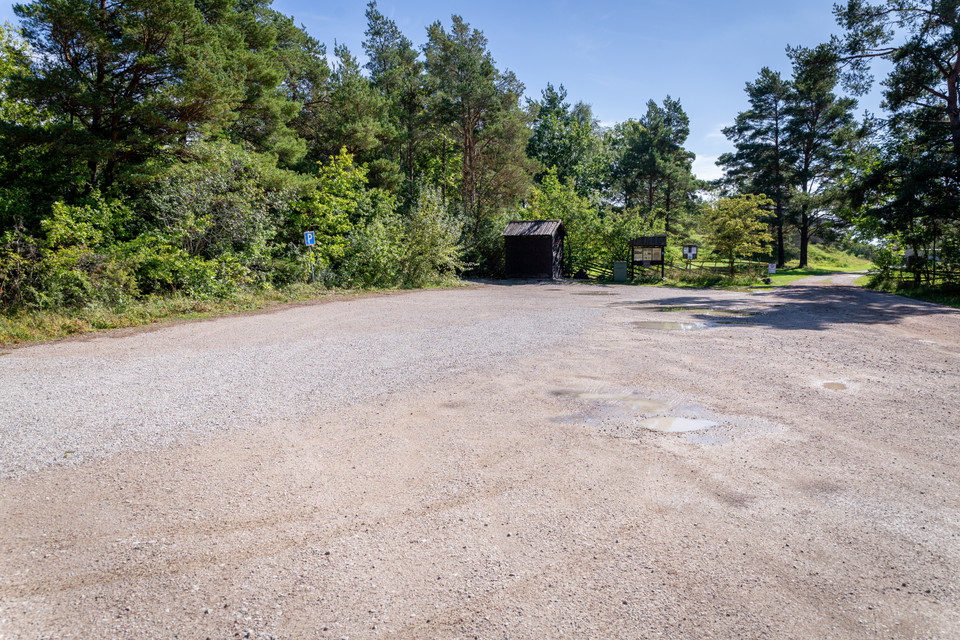
Parkeringen är väl tilltagen och här finns även ett dass.
Photo: David Skoog/Länsstyrelsen i Gotlands län -
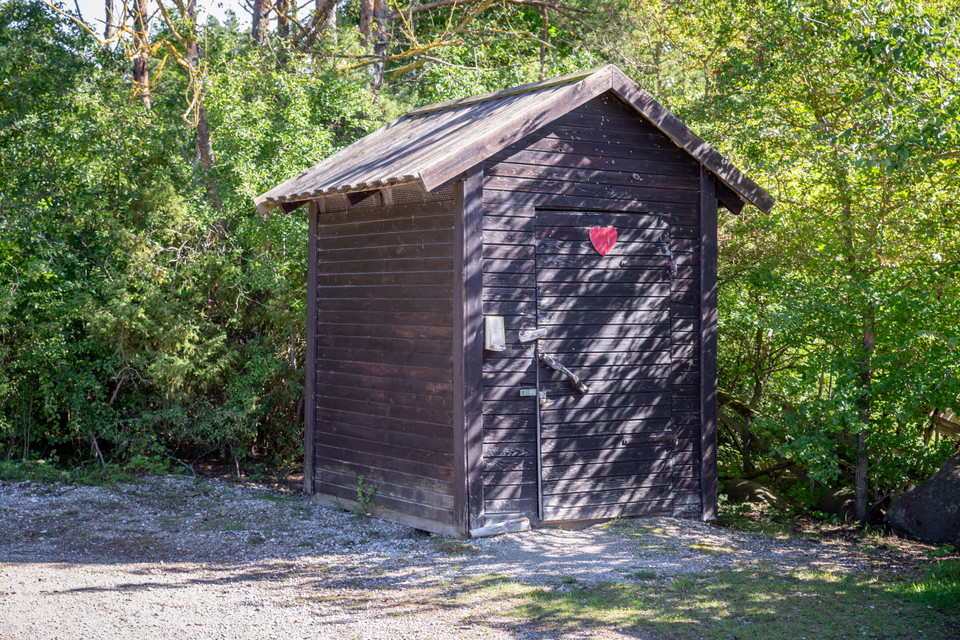
Dass finns vid parkeringen.
Photo: David Skoog/Länsstyrelsen i Gotlands län -
Barläst
- Archaeological
- County: Gotlands län
- 6968.61 km away from you
Actions
Description
Barläst is located on a forested headland on the shores of the Bay of Vägume. Here you can experience a historic lime industry environment that was the forerunner of the modern lime industry, Cementa, located on the other side of the bay.
Barläst is a place where lime was shipped out from the 18th century until 1907. It was an important port for lime exports.
Oxen and horses were used to transport limestone from the quarry at Hide. The stone was burnt in the kilns above the harbor. The oldest kiln probably dates from the early 1700s and the hexagonal kiln was built in 1882.
A long wooden bridge ran up to the tops of the kilns, on which the stone wagons could be pulled up. When one wagon loaded with wood and stone was pulled up, the other empty wagon slid down. This was made possible by a 6-meter-high pedal wheel driven by people walking in pairs.
The lime was stored in lime barns, where the lime was quenched, i.e. water was added to turn the burnt stone into a powder. The lime was packed into barrels and loaded for export to various ports in the Baltic Sea. The boats that docked here to load lime tipped their ballast into the water outside the harbor - which is how the place got its name. Ballast is the extra weight you have in an unloaded ship to keep the boat as high above the water surface as when it is loaded.
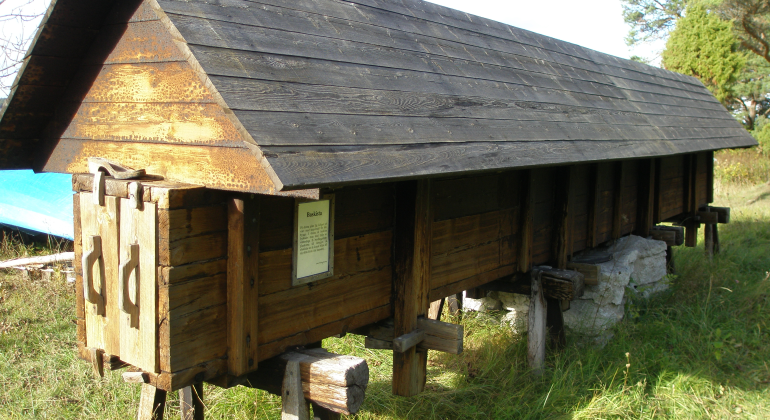
At Barläst it was possible to repair and build smaller ships. A basic chest for bending the wood remains from that time. The base chest is a long, narrow building where the wood could be steamed and softened so it could be bent into the shape you wanted.
Good to know for you as a visitor
- There is a spacious parking lot. There is an information sign next to the parking lot.
- From the parking lot to the lime kilns, it is just under 100m to walk along the gravel road.
- The area is owned by Lärbro Hembygdsförening.
- Remember to show consideration and leave no garbage.
Activities And Facilities
- Archaeological
Facts
Parish: Lärbro
Character: Limestone industry
Owner: Lärbro Hembygdsförening
Form of protection: The lime kilns are protected as ancient monuments
Directions
From Visby: Take road 148 to Lärbro, turn off towards Vägume and continue from there to Barläst.
Regulations
The lime kilns are protected as ancient monuments under the Cultural Environment Act (1988:950), Chapter 2.
It is forbidden to climb on the ruin.
According to the Cultural Environment Act, permission from the County Administrative Board is required to disturb, remove, excavate, cover, alter or damage an ancient monument.
Remember that a land area around each ancient monument is also protected. Even a newly discovered ancient monument has immediate protection.
If you are unsure how large the protected area is, you can contact the County Administrative Board.
Contact
Email address
Länsstyrelsen i Gotlands läns naturvårdsförvaltning
Organization logotype

Please be aware that some of these texts have been automatically translated.
I’ve been here
I want to go here
Questions & Answers
Ask a question to other Naturkartan users.
Reviews
0 reviews
- 5 :
- 4 :
- 3 :
- 2 :
- 1 :
Users images
No user images yet. Be the first to share!