
Images
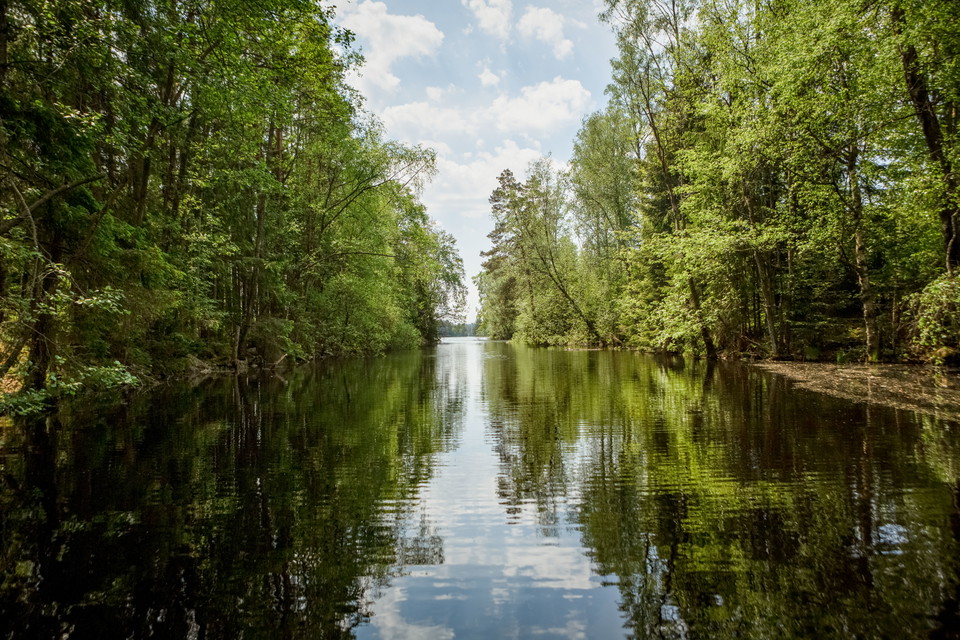
The Fegen Nature Area
Welcome to the Fegen Nature Area
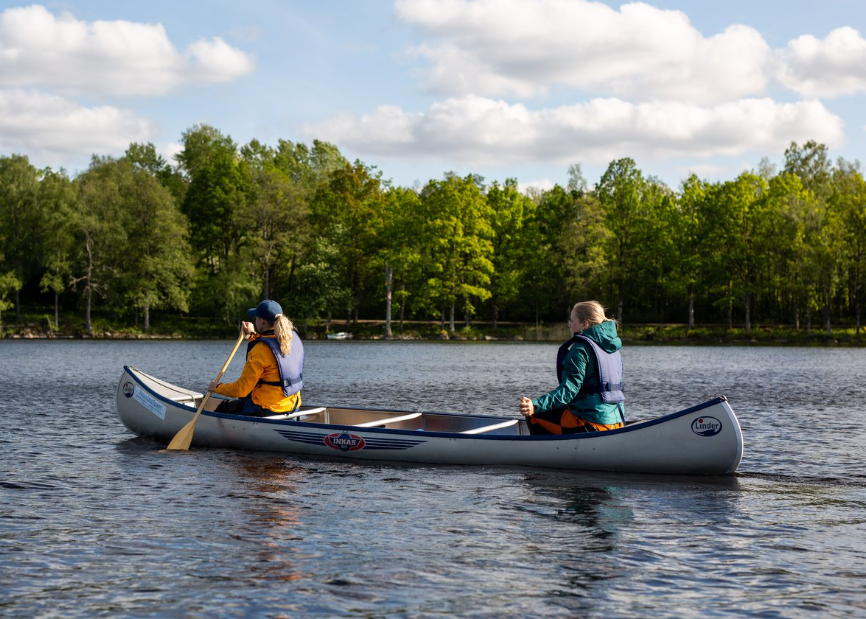
When you paddle a canoe, fish, swim, or hike in Fegen, the sense of wilderness and tranquillity is an essential part of the experience. Here, the spring-spawning vendace has its only habitat in Sweden, and among the many small islands and skerries you can find breeding pairs of black-throated divers and ospreys.
Lake Fegen, with an area of 24 km², is one of the largest lakes in southwest Sweden. It lies in a fault valley on the South Swedish highlands and reaches a maximum depth of 38 metres. The shores offer varied environments with sheltered bays, headlands, wetlands, and many small islands that support a rich diversity of plants and animals. Along the shores and lakebeds, several rare and red-listed plants grow, such as water horsetail, floating club-rush, shore quillwort, mudwort and marsh gentian.
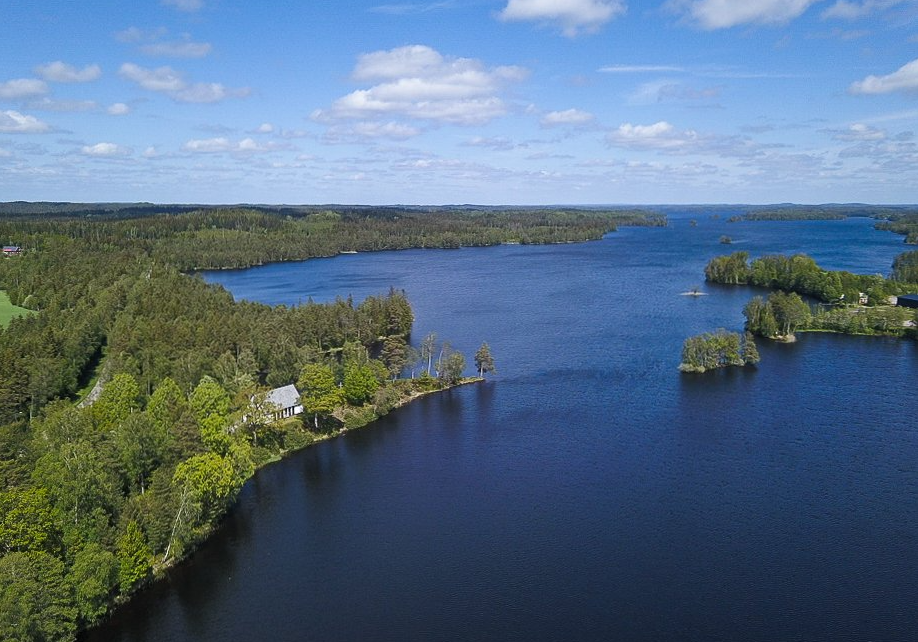
Last refuge of the spring-spawning vendace
The spring-spawning vendace lives in Fegen – it exists only here and in three other lakes in the world. It once lived in several more Swedish lakes, but has disappeared from them. Sweden therefore has an international responsibility to protect the species in Fegen. The more common autumn-spawning vendace is also found here. Vendace belong to the salmon family and live in schools in deep, naturally nutrient-poor clearwater lakes. The spring-spawning type lives at greater depths than the autumn-spawning one. To ensure its survival, it is crucial that the water quality in Fegen does not deteriorate due to nutrient enrichment that can cause oxygen depletion. A total of 17 fish species inhabit the lake, and the most important for fishing are perch, pike-perch, pike, whitefish, autumn-spawning vendace, and eel.
Natura 2000 area
Other birds that breed or feed around Fegen include the lesser spotted woodpecker, black woodpecker, common tern, grey heron, great crested grebe, goldeneye, goosander and common sandpiper. Fegen has been designated both a Natura 2000 site and a Special Protection Area under the EU Birds Directive. The main reason is the high number of breeding black-throated divers and ospreys.
An ancient borderland
When you paddle a canoe on Fegen or walk along its shores, you are moving through historic borderlands between Sweden and Denmark. Today, it is the borders of Västra Götaland, Jönköping, and Halland counties that meet in the lake.
Cultural heritage
At several places around the lake you will find culturally valuable buildings and historic landscapes. At Gammalsjö, a manor lies by the former Sweden–Denmark border. Here, you can walk out to Kummeludden through a nature park with old broad-leaved trees. On the headland there is an Iron Age burial site (500 BC–1050 AD) with stone settings and cairns.
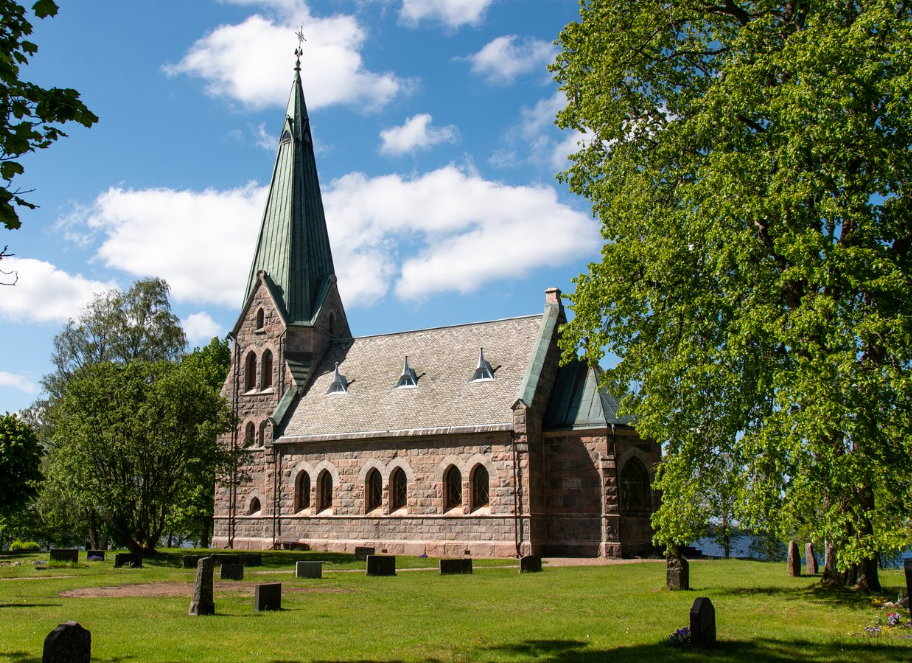
The legendary Sandvik Church
From Sandvik Church you have a beautiful view over the lake. The current church, built of red granite in the 1890s, replaced an older wooden church that burned down. A church was burned by Danish forces in 1644, but the first church on the same headland was erected during the Middle Ages. According to legend, a wealthy woman from Sotanäs was crossing the lake when a storm suddenly arose. In her desperation she prayed for help and vowed to build a church if she survived. The boat drifted ashore on the headland – and she kept her promise. Sandvik Church later played an important role in spreading Christianity in the region.
Valuable habitats
Near Sandvik there are several valuable habitats: noble broad-leaved forest where the red-listed lung lichen grows, grazed pastures with old broad-leaved trees, and ancient beech forest with several red-listed species and plenty of dead wood. Many rare species depend on dead wood as food, habitat, or growth substrate.
Timber floating and water regulation
In the late 1800s, timber floating began on the lake to supply the wood industries in Fegen and transport logs onwards by rail. Around the same time, the water level was lowered to create new farmland. In the 1940s the water level was raised again when Fegen and Kalvsjön became reservoirs for the power stations in Lillån and Ätran.
Purpose of the nature reserve
The purpose of the nature reserve is to preserve fish and bird populations, water quality, valuable broad-leaved forests, and the Natura 2000 habitats and species. The reserve should also provide good conditions for outdoor recreation.
Important bird protection areas – Respect our sensitive species
Fegen has special bird protection zones to safeguard sensitive species during the breeding season, especially black-throated divers and ospreys. During this time, it is forbidden to go ashore or approach the shore closer than 100 metres. Both species are very sensitive to disturbance, and if they leave their nests the eggs risk being taken by predators. Studies show that the black-throated diver’s breeding success has improved significantly since the protection zones were introduced.
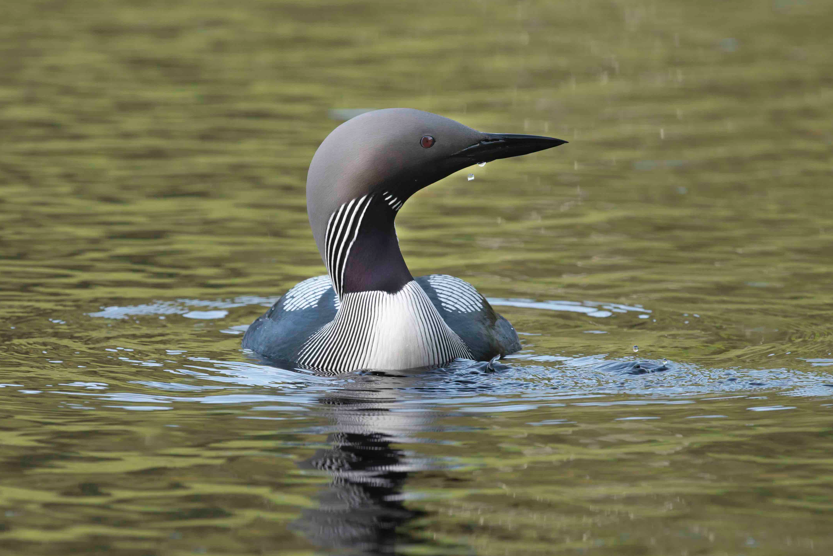
Black-throated diver
The black-throated diver is one of the characteristic birds of wilderness lakes like Fegen. Its haunting call is typical of the species and may be the origin of its name. It is recognisable by its elongated body and striking black-white-grey plumage. Divers are shy and should be observed from a distance. They are especially vulnerable during incubation: if disturbed, gulls, crows or ravens can quickly take both eggs and chicks. Their nests lie close to the water, making them vulnerable to waves. Maintaining distance and low speed when boating is therefore essential.
Osprey
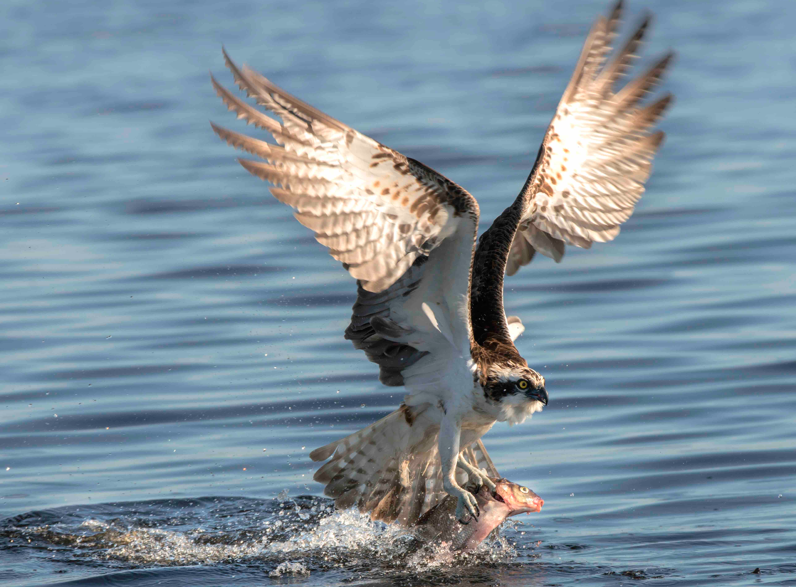
The osprey is a bird of prey with long wings and white-brown plumage. It is highly adapted to catching fish: dense, oily feathers, nasal valves, and feet with long claws, spines, and a reversible toe for gripping slippery fish. It nests in tall pines around Fegen, which is one of the species’ most important breeding areas in southwest Sweden. The osprey winters in West Africa and returns between late March and early May. Because the chicks fledge late, bird protection remains in effect until the end of July. Ospreys have declined significantly in the area in recent years, making disturbance-free breeding even more crucial.
Categories
- Valuable nature