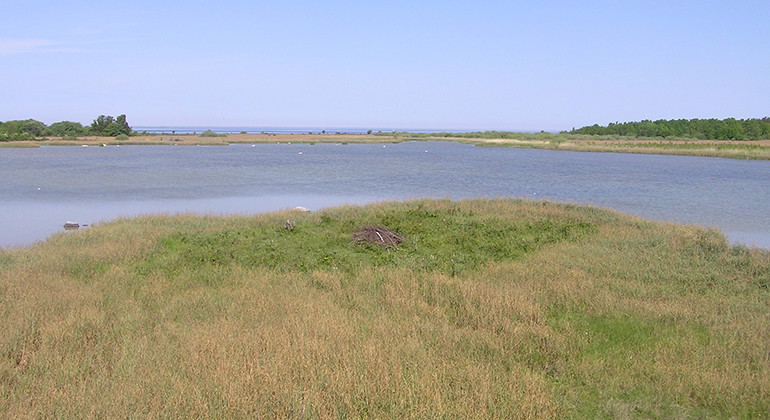
This reserve contains something rare on Öland - a wetland that has not been drained. However, the land around the wetland has been farmed for centuries. This combination means that a great diversity of animals and plants thrive here in Knisa mosse.
What's new in the reserve in 2025
The county administrative board's budget for nature conservation and outdoor life sometimes changes and right now we have less money to allocate. The priority is then to manage our natural values in the first place and outdoor recreation facilities in the second place. As a result, this year we are closing a number of toilets in reserves and removing rubbish bins in several protected areas in the county.
In Knisa mosse, the toilet is closed and all waste management ceases.
Used for a long time
The land of Knisa bog has been farmed for many generations. On the grass- and sedge-rich meadows, farmers have harvested hay, and on the grasslands, cattle have gone to summer grazing. Areas with thicker soil cover have been used for arable farming.
Uncultivated = valuable
In the 19th century, a number of lakes and wetlands were drained to gain more arable land for a growing population. But when it came to Knisa bog, a number of landowners protested. The justification was, among other things, that "...because if this happens, it will be of no use to us, but a great loss because we will lose the sedge fodder that can be salvaged there..." Today, Knisa bog is one of the few bogs on Öland that has never been drained.
Requires care
As early as the 1910s, the area was recognized for its rich bird life. In 1931, Knisa bog was designated Öland's first bird protection area. With the designation, meadow mowing ceased and over the years grazing became less intensive. The overgrowth that followed led to the disappearance of breeding birds such as the black-crowned grebe, black tern and oystercatcher. Grazing was therefore reintroduced in the 1990s and the land has since gradually been reopened.
Experience the diversity of Knisa bog
There is room for many in the reserve's varied nature. Ducks swim in the open water of the bog and wading birds stroll in the meadows. A wide variety of flowers grow in the marshes and on the dry grasslands. For example, you can see various orchids such as honeycreepers, meadowsweet and marsh marigold.
Visitor information
Please note that parts of the reserve are closed to visitors between April 1 and August 15.
The site has been of interest to people for many hundreds of years. In the western and south-eastern parts there are graves from the Iron Age. Thanks to the intervention of the writer and photographer Bengt Berg, the bog was protected in 1931. In his book Sällsynta fåglar (Rare Birds) he had drawn attention to the rich bird life in the bog. Black terns, curlews and black-necked grebes, among others, nested there.
There is a bird tower overlooking the bog.
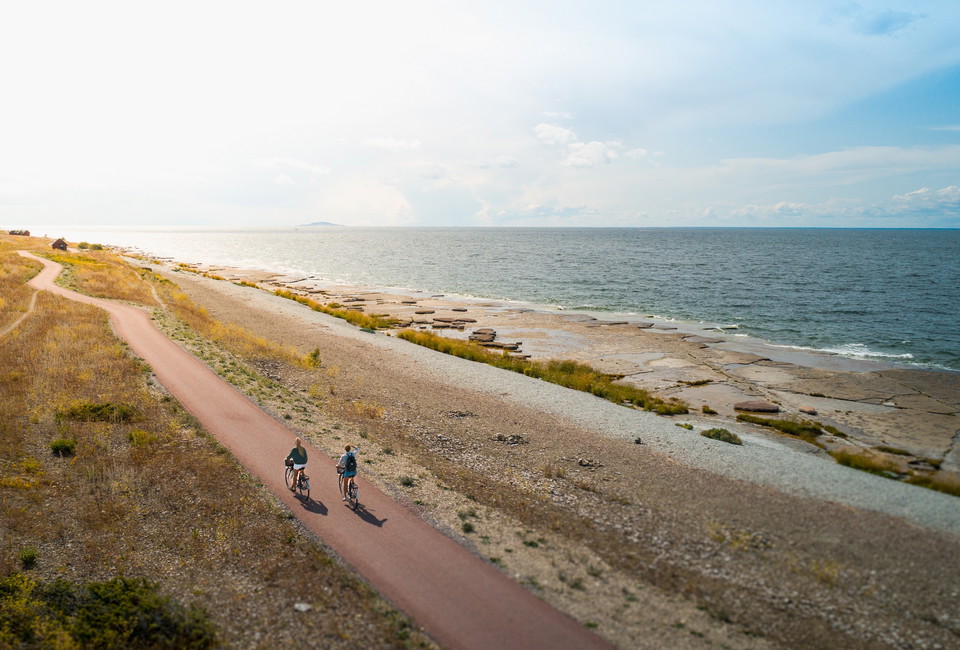
Around Knisa bog there is a walking trail of about 4.7 km. Here you can experience the reserve's habitats - wetlands, dry pastures, coastal environments, deciduous forest - and plants and animals. At the bird tower there are paths over wet areas. When there is a lot of water, it can also be wet on untracked parts, during these periods boots are recommended. The birdwatching tower is about 400 m from the parking lot.