
-
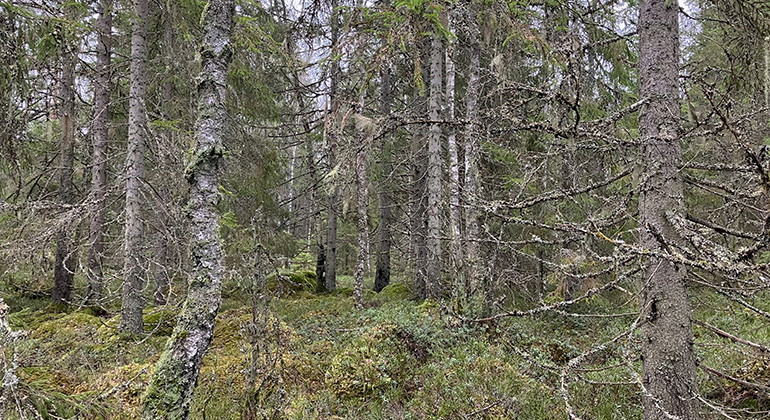
Övraryd.
Photo: Johan Johnmark -
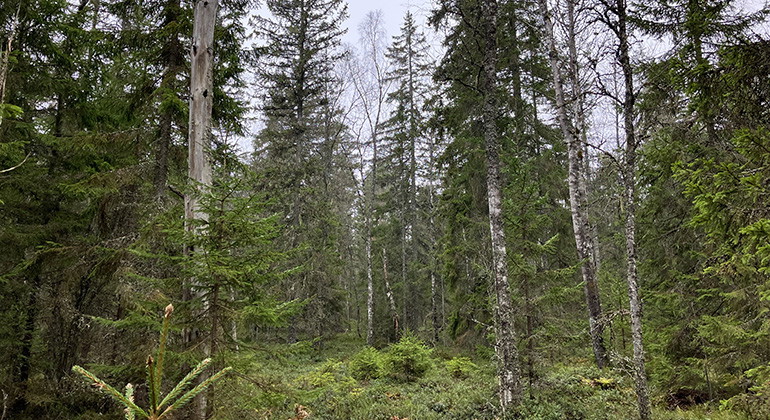
Naturskog.
Photo: Johan Johnmark -
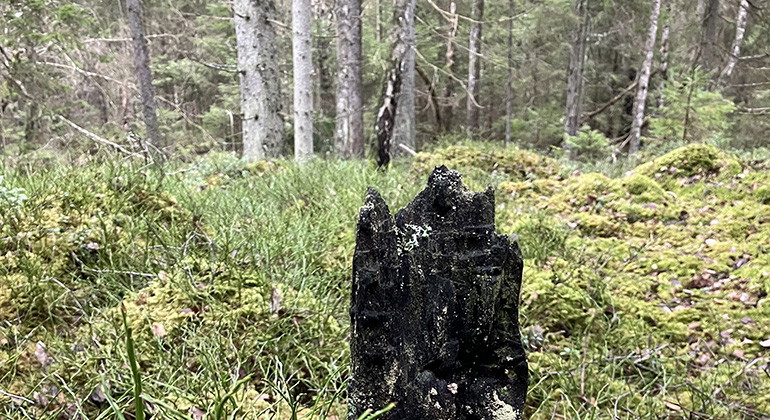
Bränd stubbe från Loshultsbranden 1921.
Photo: Johan Johnmark -
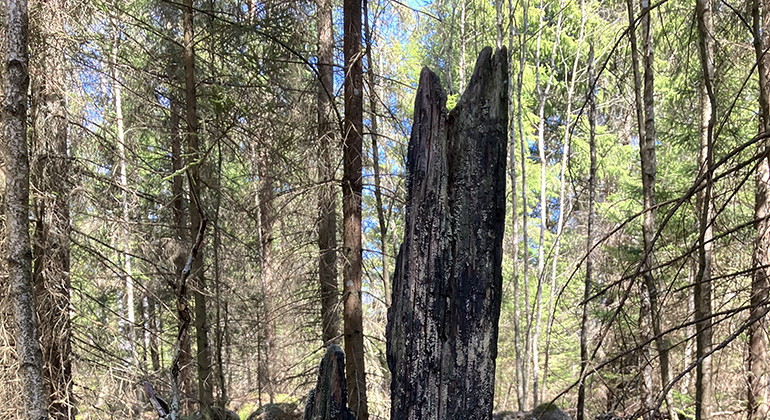
Stubbe från Loshultsbranden 1921.
Photo: Johan Johnmark -
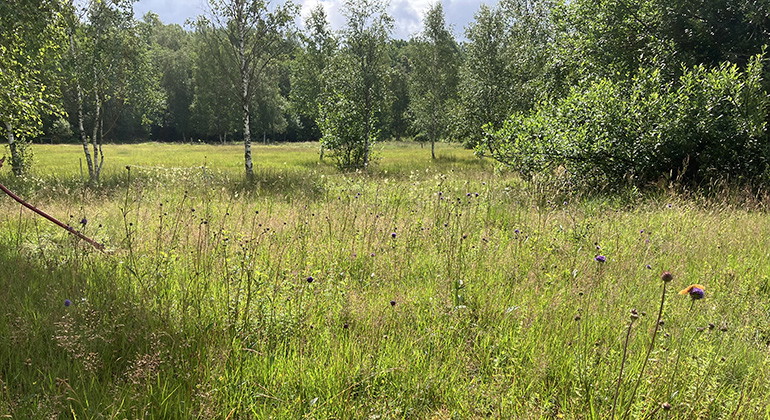
Photo: Johan Johnmark -
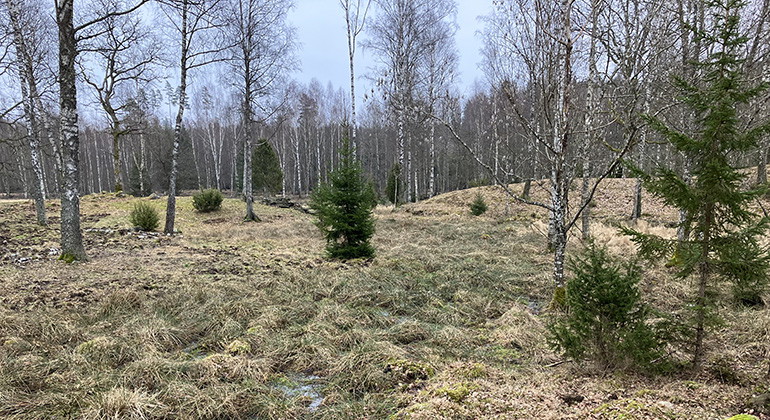
Photo: Johan Johnmark -
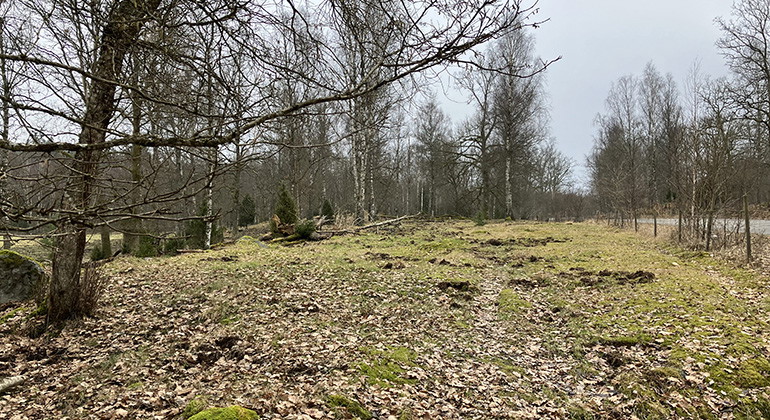
Photo: Johan Johnmark -
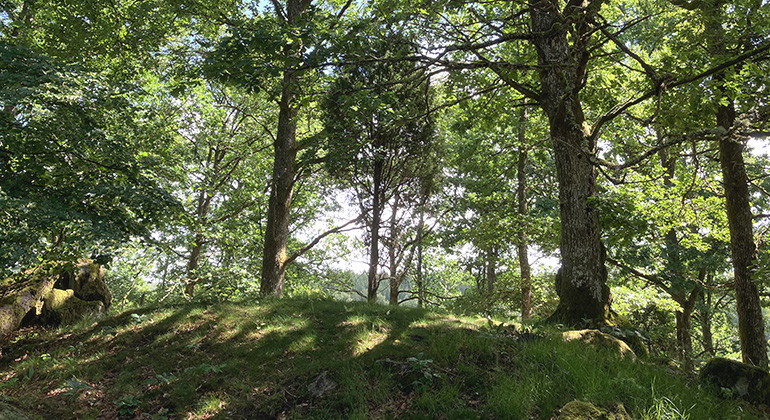
Ekbacken.
Photo: Johan Johnmark -
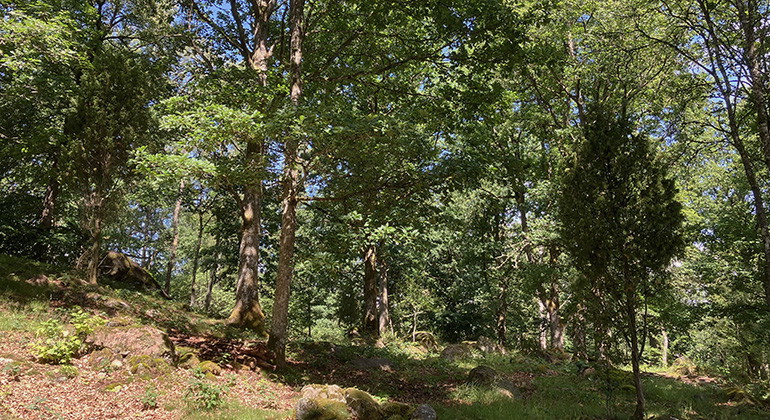
Photo: Johan Johnmark
Övraryd, Naturreservat
- Nature reserve
- County: Skåne län
Actions
Description
Övraryd is located between Lönnsboda and Hökön. Here is one of Skåne's finest natural forests with old spruce and pine. The capercaillie lives in this magical forest. It all began with the Loshults fire in 1921. It is a pathless land that is appreciated for its pristine nature and silence. Butter-yellow meadow balls, or butterballs as they are actually called, are some of the meadow plants that add color to the pastures along the river in summer. There is no parking or hiking trails.
Winding river and ridge from the ice age
The Övraryd nature reserve consists of two sub-areas: the oak hill and pastures by Rönnebodaån in the south-east, and the old natural coniferous forest west of Övraryd. Near Rönnebodaån is a pebble ridge. It is a fragment of a long ridge that can be followed from Biskopsgården 3 kilometers north and all the way down to Kristiansstadslätten via Glimåkra and Knislinge. Rönnebodaån has a winding course here and for a mile has the same route as the ice river when the inland ice melted more than 10,000 years ago. The oak hill in the southeast consists partly of petrified magma, or diabase. Streaks of diabase like this in the bedrock are common in northern Skåne.
Traces of the past - sawmills and charred stumps
Rönnebodaån and its surroundings have been important to people since the Stone Age. The land along the river has probably been open and cultivated since the Bronze Age. In other words, today's meadows may be more than 3000 years old. The forest was also sparse and used for grazing in the early 19th century. Later in the 19th century, forest production became increasingly important. This gained further momentum after the Loshults fire in 1921. Production increased enormously when all the fire-damaged timber had to be disposed of. This is shown not least by the remains of the old sawmill at Rönnebodaån and the large so-called saw plane next to it. An area that was used for handling and storing the logs. Even today there are charred stumps in the forest that remind us of this extensive fire that raged more than a hundred years ago. A fire that paved the way for today's capercaillie forest.
Loshultsbranden gave natural forest with capercaillie and hanging lichen
Today's coniferous natural forest grew up spontaneously after the ravages of the Loshults fire in 1921. Because all the nutrient-rich topsoil burned up, the trees grew very slowly. It is a so-called late-growing forest. For example, there is a 12 cm spruce stump in the area that has 70 annual rings. The forest has similarities with the forest found in the mountains. The spruces are tall and covered with hanging lichens. There is also a lot of late-growing pine, birch and aspen. On the ground there is plenty of bilberry and some lingonberry. This is the forest of the entitan, the robin and the capercaillie. Before the reserve was established, there was a whole family of capercaillie. Something that is very unusual in Skåne.
Flowery meadows along the river
The meadows along the river are flooded in the spring and are kept open and flowery by grazing and mowing. Here, the unusual small waterwort grows by the thousands and spruce spires and buttercups by the hundreds. In the past there was also the very rare bell gentian. In the drier parts, there are other rare meadow plants such as wood anemone, maidenhair fern, haymaking rue, pig's root and haymaking fiddle. You can also find classic meadow grasses such as sedge and sedge grass. Insects that you can see looking for nectar and pollen in the meadow flowers are the meadow metalwing, violet-edged goldwing and various swarmers. If you see a fieldfare, you may also see the fieldfare bee. This fastidious and rather unusual bee lives in the drier parts with sun-warmed sand. Birds seen flying in the area include starlings, greenfinches, green wrens and chiffchaffs.
Outdoor life
Övraryd's natural forest with old spruce and pine offers untouched nature and silence. There are no paths, so you can roam freely among logs and stones in this grouse forest. In the southeast, there are flower-rich meadows along the river that are partly flooded. The Övraryd nature reserve borders the Nedraryd nature reserve to the south-east. Both lack parking.
Activities And Facilities
- Nature reserve
Facts
Established: 2024
Size: 34 hectares
Municipality: Östra Göinge
Manager: County Administrative Board of Skåne
Protection type: Nature reserve and Natura 2000
Directions
Walk, cycle, take public transport or drive here. On the map, you can click on a parking lot or access point. For directions, click on the 'Find here' arrow (below the map).
Regulations
**Within the area, special rules and restrictions apply to the right of public access.
For example, it is forbidden to:
- keeping dogs unleashed
- make fires other than with an open-air stove
- setting up a caravan/mobile home overnight
It is important to note that this is only a selection of the rules.
Full regulations for visitors
In addition to regulations and prohibitions in other laws and regulations, it is forbidden to:
- digging, drilling, painting or otherwise damaging the ground, stone, stone wall or natural objects,
- set up caravans, motorhomes or similar during the period 00:00 - 05:00,
- make a fire other than with an outdoor kitchen,
- bring a dog (or other pet) that is not kept on a physical leash,
- digging up plants
- removing dead wood, breaking branches, felling or otherwise damaging living or dead standing or lying trees and bushes
- picking mosses, lichens or wood-boring fungi
- erect any form of construction or place objects foreign to the reserve.
It is prohibited without the written permission of the County Administrative Board to
9. collect invertebrates, such as beetles or molluscs
10. arrange and organize competitions, training, camps or similar events
11. place or put up a board, poster, sign, poster, string or similar, other than temporarily, for more than ten days. The nature reserve's manager must always be informed before such devices are set up in the reserve,
Contact
Address
Under LÄNKAR kommer du till aktuell reservatssida på Länsstyrelsens webbplats, med fördjupande information som kartor, broschyrer och hänvisning till relevanta aktörer. Här finns även en rapportfunktion för dig som vill lämna uppgifter om naturreservaten som vi förvaltar.
Email address
Organization logotype
Please be aware that some of these texts have been automatically translated.
I’ve been here
I want to go here 1

Questions & Answers
Ask a question to other Naturkartan users.
Reviews
0 reviews
- 5 :
- 4 :
- 3 :
- 2 :
- 1 :
Users images
No user images yet. Be the first to share!