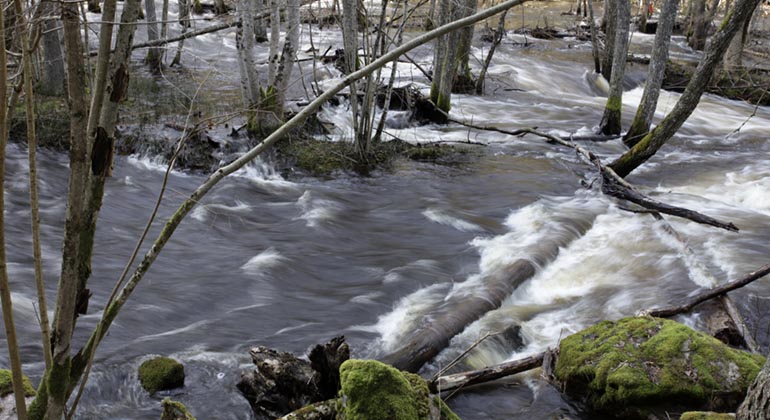
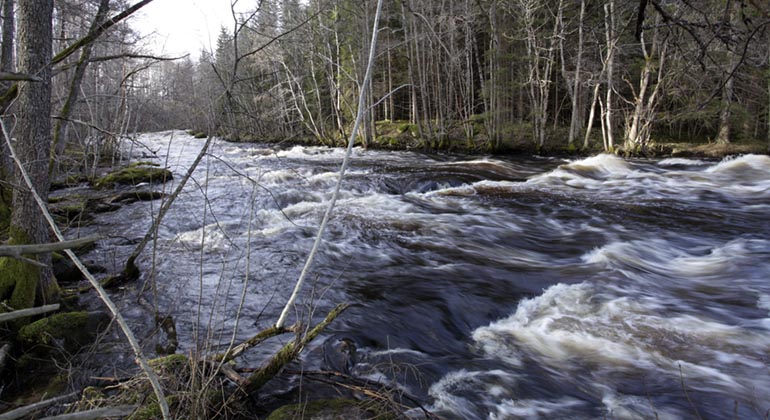
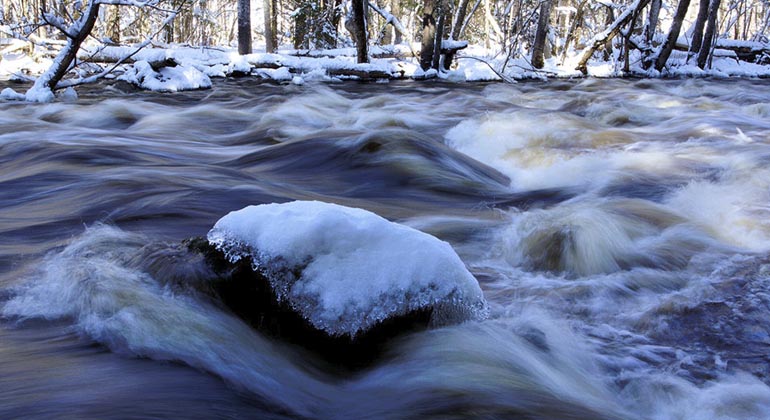
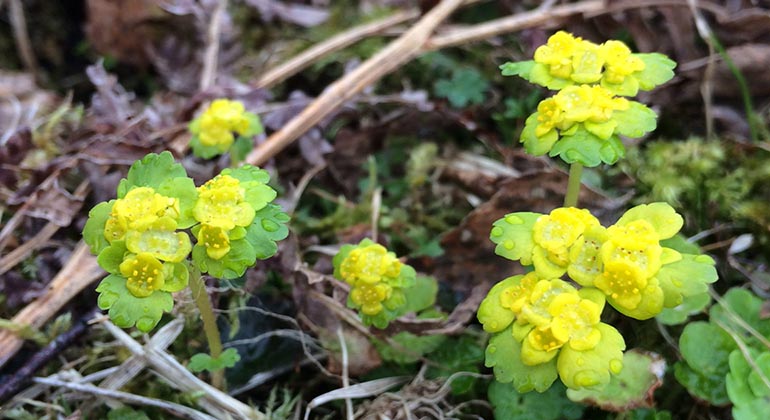
The Järleån nature reserve covers a six-kilometer stretch of the Järleån valley. The river has largely retained its natural course with one of the county's most powerful rapids - Långforsen. The rapids are at their most powerful in spring. In early summer, the flowers are well worth seeing and the birdsong reaches its peak.
The future of the dam at Järle mill
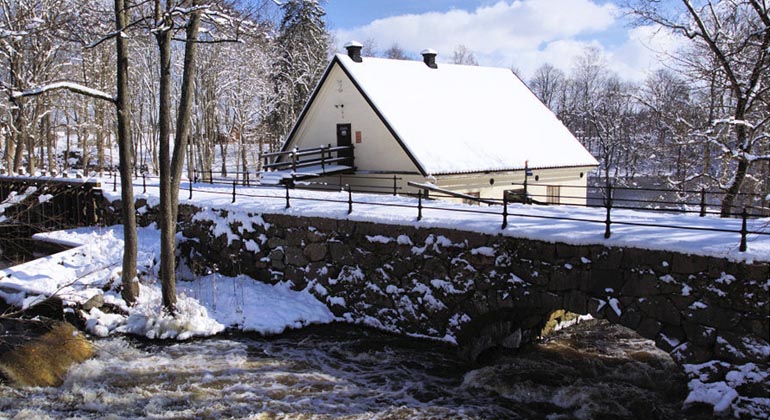
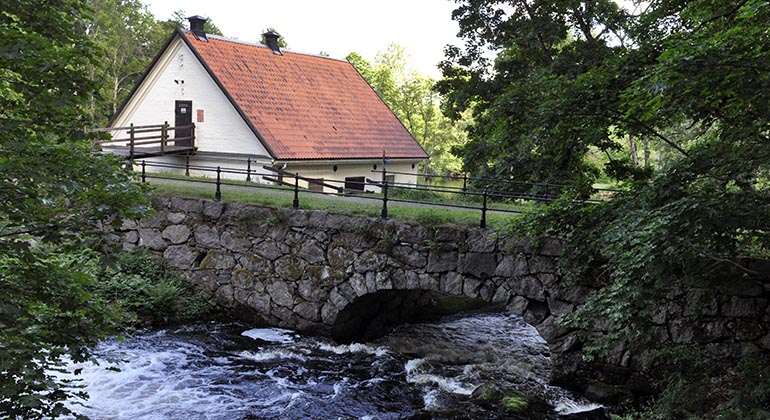
The power plant and the regulation at Järle mill dam lack the permits currently required by law. The Swedish Environmental Protection Agency, which owns the dam, has drawn up a proposal for how the area could look in the future. The proposal is that the dam gates are removed and the rapids are recreated. Järle Mill will continue to be a beautiful place to visit. More information and contact details can be found at:
Old valley
Järleån is one of Örebro County's larger waterways. Järleån drains Lake Norasjön and after 3 miles flows into Väringen. The Järleån valley is several hundred thousand years old. It existed even before the ice sheets. When the last ice sheet melted away, almost the entire valley was below sea level. This deposited huge layers of gravel, sand and clay at the bottom of the valley. The Järleån river flows through these layers today. People have farmed on the layers of gravel, sand and clay and today cows graze here. The more inaccessible slopes and ravines contain deciduous and mixed forests.
Life below the surface
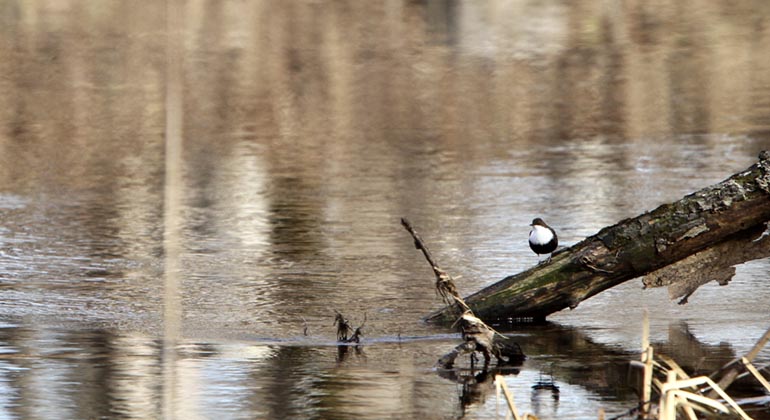
Järleån's waters are home to fish such as stonefish, brook lamprey and the original stream-dwelling Hammarby trout. A small population of river pearl mussel is found in the watercourse. Other typical species for running water are mayflies, which live on the river bottom before developing into flying insects. The donkey dragonfly is one of the dragonfly species found here. Beavers are common and in recent years otters have been seen again in Järleån.
Living geology
Järleån's advancing waters affect the shores and the river's course is constantly changing. In the outer bends of the river, the banks are eroded and landslides occur. This causes parts of the bank to slide into the river, trees and all, and completely vegetation-free areas, "landslide scars", are formed. On the other hand, gravel and finer-grained material accumulates in the river's inner bends, building up new land areas. Sometimes completely new islands are formed. Both landslides and islands create new nesting sites for many birds, such as kingfishers, white-tailed egrets and corncrakes.
Långforsen
Långforsen is, as the name suggests, the longest of Järleån's rapids. The 1200 meter long stretch of rapids is a powerful experience at high tide. During the spring flood, the water flow is at its highest, but even after a rainy period, large amounts of water can rush through the river.
A humid climate
In the damp and shady environment around the river, both deciduous trees and many mosses and lichens thrive. Monastery lichen is common on many of the older deciduous trees. The reserve also has several rare species such as mountain lichen and blunt feather moss. In addition to fungi, lichens and mosses, plenty of dead hardwood attracts various insects. These in turn make the dead wood a sought-after larder for many birds, such as the lesser spotted woodpecker.
Old meadows and pastures
Thanks to the fine-grained and nutrient-rich soils, the vegetation is rich in species. This is evident in the large number of different deciduous trees. In the parts of the reserve that used to be used for haymaking and grazing, the most common trees are grey alder and ash. There are a few very old and coarse ash and birch trees left from the haymaking period. In the nature reserve, parts of the land are still kept open by grazing. Here you will find many typical meadow plants, such as maidenhair fern, bitterroot, meadowsweet and yellowhammer. In the wetter areas, buttercups, night-flowering violet and maidenhair fern grow. Among the rarer plants are thistle, water lily, lungwort and chafing grass. Between the pastures and the forest there are valuable buffer zones consisting of hazel, hawthorn and rose bushes.
Iron production
Already in the middle of the 16th century there was a smelter at Järleån. In the following centuries, the Järleån valley became the most important center for iron processing in Noraskogs bergslag, with smelters and hammers at three different dams. Iron processing in the area continued right into the 1920s. In the southern part of the reserve is Järle Mill, which was in operation until the 1970s.
Hammarby mill
In the 17th century, Hammarby mill was one of Noraskog's larger mills and an important part of the export industry that financed the Swedish superpower. The iron ore came from the nearby mines but also from several smaller mine holes around Hammarby and along the Järleån river. But competition from cheap foreign iron led to the so-called 'death of the ironworks' in the 19th century. Many small mills were forced to close. However, Hammarby mill survived until 1923.
Ruins after the ironworks
Today there are large ruins of the mill operations on the north side of the river. The dam is surrounded by the remains of the mill and smelter. The only remaining mill building is the Martin mill from 1919, a dominant brick building with a flame furnace. On the site of the smelter there are also the ruins of the smelter's wall, blast furnace and roasting furnace made of slag bricks, as well as a large slag hearth. In the surrounding area, many of the workers' dwellings remain.
Accessibility and facilities
Hiking trails
A path leads through most of the reserve. Parts of the reserve are very hilly with steep paths and stairs. The easiest stretches to walk are between Hyttfallet and Hammarby and between Järlekvarn and Djupedal.
Accessible rest area
At the parking lot south of Järle kvarn you are close to the water and the old mill environment. West of Järle mill, at Långforsen, there is a picnic area with picnic tables, barbecue area and a spacious toilet. The toilet and some of the tables have high accessibility.
Barbecue areas
You may only light fires in designated fireplaces. Firewood is available on site. Please use firewood in moderation so that more visitors have the opportunity to light a fire. We regularly replenish the wood supply but cannot guarantee availability at all times. If you want to be sure to be able to light a fire during your visit - bring your own firewood.
Take the bus to the reserve
Länstrafiken buses 406 and 420 stop at the Bondebyn and Övre Järle stops on the eastern edge of the nature reserve.
Sign interpreted information