
-
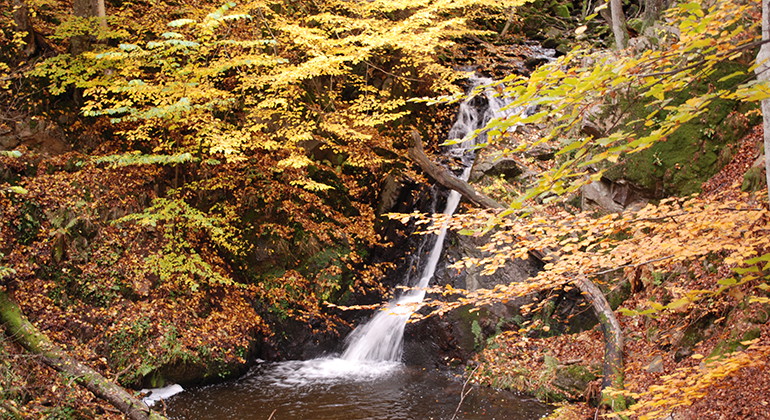
Övre vattenfallet.
Foto: Länsstyrelsen Skåne -
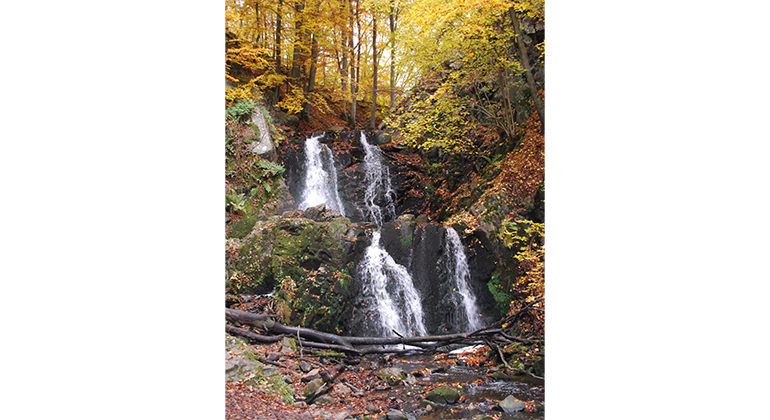
Nedre vattenfallet.
Foto: Länsstyrelsen Skåne -
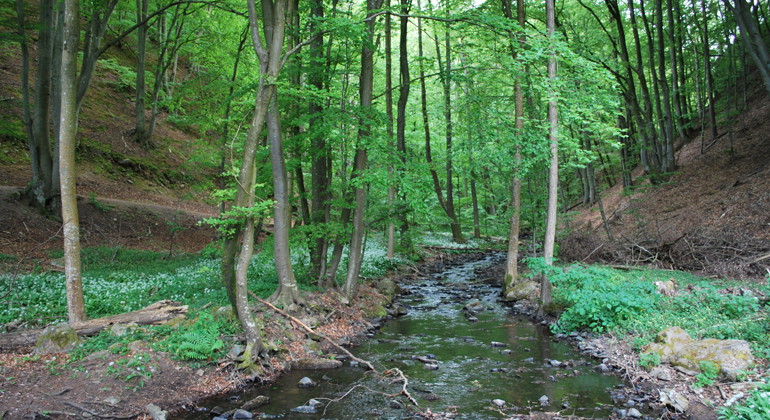
Foto: Mona Persson -
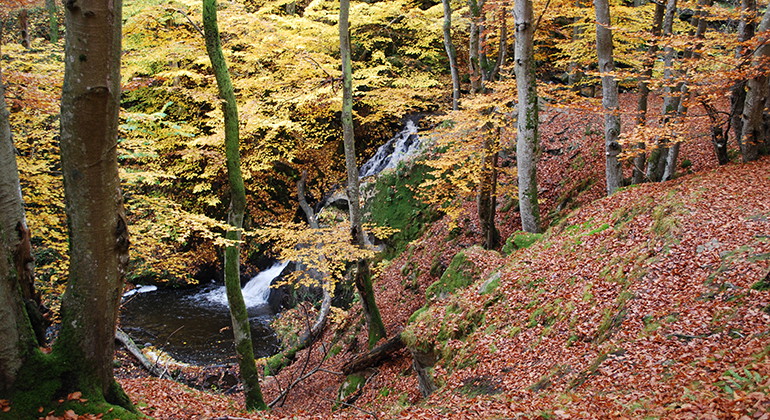
Nedre vattenfallet.
Foto: Länsstyrelsen Skåne -
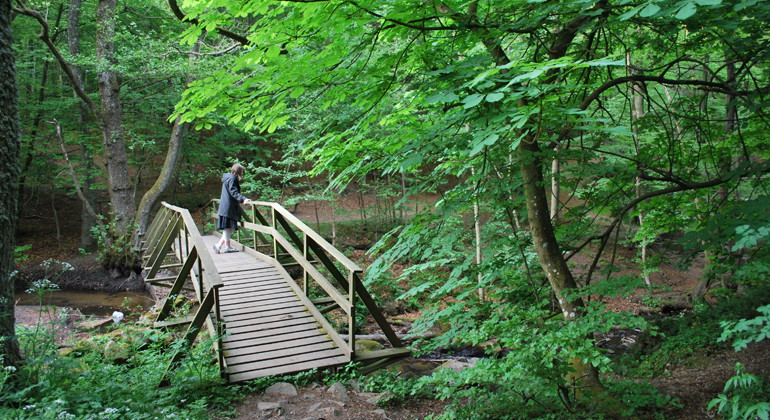
Foto: Mona Persson -
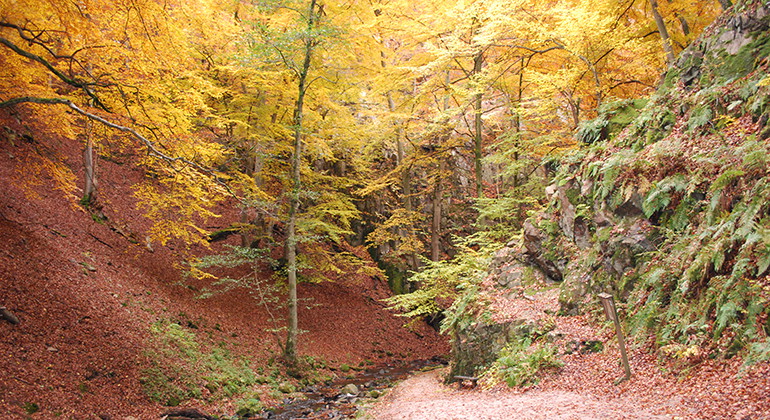
Ravinen.
Foto: Länsstyrelsen Skåne -
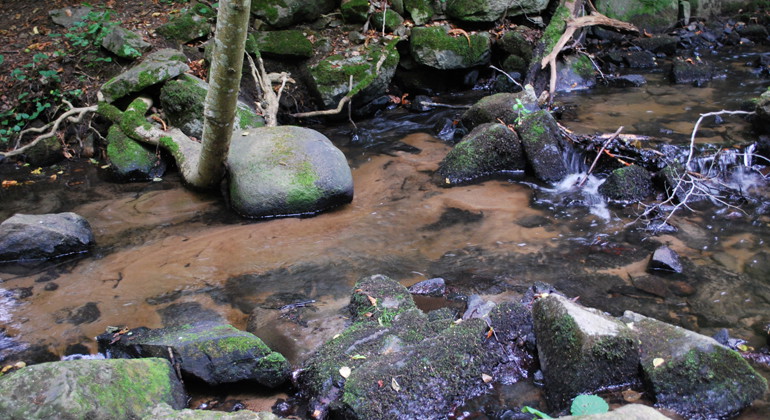
Foto: Mona Persson -
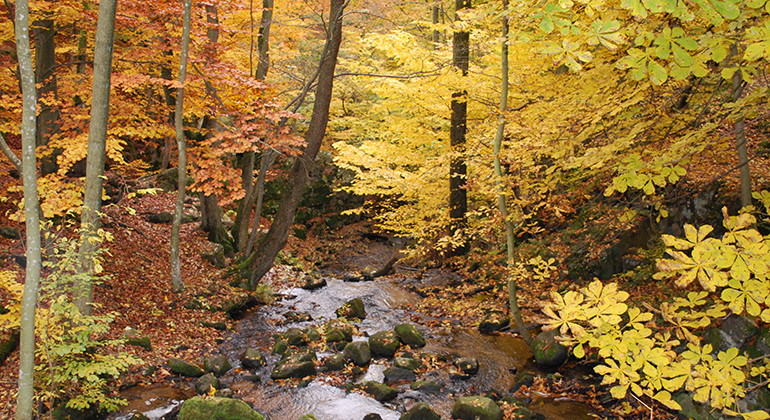
Foto: Länsstyrelsen Skåne -
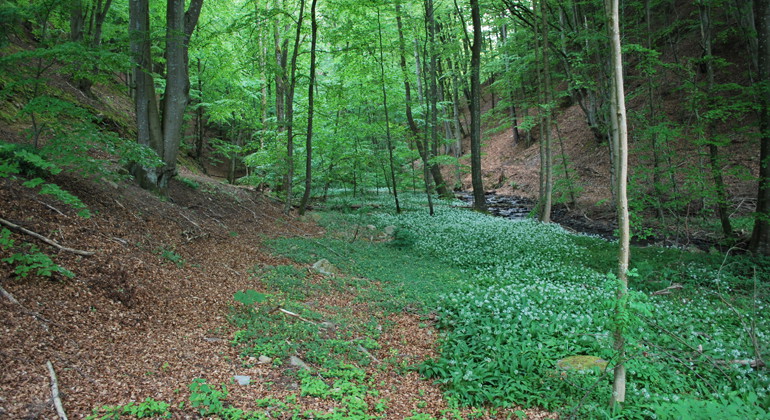
Foto: Mona Persson -
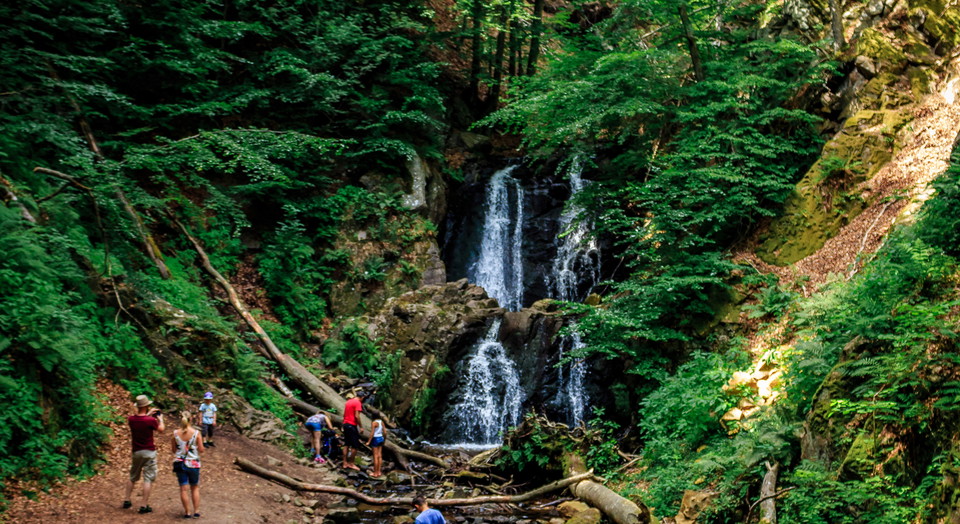
Foto: MOSTPHOTOS -
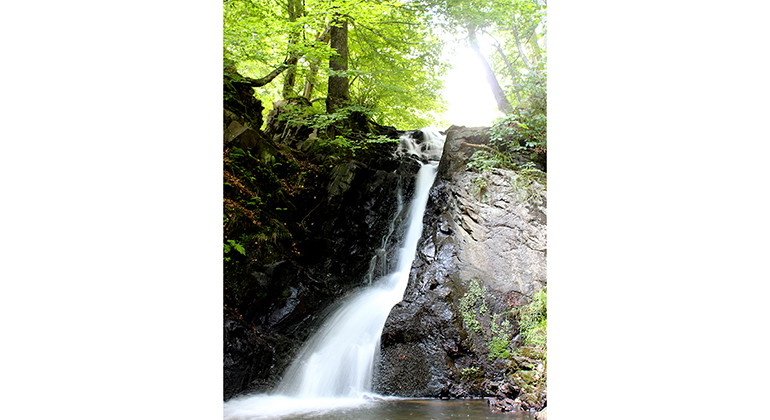
Foto: MOSTPHOTOS
Forsakar med Lillaforsskogen, Naturreservat
- Naturreservat
- Amt: Skåne län
Handlinger
Beskrivelse
Like a landscape from an Astrid Lindgren book. Forsakar with Lillaforsskogen is a deep gorge with several cascading waterfalls, surrounded by a magical and legendary beech forest. Forsakar's upper falls have a drop of 7.4 meters and the lower, which is divided by a ledge, has a total drop of 10.6 meters. The ledge, the "tub", has given rise to the name Forsakar. A marked trail takes you around the reserve.
Avoid crowding during weekends
The parking lot is often full during weekends. Maybe cycle here or do a long walk through the area? The congestion is greatest at the parking lot. Below are tips on reserves that are usually a little quieter.
A deep ravine in the forest
According to legend, the magical ravine at Forsakar is the work of giants. Science believes instead that the ravine was carved out by large amounts of water from melting ice sheets. The water masses broke through longitudinal ridges, for example at Pysslingakyrkan and Pysslingaberget. In other places, the water did not have time to break through the rock and there are now waterfalls.
Carl Linnaeus visited Forsakar on his trip to Skåne in 1749 and was impressed by the deep gorge: "The river had dug itself so deep that the sides were steep and high like church walls."
Upper fall and lower fall
The upper fall has a drop of 7.4 meters and the lower fall, which is divided by a ledge, has a total drop of 10.6 meters. The ledge, the "tub", has given rise to the name Forsakar.
Among leprechauns and bugs
There are many stories about fairytale creatures at Forsakar. At the waterfalls, the woodcock plays and in the forest, the woodcock lures young men to get lost. At Pysslingaberget and Pysslingkyrkan live trolls and leprechauns.
But you don't have to believe in leprechauns and goblins to see strange little creatures. In the spring of 1942, zoology professor Per Brinck found several beech forest runners. This is a large beetle that Linnaeus claimed existed in Sweden in the 18th century, a claim that was considered dubious until Brinck found it at Forsakar almost 200 years later. The beechwood bunting is rare and red-listed in Sweden. Forsakar is home to many other unusual organisms, especially insects and small snails. One endangered snail found in the reserve is the lamella snail.
Preserved diversity
In the nature reserve, nature is essentially allowed to develop freely. Therefore, almost no trees are felled, and most trees that blow down are left to benefit biodiversity. The amount of old and dead wood in the reserve means that the four woodpecker species, green woodpecker, great spotted woodpecker and lesser spotted woodpecker, thrive in the reserve. In the vicinity of the stream live common terns, white-tailed godwits and wagtails.
Lillaforsskogen
In 2006, the reserve was extended northwards to include Lillaforsskogen - a moist and nutrient-rich ash and elm-dominated deciduous forest with several streams. The area used to be called "Killehagen" and was used as meadowland, as evidenced by some of the wide-crowned trees in the forest. In Lillaforsskogen, 46 moss species have been found, of which 8 are so-called signal species indicating that the forest is worth protecting.
Outdoor life
A red and white marked circular trail of just under 2 km runs along the edge of Forsakarravinen. The trail starts both from the large parking lot in the south and the smaller one in the north. During the walk you pass a platform with a nice view of the lower falls. The path is steep in parts and goes over roots and rocks. The stairs in the eastern part of the round also have a steep incline. There are several dangerous cliffs along the trail, so be careful and keep any children under supervision. If you want to go a little further, you can continue the hike to the Degeberga slopes nature reserve via Skåneleden (SL6 Vattenriket), see map. It will be a round of 5.5 km. If you come to Degeberga by bus, you can start the tour in Degeberga backar, which is located near stops in the southwestern part of the community.
OBS : We strongly advise against using the path that goes down into Forsakar's ravine bottom. The path is not maintained and the risk of falling trees and branches is high. Many of the trees on the slopes of the gorge are affected by rot, which means that they can fall or break off without warning.
In English
Welcome to the nature reserve Forsakar with Lillaforsskogen
Legend and science
According to legend, the bewitching ravine at Forsakar was created by giants. But scientists claim that it was chiseled out by enormous quantities of meltwater from the inland ice. The water masses cut straight through longitudinal ridges, as can be seen for example at Pysslingakyrkan and Pysslingaberget. In other places, the water didn't have time to wear through the rock, and that is where we now have waterfalls.
Carl Linnaeus visited Forsakar on his journey to Scania in 1749 and was impressed by the deep ravine: "The river had dug itself so deep, that the sides were steep and tall as church walls."
Upper and lower falls
The upper fall has a drop of 7.4 meters; the lower fall, which is divided by a ledge, has a total drop of 10.6 meters. The name Forsakar originates from "karet", the basin-shaped ledge.
Among pixies and other small creatures
There are many stories about legendary creatures at Forsakar. The Näcken, a water spirit, plays at the waterfalls, and the Huldra lures young men into the forest to get lost. Trolls and pixies live by Pysslingaberget and Pysslingkyrkan.
But you don't have to believe in pixies and fairies to encounter strange creatures. In spring 1942, zoology professor Per Brinck found several specimens of the blue ground beetle. Carl Linnaeus had claimed its existence in Sweden in the 18th century but was not believed until Brinck's discovery at Forsakar almost 200 years later. The blue ground beetle is a rare and threatened species in Sweden. Many other rare organisms, especially small insects and gastropods, can be found at Forsakar.
Preserved diversity
Within the reserve, nature is largely allowed to develop freely. Very few trees are cut down, and most trees that blow down are left on the ground. Some people may think this looks untidy, but it is actually a prerequisite for preserving the biological diversity.
Warning!
Due to the risk of falling trees and branches, the path at the bottom of the ravine is closed Many of the trees on the steep rocky sides of the ravine are affected by rot, which means that
they can break or fall without forewarning.
Regulations in Forsakar with Lillaforsskogen
Within the grounds of the reserve it is forbidden to:
- light fires,
- drive motor vehicles, ride horses or cycle other than on public roads,
- put up tents or park caravans, camper cars or similar,
- bring unleashed dogs or other pets,
- damage living or dead standing or fallen trees or shrubs or damage other vegetation e.g. by digging up plants,
- climb on the ravine slopes downstream of the upper fall,
- put up boards, placards, signs, posters or similar (except for information boards, nature reserve signs and border signs), or make inscriptions,
- use the area for competitions, exercises, camping activities or other activities that may disturb the natural environment or outdoor
The regulations which apply in the reserves are set out on the notices displayed at the entrances and on maps.
Facts about Forsakar with Lillaforsskogen
Forsakar Nature Reserve was established in 2006. The reserve comprises 38 hectares. The purpose of the reserve is to conserve and develop the broadleaf forest, grazed grassland and watercourses, as well as the flora and fauna in these habitats. Valuable cultural heritage remains are maintained and made visible. The public's interest in experiencing the countryside, cultural heritage and geology of the area is taken into consideration. The site is part of the European network of nature protection areas, Natura 2000. Forsakar is located within Kristianstads Vattenrike Biosphere Reserve (designated under UNESCO's Man and Biosphere Programme, MAB).
Aktiviteter og faciliteter
- Naturreservat
Fakta
Established: 2006
Size: 118 hectares
Municipality: Kristianstad
Manager: County Administrative Board of Skåne
Protection type: Nature reserve and Natura 2000
Rutevejledning
Walk, cycle, take public transport or drive here. Map and directions via Google maps or coordinates (WGS84).
Regler
Full regulations for visitors
In addition to regulations and prohibitions in other laws and regulations, it is forbidden to:
- light fires
- drive a motorized vehicle, ride or cycle, other than on public roads,
- camping or setting up a caravan, motorhome or similar,
- bring an unleashed dog or other loose pet,
- damage living or dead standing or lying trees and shrubs and damage vegetation in general, for example by digging up plants,
- climbing on the ravine slopes downstream of the upper falls
- affix a board, placard, sign, poster, inscription or similar device, with the exception of information and reserve signs and boundary markers,
- use the area for competitions, exercises, camps or other activities that may disturb the natural environment or outdoor recreation.
Kontakt
Adresse
Under LÄNKAR kommer du till aktuell reservatssida på Länsstyrelsens webbplats, med fördjupande information som kartor, broschyrer och hänvisning till relevanta aktörer. Här finns även en rapportfunktion för dig som vill lämna uppgifter om naturreservaten som vi förvaltar.
E-mailadresse
Organisationens logotype

Jeg har været her 9


Jeg vil gerne derhen 7


Spørgsmål og svar
Stil et spørgsmål til andre Naturkartan-brugere.
Anmeldelser
1 anmeldelse
- 5 :
- 4 :
- 3 :
- 2 :
- 1 :
Brugernes billeder
Der er endnu ingen brugerbilleder. Vær den første til at dele et!




En fin led med vattenfall som tyvärr förstörs av många barnfamiljer med barn som ska ta sig ned i vattenfallet för att ta selfies och bada. Detta trots att det finns varningsskyltar uppsatta där man förbjuder att gå ned till klyftan och vattenfall pga fallrisk från alla omkullfallna träd.
Svårt att se skönheten i vattenfallen när 8 barn står i det och kastar sten.