-
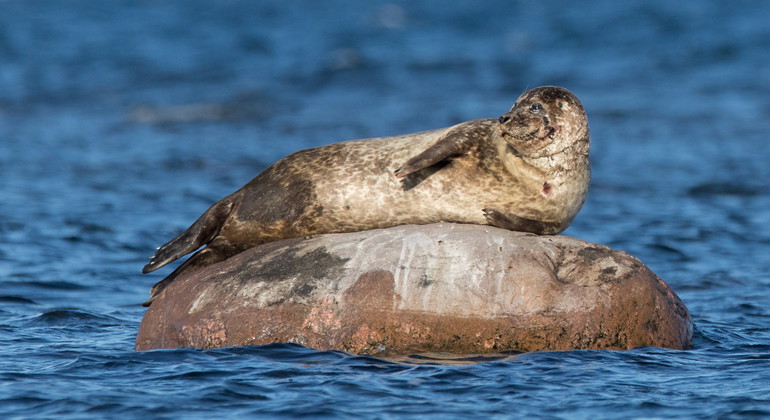
Knubbsäl.
Foto: Mostphotos -
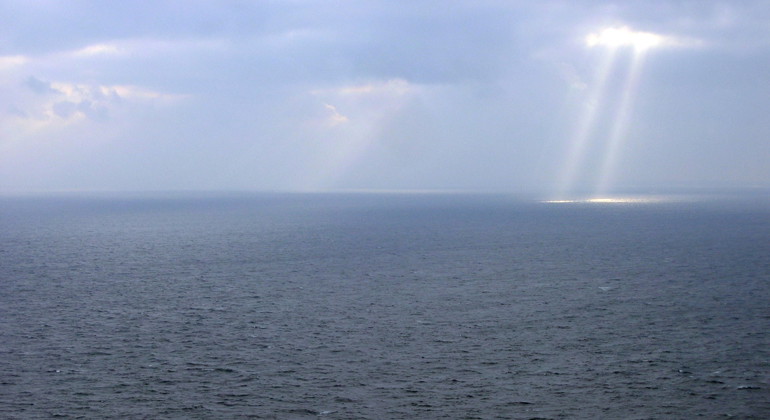
Foto: Björn Olsson -
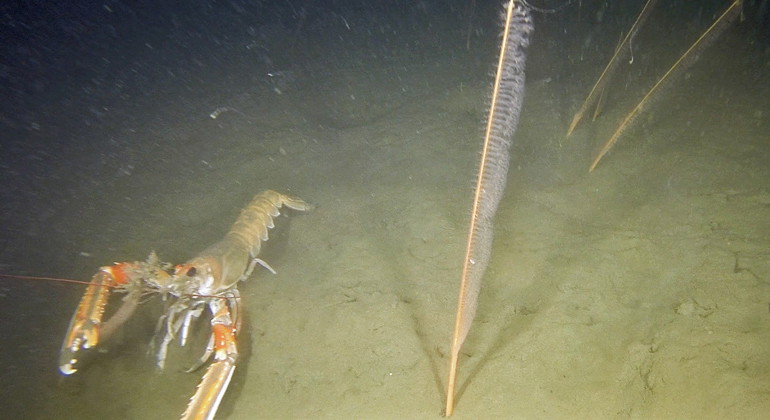
Havskräfta och Virgularia. Foto: PAG Miljöundersökningar -
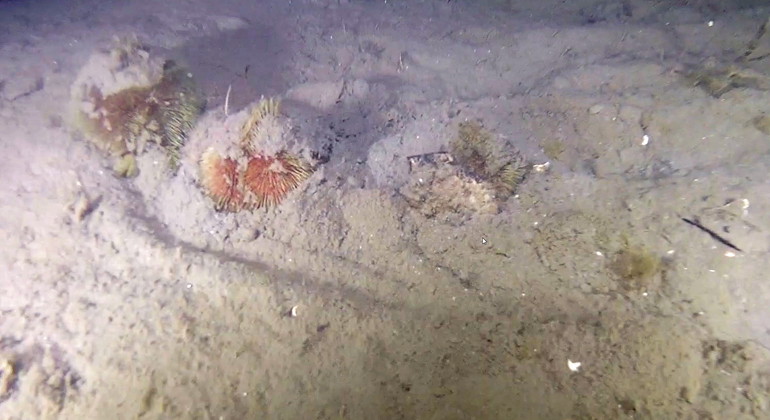
Grävande sjöborrar. Foto: PAG Miljöundersökningar -
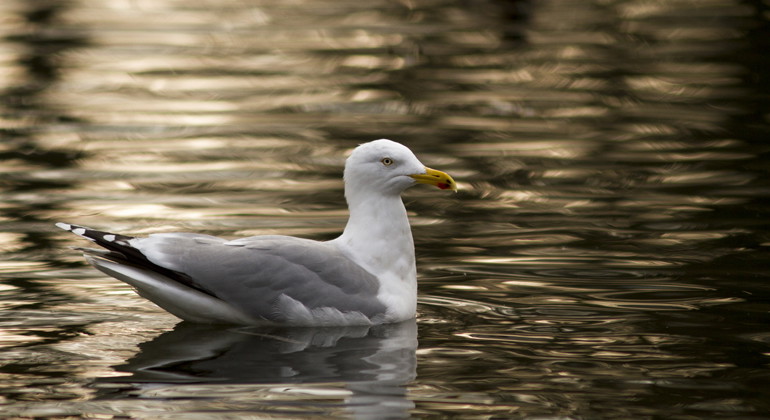
Gråtrut.
Foto: Alex Regnér -
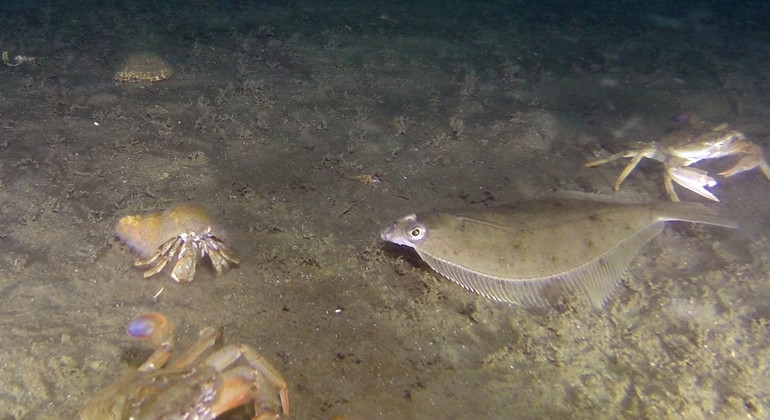
Plattfisk, eremitkräfta och simkrabbor. Foto: PAG Miljöundersökningar -
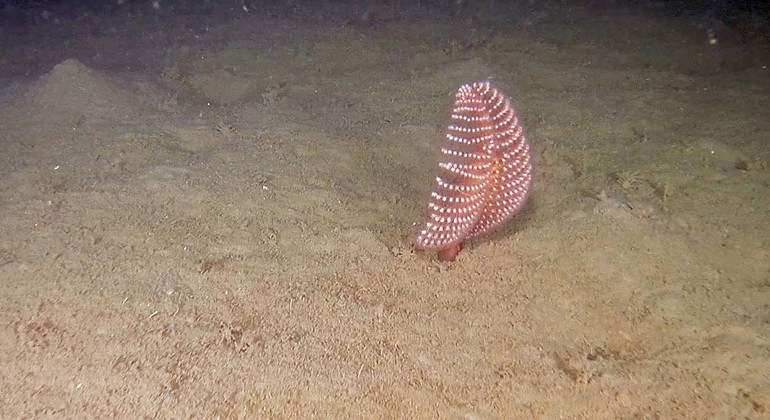
Pennatula. Foto: PAG Miljöundersökningar -
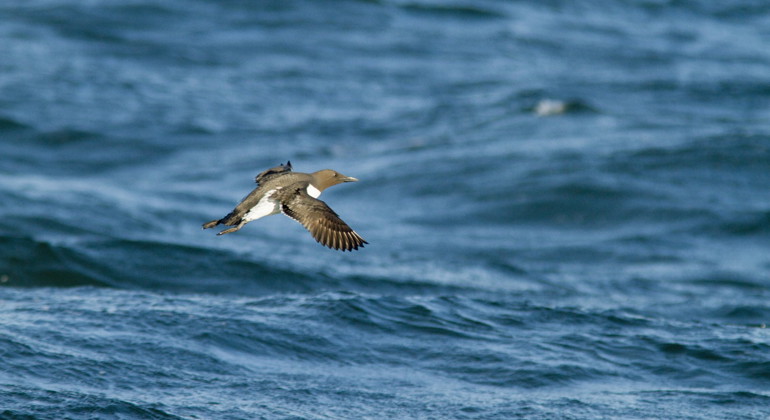
Sillgrissla.
Foto: Alex Regnér -
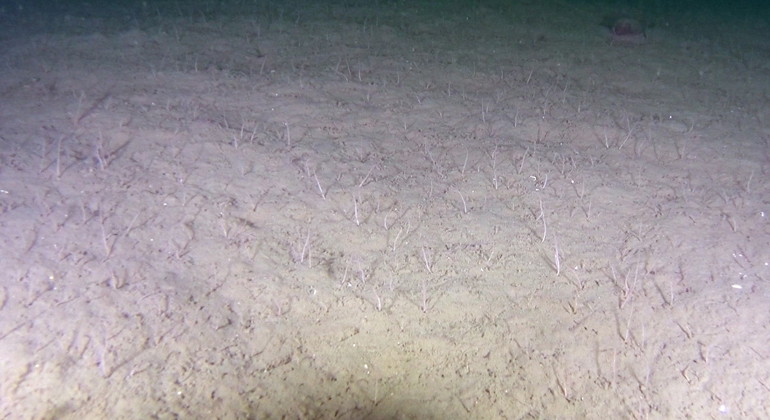
Ormstjärnearmar från nergrävda ormstjärnor. Foto: PAG Miljöundersökningar
Skånska Kattegatt, Naturreservat
- Naturreservat
- Fylke: Skåne län
Handlinger
Beskrivelse
Skånska Kattegatt is a marine area entirely offshore and connects Öresund with the rest of Kattegatt. The soft seabed is home to burrowing corals and crustaceans. The productive environment is of great importance for Kattegat cod and porpoises. At just under 60,000 hectares, it is one of Sweden's largest marine nature reserves. Fishing is prohibited in most of the area.
Salt and fresh water
The soft and clayey seabed lies at a depth of between 19 and 34 meters. Along the bottom, salty seawater comes in from the north. Higher up in the water masses, the water is brackish, i.e. mixed with fresh water. In the deep, salty water, the environment is stable and currents are weaker. This contributes to a richer bottom fauna but also makes the environment sensitive to oxygen deficiency caused by eutrophication, for example.
From brittle stars to sea pens
During the 20th century, life on the seabed has changed. Oxygen depletion and extensive bottom trawling may be the cause. The less sensitive brittle stars have become dominant. Since the closure of the fishery in 2009, the more sensitive coral animals, sea pens, have benefited. In addition to sea pens and brittle stars, there are also various bivalves, starfish, sea urchins and crustaceans. All of them contribute to the oxygenation of the seabed and make it attractive to more species.
Cod and porpoises
In Skånska Kattegatt, it is easy to see the small whale porpoise throughout the year. These are mainly individuals from a group called the Belt Sea population. To communicate, forage and navigate, harbour porpoises use echolocation. This makes them very sensitive to noise disturbances caused by humans. Cod are also sensitive to noise during their spawning season in January-March. This is when a large part of the critically endangered Kattegat stock gathers here. Cod is the most ecologically important predatory fish in Skagerrak and Kattegat and is protected by prohibiting fishing in most of the nature reserve. Gray and harbor seals are other animals in the area.
Outdoor life
The main attraction, apart from the experience of being on the lake, is probably the opportunity to see porpoises but also seals and seabirds. Both porpoise and seal safaris occur in and around the area. Remember to take your trash home with you.
Immerse yourself in the natural values
Substrate, currents and depth
Above the muddy seabed, which lies at a depth of between 19 and 34 meters, there is a southbound salty bottom current. A strong thermocline separates the salty water mass from the northward Baltic surface current, which brings brackish water from the Baltic Sea. Below the salinity layer, the environment is relatively stable and the currents weaker, which both provides conditions for the development of a rich bottom fauna and at the same time makes it sensitive to oxygen deficiency.
Changes in the benthic fauna
At the beginning of the 20th century, the benthic community was characterized by a genus of crustaceans (Haploops). By the end of the century, surveys showed that this community had disappeared from all sample points and that the area was instead dominated by brittle stars. Extensive bottom trawling and periods of oxygen depletion due to ocean eutrophication are likely to have contributed to this change. Bottom trawling and other fishing were stopped in most of the area in 2009 and in recent years oxygen conditions have improved.
Inventories carried out in 2014-2018 in the area now show that the OSPAR habitat "sea pens and burrowing megafauna" dominates throughout the area. Sea pens are coral animals and these are the species small pipe cleaner (Virgularia mirabilis) and sea feather (Pennatula phosphorea). Other examples of species that were frequently found and that are typical of the habitat are the common starfish (Asterias rubens), Norway lobster (Nephrops norvegicus), red hermit crab (Pagurus bernhardus), striped crab (Liocarcinus depurator) and the snake star genus Ophiura. Also found were the Icelandic mussel (Arctica islandica), the crustaceans Calocaris macandreae and Callianassa subterranea, which are also indicators of the Ospar habitat. Further examples of large burrowing species found are the lyrebore (Brissopsis lyrifera), the cordate burro (Echinocardium cordatum) and the glutinosa eel (Myxine glutinosa).
Seven red-listed species have been found, of which special mention can be made of the horse mussel (Modiolus modiolus) and the sand mussel Mya truncata, both of which have declined sharply in many areas in Swedish waters in recent years and are considered vulnerable according to the Species Data Bank 2020 and/or Helcom 2013.
Cod
A large part of the critically endangered (according to Helcom 2013) Kattegat stock of cod congregates in the Scanian Kattegat during January - March to spawn. During spawning, the males court the females with grunts and displaying movements during this period they are particularly sensitive to disturbances, such as noise. Cod is the most ecologically important predatory fish in Skagerrak and Kattegat.
Porpoise
Skånska Kattegatt lies within an area that has a particularly high occurrence of porpoises. These are mainly individuals from the so-called Belt Sea population. Harbour porpoises are found in the area throughout the year. As the harbor porpoise is a small whale that moves in cold waters, it depends on an abundant food supply. To communicate, forage and navigate, porpoises use echolocation. Their sonar consists of fast, high-frequency clicking sounds ranging between 110 - 150 kHz. Harbour porpoises are very sensitive to sound disturbances caused by humans.
The purpose of the nature reserve
Reference area for our marine environment
The overall purpose of the nature reserve is to preserve biodiversity, care for and preserve valuable natural environments and to protect and restore valuable natural environments or habitats for species worthy of protection in a relatively unaffected marine area. An important part of the purpose is that the natural values should be able to develop with minimal human impact. The County Administrative Board is therefore working to ensure that all fishing continues to be prohibited in most of the area. Where fishing is permitted, special rules will apply. At present, these have not been decided. The location of the nature reserve means that shipping through the area is extensive. The harmful impact will be reduced by regulations limiting the speed of certain vessels, the generation of noise, a ban on jet skis and similar vessels and rules on how to travel in the vicinity of marine mammals and seabirds.
Skånska Kattegatt is the first marine nature reserve in Skagerrak and Kattegat that is intended to serve as a comparison area, a so-called reference area, for the marine environment. This means that research and knowledge collection to follow the development of natural values is important and can help us understand more about our marine environment, such as the effects of climate change and fishing.
What you can do to avoid disturbing or harming wildlife
- Turn off the sonar and similar sound-emitting equipment
- Slow down if you are driving a motorized vehicle and follow the speed limit
- Do not throw anything overboard or discharge anything other than clean water
- Maintain a straight and steady course and do not follow or interfere with individuals or groups of marine mammals or seabirds
- Report to the County Administrative Board and the Coast Guard if you see lost fishing gear or fishing where it is not allowed
Aktiviteter og fasiliteter
- Naturreservat
Fakta
Established: 2020
Size: 58 596 hectares
Municipality: Båstad and Höganäs
Administrator: County Administrative Board of Skåne
Protection type: Nature reserve and Natura 2000
Veibeskrivelse
Walk, cycle, take public transport or drive here. On the map, you can click on a parking lot or access point. For directions, click on the 'Find here' arrow (below the map).
Forskrifter
**Within the area, special rules and restrictions apply to the right of public access.
For example, it is forbidden to:
- Driving faster than 25 knots with certain boats
- Anchoring
- Driving jet skis or similar vessels
- Following/riding between individuals/groups of marine mammals and seabirds
- Hunting
Regulations within the nature reserve Skånska Kattegatt Pdf, 105.8 kB, opens in new window
It is important to note that this is only a selection of the regulations.
Full regulations for visitors
In addition to regulations and prohibitions in other laws and regulations, it is forbidden to:
- drill, dredge, excavate, flush sediments, conduct quarrying or other extraction of materials, fill, dump, blast, store chemical substances in sediments or bedrock,
- anchoring
- erect any form of construction or place an object foreign to the nature reserve,
- operate commercial vessels with a length of less than 15 meters at the waterline, or motorized recreational vessels of any size, at a speed of more than 25 knots
- operate personal watercraft or similar vessels
- organizing military exercises
- organize competitions or events that may disturb the natural environment
- engage in aquaculture, e.g. fish or mussel farming or the cultivation of macroalgae, or harvesting of existing vegetation
- introducing or releasing species or populations alien to the area
- hunting
- picking, trapping or collecting plants or animals
- deliberately disturbing marine mammals or seabirds such as following individuals or groups, or driving between pairs or groups of individuals,
Furthermore, without the written permission of the County Administrative Board, it is prohibited to;
13. conduct scientific or other surveys that may disturb wildlife such as collecting or capturing organisms, or with methods that use sonar, other sound generation or electromagnetic radiation.
* watercraft or equivalent means a vessel that has an internal combustion engine with a water jet engine as its primary source of propulsion and is designed to be propelled by one or more persons sitting, standing or kneeling on the vessel rather than in it
Kontakt
Adresse
Under LÄNKAR kommer du till aktuell reservatssida på Länsstyrelsens webbplats, med fördjupande information som kartor, broschyrer och hänvisning till relevanta aktörer. Här finns även en rapportfunktion för dig som vill lämna uppgifter om naturreservaten som vi förvaltar.
E-postadresse
Organisasjonens logotype
Jeg har vært her
Jeg ønsker å dra hit
Spørsmål og svar
Still et spørsmål til andre brukere av Naturkartan.
Omtaler
0 anmeldelser
- 5 :
- 4 :
- 3 :
- 2 :
- 1 :
Brukernes bilder
Ingen brukerbilder ennå. Bli den første til å dele!