Länsstyrelsen Skåne län
Välkommen till Skånes fantastiska natur!

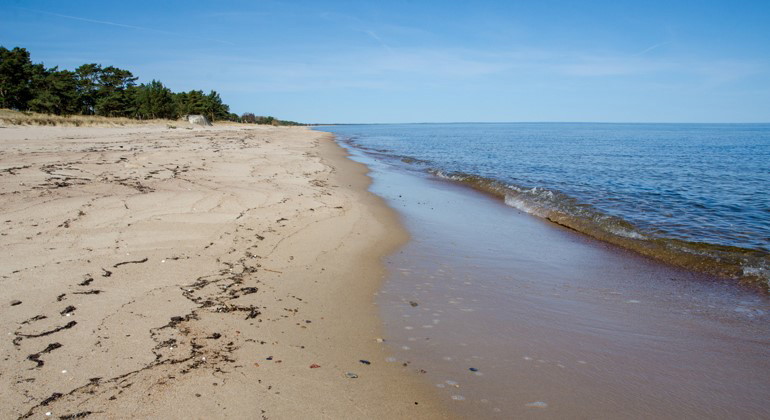
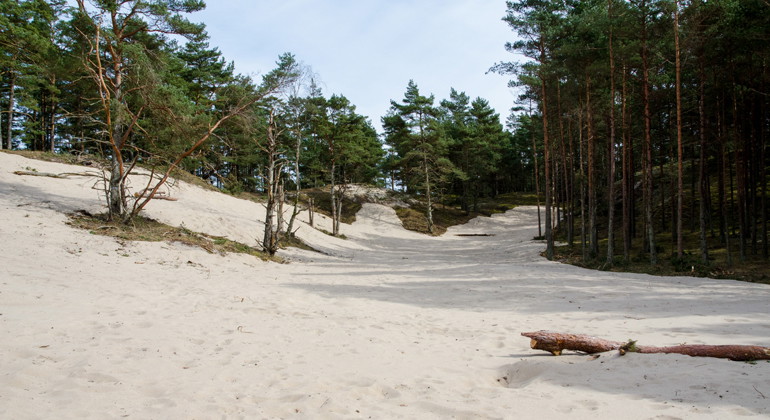
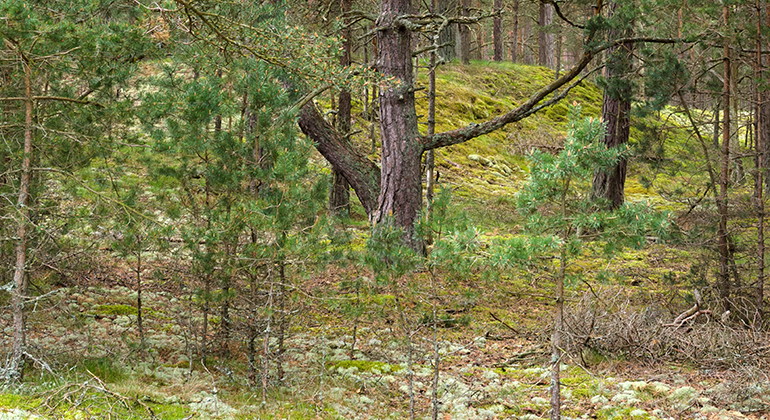
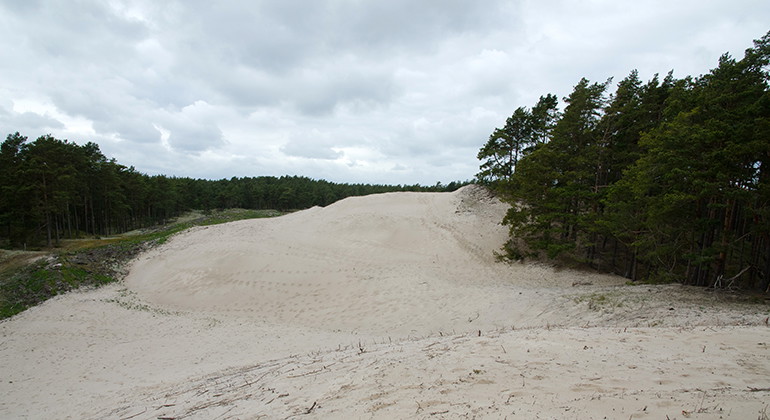
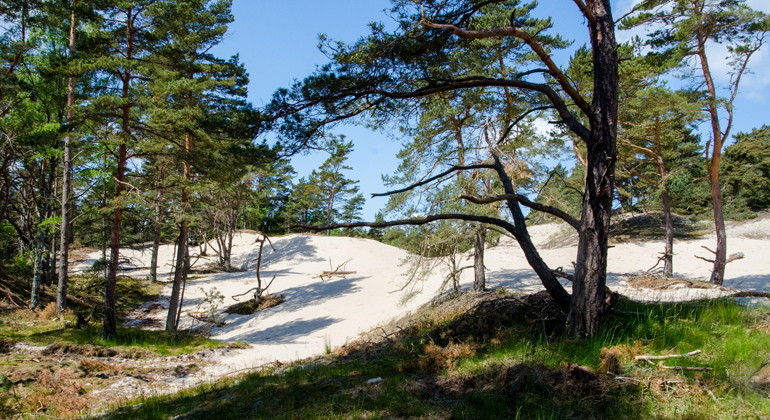
During the summer, many bathers are attracted to the sandy beach at Gropahålet. A short hiking trail starts at the outer parking lot. It goes through the reserve's pine forest over the sand dunes and down to the beach and wave swell. The pine forest is airy and thick mats of lichens and mosses spread out on the ground. In places, sandstar and birch pyrola grow, but also yellow-flowering knapweed and bluebells. Perhaps you will see the sparrowhawk flying by?
The original forest along the coast was probably mostly oak. Due to intensive land use, the coastal area was deforested and the sand was exposed and began to blow around and form drifts. For a couple of hundred years, there were major problems with sand blowing out over the fields inland from the coast. A complex dune system with dunes up to 20 meters high arose in the area. In the early 19th century, pine plantations were carried out to bind the sand and today almost the entire coastal strip is again covered with forest, mainly pine.
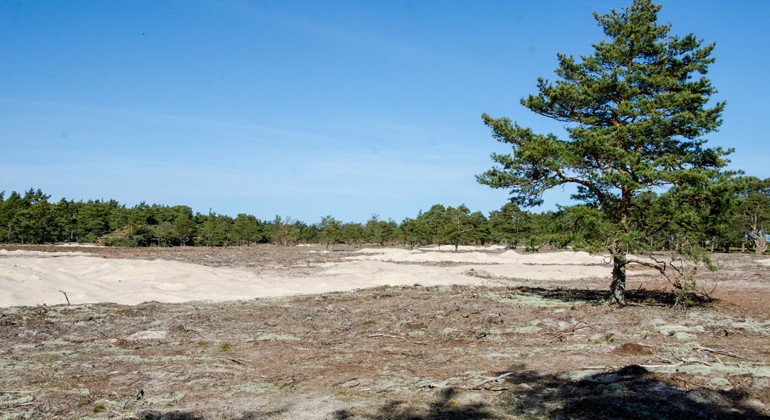
The pine forest in the reserve is relatively open and thick mats of lichens and mosses spread out on the ground. The field layer is home to species such as sand sedge, creeping thistle, knapweed, bluebell, meadowfoam, green pyrola, birch pyrola and yarrow. In the western parts of the reserve and closest to the sea, there are open, more herb-rich areas with, for example, field bindweed, creeping thyme, sand carnation and heath flowers.
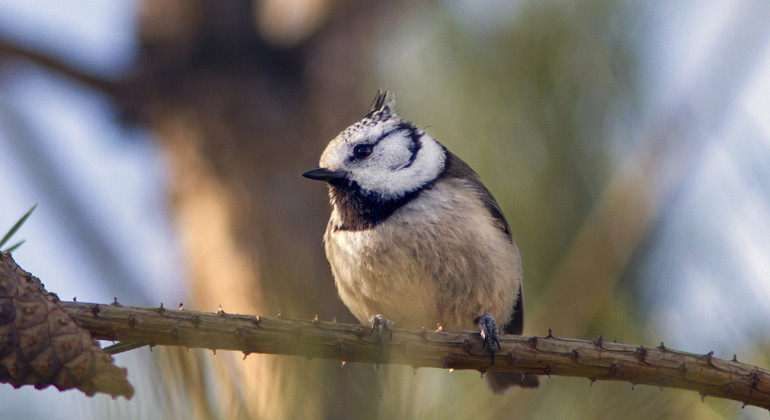
In the pine forest, there are sparrowhawks and wood tits such as the black tit and tufted titmouse. In open, sandy parts of the reserve you can spot the endangered skylark.
During the summer, many bathers are attracted to the sandy beach at Gropahålets nature reserve. The inner parking lot is 200 meters from the beach, which has both dog bathing and natural bathing. There is also a toilet here. At the outer parking lot begins a 1 km long hiking trail that goes through the reserve's pine forest, over the dunes and down to the beach and wave swell. The Skjåneleden trail (SL6 Vattenriket) passes through the reserve between Kristianstad and Brösarp. Remember to take your rubbish home.
Gropahålet Nature Reserve is situated just north of where the river Helge å flows into the sea. Gropahålet is part of the 20 km long area that extends from Åhus to Juleboda and is characterized by sand dunes. Some of the dunes in the reserve are close to 20 meters high.
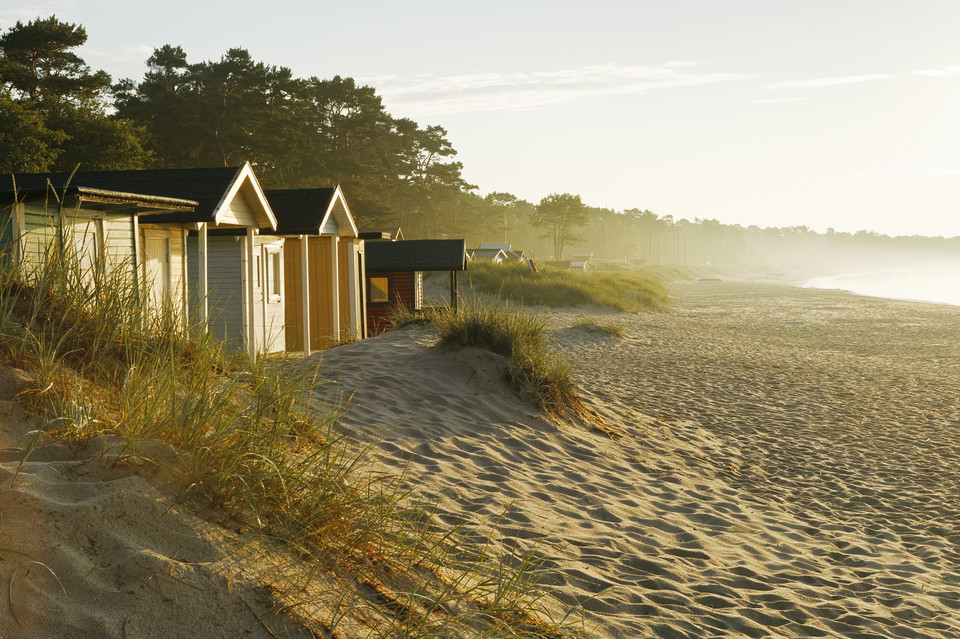
The largest part of the nature reserve is covered by pine forest with a thick carpet of lichens and mosses. The pines were planted during the 1800s to avoid the sand drift that had troubled the area since the original oak forest was felled some hundred years earlier. Closer to the shore, the sand dunes are still forming and shifting to this day.
Among the plant species in the area are dwarf everlast, umbellate wintergreen, small pasque flower and wild thyme. The pine forest houses typical forest dwelling birds, such as black woodpecker, coal tit and crested tit. In open, sandy areas you may encounter the rare and threatened tawny pipit.
Just outside the reserve is a sandy beach that is popular during the summer.
Within Gropahålet Nature Reserve it is forbidden to:
Furthermore, without written permission from the County Administrative Board it is forbidden to:
9. catch insects, spiders, snails, slugs or other invertebrates other than by netting, hand picking or other selective methods that does not destroy the animal's habitat, with the subsequent reintroduction within the nature reserve. The requirement for reintroduction does not apply to individual voucher specimens of each species on condition that the record is logged in the reporting system Artportalen and that the collection is not contrary to the species protection regulations.
Established: 1976
Size: 32 hectares
Municipality: Kristianstad
Manager: County Administrative Board of Skåne
Protection type: Nature reserve and Natura 2000
Walk, cycle, take public transport or drive here. Map and directions via Google maps or coordinates (WGS84).
**Within the area, special rules and restrictions apply to the right of public access.
For example, it is forbidden to:
It is important to note that this is only a selection of the rules.
In addition to regulations and prohibitions in other laws and regulations, it is forbidden to:
Furthermore, it is forbidden without the written permission of the County Administrative Board:
9. capture insects, spiders, snails or other invertebrates other than by scooping, hand picking or other selective method that does not destroy the animal's habitat, with subsequent release within the nature reserve. The requirement for re-release does not apply to single specimens of difficult-to-determine species of each species, provided that the findings are registered in the Species Portal, or equivalent database for threatened species, and that the collection does not violate the conservation regulations.
Under LÄNKAR kommer du till aktuell reservatssida på Länsstyrelsens webbplats, med fördjupande information som kartor, broschyrer och hänvisning till relevanta aktörer. Här finns även en rapportfunktion för dig som vill lämna uppgifter om naturreservaten som vi förvaltar.


Still et spørsmål til andre brukere av Naturkartan.
0 anmeldelser
Ingen brukerbilder ennå. Bli den første til å dele!