Länsstyrelsen Skåne län
Välkommen till Skånes fantastiska natur!
Användare av Naturkartans app för Android rapporterar i sommar att appen är seg mm. Vi rekommenderar att man raderar appen helt från sin telefon i så fall och laddar ned igen! Då skall den fungera bättre. Den befintliga appen skall ersättas av en ny app efter sommaren. Den gamla appen laddar all data för hela landet lokalt i appen (för att klara offline-läge) men det innebär att den blir för stor för vissa telefoner - då behöver den raderas och laddas ned igen!

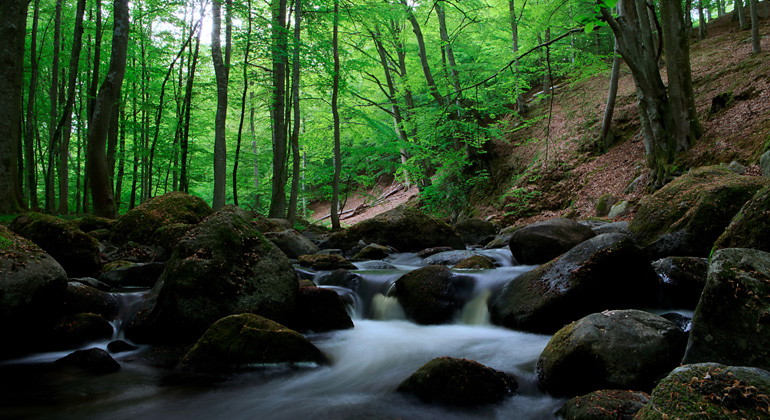
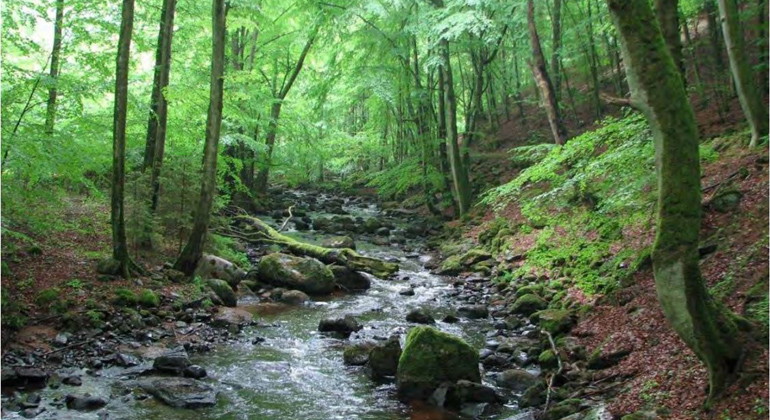
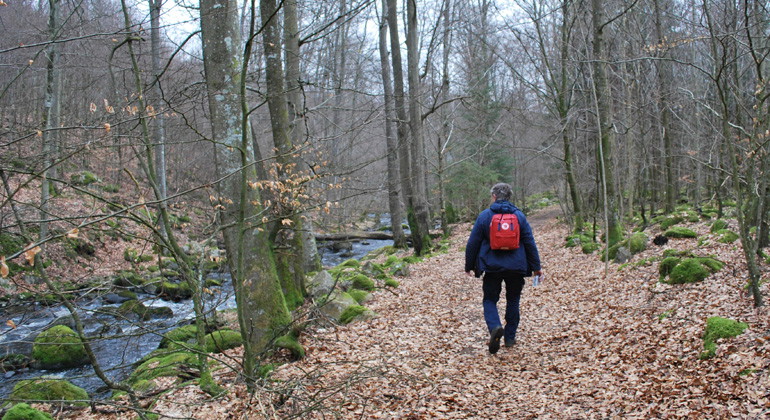
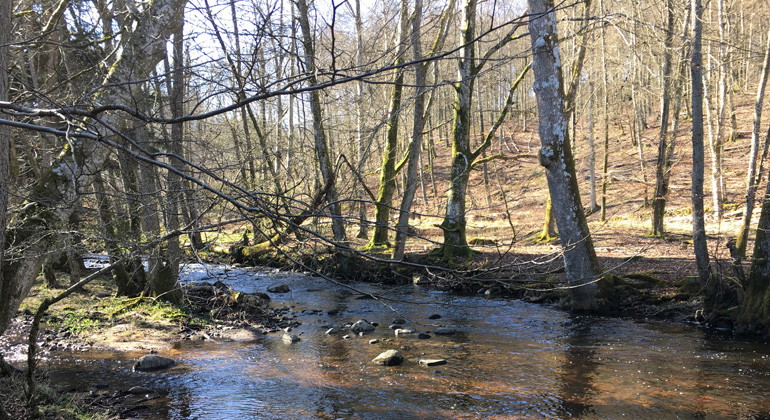
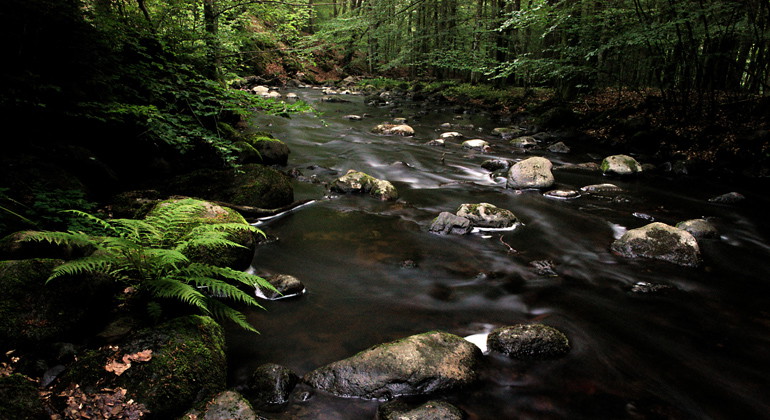
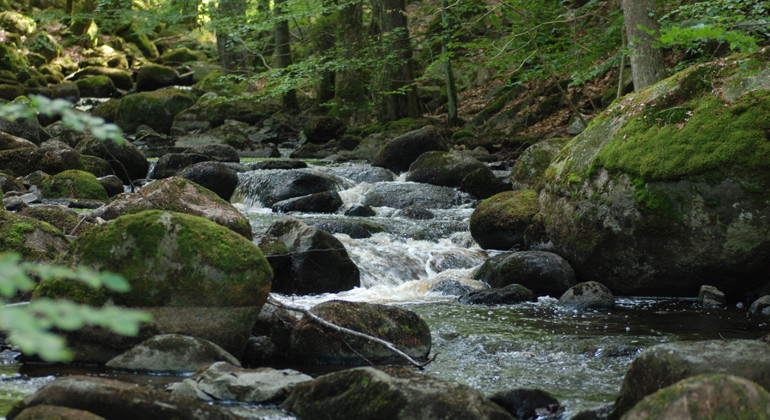
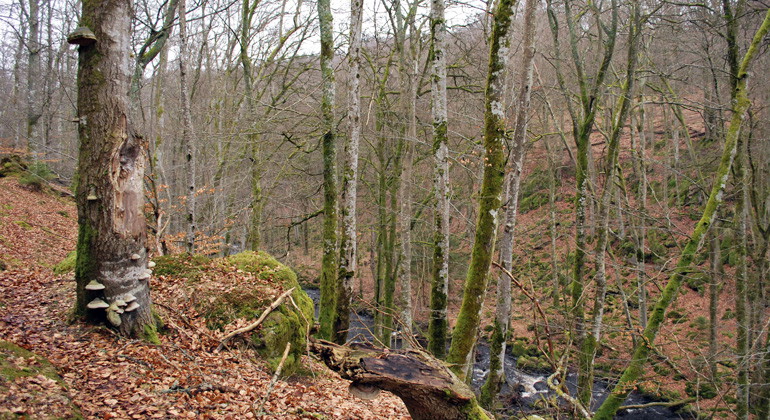
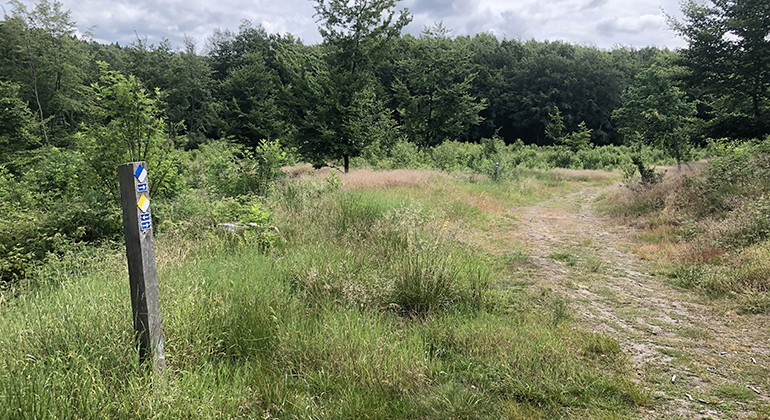
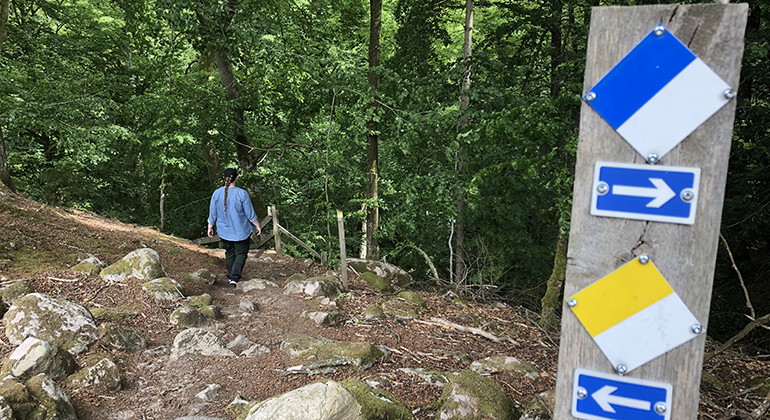
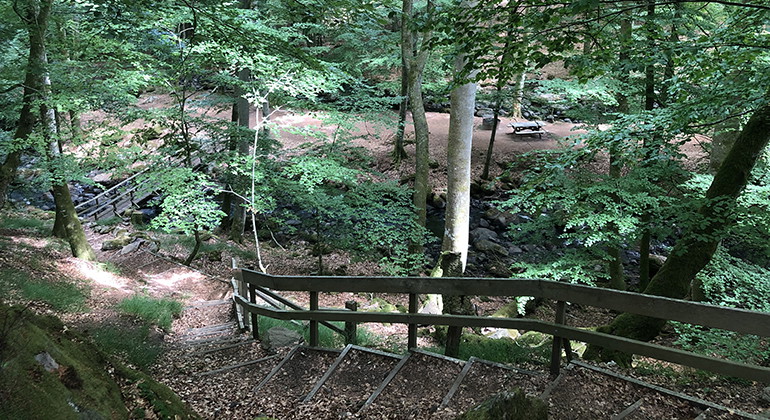
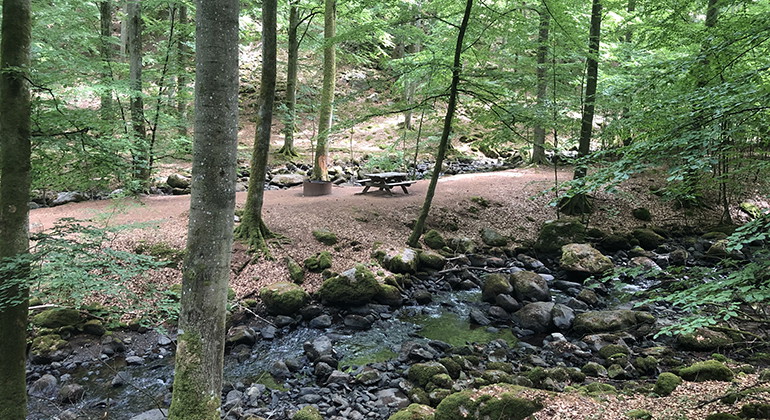
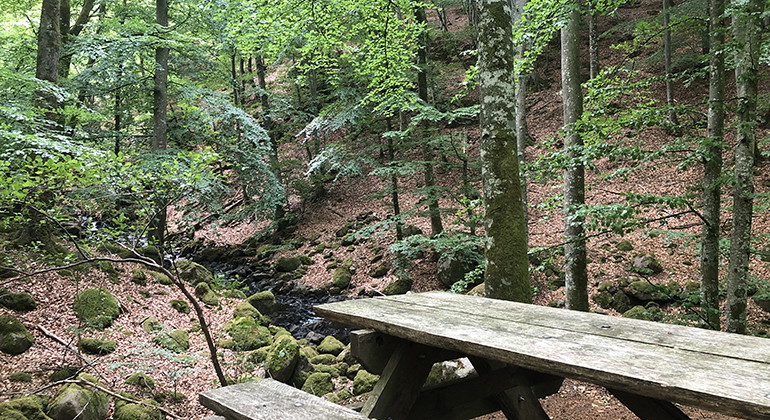
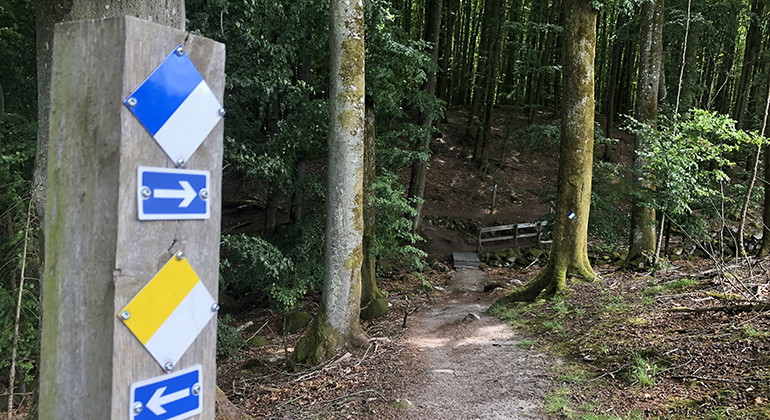
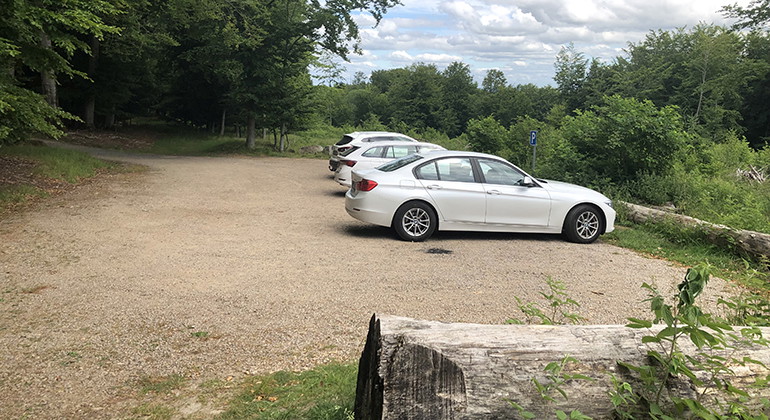
In Åbjär there are two hiking trails that start at the parking lot and initially run together. The reserve offers the hiker varied terrain with Mjöån in the center, which flows through swamp forest and between steep mountain ridges. Many species of mosses, lichens and fungi thrive in the moist environment. The rich insect fauna in turn attracts a variety of small birds and woodpeckers.
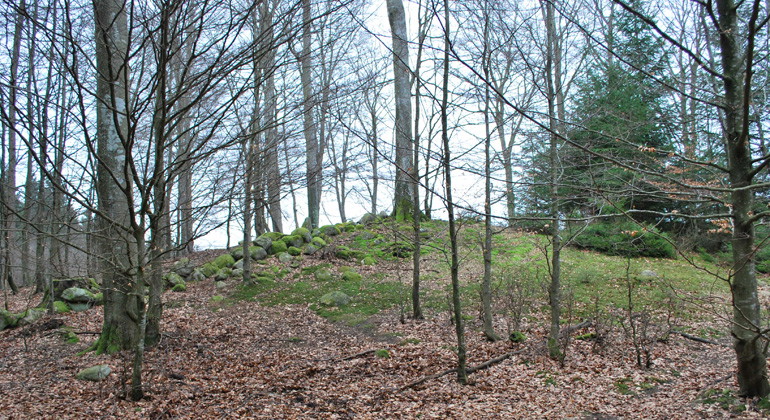
The reserve contains traces of people who lived here several thousand years ago. There are both remains in the form of burial mounds and clearance cairns from ancient arable farming. In the south there is a fossil old field of about 450x150 meters. It consists of stone-cleared areas with 50 stone cairns, so-called clearing cairns. Some cairns are up to 5 meters in diameter and about 0.5 meters high.
For a long time, livestock farming was the most important industry here in the borderland between agricultural and forest areas. Since the grazing animals disappeared, the beech forest has spread. Along the Mjöån river, which flows through the reserve, there is swamp forest consisting mainly of alder.
Mjöån is one of the tributaries of the Helge å water system. It has for the most part retained its original meandering flow. The river's natural value is very high and its clean waters are home to many species of fish and insects. Fish such as trout and minnow provide conditions for the endangered thick-shelled mussel to reproduce and spread. The larvae of the mussel live as parasites on the gills of fish. After a few months, they develop into millimeter-sized mussels that fall off and bury themselves in the river bottom where they remain for a few years. The thick-shelled mussel has been shown to live to be around 90 years old.
Many species of mosses, lichens and fungi thrive in the damp environment around Mjöån. On the difficult-to-access slopes, landslides cause trees to fall and remain lying. These dead trees provide a habitat for many rare fungi, lichens, mosses and not least insects. Among the real rarities of the area is the red-eyed moth, a species of beetle whose larvae live in rough, rotting beech stumps.
The rich insect fauna in turn attracts a variety of small birds and woodpeckers. In and around the Mjöån river, you can spot white-tailed godwits and common terns.
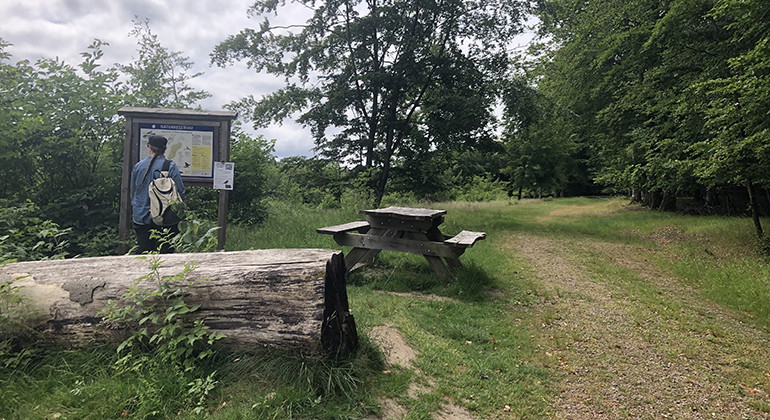
In Åbjär there are two hiking trails, a yellow one (about 2.5 km) in the northern part of the reserve and a blue one (about 3 km) in the south. The trails start at the parking lot and initially go together. At the stairs the trails separate. The yellow trail continues down the stairs. Down here there is a rest area with a fireplace. Remember to bring charcoal if you are going to grill and to take your trash home. If you continue the yellow trail north, there is another rest area with bench tables next to Mjöån. If you choose the blue trail instead, you go past the stairs and over a footbridge and continue the hike south. Here you pass the fossilized old field with its 50 clearing cairns.
Walkers visiting Åbjär Nature Reserve discover a varied terrain with the River Mjöån ravine running through the center. There are interesting footpaths through the beech woodland and along the river. The River Mjöån runs through wet woodland and between steep ravine walls.
Here in the boundary between farmland and woodland, livestock farming has long been the most important source of income. The beech woodland has spread out since the grazing animals disappeared.
The River Mjöån is one of the tributaries of the River Helge water system. It has virtually retained its original, meandering course. The nature conservation value of the River is high and many fish and insect species live in the clean water. Fish such as brown trout and common minnow provide the conditions for the threatened thick-shelled river mussel to breed and disperse.
In the humid environment around the River Mjöån, many species of mosses, lichens and fungi thrive. On the inaccessible steep slopes, the scree, trees that fall are left lying. These dead trees are a habitat for many rare fungi, lichens and mosses but not least insects. Small birds feed on the insects.
Within Åbjär Nature Reserve it is forbidden to:
Without permission from the County Administrative Board, it is also forbidden to:
Established: 2012
Size: 93 hectares
Municipality: Kristianstad
Administrator: County Administrative Board of Skåne
Protection type: Nature reserve and Natura 2000
Walk, cycle, take public transport or drive here. Map and directions via Google maps or coordinates (WGS84).
In addition to regulations and prohibitions in other laws and regulations, it is forbidden to:
Furthermore, it is forbidden without the permission of the County Administrative Board:
8. collect mosses, lichens, or wood-living fungi,
9. catch and remove insects or other animals with killing traps, or otherwise damage wildlife or their habitats.
Under LÄNKAR kommer du till aktuell reservatssida på Länsstyrelsens webbplats, med fördjupande information som kartor, broschyrer och hänvisning till relevanta aktörer. Här finns även en rapportfunktion för dig som vill lämna uppgifter om naturreservaten som vi förvaltar.



Still et spørsmål til andre brukere av Naturkartan.
0 anmeldelser
Ingen brukerbilder ennå. Bli den første til å dele!