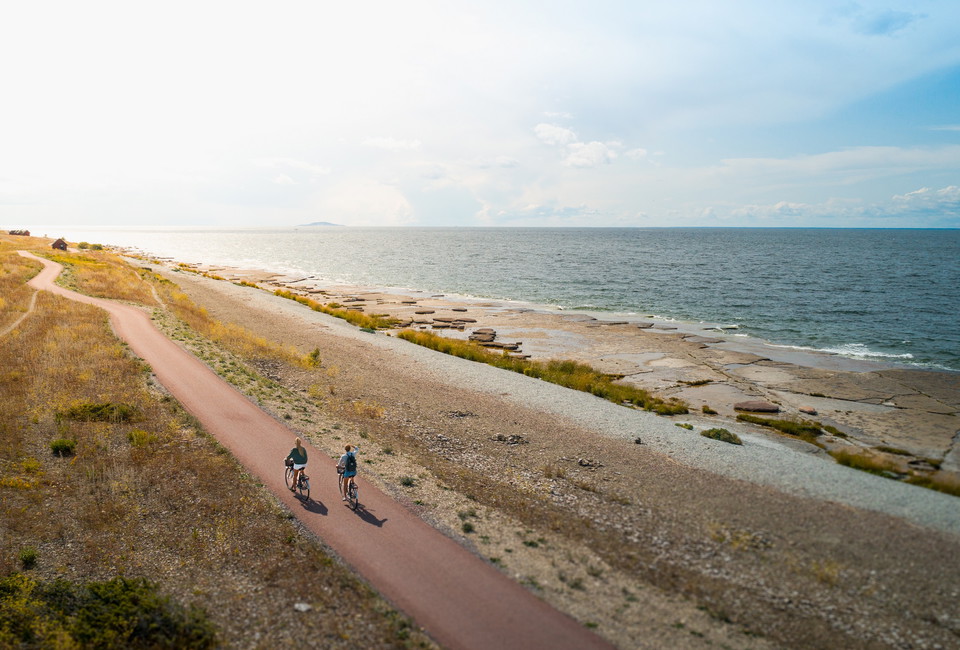
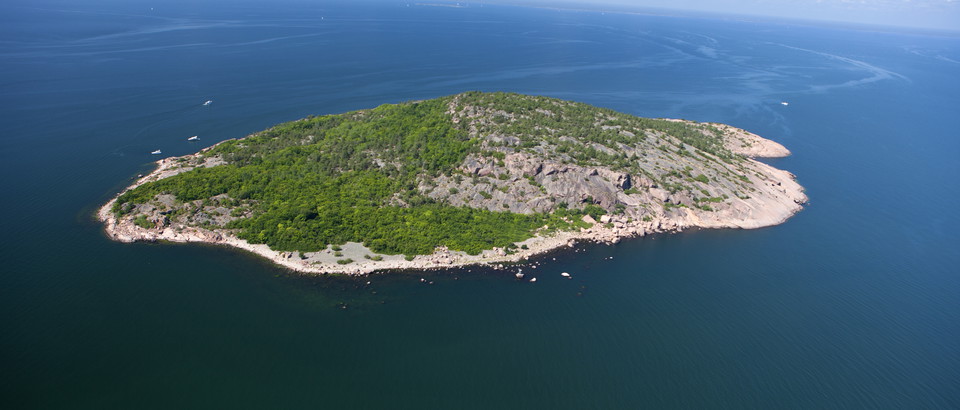

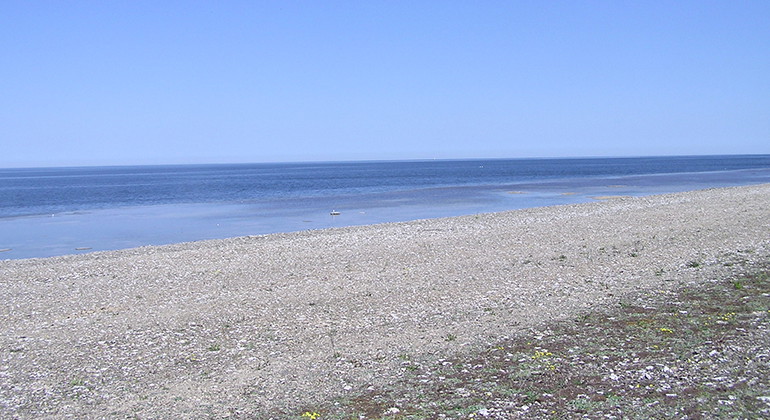
Between the northern tip of Öland and Byxelkrok, vast shingle fields dominate the landscape. The most famous area is the Neptuni fields. Undulating sea wall formations, burial grounds from the Viking Age and fantastic color splendor when the bluebells bloom in summer contribute to Neptuni fields being one of Öland's most visited areas.
The name Neptuni åkrar comes from Linnaeus who made his Öland journey in 1741. Despite the name, this shingle embankment is a natural formation deposited by the last ice sheet. When the ice melted, material was deposited that was then shaped by the waves over thousands of years. From the shoreline to the shore, a 200-metre-wide seawall system extends. A seawall consists mainly of flat stones and gravel that have been transported by the waves above or parallel to the waterline. Seawalls can consist of different layers deposited as the water level recedes over time. The oldest layer is therefore the one that is highest above the waterline. At Neptuni Fields, there are about ten parallel embankments consisting mainly of limestone. Along the shore, the underlying limestone is visible in the form of a so-called pallet plane that extends into the water.
In this barren and windswept environment, only very drought-resistant plants can survive. The vegetation in Neptuni fields is therefore very sparse. Yet it is precisely the vegetation that is one of the reasons why Neptuni Fields is one of Öland's most visited areas. In summer, the gray fields turn into a colorful, blue sea of flowering bluebells. The bluebell is not native to Öland but has been introduced with the help of man. In 1934, a boatload of gravel from Ven was landed in Byxelkrok. The gravel contained bluebell seeds that spread and today bluebell grows in several places on Öland.
The area is well researched in terms of fossil fauna, which is very rich. There are many examples of trilobites, a kind of arthropod, and brachiopods or armchairs, a kind of mussel.
Adjacent to the southern part of the reserve is a burial ground of great cultural and historical interest. It is Öland's northernmost burial ground and has been dated to the Viking Age, around 1000 years after Christ. The burial ground is 150 meters long and 30 meters wide and includes cairns, stone circles, coffin graves, trident, stone remains and a ship-shaped stone called Forgalla ship. About 10 of the graves have been investigated. About 500 meters south of the burial ground there is a 1.7 meter high stone called Höga flisa. According to tradition, it is a remnant of a place that was a Christian place of prayer for the fishermen of Byxelkrok.
Year of decision: 1975
Area: 20 hectares
Municipality: Borgholm
Landowner: Individual
Administrator: Kalmar County Administrative Board
The reserve is located next to road 136, about 2 kilometers north of Byxelkrok. There are four major parking pockets along the reserve.
In the nature reserve you are not allowed:
C. Regulations under 103 of the Nature Conservation Act on what the public must observe within the nature reserve.
In addition to what is prescribed by law and regulation, the public shall be prohibited from within the area
Per Markus Jönsson




Still et spørsmål til andre brukere av Naturkartan.
0 anmeldelser
Ingen brukerbilder ennå. Bli den første til å dele!