
A famous burial ground. The legacy of some stubborn farmers. An amazing diversity of plants and animals. You can spend many hours here in Karum. Feel the wings of history as you wander among all the ancient remains. And marvel at the changing nature, from barren alvar to lush deciduous forest.
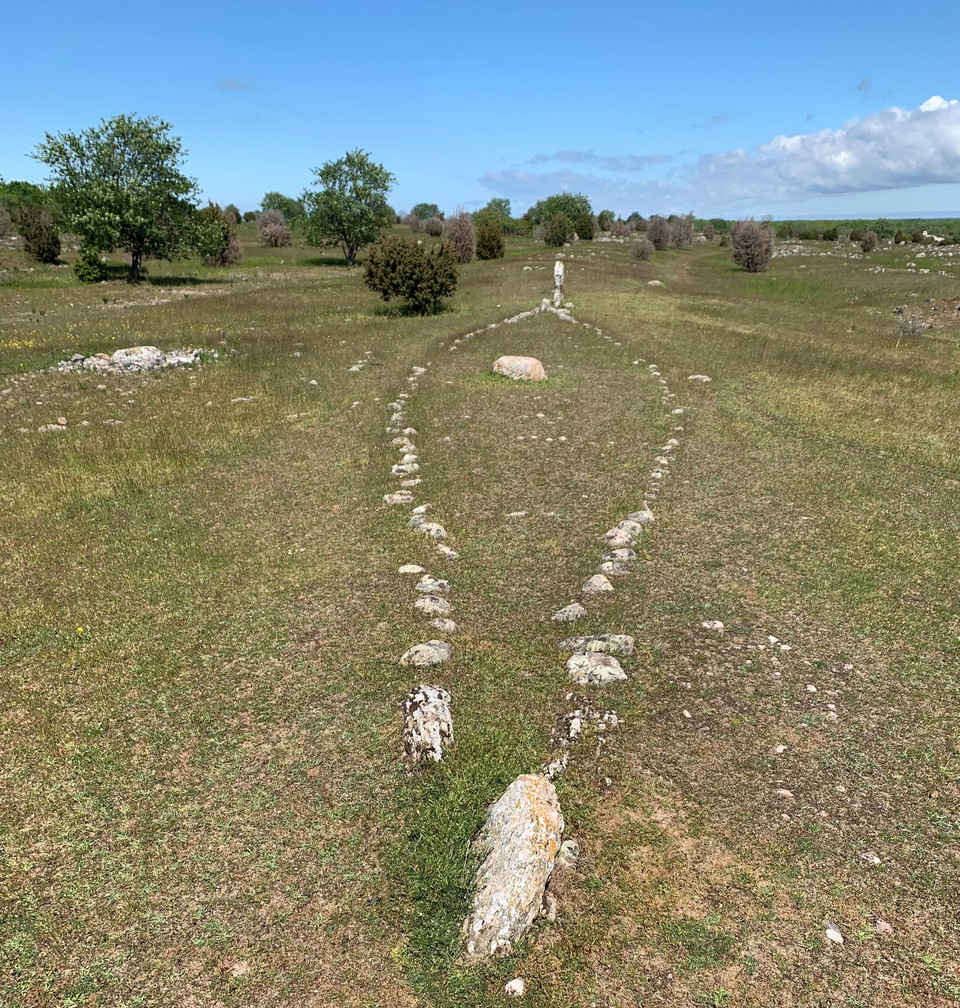
People have lived here in Karum since the early Iron Age. There are many traces of the different eras, especially in the form of stones! Stones that mark an old boundary, that were once the foundation of a house, or that have been carried away from the farmland and piled up. Perhaps most fascinating are all the stones that mark where ancient people buried their dead, in the burial ground called Noah's Ark.
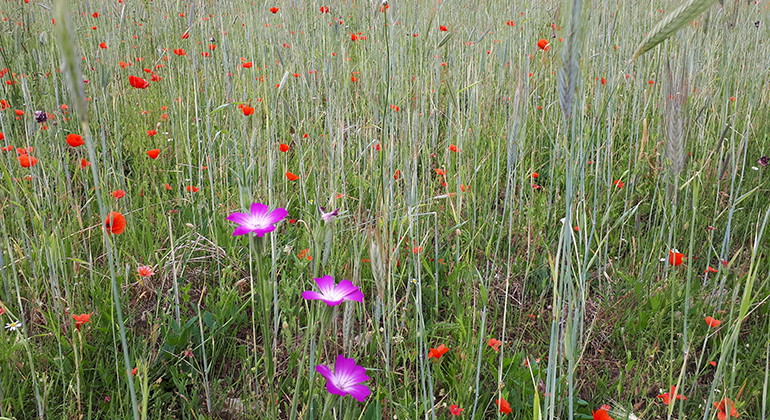
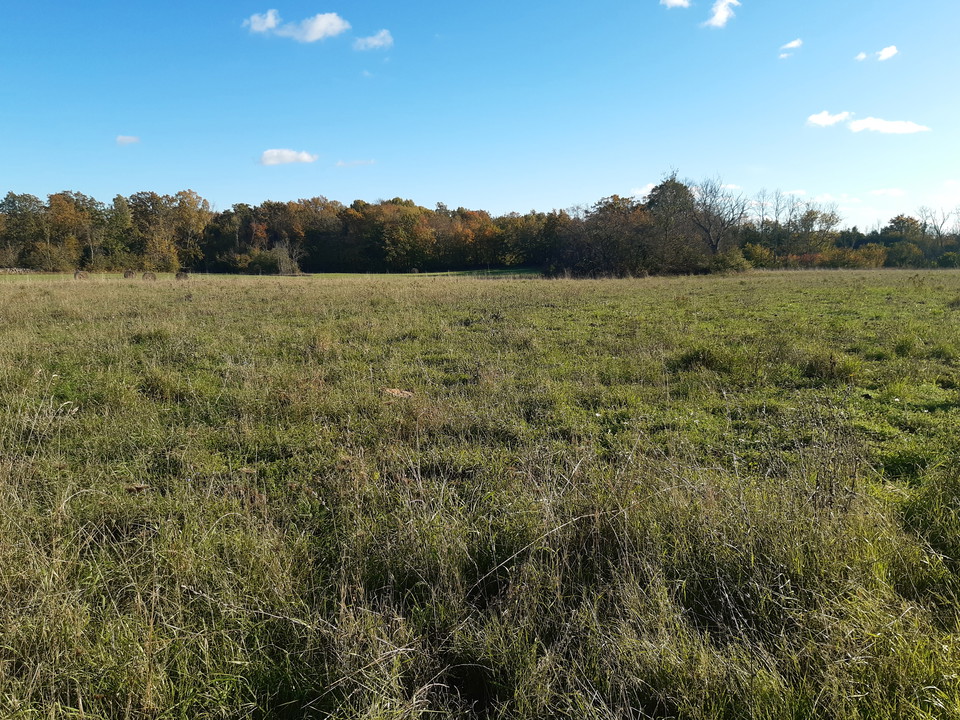
During the 18th and 19th centuries, several agricultural reforms were implemented in Sweden. Farmland was divided up and farms were moved. But in Karum, the villagers didn't really get along, so there weren't many changes. Thanks to the stubborn farmers, an old-fashioned agricultural landscape has been preserved to this day. Then as now, the village farms are surrounded by small fields bordered by stone walls and to the south, on Karum's alvar, are the pastures. The fields are also farmed in the old way. Rye is sown in the first year, barley in the second and the field is left to rest in the third. In recent years, old hay meadows have also been brought back into use.
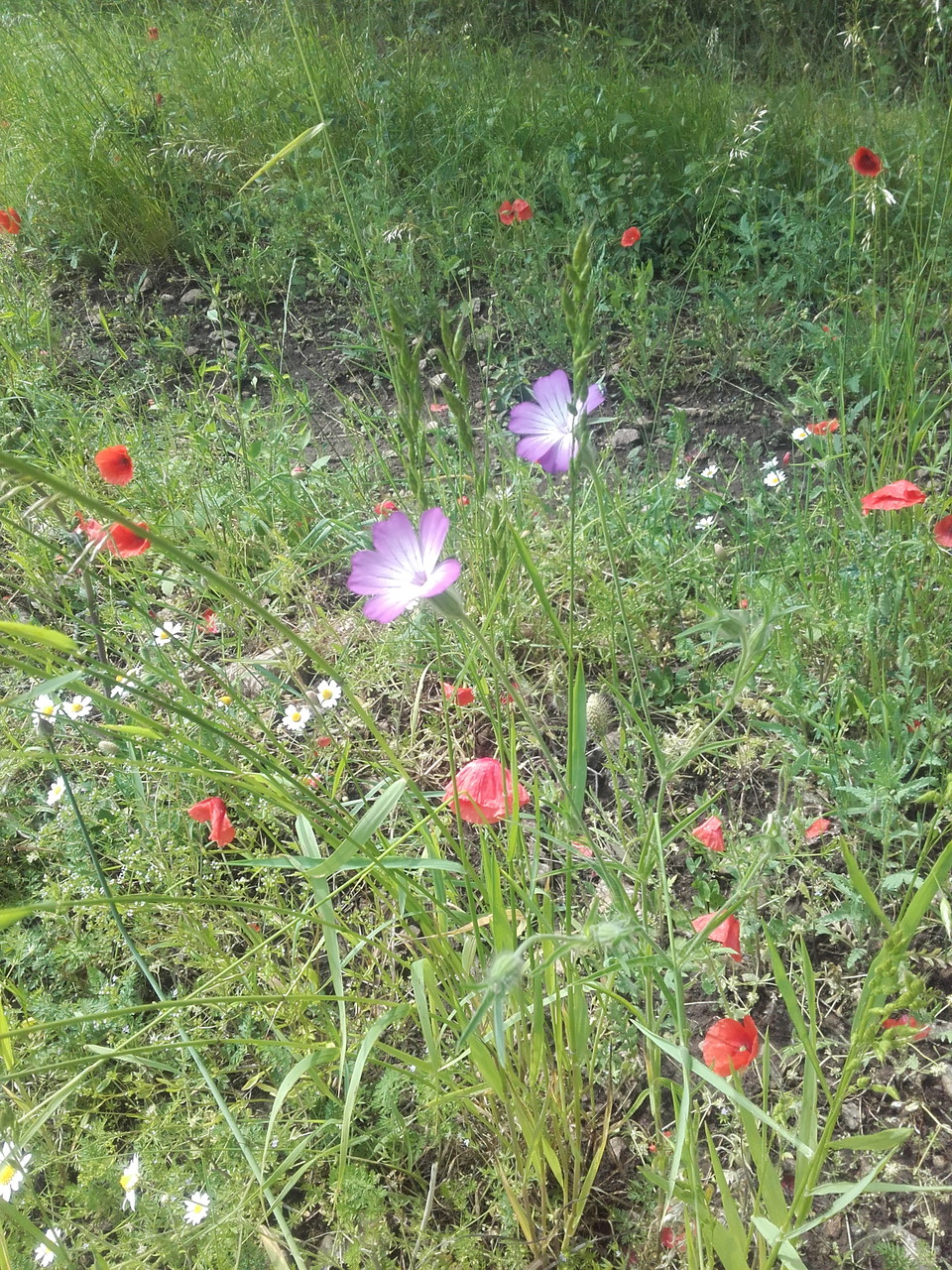
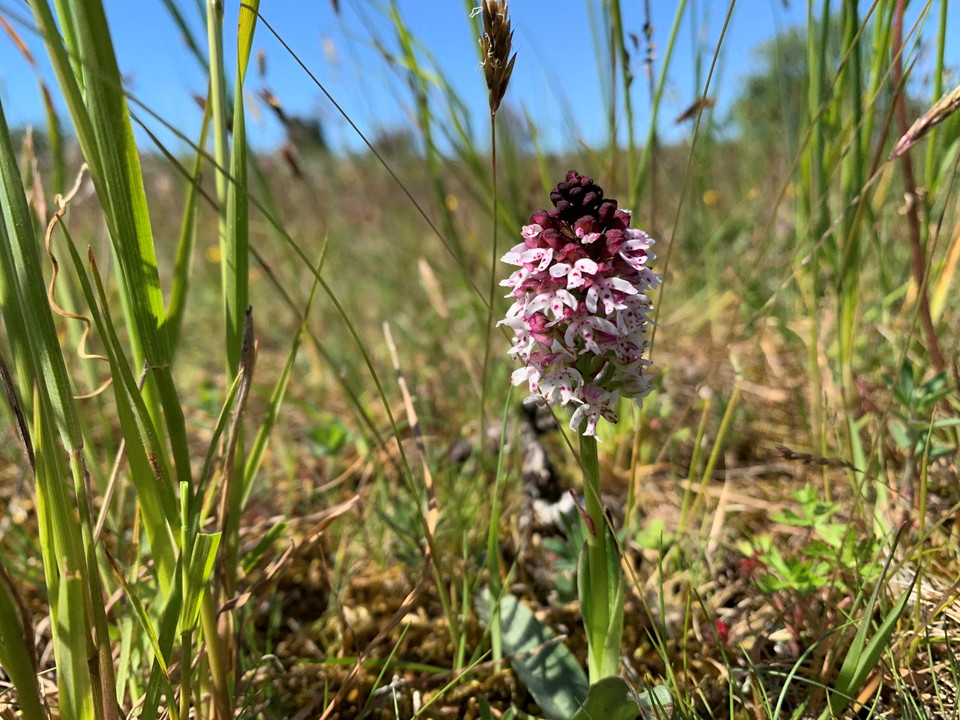
There are many plants and animals to discover in Karum. Different kinds of flowers grow in the hay meadows, in the old-fashioned fields and on the alvar. The nectar and pollen of the flowers attract butterflies and other insects. Some beetles, aptly named dung beetles, prefer the droppings of grazing animals! In the calcareous soil of the deciduous forest, the knotty red truffle and other exciting fungi grow. The fact that the land is farmed in an old, traditional way is a prerequisite for preserving this diversity. Farming favors rare arable weeds; grazing and mowing keep shrubs and undergrowth at bay, preserving the richness of flowers.
The agricultural landscape in Karum can largely be regarded as a relict area. The landscape we see today bears traces of many different periods, from the Iron Age onwards. Prehistoric house foundations and enclosures from both the Iron Age and historical times, cairns, farm roads and cultivated areas are examples of easily perceived elements in the landscape. Maps show the development of the village from the late 17th century to the present day. The 1680s land revision map shows how the small, irregularly shaped fields are adjacent to the settlement. The 1777 probate map shows that small areas have been cultivated in the meadow. This is particularly noticeable in the southern, central and western parts of the village. The Great Partition was never established. The division of land made in the early 1800s meant that the alvar lands south of the village were added to the village. The 458 acres that went to Karum consisted largely of dry and sharp pastures and in several places the limestone chips were exposed. Barely 40 years after the major shift, the single shift began. There were major disagreements between the farm owners in the village, and this parcel was not completed either. However, the map drawn up in 1817 gives us a very good picture of the village's agricultural landscape. In 1839, the legal shift was established for Karum, which was not fully implemented. We do not know the reason for the disagreement over the implementation of the parcel. Perhaps it was felt that the disadvantages outweighed the advantages, and the costs of the parcels were perhaps higher than the profits that could be made.
Almost all of this area contains the remains of Iron Age farmsteads linked by stone walls. The area also extends beyond the boundaries of the village. The lack of land consolidation in the village means that there are many links between the Iron Age farming landscape and the historic settlement. 19th century stone walls often coincide with earlier boundaries that may be almost 2000 years old. The deciduous forests have a rich flora, especially in terms of fungi. Some twenty rare species have been observed. These include lily of the valley, olive brown spider mite, mouse-ear mushroom, stalked mushroom and red truffle. The shadow lousewort, lesser celandine, and lesser celandine are some unusual vascular plants that grow in the forests.
In the southwestern part of the area is one of Öland's more famous burial grounds, very close to the ancient and winding road between Högsrum and Gärdslösa. The burial ground is sometimes referred to as Noah's Ark, but in fact this name only refers to the large ship that you first notice. In total, the burial ground contains some 70 graves. Most of them are stone circles in various shapes, sometimes pile-like. Some 25 graves have been investigated, including four rectangular stone circles, which turned out to be weapon graves from the pre-Roman Iron Age. The burial ground was laid out during the Bronze Age and was probably used during large parts of the Iron Age.
Karum village is located in the central part of Mittlandsskogen. The village consists of three farms: Östergården, Mellangården and Västergården. The fields in the village are small and surrounded by stone walls. They are farmed in the old way according to a three-year crop rotation, so-called three-seed. Rye is harvested in the first year, barley in the second and the field is left fallow in the third. In smaller areas, old country varieties such as Gotland rye are grown. The weed flora of the fields is very rich as a result of the old-fashioned farming. Examples of some of the rarer plants are cleavers, rye grass, field bindweed, small-fruited maidenhair, lesser celandine, barley thistle, summer cress and field bindweed. Several small and completely open hay meadows have been restored in Karum's inland area. Here you can find small remnants of the grassland flora that was previously dominant in the landscape. The majority of the meadows consist of healthy and moist meadows.
Pastures still dominate the old outfield. In the far south is Karum's alvar, one of the few alvars on central Öland. The area of rocky ground and gravel lichen is quite small. Most common is an intermediate form of gravel alvar and herb-rich dry grasslands with a broken and relatively sparse field layer. The central part of Karum's alvar has a slightly thicker soil cover. This part was previously heavily overgrown but has been opened up in recent years and the original grassland flora has gradually begun to migrate in again. In the low-lying parts of the alvar there are well-formed, moist grasslands with a species-rich flora dominated by alder. Herbs are abundant in places, including species such as mayweed and honeydew. In the northern part of the alvar there are two small marshes that hold clear water for most of the year. The marshes are important spawning grounds for long-legged frogs.
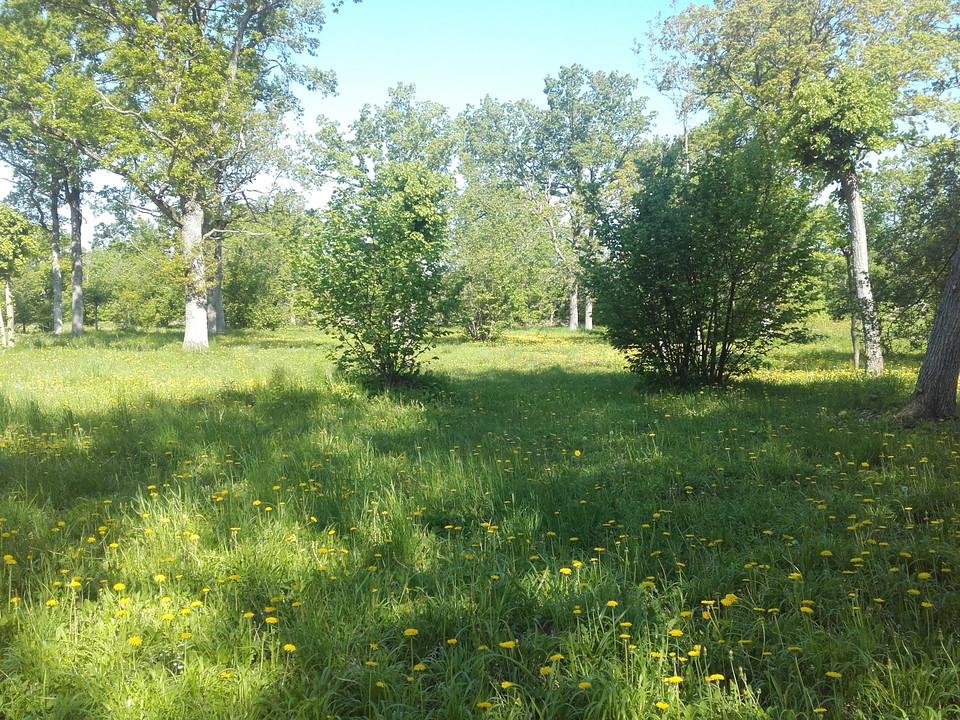
The surroundings are characterized by large deciduous forest areas with a small proportion of cultivated arable land. The vegetation in the area is strongly characterized by previous land use. The land in the fence consists mainly of deciduous forests and arable land. The deciduous forests have a certain variation in both species content and density. The most common forest type is oak/hazel forest with a field layer of noble oak type. The forest bingle is one of the most common vascular plants. Many of the oaks are very old and have been here since these lands were managed as hay meadows. Other deciduous trees also occur in the grove-like oak forests, mainly ash, elm and lime. Sometimes the shrub layer is dense and the hazel is then mixed with hawthorn bushes. In moist areas, the mix of ash increases; the field layer changes to a tall herb type with herbs such as meadowsweet and hop flowers. In the wettest parts, the forest changes to pure ash forest. There is a large amount of willow scrub along the marked damp patches. Previously completely open areas are now dominated by birch. Hazel is also common in these parts, but there are also elements of hawthorn and rosehip.
In connection with the burial ground at Noah's Ark, there is a herb-rich, dry grassland flora with several rare species such as clove, bird's-foot trefoil, alvar veronica and large sand lily. The alvar snail has been present in the area and it is still possible to find shells, but it is uncertain whether it is still alive. In 1998, the first Swedish discovery of the meadow roadside was made at Karums alvar in 25 years. The species was last collected on Öland in the 1930s, including in Ekerum and Halltorp. Among the red-listed butterflies on the alvar, the pale yellow lichen fly, the striped heath spinner, the white-yellow leafy meadow moth and the club-footed bastard moth can be mentioned. Several interesting beetles occur, including the shiny shouldered beetle, alvar fall beetle, moonhorn beetle, azure beetle, the weevil Lepyrus capucinus and the lizard dung beetle. A rarity is the shortwing Chennium bituberculatum, which in all of Northern Europe has only been found on Karum's alvar and a single find on Greby alvar just northwest of Karum. The first find was made in 1955 and then it took another 25 years before the next specimen was found despite extensive searches. The shortwing lives together with the grass peat ant under stones. The role of the beetle in the ant community is unclear, but it probably feeds on ant eggs and larvae. In return, it provides the ants with a secretion. The strange thing is that the ant is quite common on Öland and in eastern Småland. Another interesting ant, the twig ant, was found in the area in 1989 as a new species for northern Europe. The species was later also discovered at a site on Gotland.
There are three parking lots within the reserve. The southernmost is located at the burial ground and the ship Noah's Ark. North of there is a larger bus parking lot on the road towards the village of Karum. On the same road in front of the village there is a smaller car park.
There is an information point at Kvarnkullen where you can also sit down and eat your packed lunch if you wish. There are benches and picnic tables along the trails.
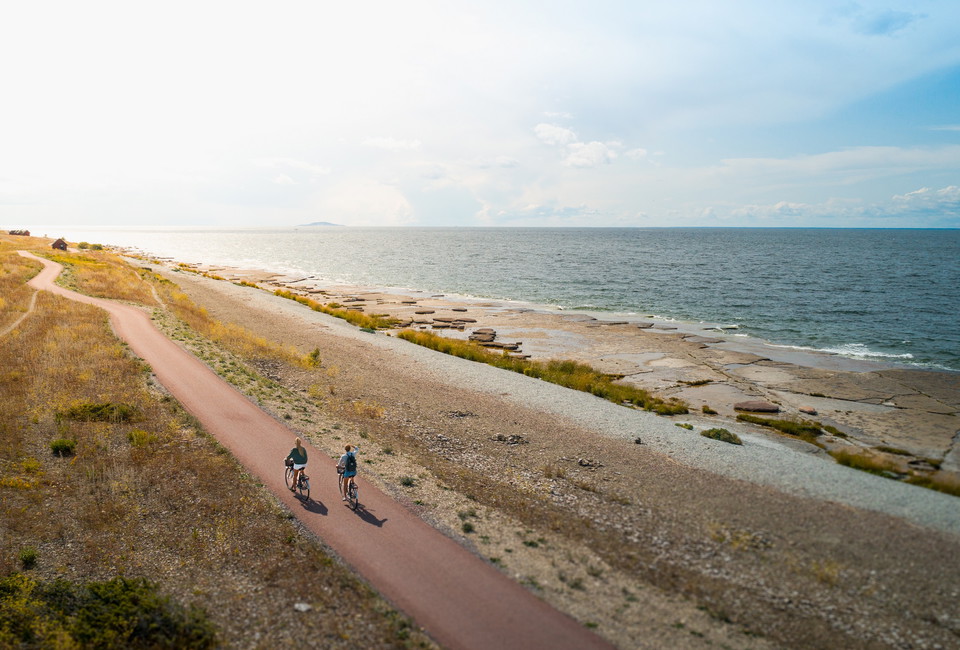
Within the reserve there are a number of marked trails to choose from, you can reach these best from the parking lot closest to the village. Along some trails there are information signs. The signs describe Karum and its land, what it looked like in the past and a little about how they are managed now. Three of the signs have been specially designed to show the three-seed system in which the fields in Karum are farmed. They are adjacent to three fields that are in different years in the cropping system, rye barley and fallow.
After periods of rain and after snow melt, certain stretches along the trails are very wet. Boots are advisable.
There are 5 marked trails within the reserve. They are most easily reached via the car park closest to the village of Karum. After periods of rain and after snow melt, some stretches along the trails are very wet. Boots are advisable.
The Karum Trail takes you through an idyllic agricultural landscape surrounded by stories from bygone times. You walk through fields that are farmed with modern machines but which are supposed to mimic more archaic tools. There are also more weeds allowed, some of which are sown with the seed and many of which are really rare nowadays. You walk through broadleaf forest, meadows and pastures. Just off the well-kept paths there are many prehistoric remains to discover. In the far north, the trail passes the remains of a longhouse from the Iron Age.
Part of Stenängsåkersleden is shared with Karumleden. Along the trail you can see many of the small fields and meadows found in Karum. In some places, fields and meadows are together without a stone wall between them, as was the case in the past when the village's properties were divided into out- and inäga. The village's grazing animals were only allowed on the inäga, or pasture, after harvesting and mowing. Therefore, no fencing was needed.
The trail connects to Karum- and Stenängsåkersleden. It runs through Mittlandet's broadleaf forest, between logs and stones, into the Västra äng nature reserve with its meadows that flood early in the year.
The trail leads back to the car park after about half the distance of the Karum Trail. Along the route, you can find the rare large violet at a small ditch. You can also look out over cultivated fields and meadows that are mown in late summer. You walk between straight, long walls.
Karum is the northernmost stretch of the Mittlandsleden trail. Choose to walk a round trip from the car park at the village of Karum down to the ancient remains at Noah's Ark and back to the parking lot again via Karås nature reserve. The distance is approximately 4.8 km. You can also choose to continue the Mittlandsleden trail further south.
Karum is part of the LIFE project RestoRED. Follow the link here to read more about the project and the actions planned.
LIFE RestoRED Link to another website
Year of decision: 2006
Area: 315.7 hectares
Municipality: Borgholm
Landowner: Swedish Environmental Protection Agency
Administrator: Kalmar County Administrative Board
Turn east from road 136 in Rälla, towards Högsrum. Keep towards Gärdslösa (left) where the road splits. After about 1 km, Noaks Ark appears on the left. Here is a parking lot that gives the opportunity to visit the grave field but also the alvar fields that are east of the highway. After another 1 km turn left towards the village - sign Karum. Parking is on the right side before the village, follow the signs. Bus parking is on the left side when you turn off towards Karum.
In the nature reserve you are not allowed:
After consultation with the County Administrative Board, you may:
C. Regulations according to Chapter 7, Section 30 of the Environmental Code on the right to travel and stay in the reserve and on order in general.
It is forbidden to enter the reserve:
The regulations under C do not apply to owners and holders of special rights to property.
Per Markus Jönsson



Still et spørsmål til andre brukere av Naturkartan.
0 anmeldelser
Ingen brukerbilder ennå. Bli den første til å dele!