
-
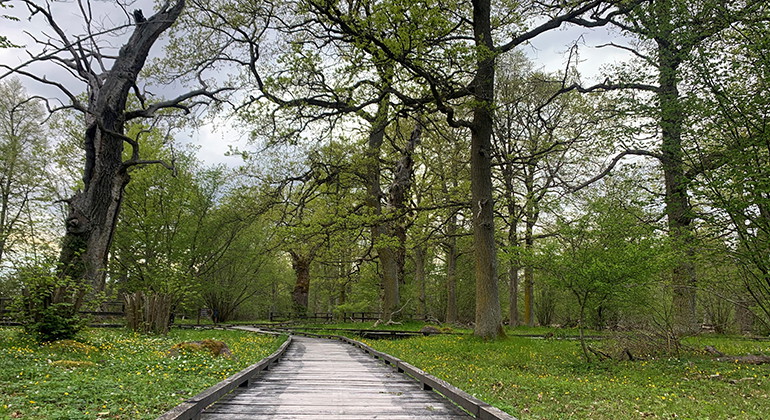
Foto: Anna Lindberg -
Fotograf: Charlotta Larsson
Foto: Charlotta Larsson -
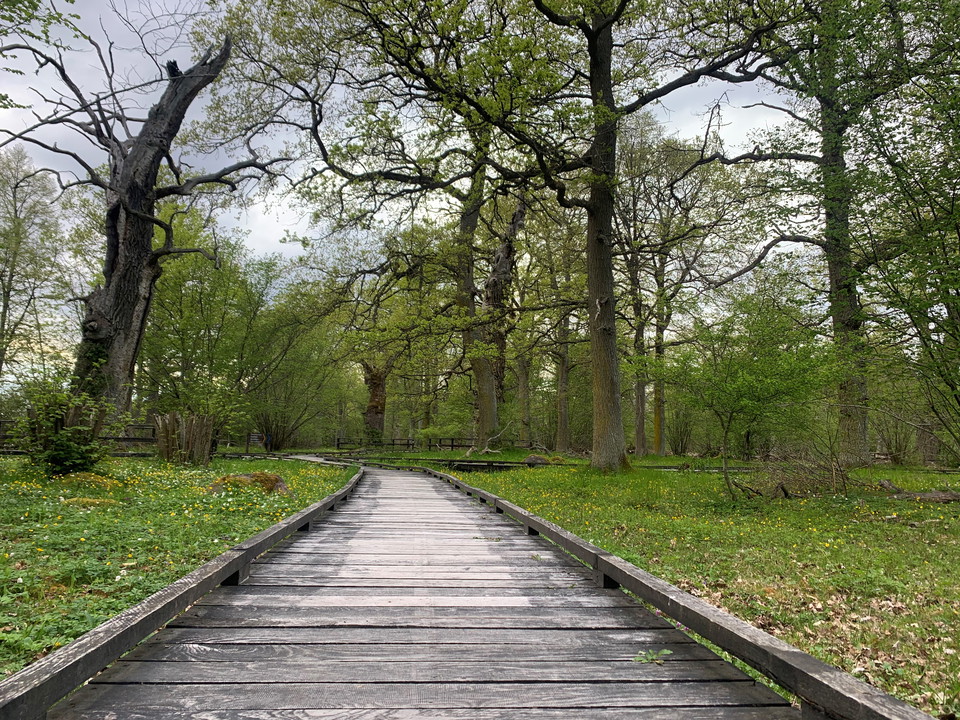
Foto: Anna Lindberg -
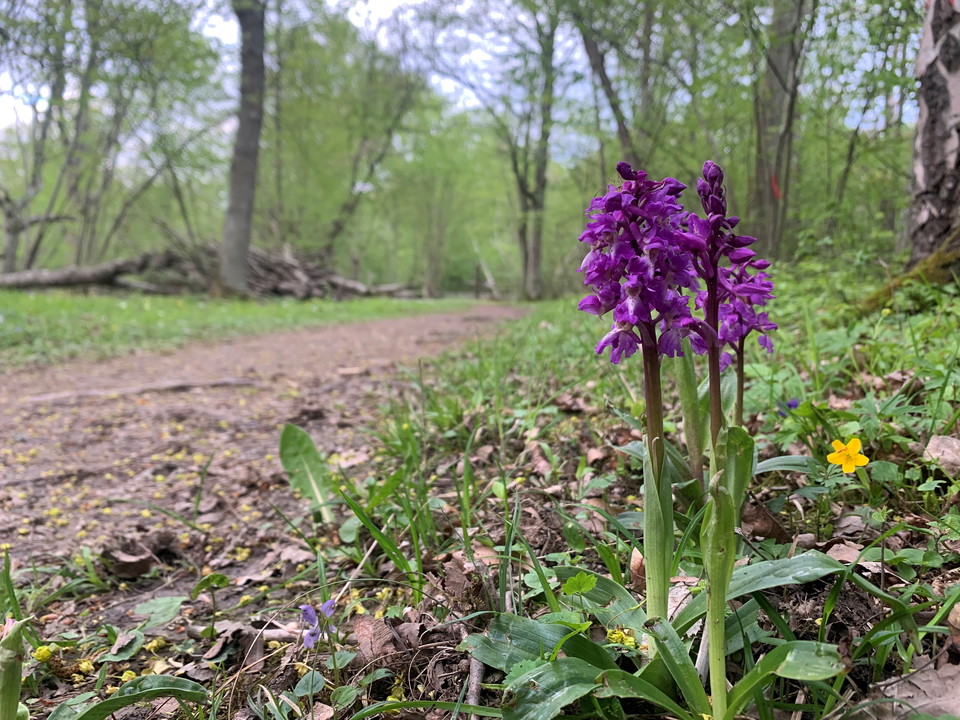
Foto: Anna Lindberg -
Foto: Anna Lindberg -
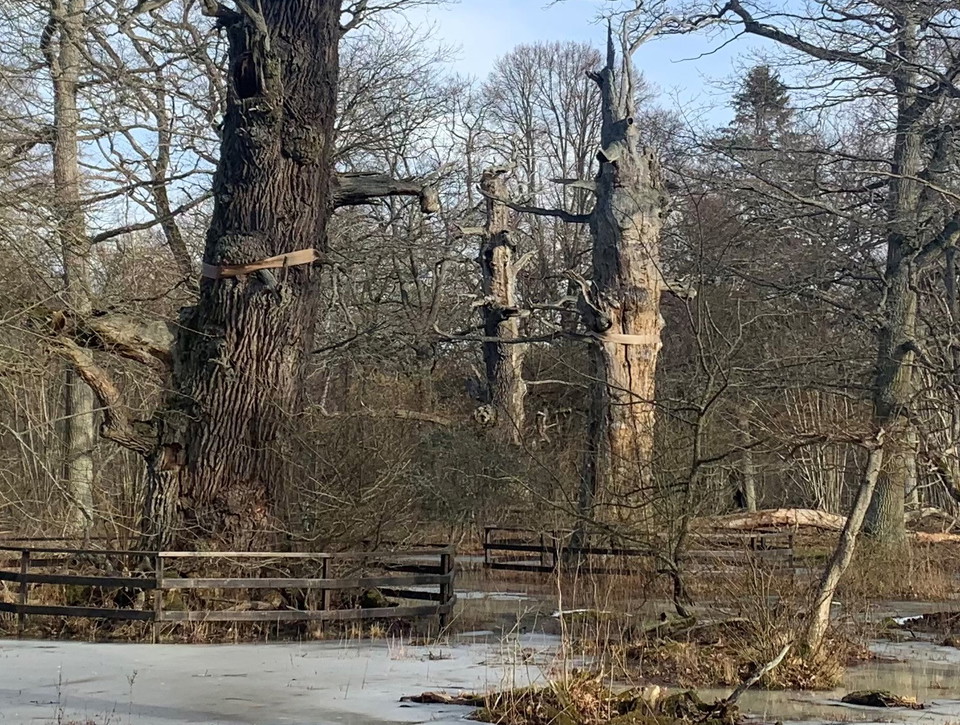
Foto: Anna Lindberg
Halltorp, Naturreservat
- Naturreservat
- Fylke: Kalmar län och Öland
Handlinger
Beskrivelse
Halltorp is the crown jewel among the deciduous forests along the west coast of Öland. So many species live here that the area is considered one of the most species-rich in Sweden. The most exclusive ones live in the ancient oaks found in Halltorp's garden. If you walk Lilla lundstigen, you will see these magnificent tree giants. Don't miss the promenade and the beautiful leafy path!
Packed with species
Halltorp is one of the most species-rich places in the country. Many of the inhabitants are small and don't make much of a fuss. Lichens and mosses that grow on the tree trunks, fungi that appear in the fall in the lime-rich soil. And insects that live most of their lives inside the trunks, branches and roots of trees. But there are exceptions, of course. In the spring, the small birds hold a concert in the beautiful deciduous forest. This is also when the orchid guckusko blooms in the deciduous meadow, one of several orchids that can be seen in the reserve.
Why so popular?
For centuries, farmers have grazed their animals and collected hay from the meadows in Halltorp. This has favored light-loving oak, ash and elm trees that have grown up in the open fields. The now old broadleaf trees contribute to Halltorp's diversity because they are home to so many species. Grazing mules and haymaking have also paved the way for the wealth of flowers. As has the lime in the hillside!
Halltorp's flowers
In the spring, the deciduous forest and meadows offer beautiful flowers. The first to bloom are white, blue and yellow cowslips, spring onions and cowslips. They are followed by St. John's wort, musk, toothwort and spring pea. And the stately guckuskon, which grows in the southern deciduous meadow. In summer, you can see many different flowers on the grazed coastal meadows, such as wild clover, snake's tongue and coastal arum. A little further inland, you'll find the rosette maidenhair fern, the bride's bread, and the orchids spotted and St. John's keys. If you go to the pasture at the eastern parking lot, you can see the topjungfrulin and another orchid - gunpowder burnet.
Rare mushrooms
Many exclusive mushrooms have appeared in Halltorp over the years. Calcareous soil and warm, sunny locations in broadleaf forests and hedgerows - these are the requirements of the purple mushroom, for example. There must also be an oak tree nearby, with which the fungus has an intimate relationship.
Housing for many
In spring, the forest resounds with the chatter of starlings. Stop by trees with hollows and you may hear the young starlings calling to their parents. Other birds that like to settle in tree hollows are the lesser spotted woodpecker and wood pigeon. Bats also move into the holes. But birds and bats also need food to survive. And there is plenty of it. Both the tree crowns and the flower-rich fields are full of insects. Which are hunted by the birds during the day and the bats at night!
Hiking trails and visitor information
The reserve is best reached by car. Road signs show from road 136. About a kilometer down the road is the reserve parking with accessible dry toilet next to the part of the reserve called Halltorps hage. There is also a larger picnic area along road 136 with picnic tables and toilets managed by the Swedish Transport Administration. The reserve is also accessible from the road to Halltorps gästgiveri.
The entrances down at Halltorps hage have self-closing gates and a 700 meter long wooden footbridge. This part of the reserve has high accessibility for many, even for those in wheelchairs or walking with a walker.
The trail system is marked with colors and figures so that as many people as possible can use it. Here is a brief description of the various trails. The soil in the reserve consists mainly of clay and it gets sticky in the rain and in the spring, but there are paths in the worst places. The woodland and meadows have a rich bird life and you will see tits, chaffinches, warblers, flycatchers and several thrushes especially in spring. Fantastic spring blossoming with primroses and orchids. In spring there is a lot of water in the reserve and if you are lucky and are out at the right time, it is not unusual to encounter the long-legged frog.
The meadow path
(yellow triangle) 1.4 kilometers - this trail takes you from the Swedish Transport Administration's parking lot through the eastern part of the reserve and through the guckuskoängen. The guckuskon blooms in May-June. The trail continues down the edge of the castle and into Halltorps hage and connects to the wooden walkway there. Several of the giant oaks are passed on the way.
Next to the guckus meadow, we are restoring a large area to deciduous meadow. A first stage has been done to open up the area. In a few years, another round will take place and the area will be even more open. Today, sheep and cattle graze the land, but in the future the land will be managed as a hay meadow.
In the video, you can look at the surface and the environment and decide for yourself how accessible the trail is for you.
The boot trail
(green boot) 1.7 kilometers - starts from the southern part of the reserve and goes through Halltorp's garden's eastern edge and past several old oaks. The trail continues through the hornbeam forest with its silver trunks and lime-green spring greenery below the edge of the castle until the middle of the reserve. There the trail turns west and you follow the water's path down to the meadow. The trail passes several streams in the forest. In spring, as the name of the trail so aptly says, boots are required as it is very wet in the fields.
In the video, you can look at the surface and the environment and decide for yourself how accessible the trail is for you.
Little grove trail
(orange square) 1.6 kilometers - This is the reserve's shortest trail and also starts from the southern part of the reserve in Halltorps hage. The first stretch follows the footbridge and you can be fascinated by the old oaks and look for insects. Then the trail makes a turn northwards through the pasture and then turns off towards the beach meadow.
In the video, you can look at the surface and the environment and decide for yourself how accessible the trail is for you.
The footbridge
700 meters (not otherwise marked in the field) - The entire path runs in an arc and is a circular loop among the old oaks. There are sofas and a larger platform with picnic tables. Here you can enjoy these oak giants while drinking coffee. If you're lucky, you'll see oaks flying.
In the movie, you can look at the surface and the environment and decide for yourself how accessible the trail is for you.
Strandängsstigen trail
(blue rhombus) 3.5 kilometers - This trail runs along the entire coastal meadow in the south to the north. Passes open grazed beach meadows with sloe bushes and flowering hedges towards the woodland. At the edge you can see older oaks that seek out the light. The trail passes Garnudden's oaks and then goes back out on the open grazed beach meadows. The sword lily blooms in the damp pockets on the coastal meadows. Then the trail makes a bend into the grazed sun-open forest in the north and then further south again. Once you have passed the farm road, you come to a magical and unexpected place with several large boulders! After a while you come to a large clearing on the eastern side of the large wetland in the middle of the reserve. There is a picnic table here if you want to rest or have a coffee. In the wetland there is a long-legged frog as in most wetlands in Halltorp. There is also a very large lime tree that leans out into the clearing. Along the trail to the south, you now pass an area with very old rough hornbeam. These trees have many cavities and the trees are coarse and have a large crown.
In the movie you can look at the surface and the environment and decide for yourself how accessible the trail is for you.
Grodstigen
(purple circle) 2.1 kilometers - This shorter trail starts from the southern part of the reserve in Halltorps hage. The first stretch follows the path and you can be fascinated by the old oaks and look for insects. Then the trail continues north through hornbeam forest and pasture with oaks and pollarded lime trees. There are long-legged frogs in the wetlands, as in most of the wetlands in Halltorp. Plenty of hawthorn and apples, hazel.
The innkeeper's walk
(red house) 2.8 kilometers - The trail starts at Halltorp's inn and you go down the old road and continue straight west inside the reserve. The trail passes the newly restored hay meadow and several haystacks are placed along the farm road. The woodland is dominated by hornbeam but there are also older oaks. It is sun-warmed open grazed forest. Wetlands run in a north-south direction throughout the reserve. The visitor walk turns north and runs towards the northwest and the beach meadow. Passes sun-open grazed forest with several older oaks. In spring, this walk is a hike through a sea of wood anemones, blue, white and yellow anemones are found here. One stretch runs along the grazed meadow with the edge of the woodland. Mute swans and mallards are often seen in the water. The footpath leads back up towards the farm road after passing several wild apples with fine flowering in early summer.
Quick facts about Halltorp
In Halltorp, 421 red-listed species (species whose numbers have declined sharply) have been found, including 120 fungi, 26 lichens and 101 beetles. Halltorp is home to the very rare large oak beetle. It only lives in very large oak trees, which it has in common with several other rare wood-dwelling beetles in the reserve.
Some examples of other rare species in the reserve are: forest veronica, purple fungus, long-legged frog, leatherback beetle, tongue thrips, flower spider, old oak lichen.
In 1918, around a thousand oak trees were felled in Halltorp. Some thirty oaks were left in what is now called Halltorp's garden. Today, 13 giant oaks (trees with a circumference of more than 100 cm) remain. 8 of these are alive and are 500 - 700 years old.
LIFE project
Halltorp was part of the LIFE project Bridging the gap during the years 2016-2022. Follow the link below to read more about the project.
Listen to the audio guide for Halltorp Nature Reserve
Here you can listen to the audio guide for Halltorp Nature Reserve. By listening to the guide you can learn more about why Halltorp Nature Reserve is so unique.
The audio guide is available at 15 different locations (signs) out in the nature reserve and is best experienced on site starting in the southern part of the reserve in Halltorp's garden.
The audio guide is available in Swedish and English.
In Swedish - Audio guide for Halltorp nature reserve
Station 1 of 15
This is an audio guide that is available at 15 different locations around the nature reserve. Here you can listen and learn more about why Halltorp Nature Reserve is so unique.
Station 2 of 15
About the old logging stump. It's a stump from a tree that may have sprouted during the 14th century and the Black Death came to Öland.
Station 3 of 15
About why the dead oak is so valuable in the forest today. You will also learn more about the rare black gold beetle that lives in the oak.
Station 4 of 15
About one of Halltorp's oldest living oaks that is over 600 years old. The oak is hollow and many species and insects live in it.
Station 5 of 15
About the most species-rich oaks in the Nordic region. The oak tree is home to, among other things, the greater oak beetle, which is one of Sweden's largest beetles.
Station 6 of 15
About why Halltorp Nature Reserve is so unique for rare and endangered species.
Station 7 of 15
About why there are dead oaks in the field. They're called oak woodland plants and benefit not only oaks but also many other insects.
Station 8 of 15
About the lime trees in the nature reserve. Why do the trees look the way they do?
Station 9 of 15
About the old logging stump. It is a stump from a tree that may have sprouted during the 14th century and the Black Death came to Öland.
Station 10 of 15
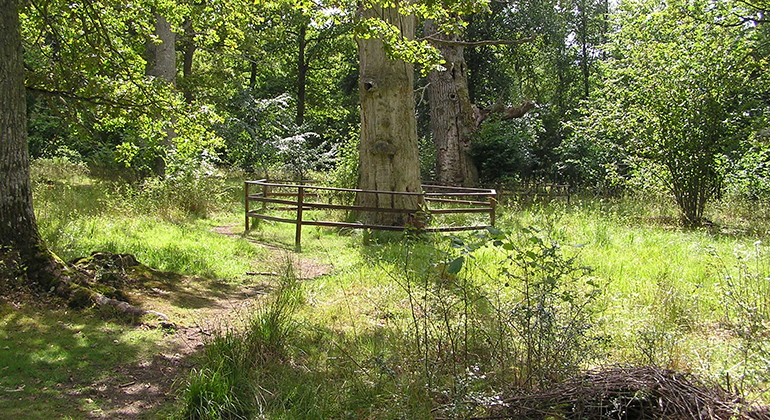
About the three oaks standing next to each other. Why does it look like lightning has struck one of the trees?
Station 11 of 15
About the long-legged frog that lives in the wetlands of the nature reserve. If you're lucky, you might hear a long-legged frog playing.
Station 12 of 15
About the ivy growing in the oaks and how it affects the trees.
Station 13 of 15
About the large mulberry trees that are found in the nature reserve and what they do for nature?
Station 14 of 15
About the spring-flowering orchid St. Peter's keys that grow in the nature reserve.
Station 15 of 15
Why hazel and oak trees get on so well together. You will also learn more about the different fungi and beetles that feed on the trees.
In English - The audio guide for Halltorp's Nature Reserve
Station 1 of 15
This is an audio guide which is available at 15 different locations around the Nature Reserve. Here you can listen and learn more about why Halltorp's Nature Reserve is so unique.
Station 2 of 15
About the old stump. It is a stump from a tree which likely germinated in the 1300s when the Black Death came to Öland.
Station 3 of 15
About why dead oak is so valuable in woodlands today. You will also learn more about the rare variable chafer beetle that lives in this oak.
Station 4 of 15
About one of the oldest living oaks at Halltorp. It is more than 600 years old. The oak is hollow and is home to many insects and other species.
Station 5 of 15
About one of the most species-rich oaks in the Nordic countries. This oak is home for example, to the greater capricorn beetle, which is one of Sweden's largest beetles.
Station 6 of 15
About why Halltorp's Nature Reserve is so unique for rare and threatened species.
Station 7 of 15
About why there are dead standing oaks out in this field. These are called stag beetle habitat piles and favor not only stag beetles but also many other insects.
Station 8 of 15
About the lime trees in the Nature Reserve. Why do these trees look like they do?
Station 9 of 15
About the hornbeam tree, which is a popular home for many bat species.
Station 10 of 15
About the three oaks which are standing next to one another. Why does it look like lightning has struck one of the trees?
Station 11 of 15
About the agile frog which lives in the wetlands in the Nature Reserve. If you are lucky, you may even hear an agile frog calling.
Station 12 of 15
About the ivy which grows in the oaks and how it impacts on the trees.
Station 13 of 15
About the large wood-mould boxes that are in the Nature Reserve and how they benefit wildlife.
Station 14 of 15
About the spring-flowering early purple orchid which grows here in the Nature Reserve.
Station 15 of 15
About why hazel and oak thrive together. You will also learn more about the different fungi and beetles which live in these trees.
Aktiviteter og fasiliteter
- Naturreservat
Fakta
Year of decision: 1979
Area: 198 hectares of which 142 hectares is land
Municipality: Borgholm
Landowner: Swedish Environmental Protection Agency
Administrator: Kalmar County Administrative Board
Veibeskrivelse
Just over eight kilometers north of Glömminge along road 136, you turn off at the sign Halltorps hage and continue a little over a kilometer to the reserve parking lot. If you are coming from the north, there is also a larger rest area (Trafikverket) along the road where you can park and hike down to the reserve.
Forskrifter
In the nature reserve you are not allowed:
- Damage or remove fixed natural objects or surface formations.
- Damage or remove growing trees or bushes.
- Pick flowers.
- Damage or remove dead trees, stumps, bark or brushwood.
- Hunt, kill, capture or injure wild mammals, birds or their young.
- Collect insects.
- Remove or damage eggs or nests.
- Climbing trees with nests.
- Deliberately disturbing wildlife.
- Being near a bird of prey's nest, lair or burrow.
- Bringing dogs that are not on a leash.
- Damaging or removing any fencing (e.g. fences or barriers).
- Riding a horse.
- Driving a motorized vehicle, bicycle or other means of transport off designated roads or trails.
- Parking other than in designated parking lots.
- Build a fire.
- Camping, setting up a caravan or houseboat.
- Disturb the environment with loud noises such as music, video or radio.
- Using the area for competitions or exercises.
Full regulations
C. Regulations according to Chapter 7, Section 30 of the Environmental Code on the right to travel and stay in the reserve and on order in general.
In addition to what is prescribed by law and regulation, the public shall be prohibited from:
- damage or remove fixed natural objects or surface formations
- damage or remove living trees, bushes or other plants, including flower picking
- damaging or removing dead trees, stumps, bark or brushwood
- climbing nest trees, being near a bird of prey's nest, lair or burrow, collecting insects or otherwise deliberately harming or disturbing wildlife, with the exception of fishing
- bring an unleashed dog;
- damage or remove fencing
- riding a horse
- drive a motorized vehicle, bicycle or other means of transport elsewhere than on designated roads
- park vehicles elsewhere than in designated places
- light a fire
- camping, pitching a caravan or mooring a houseboat
- use a radio, gramophone, tape recorder or similar in a disruptive manner; and
- use the area for competition or training purposes.
Kontakt
E-postadresse
Per Markus Jönsson
Organisasjonens logotype

Jeg har vært her 8


Jeg ønsker å dra hit 1
Spørsmål og svar
Still et spørsmål til andre brukere av Naturkartan.
Omtaler
0 anmeldelser
- 5 :
- 4 :
- 3 :
- 2 :
- 1 :
Brukernes bilder
Ingen brukerbilder ennå. Bli den første til å dele!