
Butterfly enthusiasts from all over the country flock to Grytsjön to look for rarities such as the Russian hightail and the rose-breasted fritillary. As many as 600 species of large butterflies have been observed in the area. That's more than 60% of Sweden's known butterfly fauna, making Grytsjön one of the most species-rich places in the country!
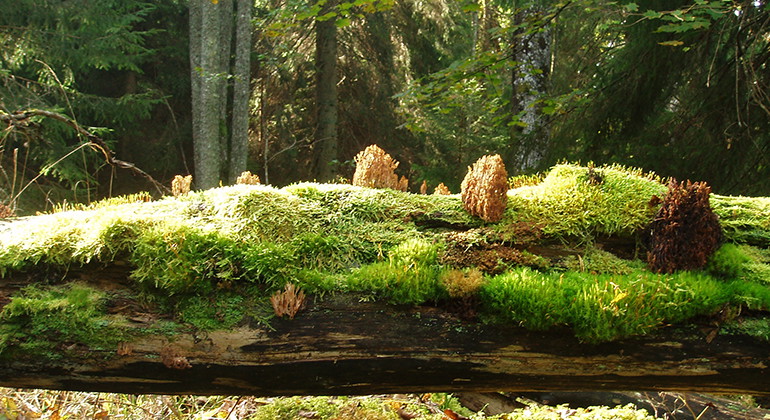
The nature reserve's forest is characterized by fire. The fires have exposed the very rocky ground and favored the regeneration of aspen and birch. The last time it burned was in the early 1900s and since then deciduous trees have dominated, although conifers are on the rise. These areas are called deciduous burns and until the 19th century they were common in the forest landscape.
It's not just butterflies that thrive in aspen-rich forests. Many beetles appreciate soft aspen wood and dead trees, of which there are plenty in Grytsjön. During a small inventory of beetles in 1994, entomologists found 137 different species, of which about 20 were rare. And if there are plenty of beetles, they will attract woodpeckers, such as the woodpecker.
Little impact of modern forestry, plenty of aspen and a favorable microclimate are conditions that contribute to the nature reserve's species richness. The special microclimate is due to the fact that the sun's rays find their way to the tree trunks and soil in the sparse forest. There are many rays, in this part of Sweden there are many hours of sunshine and little rainfall!
Year of decision: 1995
Area: 139 hectares
Municipality: Nybro
Landowners: Swedish Environmental Protection Agency and individuals
Administrator: Kalmar County Administrative Board
The reserve is reached via a forest road starting at Kättilstorp, and there is a long forest road with several detours. The road passes the old railroad bank - DO NOT DRIVE IN on this but continue straight ahead. There is a turnaround at the end of the road.Parking with information board is located next to the game enclosure in the northern part of the reserve.
In the nature reserve you are not allowed:
C. Regulations according to Chapter 7, Section 30 of the Environmental Code on the right to travel and stay in the reserve and on order in general.
In addition to what otherwise applies, it is forbidden to
Per Markus Jönsson


Still et spørsmål til andre brukere av Naturkartan.
0 anmeldelser
Ingen brukerbilder ennå. Bli den første til å dele!