
-
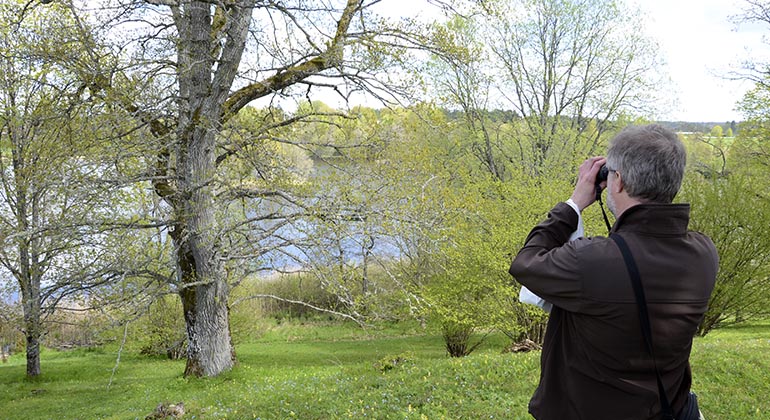
Tjälvesta äng, utsikt över Kyrkesjön.
Foto: Elisabeth Karlsson -
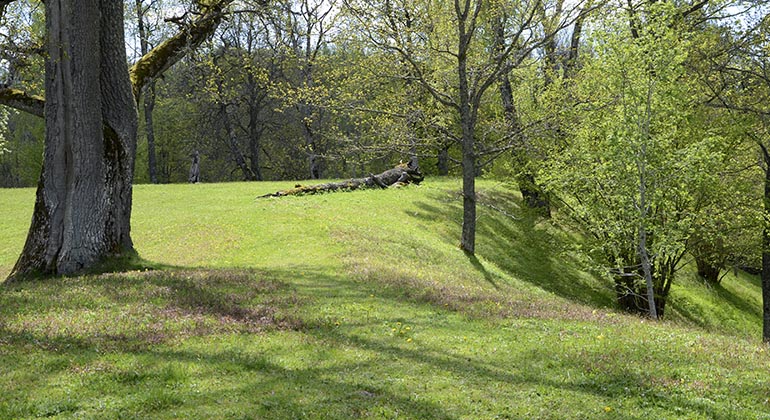
Tjälvesta äng, kant till dödisgrop.
Foto: Elisabeth Karlsson -
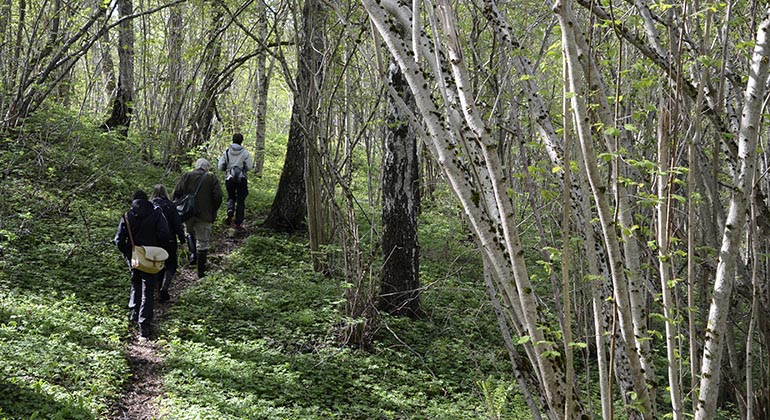
Snavlunda, lövskog i vitsippetid.
Foto: Elisabeth Karlsson -
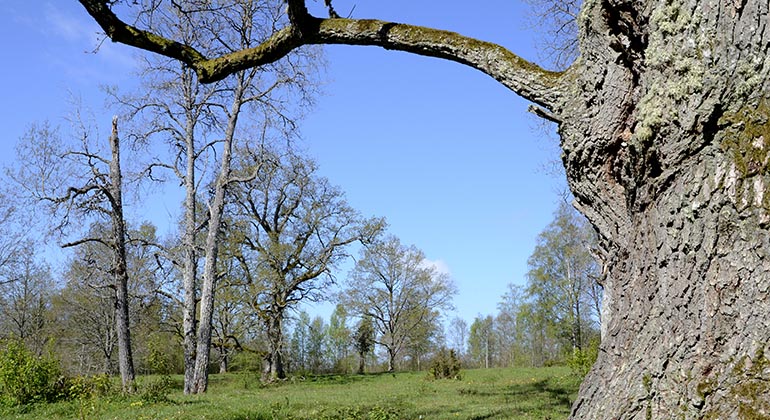
Snavlunda, betesmark med gamla ekar.
Foto: Elisabeth Karlsson -
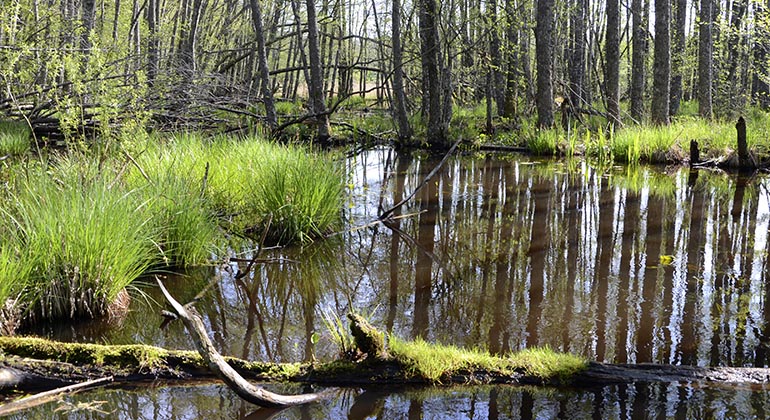
Tjälvesta, Hultaån.
Foto: Elisabeth Karlsson -
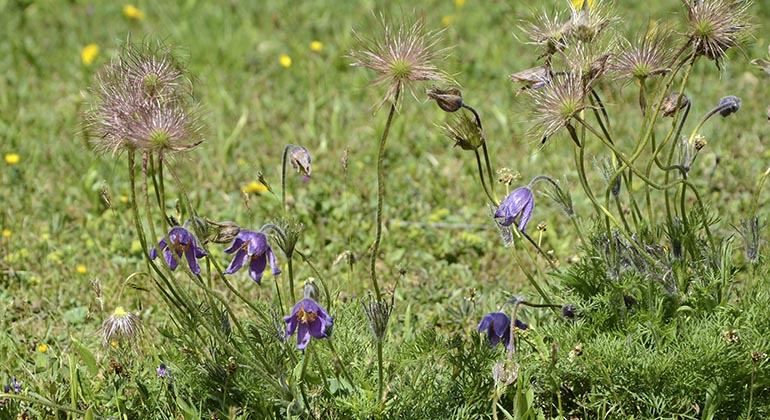
Tjälvesta äng, backsippa.
Foto: Elisabeth Karlsson -
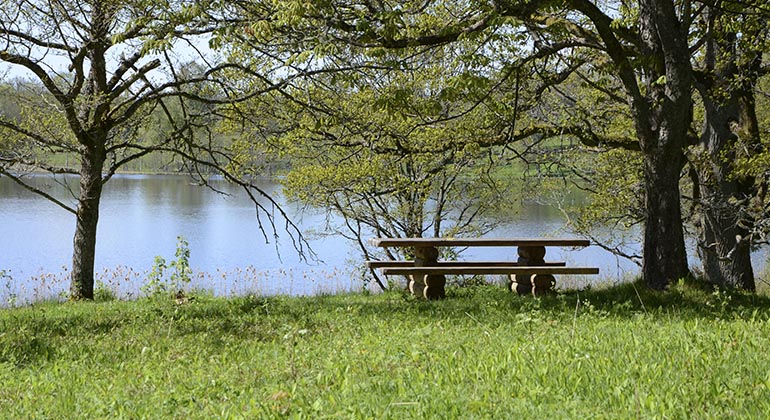
Tjälvesta, rastbord vid Bysjön.
Foto: Elisabeth Karlsson
Snavlunda, Naturreservat
- Naturreservat
- Amt: Örebro län
Handlinger
Beskrivelse
The Snavlunda and Tjälvesta nature reserves lie side by side in a rolling cultural landscape dating back to the Iron Age. Here you can wander through flowering meadows and lush leafy groves and see clear traces of the last ice sheet.
Discover Snavlunda and Tjälvesta!
Snavlunda and Tjälvesta are popular destinations for excursions, especially in the spring, when the wood anemones spread their white carpets. But a trip to the reserves can be made all year round. In summer, the meadows are in full bloom and in autumn you can experience the color changes of the deciduous forest.
A work of ice and water
The rolling, lake-rich landscape of Snavlunda-Tjälvesta was formed at the end of the last ice age, during a colder period when the ice was stationary. Rivers with calcareous sand and gravel flowed out of the ice and built up a delta in front of the ice edge. In the delta, blocks of ice capsized and became embedded in the ice river material. As the ice melted, water-filled pits with steep sides formed. Several deep pits are still filled with water and today form lakes in the landscape. Shallower depressions have grown back into marshes, while others have become dry 'bowls'. One of the depressions in the hay meadow west of Lake Kyrkesjön is called the "Giant's basin". The giant referred to is the legendary Tjälve, who is said to have given his name to Tjälvesta farm.
Old cultural landscape
The flat land along the highway in the east has been used as fields since at least the 16th century. Almost all other land in the nature reserves is old meadowland. Here, the farmers of Tjälvesta and Snavlunda cut their hay between sparse deciduous trees and hazel bushes. When the haymaking stopped, the meadows grew back, but nowadays large parts of the reserves are kept open again. The meadow west of Kyrkesjön, Slåtterängen, is mown annually. Other fields are kept open by grazing animals. In the parts of the reserves that are not grazed or mown, lush deciduous forests grow.
Flower-rich meadows and pastures
The meadows and pastures of the reserves are home to a myriad of plants and animals that thrive in bright, warm environments. The plants in the meadows include wood anemone, pig's root, buttercups, bride's bread, cowslip, field and meadow vetch. The flowers provide a storehouse of pollen and nectar for butterflies, bees and other insects. Hay harvests and grazing mules are the reason for the diversity of the open fields. Without mowing and grazing, the species diversity would be depleted and replaced by a monotonous flora of tall plants and shrubs.
Lush groves with rich birdlife
The flora of the groves is at its richest in spring before the dense foliage of the trees shades the ground. Sippor, lungwort, spring pea and toothwort are examples of species that thrive in the rich soil. The forest is full of old and dying trees. Birds nest in the decaying, soft hardwoods. These include the blue tit and the black-and-white flycatcher, the barn owl and all our woodpeckers. For example, the country's smallest woodpecker - the rare lesser spotted woodpecker - lives in nature reserves. The decaying wood is also valuable for fungi, lichens, mosses and wood-boring insects. The hazel is a common shrub throughout the nature reserve. Its nuts are appreciated by the nutcracker, nutcracker and the rare nutcracker that can be seen in the reserves in the fall.
Lakes with rich vegetation
The lakes in the nature reserves are known for their rich vegetation. The clear, calcareous water is home to many different underwater plants. This diversity is a good sign that the lakes are healthy and have good water quality. The lakes are home to many different species of dragonflies.
Movie about dead ice pits
In the clip below you can see and hear cultural geographer Torgny Frembäck from the County Administrative Board talk about why the landscape in Snavlunda-Tjälvesta looks the way it does, how the dead ice pits were formed and whether man has used the landscape throughout history.
Accessibility and facilities
A network of paths runs through both nature reserves, starting from the two entrances as well as from Snavlunda and Hembygdsgården. Keep in mind that the terrain is hilly, so you will encounter a lot of hills and slopes along your hike. Along the paths there are several benches for resting, as well as information signs that tell you about the area's natural values and cultural history. There are toilets at the entrances as well as picnic tables. In parts of the reserve, the trail passes through pastures, so don't forget to close the gates after you!
Sign interpreted information
Aktiviteter og faciliteter
- Naturreservat
Fakta
Municipality: Askersund
Year formed: Snavlunda 1965, Tjälvesta 1956
Size: Snavlunda 83 hectares, Tjälvesta 68 hectares
Landowners: Church of Sweden and individuals
Manager: County Administrative Board
Reserve creator: County Administrative Board
Natura 2000: parts of the areas are part of the EU network for protected nature, SE0240004 Snavlunda-Tjälvesta
Rutevejledning
Follow the road signs along the road between Askersund and Vretstorp.
Regler
**In the nature reserves Snavlunda and Tjälvesta it is forbidden to
- destroy or damage fixed natural objects or surface formations
- picking flowers, digging up plants, breaking twigs or otherwise damaging vegetation
- deliberately disturbing wildlife, for example by taking close-up photographs of birds' nests
- bringing an unleashed dog
- deliberately disturbing grazing animals
- camping or setting up a caravan
- making a fire
- fishing
- driving a motorboat
- driving motor vehicles other than on designated roads
- parking other than in designated areas
- riding horses or bicycles other than on the continuous farm roads
- organize marked trails, tip walks, cross-country races, orienteering competitions or similar
- putting up a board, poster, poster, sign, inscription or similar
- use a radio, gramophone, tape recorder, musical instrument or similar in a disruptive manner
Kontakt
E-mailadresse
Organisationens logotype
Jeg har været her 2

Jeg vil gerne derhen 6
Spørgsmål og svar
Stil et spørgsmål til andre Naturkartan-brugere.
Anmeldelser
0 anmeldelser
- 5 :
- 4 :
- 3 :
- 2 :
- 1 :
Brugernes billeder
Der er endnu ingen brugerbilleder. Vær den første til at dele et!