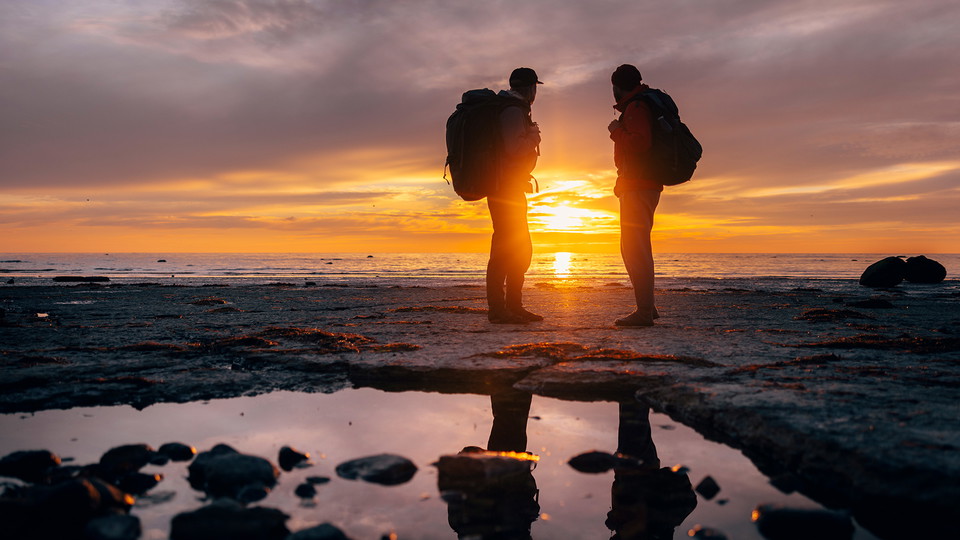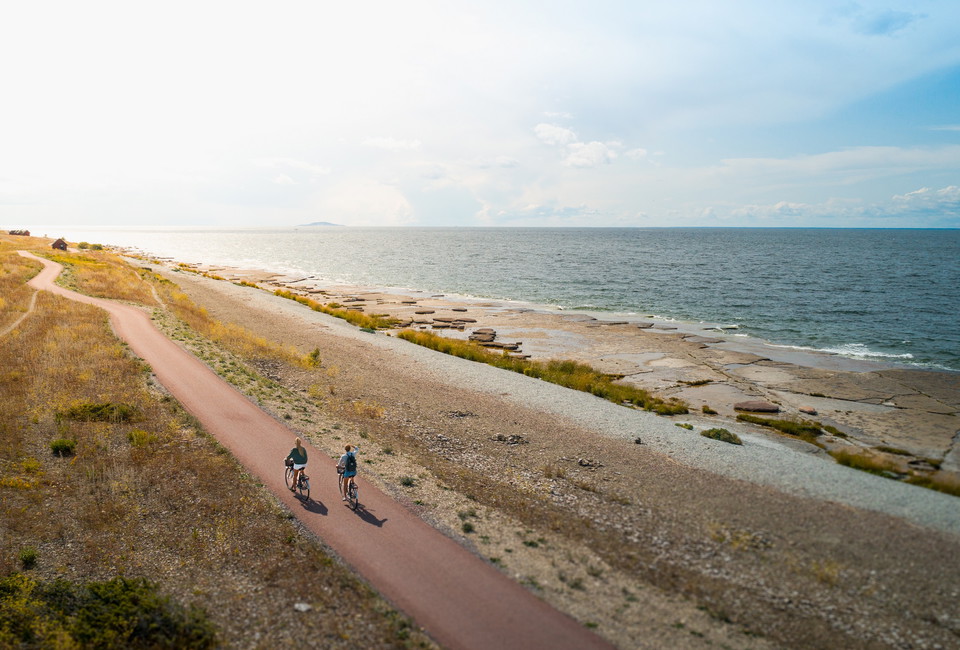

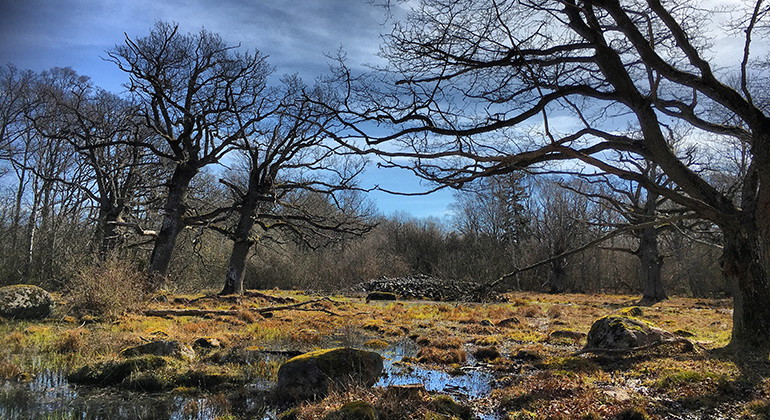
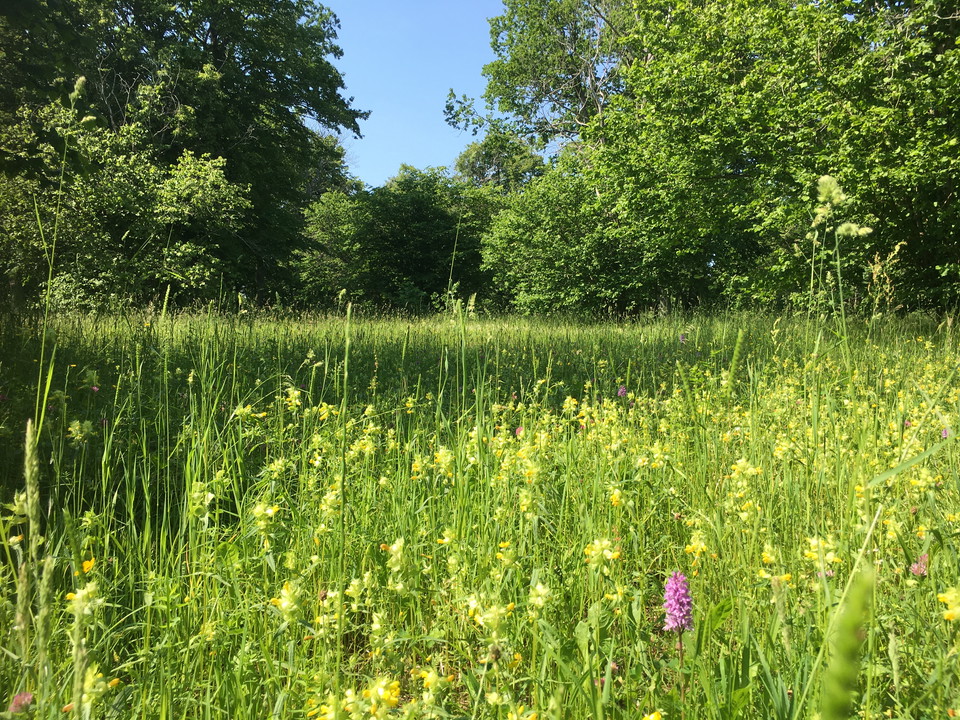
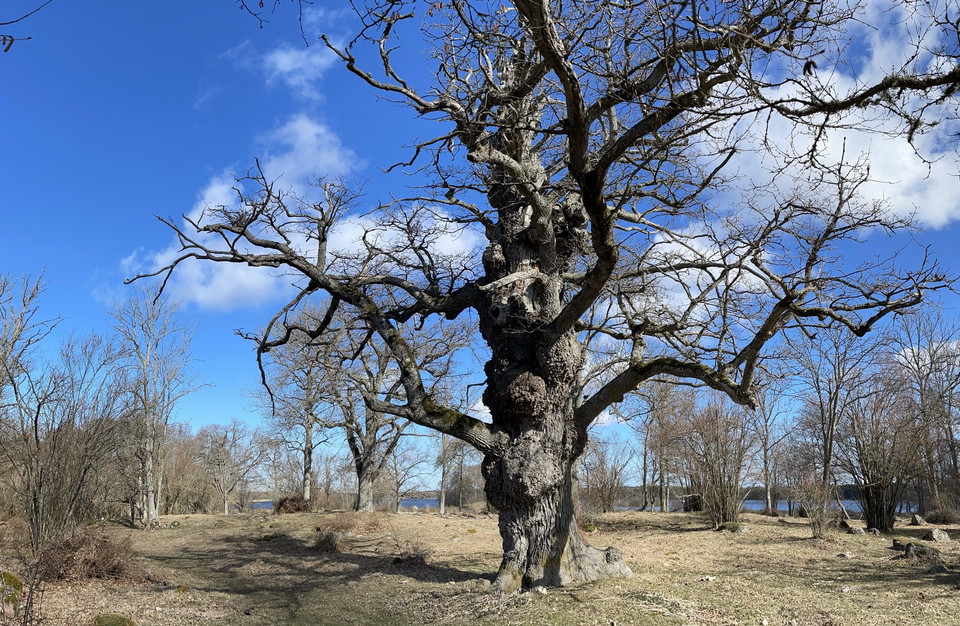
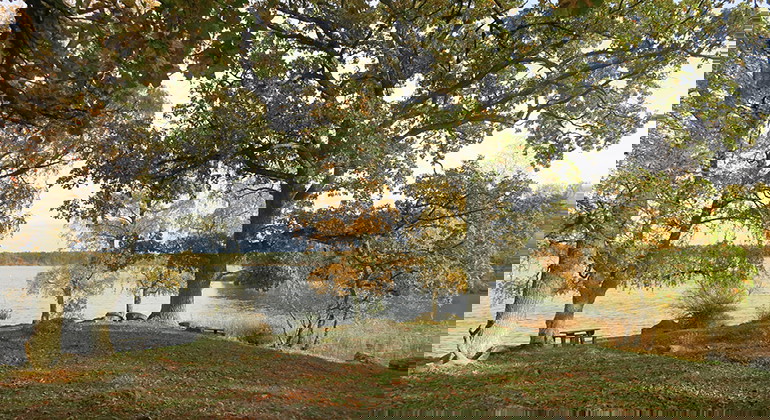
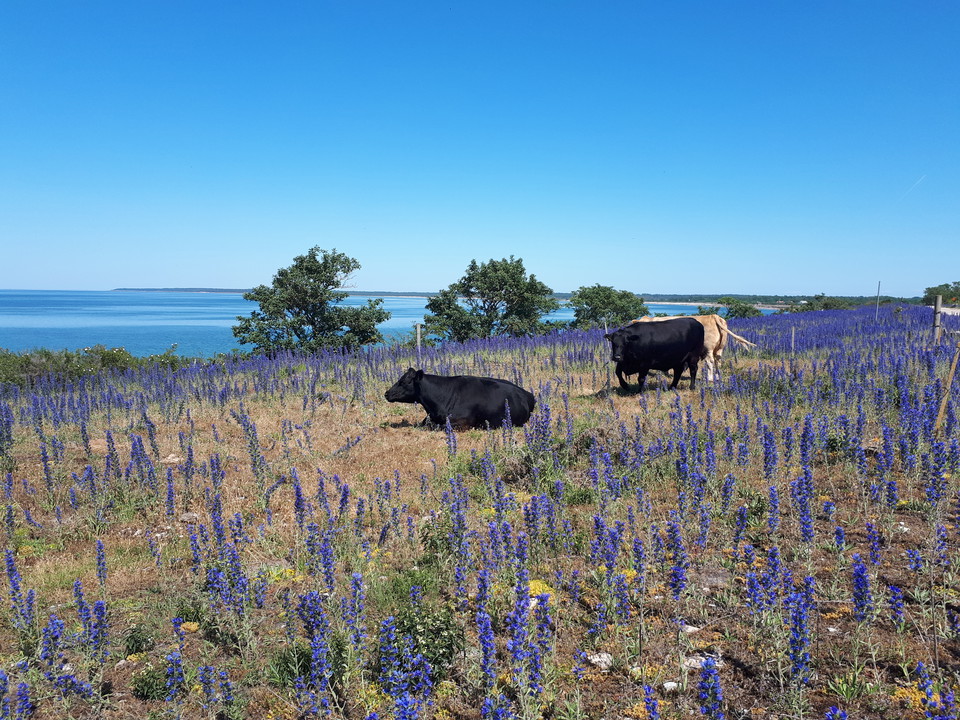
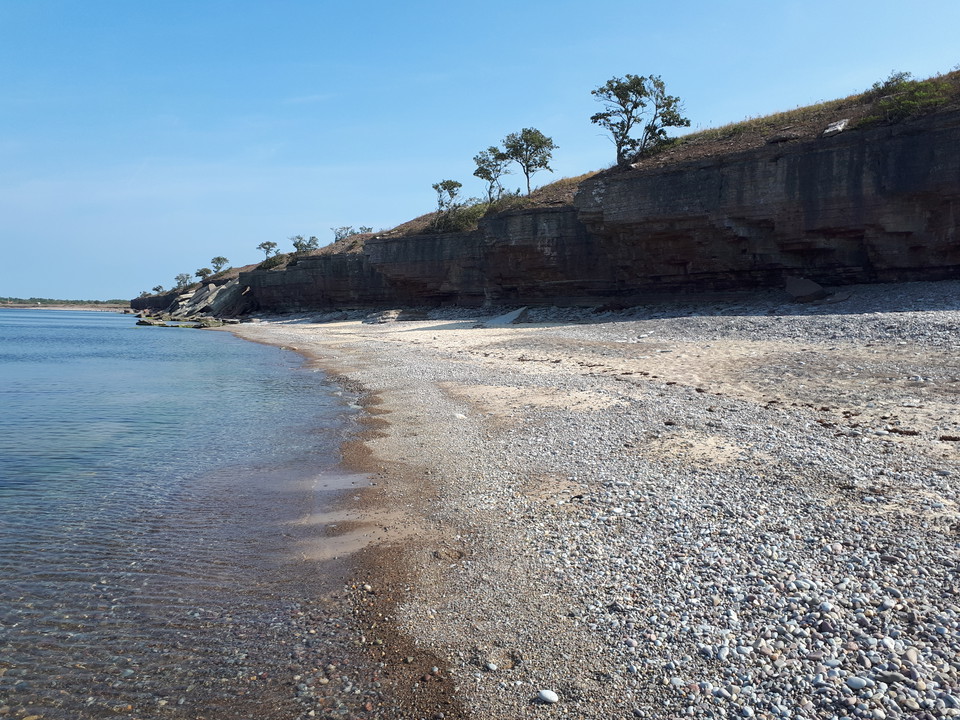
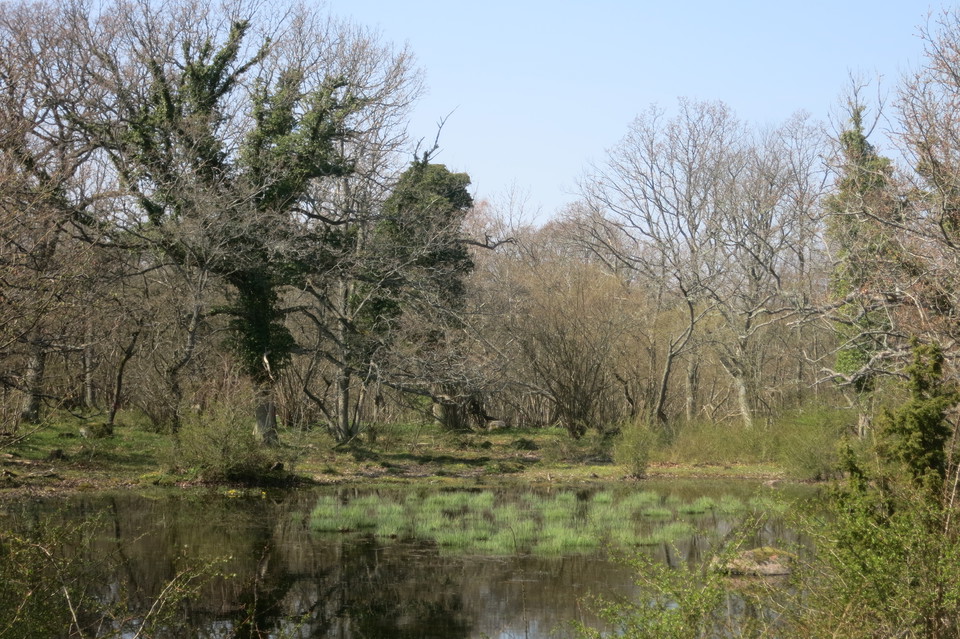
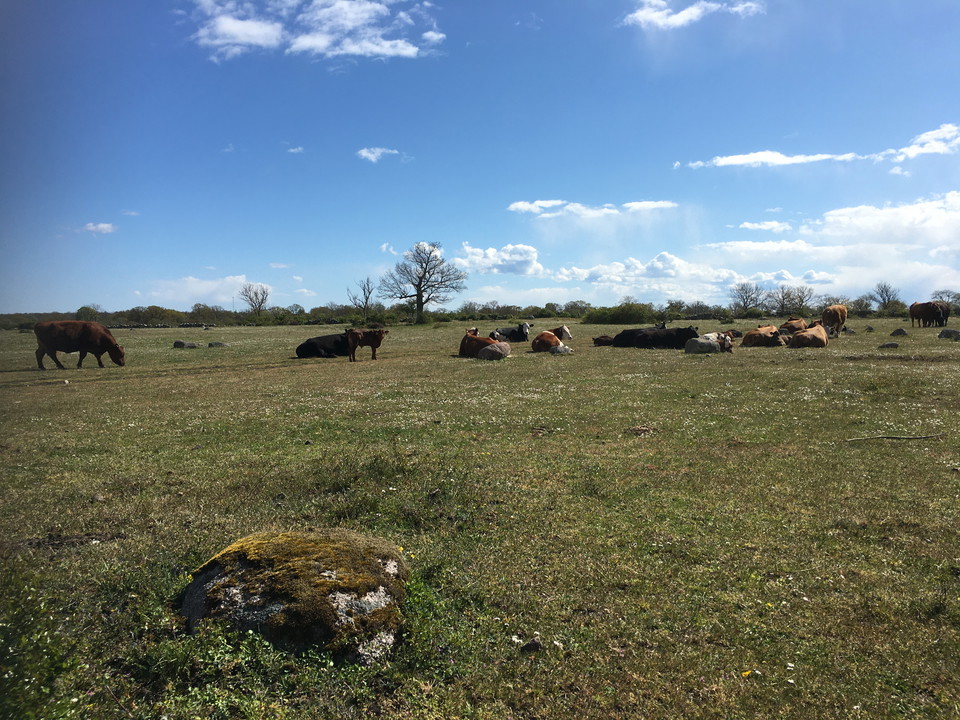
At Horns Kungsgård, virtually all the island's habitat types are represented. Pastures, deciduous forests, grassland and dry meadows, deciduous meadows and cliff coast. In addition, the lake and the marsh are represented.
The county administrative board's budget for nature conservation and outdoor life sometimes changes and right now we have less money to allocate. The priority is then to manage our natural values in the first place and outdoor recreation facilities in the second place. As a result, this year we are closing a number of toilets in reserves and removing rubbish bins in several protected areas in the county.
In Horns kungsgård, the toilets at Klosterholmen and Skogsgärdet are affected, both of which are closed and all waste management ceases. The toilet at Fornbodar remains open.
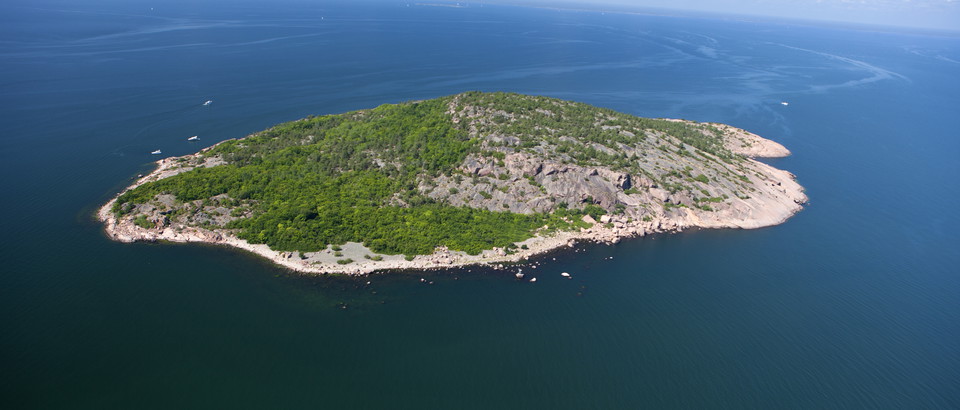
Extensive pastures stretch between the coast and Hornsjön. In early summer, they bloom with cowslips and orchids. Along the barren rocky coast, vegetation is sparse. Here, gorse, tulkwort, yellow buttercup and yellow poppy grow between juniper bushes and old oxel trees. The view of Kalmarsund with the Blå Jungfrun National Park in profile is magnificent.
In the southern part of the reserve there is a tree-bearing hay meadow. It is characterized by the typical alternation between open grassy areas and narrow curtains of trees on stone strings. In the meadow, you will find, among other things, hay rattle, bride's bread, cuckoo flowers, rose maidenhair, darnel grass and a large number of orchids such as soapwort, maidenhair fern, gunpowder burnet and bride's spurge.
Along the western shore of Lake Hornsjön, sun-open, lush broadleaf forests spread out. The farm's cattle graze the land, where oak and lime are the most common tree species along with birch, ash, oxel and alder. There are plenty of hazel and hawthorn bushes. On the ground you will find wood sorrel, lily of the valley, toothwort and bluebells. Lake Hornsjön used to be part of the Baltic Sea, but the lake was lowered by one meter at the beginning of the 20th century and was then cut off. Today, Hornsjön is an excellent bird lake. Great crested grebe, brown harrier, coot and water rail nest here. All tern species can be seen foraging in the lake.
Horns udde north of Alvedsjö consists of a 6-7 meter high, overhanging shoreline cliff with loose large blocks in the shoreline. Beneath the overhanging cliff there is a house whale colony. Towards the north, the cliff is overgrown with rosehips, blackberries, sloe, oxel, try and ebony. Above the cliff in the north there is a slope with a thorny shrub layer of juniper, rosehip, sloe with elements of oxel, goat's apple, ash, oxberry and try. Otherwise, the ground is open with a sparse shrub layer. The upper, eastern part of the area is relatively flat with weakly formed embankments and some smaller, bare shingle fields. The dry meadow flora with, among other things, thyme, thistle, lesser celandine, yellow and white buttercup, colored madder, field bindweed, yellow spurge, tulkwort, chives and sheep's fescue has, by the fact that the area is no longer grazed, begun to change character. Especially east of the road and in the shelter of bushes, tall herbs and grasses have begun to migrate in. These include blue and yellow alfalfa, sorrel, ox tongue and, at the edges of the road, creeping oats.
Hornsjön was previously a bay of the Baltic Sea. Due to land uplift, the bay has been narrowed. The lake was lowered just over a meter in the early 1900s. The former lake bottom is now overgrown with reeds and shrubs. Large areas of Hornsjön's bottom are covered with dense mats of cranial algae, which is typical of lakes in extremely calcareous areas. Hornsjön is an excellent bird lake. Birds such as the brown harrier, coot and water rail nest here. The characteristic species is the bearded grebe, whose open and noisy behavior completely dominates the lake. All of the country's tern species can be seen foraging in the lake on certain days. In spring, the nightingale, green warbler and rosefinch, among others, provide an intense concert in the shore forest. The collared flycatcher has one of its safest haunts in the area.
The reserve is rich in ancient monuments; burial grounds, ship settlements, monoliths and house foundations. On Klosterholmen there are the remains of a medieval fortification called St. Otto's Chapel. Today, Klosterholmen also contains the remains of a medieval farm. The farm was surrounded by moats, which are now dry because the surface of Lake Hornsjön has been lowered. The farm was probably involved in trade and today you can see the remains of the quay, buildings and the moat.
Kungsladugården was founded in the 16th century by Gustav Vasa and was to serve as a model farm for local agriculture. The farmers were obliged to carry out daily work at the royal farm. Horns kungsgård supplied meat, pork, sheep cheese and honey to the royal storehouse in Stockholm. Other royal farms on Öland were Borgholm, Gärdslösa, Rälla and Ottenby. Horns kungsgård was owned by the Crown until 1937. After a period of private ownership, it was purchased in 1971 and set aside as a nature reserve. Today the state leases the farm. The land is managed with the help of cattle and also through haymaking and manual clearing in the pastures.
**There are parking lots inside the reserve at Skogsgärdet and Klosterholmen. Both have space for about 15 cars. There are picnic tables at the parking lots. From these parking lots it is easy to connect to several of the trails in the reserve, see map.
**Bus parking is available near Kungsgården.
Parking information along the coast road:
Front sheds : No parking for cars, class II + trailer at 22:00 - 06:00 every day. No designated motorhome space. There is a toilet with ramp and picnic table.
Ålkistan : No parking for cars, class II + trailer at 22:00 - 06:00 every day. Up to 12 spaces for motorhomes.
The bird tower on Klosterholmen is currently completely without a view of Lake Hornsjön due to overgrowth. There is currently no timetable for restoration. We will keep you updated here.
**Hiking trails in the reserve
There are three hiking trails in Horns kungsgård; Kungsgårdsleden 6.2 km (green marking), Kuse-kattstigen 1.4 km (red marking) and Skogsgärdesstigen 1.0 km (blue marking).
Between 2016 and 2022, Horns kungsgård has been part of the LIFE project Bridging the gap. Through the project, extensive restoration has taken place, mainly in the reserve's oak environments. Follow the link to read more about the project Life Bridging the gap Link to another website, opens in new window
Year of decision: 1979
Area: 829.9 hectares of which 284.7 hectares are water
Municipality: Borgholm
Landowner: Swedish Environmental Protection Agency
Administrator: Kalmar County Administrative Board
About 3 km SW Byrum Sandvik, about 5 km NW Löttorp. From road 136: Take exit towards Löttorp. Drive towards west. After 4 km follow signs to the north via sign Horn 2. It is now about 1 km to the first parking lot. The coastal area in the north is reached by continuing all the way to the coast before turning right. From there it is about 4 km to the parking lot.
In the nature reserve you are not allowed:
If you have received permission from the County Administrative Board, you may
After consultation with the County Administrative Board, you may:
C. Regulations according to Chapter 7, Section 30 of the Environmental Code on the right to travel and stay in the reserve and on order in general.
In addition to what is prescribed by law and regulation, the public shall be prohibited from:
Surveys or research must be carried out in consultation with the County Administrative Board.
Per Markus Jönsson

Stil et spørgsmål til andre Naturkartan-brugere.
0 anmeldelser
Der er endnu ingen brugerbilleder. Vær den første til at dele et!