
Solberga kloster
- Archeologiczny
- Województwo: Gotlands län
- 6947.35 km od Ciebie
Akcje
Opis
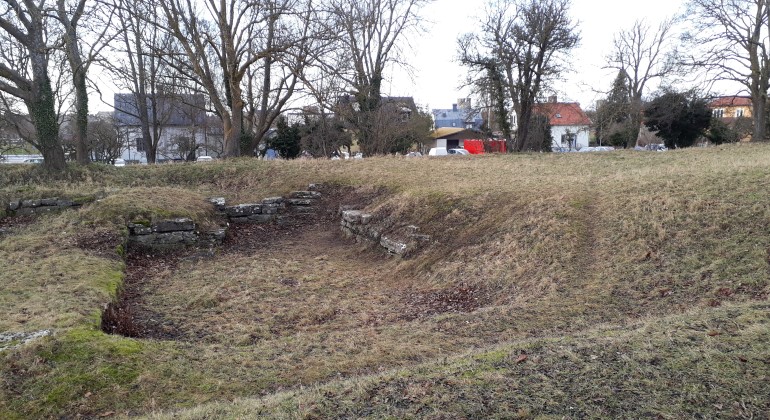
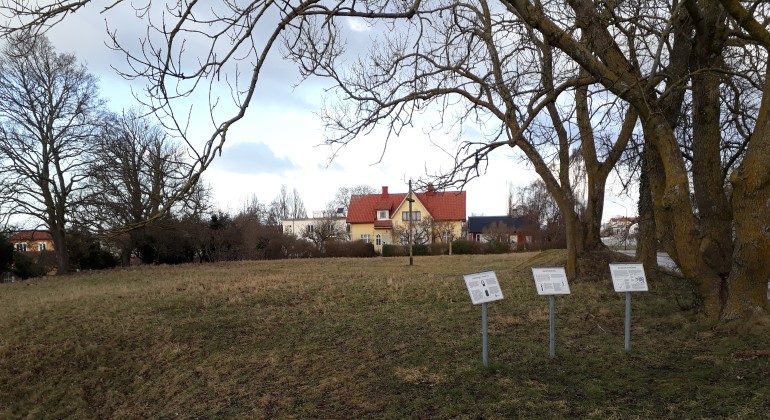
In the grass next to the courthouse there are remains of walls from Gotland's only nunnery. Today it is visible through raised ramparts and remains of stone walls. In the Middle Ages it was a flourishing monastery.
At the request of the Gotlanders, Solberga monastery, the Cistercian monastery Mons Solis, was founded in 1246. It was to be the only nunnery established on Gotland. According to the rules of the Cistercians, the monastery was located outside the city. It was thus part of medieval Visby, but outside the ring wall.
In addition to the 15 or so nuns who lived in the monastery, novices, lay sisters and lay brothers also lived there. We do not know when and why the monastery was closed.
The monastery area
The remains of the walls that are visible above ground today show the kitchen with dining room (refectory), the monastery church and a house that may have been the abbess's or prioress's house. In addition to these, three other buildings have been found. The monastery area was probably much larger than this and the area certainly contained several buildings. It is possible that several house foundations are underground.
North and east of the church was the monastery cemetery, which is the same place as the mass graves from the battle of Visby in 1361.
Monastic life
Ora et labora (prayer and work) were important rules of life in the monastery. Days followed strict schedules with masses and services. The time in between was devoted to biblical studies, cleaning, cooking, sewing, singing practice and more.
Good to know for you as a visitor
- The monastery ruins are located just east of the courthouse. There is no designated parking for the monastery area, but there are parking lots nearby and the ruin is within walking distance of the city center.
Działania i udogodnienia
- Archeologiczny
Fakty
Socken: Visby
Charakter: Zniszczenie klasztoru
Właściciel: State Property Works
Formularz ochrony: Formularz
Wskazówki dojazdu
Pozostałości klasztoru znajdują się wzdłuż wschodniego Hansegatanu na skrzyżowaniu Östra Hansegatan i Artillerigatan.
Regulamin
Ruiny klasztoru są chronione jako ekstradycja na mocy ustawy o środowisku kulturalnym (1988: 950) 2 oł.
Zgodnie z ustawą o środowisku kulturalnym od rady administracyjnej hrabstwa wymaga się zezwolenia na zdenerwowanie, usunięcie, wykopanie, przykrycie, modyfikowanie lub uszkodzenie ekstradycji.
Należy pamiętać, że obszar lądowy wokół każdej działki jest również chroniony. Nawet nowo odkryta wizyta ma natychmiastową ochronę.
Jeśli nie jesteś pewien, jak duży jest obszar chroniony, możesz skontaktować się z County Administrative Board.
Kontakt
Adres e-mail
Länsstyrelsen i Gotlands läns naturvårdsförvaltning
Logotyp organizacji

Należy pamiętać, że niektóre z tych tekstów zostały przetłumaczone automatycznie.
Byłam tu
Chcę tu iść
Pytania i Odpowiedzi
Zadaj pytanie innym użytkownikom Naturkartan.
Opinie
0 recenzji
- 5 :
- 4 :
- 3 :
- 2 :
- 1 :
Zdjęcia użytkowników
Nie ma jeszcze żadnych zdjęć użytkowników. Bądź pierwszym, który je udostępni!