
-
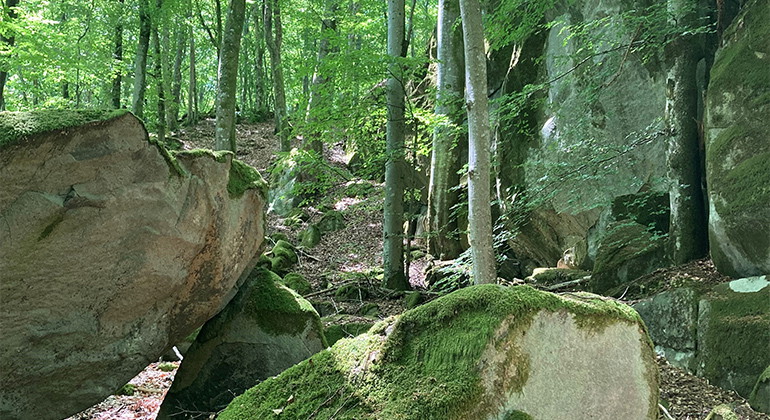
Stora stenblock i skogen.
Foto: Astrid Bornfeldt Persson -
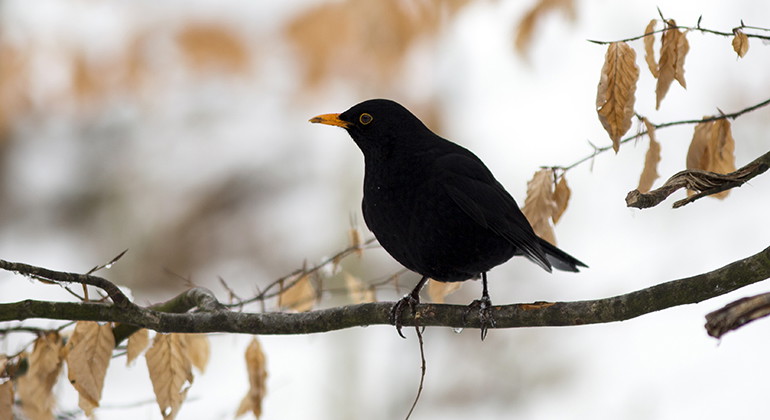
Koltrast.
Foto: Alex Regnér -
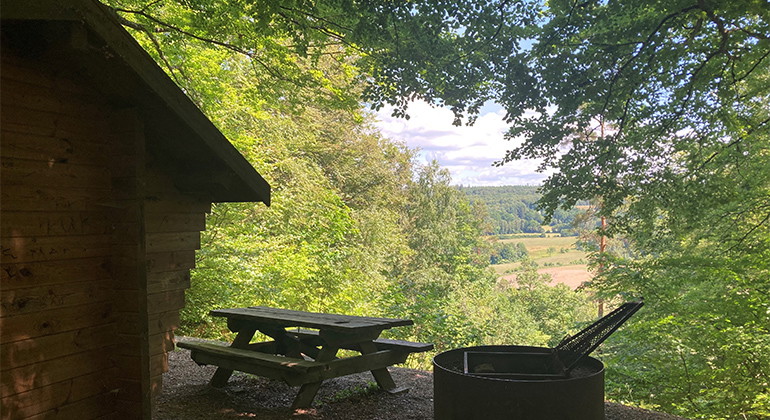
Rastplatsen ligger i mitten av reservatet och nås genom att följa den orange markeringen för Skåneleden.
Foto: Astrid Bornfeldt Persson -
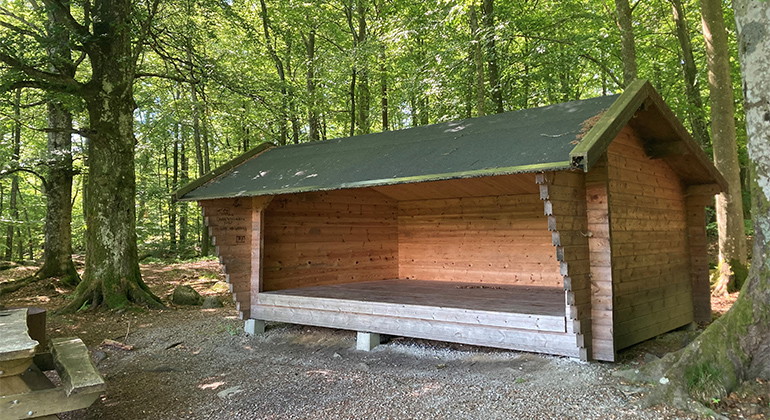
Rastplatsen ligger i mitten av reservatet och nås genom att följa den orange markeringen för Skåneleden.
Foto: Astrid Bornfeldt Persson -
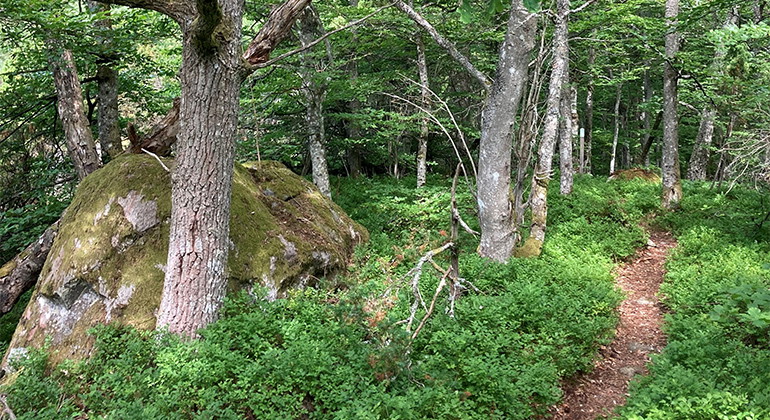
Foto: Astrid Bornfeldt Persson -
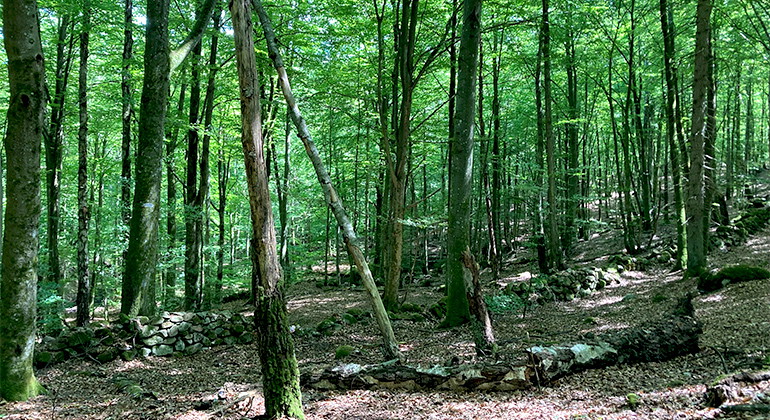
Foto: Astrid Bornfeldt Persson -
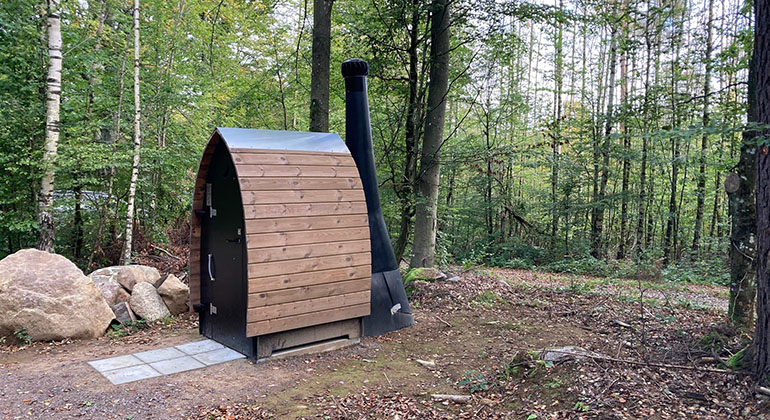
Toalett.
Foto: Maria Sandell -
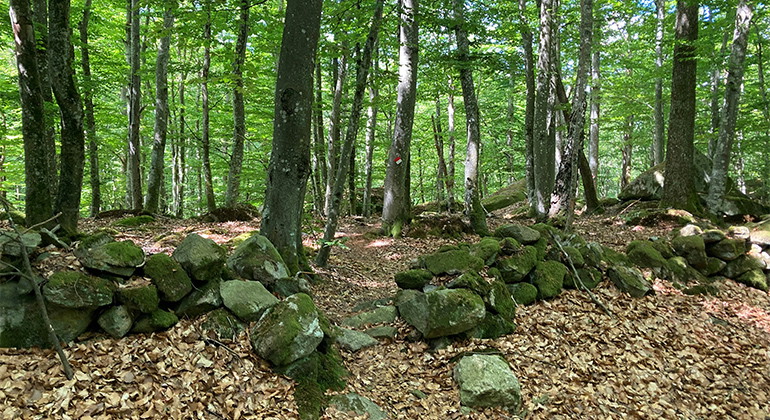
Foto: Astrid Bornfeldt Persson -
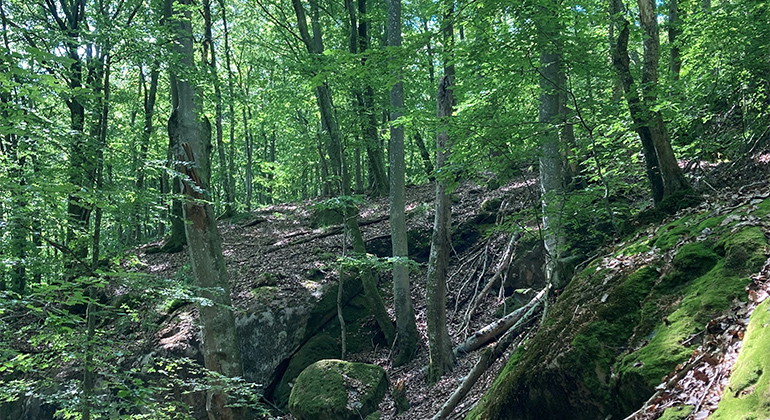
Foto: Astrid Bornfeldt Persson
Näsums bokskogar, Naturreservat
- Naturreservat
- Fylke: Skåne län
Handlinger
Beskrivelse
Once upon a time, cattle grazed among the boulders and cliffs in the forests of Ryssberget. Today, the barren ground on the mountain is an exciting natural forest where the trees are left to their own devices. Here you will find tranquillity among moss-covered boulders and large trees. In Näsum's beech forests there are nice hiking trails and here Skåneleden and Blekingeleden meet.
The name Ryssberget
The name Ryssberget comes from the word "ris" which means small forest or thicket. It gives us an indication that here did not grow lush beech forest but the nutrient-poor, thin soil made the forest grow poorly.
History of the grazed forest
The forest on Ryssberget has been common land for the villages around the mountain since the Middle Ages. It was only in the 19th century that the land was divided up between individual farms. The outfield was the part of the village's land that was not used for fields or meadows. This is where the village's animals grazed and wood and fuel were extracted from the forest. Forestry at this time was not as intensive as today's forestry and the forest was sparse with trees of different ages. Traces of the forest being used as pasture can be seen in the appearance of the trees. Multi-stemmed trees are often formed when animals graze on young trees. In several places in the former pastures you can find enclosures in the form of stone fences.
Developing into natural forest
Today, the forest is allowed to live its own life and develop into a kind of natural primeval forest. The trees are left where they fall and the result will be a varied forest. Large parts of the reserve are poor heath beech forest, but there are also oak and hazel trees growing. In the damp parts, swamp forest and marshes dominate. The biodiversity of the forest is high. This is partly because there has been forest here for a long time, but also because of the variety of forest environments that arise among the forest slopes, cliffs and damp areas. One species that indicates that the forest is old is the rare and endangered giant sponge moth, a large moth butterfly found only in forests with a long history. It needs living lichen ticks, a fungus that lives on dead and dying wood.
Experience ancient monuments under your feet
From the parking lot in the west, you can walk along a genuine ancient monument, a so-called hollow way. It is the remains of the road over the mountain used for centuries. In some places, the road is lined with stone fences. People have been traveling back and forth between villages here since time immemorial, and the tracks of wagons pulled by oxen and horses are still visible today. Other reminders of older times are the stone fences found in various places in the reserve.
Outdoor life
Näsum's beech forests, located in the northern part of Ryssberget, have several hiking trails to choose from. At the parking lot there is the Ljusgröna slingan (2.6 km), which initially follows the old hollow road. A little further north is the Yellow-White Loop (1.9 km) and in the far north the Red-White Loop (1 km). By combining these trails, you can experience the entire reserve. The Skåneleden trail (SL1 coast to coast, stage 2) and the Blekingeleden trail (stage 2) also meet here. Along the trail in the central parts of the reserve there is a nice viewpoint and a rest area with a fireplace and shelter. Remember to bring charcoal if you are going to grill. Thank you for taking your rubbish home. Parking is available adjacent to the reserve in the southwest. The nearest bus stop is Näsum Amadeus backe, about 1 km away.
In English
Welcome to Näsum Beech Forest Nature Reserve
Broadleaved woodland has grown for several hundred years on the ancient bedrock cliffs and stony slopes of the Ryssberget ridge. Cows, sheep, goats and horses once grazed here in a more open, sunny woodland than the one you see today. In the winter, pigs were put out to fatten up on the beech mast and acorns. Today the woodland is attractive for walking, dog-walking and picnics. The Skåneleden Trail has a lovely section that goes through the reserve.
There are large, old beech trees in Näsums Bokskogar as well as lots of dead wood. There is therefore, also a good chance of finding unusual species, such as the lichen Opegrapha vermicellifera and the large fungus moth, which are threatened by intensive modern forestry.
The woodland on the steep slopes has an old-growth character. The humidity is high and fungi, lichens and mosses thrive here. One example includes the rare moss bluish veilwort, which grows on the trunks of broadleaved trees, in dense, damp woodland. The beech woodlands in Näsums Bokskogar are allowed to develop freely - young trees need to get along with old and dead trees.
Regulations
Within Näsums Bokskogar Nature Reserve it is forbidden to:
- make a fire, other than in designated places,
- ride other than on designated bridleways,
- cycle or drive a motor vehicle other than on designated roads and in car parks,
- park up a caravan, camper van or equivalent,
- intentionally disturb wildlife,
- bring dogs or any other pets not on a lead,
- damage living or dead, standing or lying trees and bushes,
- dig, bore, chisel or in any other way destroy or damage natural objects or formations,
- damage stone walls,
- put up posters, signs, plaques, notices, marker tape or any equivalent items - with the exception of boundary markers, information and nature reserve signs.
Without permission from the Country Administrative Board it is also forbidden to:
- collect invertebrates, such as insects, beetles and butterflies or pick mosses and lichens,
- use the site for competitions, exercises or group camp activities.
Aktiviteter og fasiliteter
- Naturreservat
Fakta
Established: 2010
Size: 85 hectares
Municipality: Bromölla
Manager: County Administrative Board of Skåne
Protection type: Nature reserve and Natura 2000
Veibeskrivelse
Walk, cycle, take public transport or drive here. Map and directions via Google maps or coordinates (WGS84).N 56.172389, E 14.516750
Forskrifter
Full regulations for visitors
In addition to regulations and prohibitions in other laws and regulations, it is forbidden to:
- make fires other than in designated places,
- ride horses other than on designated trails,
- cycling or driving a motorized vehicle other than on designated roads and parking spaces,
- set up a caravan, motorhome or similar,
- intentionally disturb wildlife,
- bring an unleashed dog or other loose pet,
- damage living or dead standing or lying trees and bushes
- digging, drilling, chiseling or otherwise destroying or damaging solid natural objects or surface formations
- damage stone walls
- affix a board, placard, sign, inscription, poster, signpost or similar device - with the exception of information and reserve signs and boundary markers,
Furthermore, it is prohibited without the permission of the County Administrative Board:
11. collect invertebrates, such as insects, beetles and butterflies or pick mosses and lichens,
12. use the area for competitions, exercises or camp activities.
Kontakt
Adresse
Under LÄNKAR kommer du till aktuell reservatssida på Länsstyrelsens webbplats, med fördjupande information som kartor, broschyrer och hänvisning till relevanta aktörer. Här finns även en rapportfunktion för dig som vill lämna uppgifter om naturreservaten som vi förvaltar.
E-postadresse
Organisasjonens logotype

Jeg har vært her 1

Jeg ønsker å dra hit
Spørsmål og svar
Still et spørsmål til andre brukere av Naturkartan.
Omtaler
0 anmeldelser
- 5 :
- 4 :
- 3 :
- 2 :
- 1 :
Brukernes bilder
Ingen brukerbilder ennå. Bli den første til å dele!