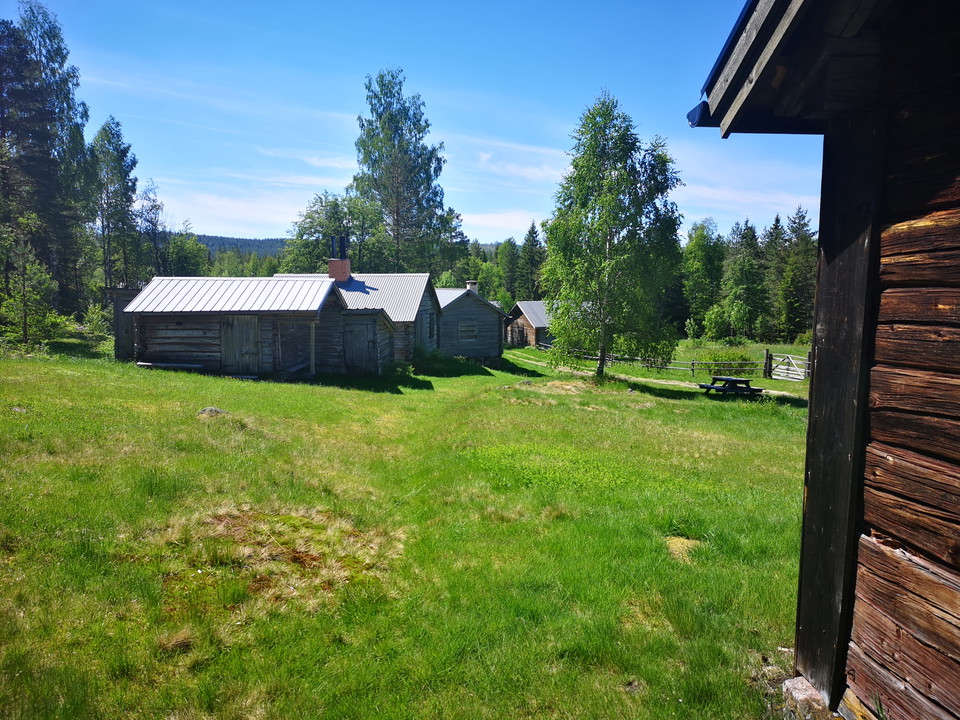
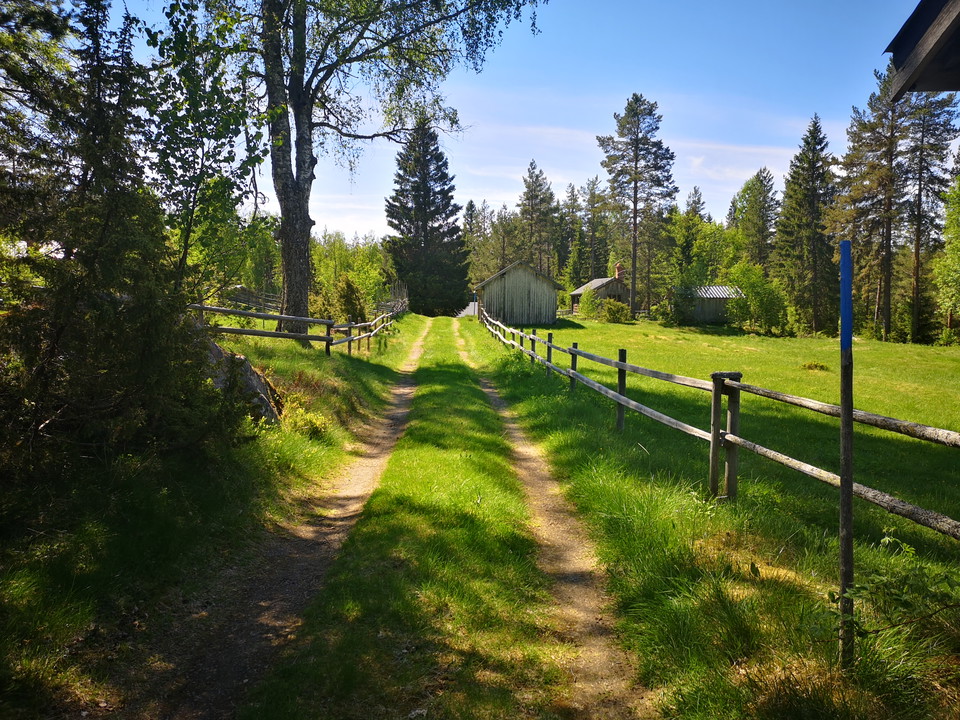
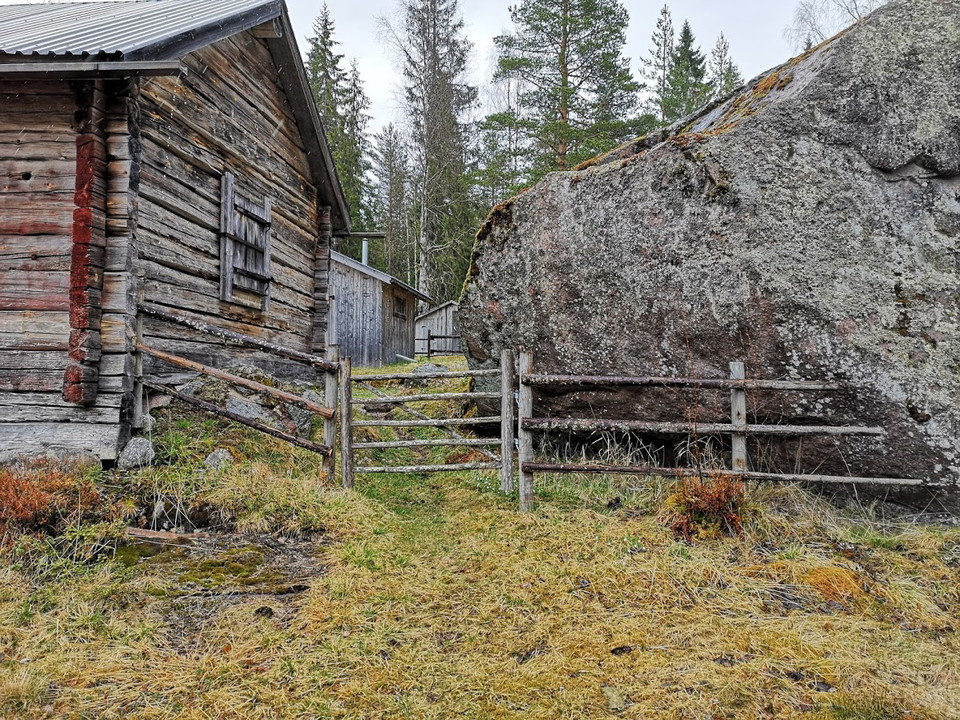
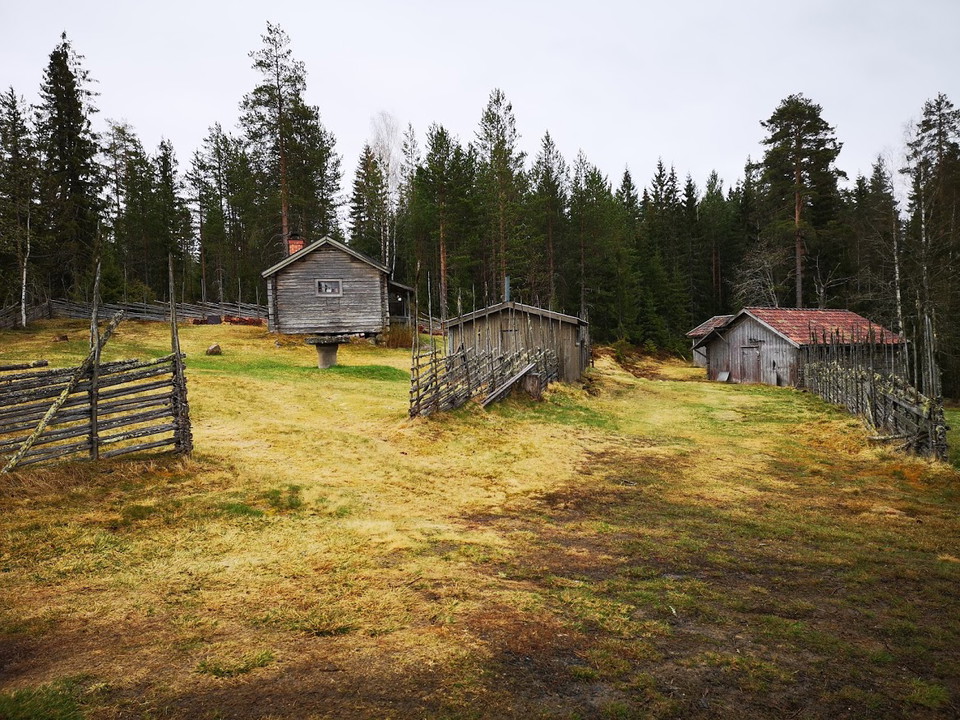
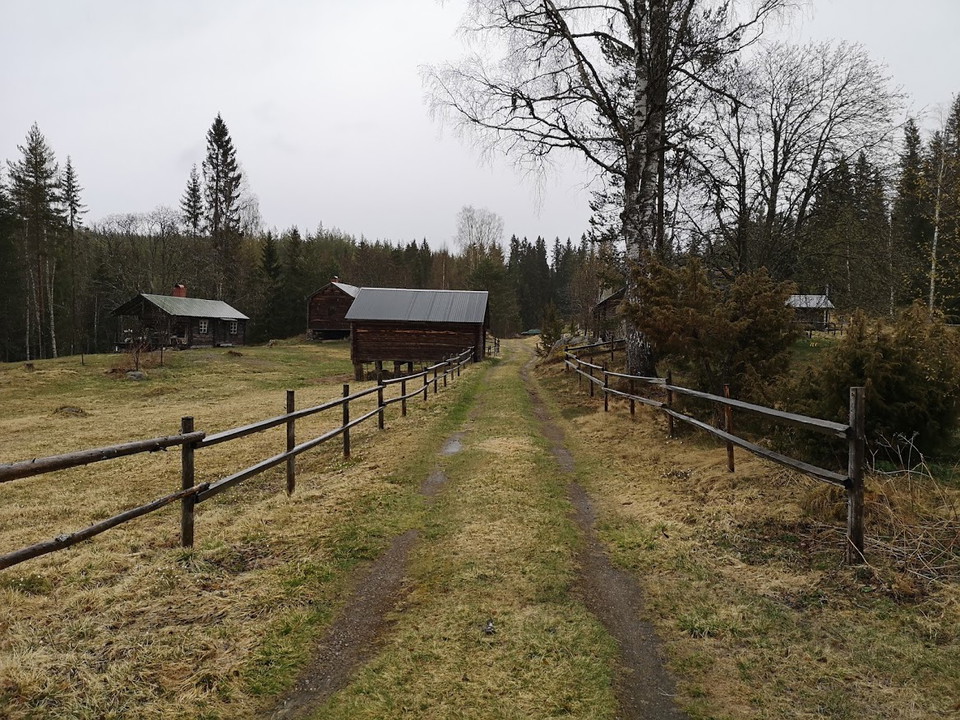
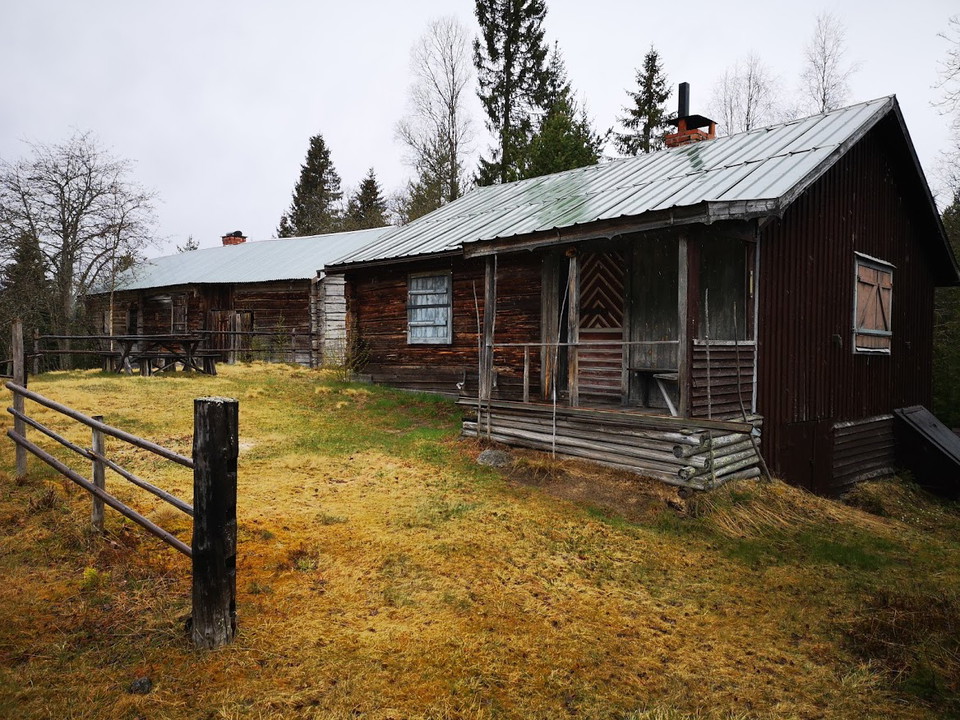
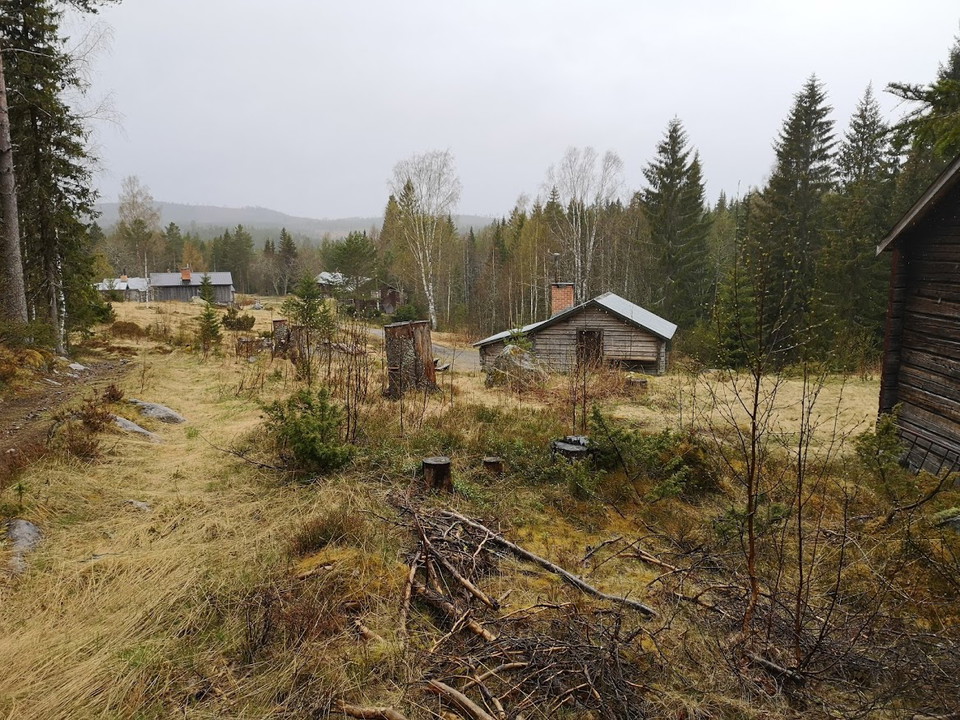
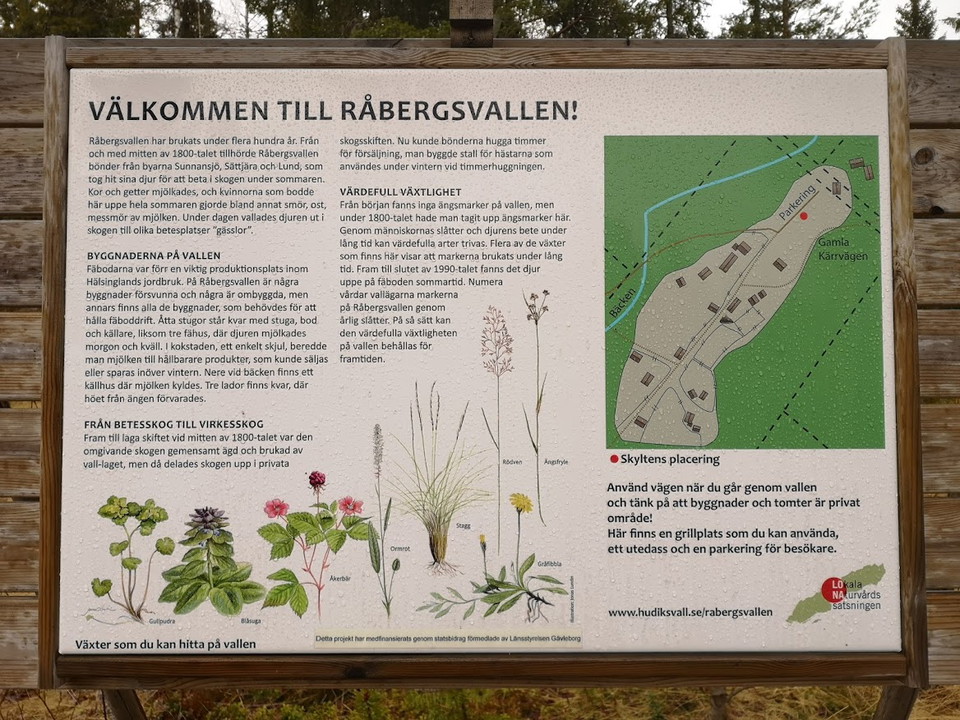
Three villages have cottages on Råbergsvallen. The villages are Sättjära, Lund and Sunnansjö.
There are 9 cottages there. Sunnansjö- Mäl-Gustavs, Per-Nilsas and Jon-is Sättjära- Els, Lars-Halvars and Mickels Lund- Källbergs, Erskas and Brodéns
The whale life: The whaling began with cutting wood in winter for the summer needs of the whale. Around June 10 was the right time to bring in the cattle. The loads were brought up by horse on the morning of the day. The load included the trunk with the servant's clothes, bedding for the main bed, butter churns, baskets, food, etc.
The giant servant went to the fold followed by his animals. The barking cow first and the calves last. Children in the village ran after and "drove on" the cows. The road from Lund to Råbergsvallen was about 12 km if you go over Håknorrbo-Selbergsvallen, i.e. the old embankment road.
Furnishings in the buildings: Our description of the furnishings is from Källbergs-Olles cottage. The most important thing in the vallstugan was and is the main bed. It is made up every summer with new straw. The bed was made up with sheets and long eiderdown in Delsbo seam. 2 pillows and a hand-knitted patchwork quilt. The main bed just stood there and shone, and was not tested by anyone.
Of course, the fireplace was also important, as it was the only fireplace available for the giant servant. The fireplace was chalked almost every year, the edge of the stove was decorated with 2 rows of shelf strips and crepe paper in between.
Every Friday evening birch twigs were picked to decorate the stove shelf with. In late summer, the birch twigs were replaced with carpet loops.
Other furniture in the cottage was a table, chairs, seat, stool and cupboard. There were fine embroidered towels on both sides of the door. Spruce rag rugs in lengths on the floor. Water bar and bucket of copper near the stove.
The sleeping place for the giant servant was in the "boa". It was 4 steps up from the main cabin. In addition to the bed, there was a food chest, the shepherdess's trunk, a butter churn and a shelf with a cheese vat, a bucket and a trough. Underneath the "boa" the cellar and swale had their rightful place.
All milk, morning and evening, was separated in the swallow. The cellar was of course used for storing food. All food was stored in wooden barrels with lids. Between the stones in the cellar, sprigs of juniper were stuck in, partly for the good fresh smell and if possible to keep the rats away.
A very important small house on the rampart was the so-called cookhouse. There was a brick boiler, a bench for washing dishes and laundry, a fireplace for heating water and, among other things, boiling brass butter and searing.
There was a hay barn with a woodshed and also a spring with a small roof over it. The milk was cooled in the spring.
A day on the rampart: The day on the rampart started early, at 5 am. First of all, the dung had to be mucked out before all the cows were hand-milked. The milk was strained and separated. Once the morning milking was done, it was time to take the animals out to graze in the forest. Grazing took turns in different parts of the forest.
Weekly schedule for grazing at Råbergsvallen:
Sunday: The cows were followed on Råberget
Monday: -"- Gustavsberget
Tuesday: -"- Ljusberget
Wednesday: -"- Råberget
Thursday: -"- Regeltjär
Friday: -"- Tavel-Kölninga
Saturday: -"- West on Kölninga The grazing sites changed mainly so that the pasture would have time to grow. When the maid came back from the forest, she had a lot of work ahead of her and what was most urgent was the processing of the milk, making butter as well as cheese and mess butter.
In the afternoon, the cows usually made their own way home to the pasture, but sometimes the maid had to go out and look for her cattle. The evening milking was next, and only after that, it was time to rest.
Then and now: In 1932 or 1933, the "Skött-Kare" began to be a farmhand at Råbergsvallen. At that time there were giant servants in 5 cottages on the embankment, namely Källbergs, Els, Drosens, Lars-Halvars and Joni's.
In the 1950s there were animals in 2 cottages and still today, still in one cottage - the Källbergs cottage.
It meant a big change in whale life when the new road was built through the forest. The cows are now brought to the fold using a tractor with an animal box. All milk is now transported to the farm by car and then sent to the dairy. This has made the work of herding incredibly easy. All the time previously spent on separation, butter and cheese production can now be used for other purposes. If an animal needs medical attention, it is now easy to contact a vet. Previously it was almost impossible to get any help. Something else that has completely disappeared is that sheep and horses no longer graze freely in the forest.
Leisure on the embankment: On Råbergsvallen, as on many other embankments, a big weekend was celebrated. The valley girls invited girls called bönjäntor and of course a whole lot of boys came too. There was a party with dancing and singing and fights on Saturday evening. Sunday was mostly spent lying down and sleeping all day. (In order for the visitors to find their way to the right valley, the giant maid put spruce roses in the middle of the road). Set up in January 1987 According to Karin and Gunnar Mårtensson, Olle Jonsson and Ingrid Paul-Gustavsson From the book Fäbodar i Delsbo, published by Delsbo Hembygdsförening 1996