
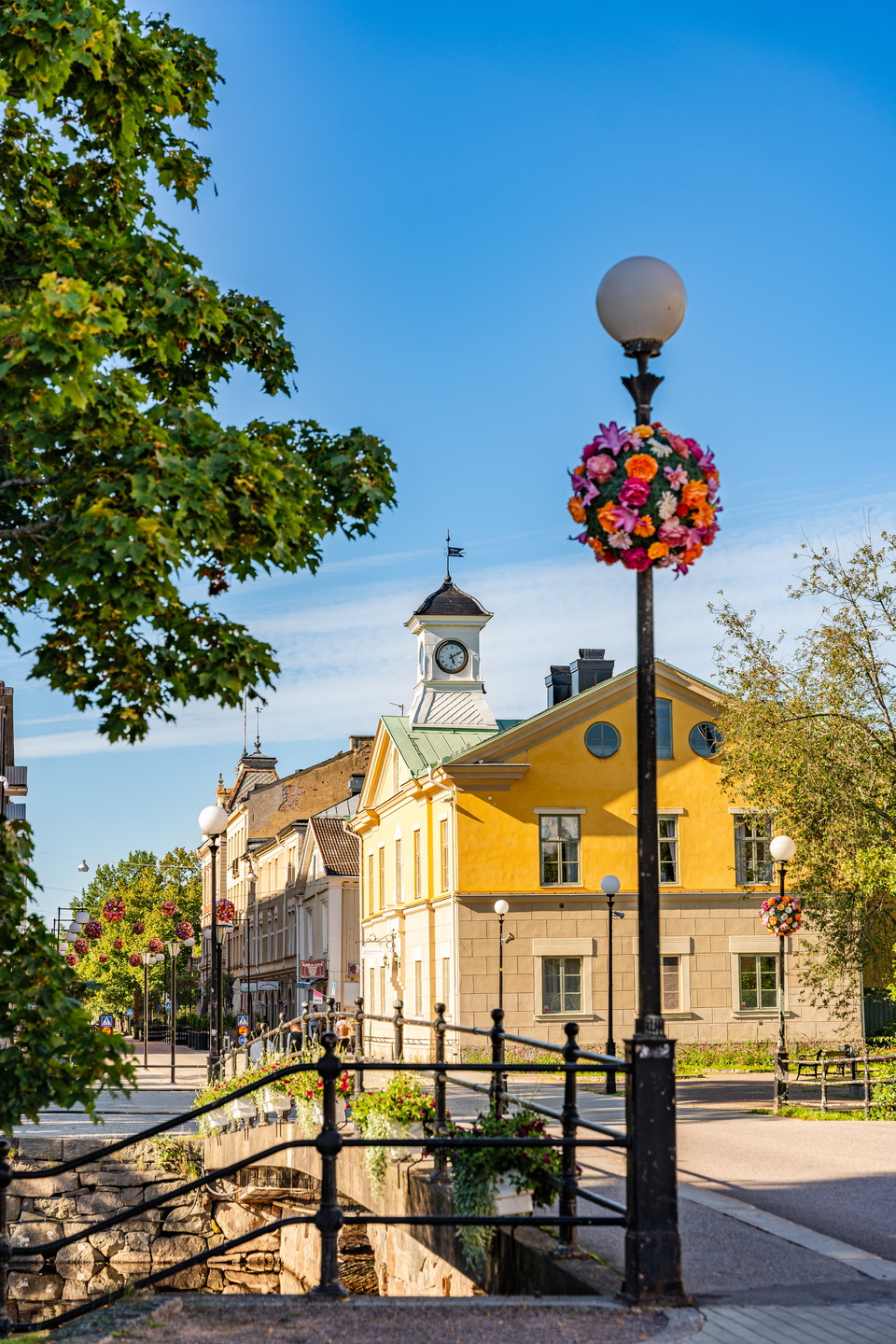
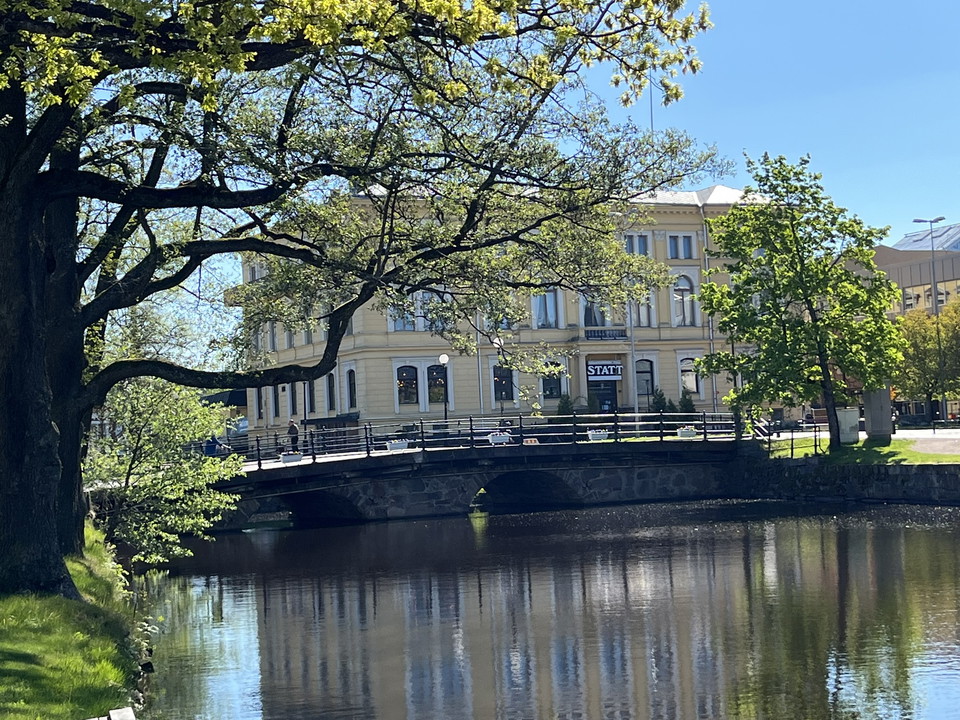
Arkitekturpromenad i Kristinehamn
- Gåtur
- Barnevognvenligt
- Tæt på offentlig transport
- Kultursti
- Amt: Värmlands län
Ruteoplysninger
- Længde 3.4 km
- Sværhedsgrad Grøn – enkel
Handlinger
Beskrivelse
1. Wahlundsgården – A House with Ghost Stories
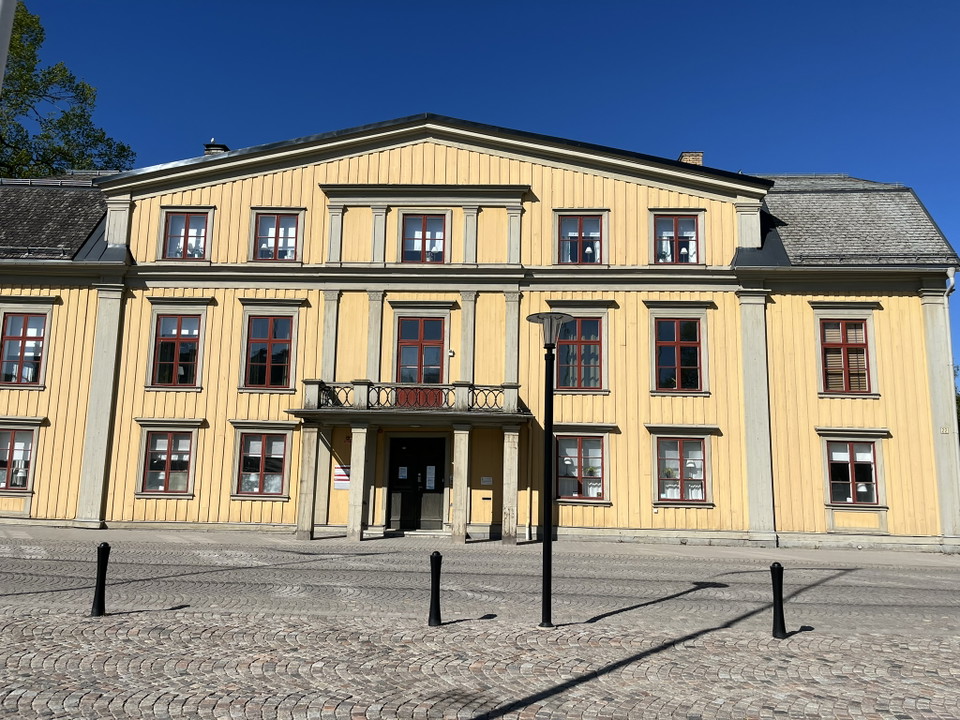
This house has had many lives. It was first built in the 1600s, burned down in 1777, rebuilt, burned again in 1804, and rebuilt once more in 1806. Later, Gustaf Wahlund bought the property. He added wooden cladding to the walls, a balcony, and the decorative gable you can still see today.
People say this house is haunted. According to local legend, an Indian princess was hidden in a chest in the attic. The chest is said to have been left there by a man who had worked for the Swedish East India Company.
The house was saved from demolition in the 1960s. Today it still stands proudly, with a new slate roof added in 2004. We hope this roof will protect the house for another 200 years.
2. Hovslagaregatan and the Vågen Quarter
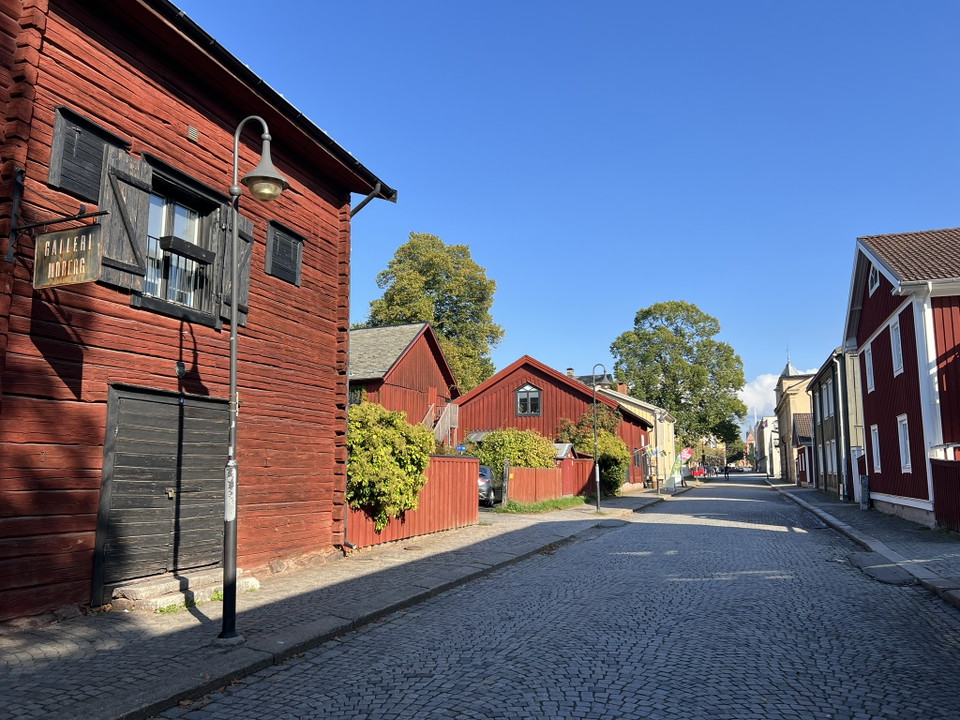
Hovslagaregatan is a beautiful street lined with old wooden houses. It runs along the Vågen Quarter, one of the oldest parts of Kristinehamn.
Today the area is full of small businesses. You will pass Retrovågen, an old-style general store. In the courtyard you can visit the Kristinehamn Historical Museum.
On the other side of the block you will find Mastmagasinet Restaurant, Galleri Vågen, and two second-hand shops: Vågens Återbruk and Djurskyddet Kristinehamn.
Further along Hovslagaregatan, beside the Varnan River, you will see the old Customs House and the Vålö Storehouse, now home to the interior design shop Lev Vackert.
3. The Customs House – Taxes and Lawyers
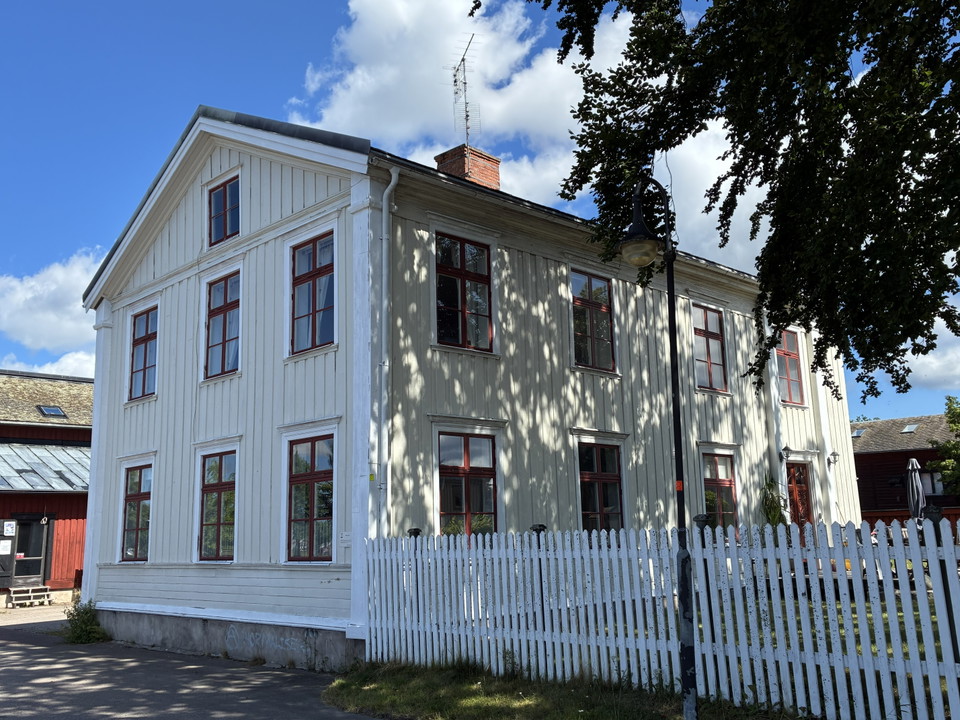
The name reminds us of the old customs house that once stood closer to the river. Goods arriving by boat were unloaded here. One important product was spirits, which were stored in a nearby warehouse.
The present building was built after the fire of 1804 in a style called Swedish Neoclassicism. It was commissioned by Johan Carl Gerneij, a lawyer, member of the Royal Swedish Academy of Sciences, and director of Sweden's pig iron production.
The property includes several buildings. The house facing the street is painted with expensive oil paint, while the courtyard side is painted traditional Falun red. This was a common way to save money: make the front look elegant while keeping the back simple.
You can see several houses in Kristinehamn with two different façade colours. Keep an eye out for them.
4. Vålömagasinet Storehouse
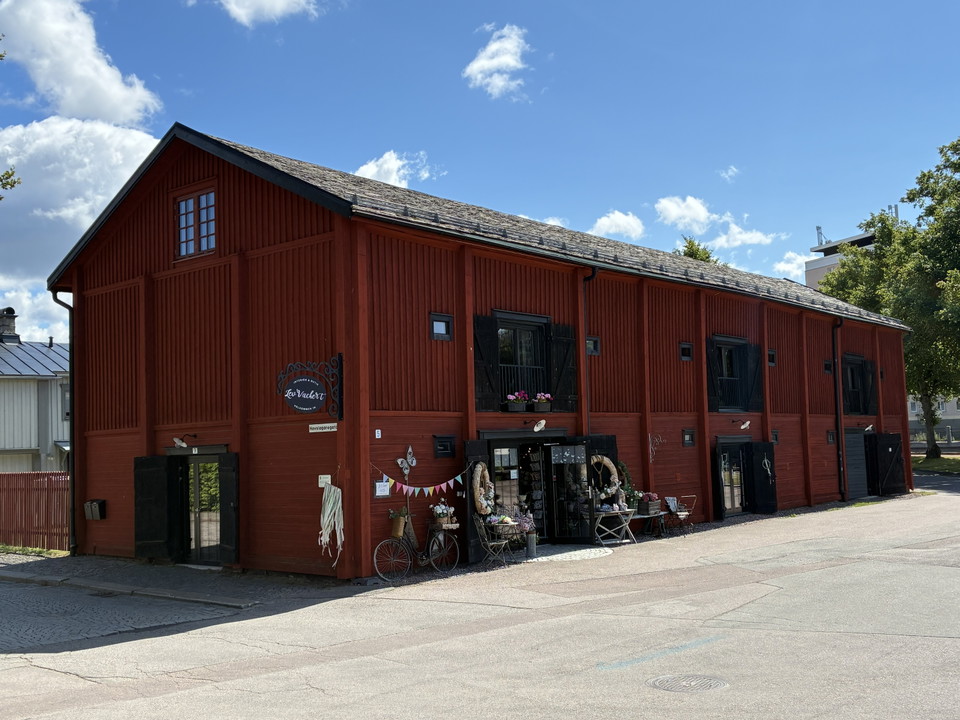
The Vålö Storehouse is the oldest surviving wooden building in Kristinehamn.
It was built in 1690 on the island of Vålön, where it stood for more than 100 years. In the early 1800s it was moved to its present location.
The building was originally used as a grain storehouse, where cereals were kept before being transported.
5. Park Bridge – Award-Winning Steel
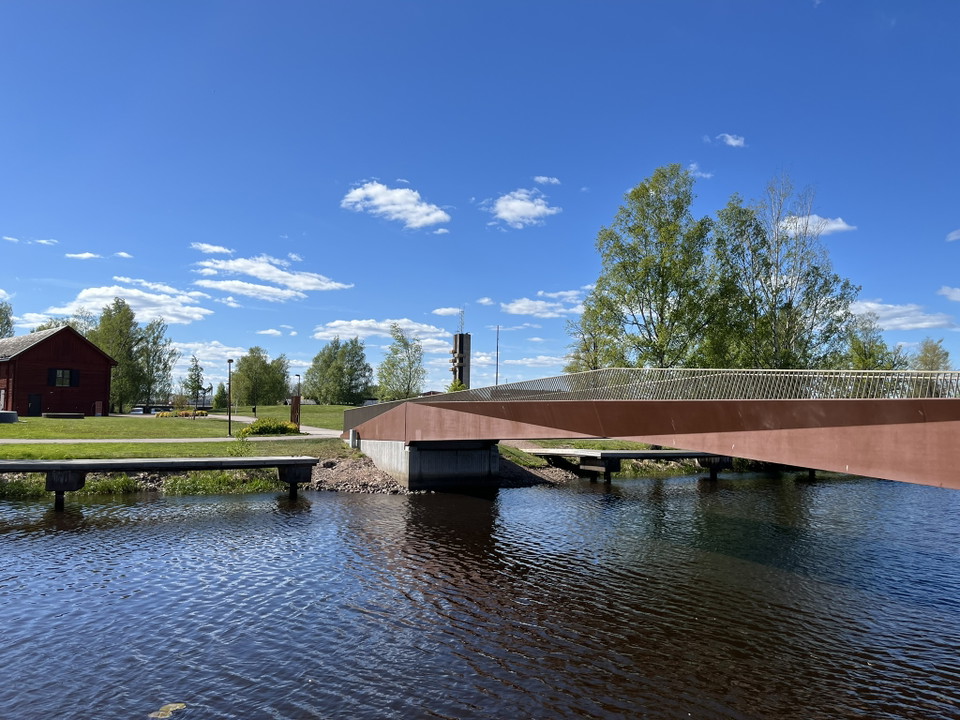
When the Park Bridge was built, workers discovered old wooden piles in the ground. They were probably remains of the town's 19th-century iron harbour. The discovery delayed construction, but the bridge was officially opened in the summer of 2020.
Many local people had different opinions about its design. Outside Kristinehamn, however, the bridge received great praise. In 2021 it was named Sweden's Best Steel Project and was also entered in an international competition.
The bridge creates a beautiful connection between the guest harbour and the town centre. With a total of 48 bridges, Kristinehamn remains one of the towns with the most bridges in central Sweden.
6. Parkmagasinet Storehouse
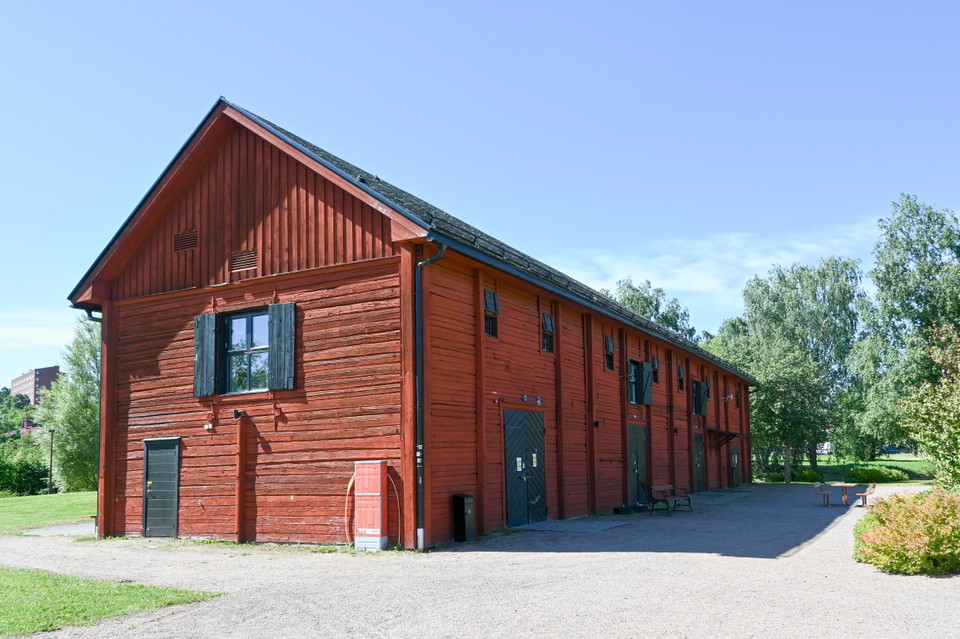
Information will be updated soon!
7. The Nordenfeldtska House – Royal Visitors and the Poor
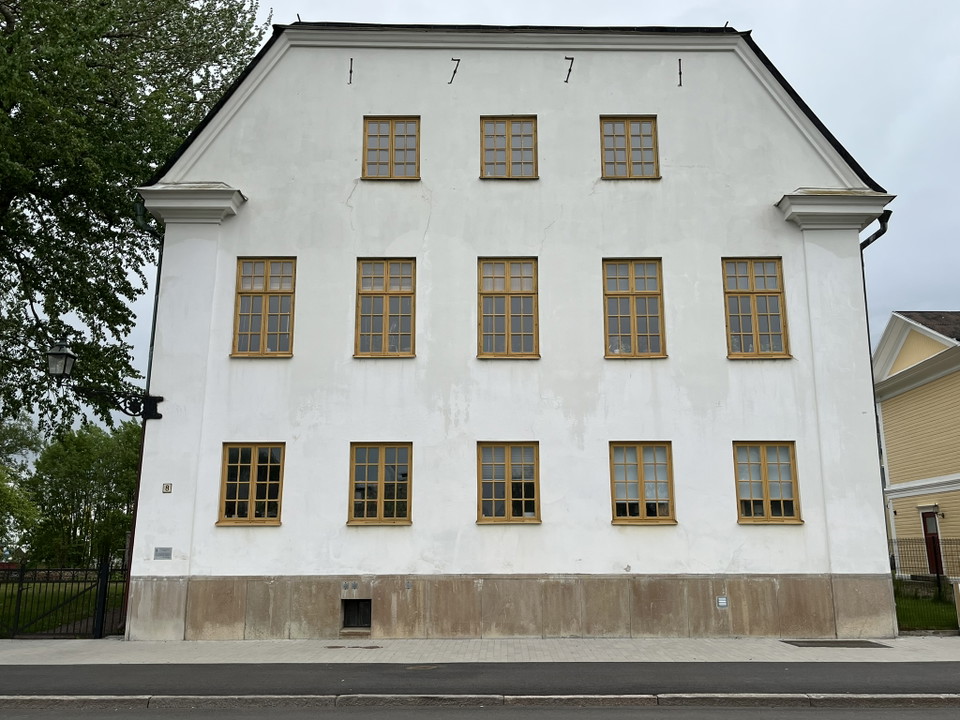
The oldest stone house in Kristinehamn is a true historic treasure. It was built in 1771 by Regina Nordenfeldt after an earlier wooden building had been destroyed by fire.
On this same site, Duke Charles had a royal manor built in the 1570s. In part of the cellar you can still see old vaulted ceilings that may date back to that time.
The house has had many different roles. It was once home to some of the town's wealthiest families, and later it became a poorhouse. Today it has been carefully restored by private owners.
With its distinctive roof and elegant gables, the house has survived both devastating fires and the passage of time.
8. The Market Square Fountain – The Town's Meeting Place
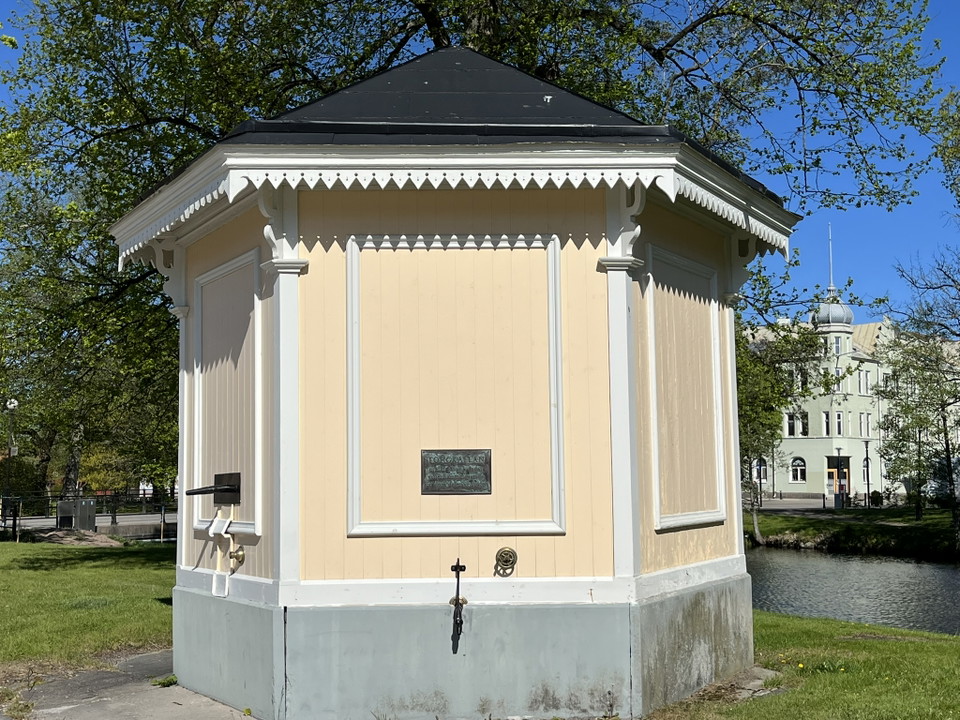
In the early 19th century, the water in the town fountain was not clean. In 1847, the confectioner P.G. Lundgren decided to solve the problem. He built a water pipeline made from hollowed-out tree trunks that carried fresh water from Kullkällan spring to the market square. At the time, this was an impressive engineering achievement.
In 1881, the fountain received its present appearance. A modern steam-powered water pump, donated by engineer Harald Asplund of Kristinehamn Mechanical Works, was installed. The fountain became the town's main place for collecting drinking water until the early 20th century.
People at the time described it with admiration: "It has three outlets, and with the push of a button, it fills a container immediately."
Many believe this is the very pump that inspired the famous Swedish poet Gustaf Fröding to write his poem Torgpumpen (The Market Pump).
9. Kungsbron Bridge – From Wood to Stone
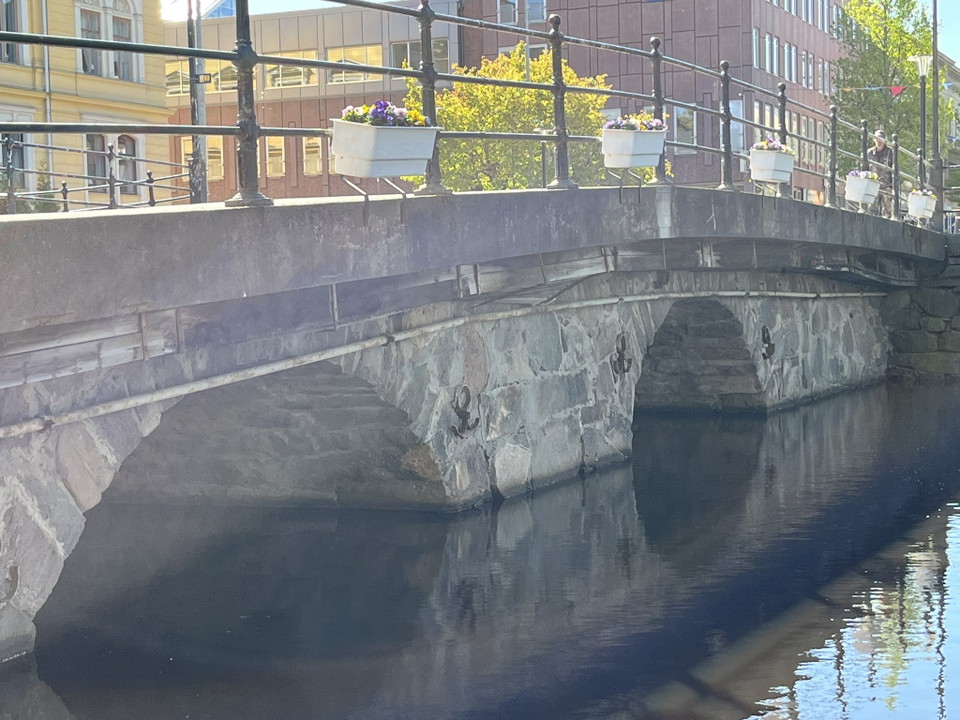
King's Bridge is one of the oldest bridges in Kristinehamn. The first bridge was built of wood in the 17th century. After the great fire of 1777, it was rebuilt in stone. The bridge you see today is the same stone bridge.
Look closely at the stone arches and the iron anchor plates that hold the structure together. These small details show the building techniques of the past. As you continue your walk, you will see similar anchor plates on several old buildings throughout the town.
Did you know that Kristinehamn has 48 bridges? It is one of the towns with the highest number of bridges in central Sweden.
10. The Town Hall – A Building with Many Roles
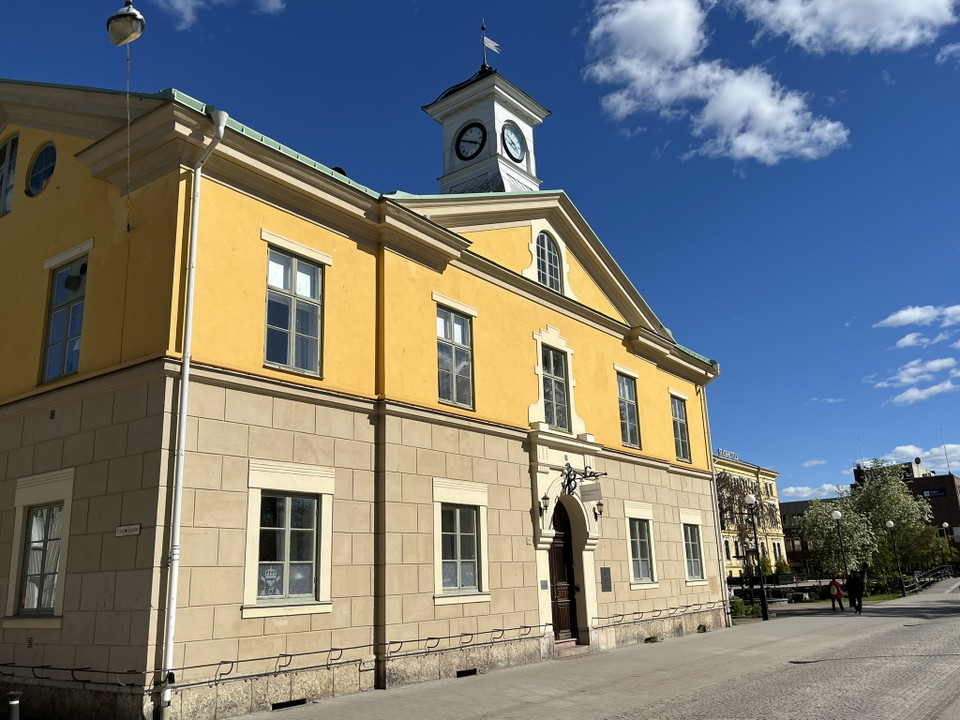
The present Town Hall was planned after the devastating fire of 1777. The drawings were approved by King Gustav IV Adolf, and the building was completed in 1805 on its present site beside the North Market Square.
Over the years, the building has served many purposes. It has been a town hall, hospital, mayor's residence, telegraph office and police station. The small building in the courtyard was even used as a prison.
Today the Town Hall is used by the Bergslagen Artillery Regiment.
The square in front of the building was once full of market stalls, fish sellers and local life. It even had a tennis court, built by the Geijer family.
11. Trädgårdsgatan – A Street Full of History
This street tells the story of Kristinehamn after the great fire of 1777. The cobblestones, two-storey wooden houses and traditional architecture show how the town was rebuilt.
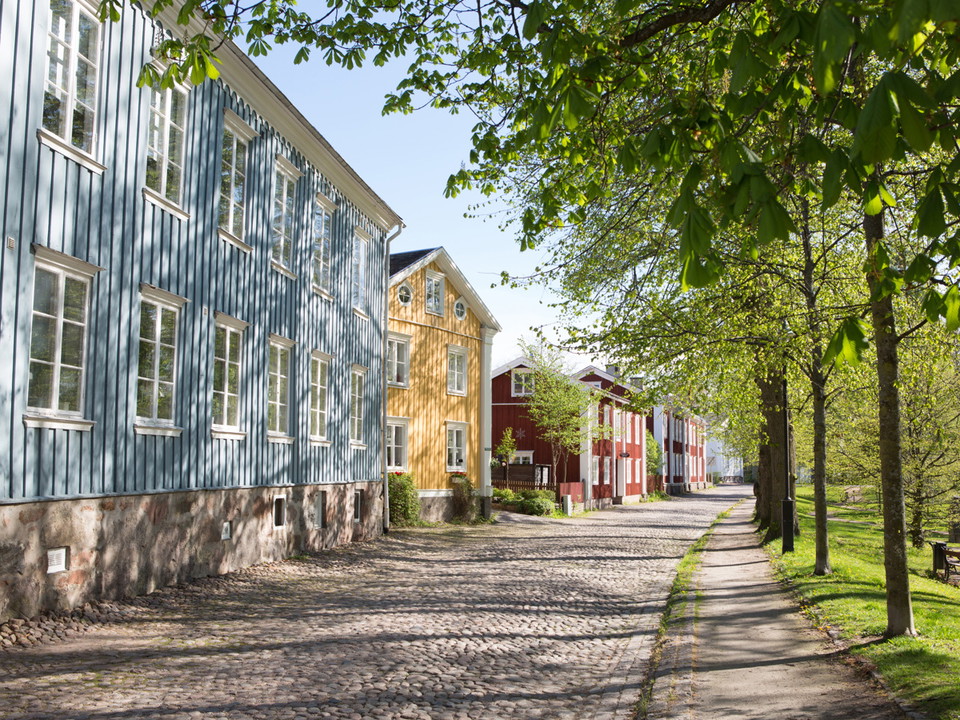
Trädgårdsgatan 10
One of the town's oldest timber houses, built from high-quality heartwood. Ellika Larsdotter once lived here. She ran a popular tavern but was later sentenced to death for the murder of her child.
Across the cobbled street is a small park, and beyond it flows the Varnan River. The stone steps along the riverbank were once used when people rinsed their washing in the water.
Trädgårdsgatan 8 – The Dean's House
The present Dean's House was built in 1857. The last parish priest moved away in 1965.
Trädgårdsgatan 6
The first house on this site was built as early as 1648. The year is still visible in the well-preserved cellar.
Trädgårdsgatan 4 – Blomberg House
This building was moved here in 1973 from Södra Staketgatan. It was originally the home of a coppersmith.
Trädgårdsgatan 2 – Grundel House
Built in the late 18th century, this beautiful house has been home to both mayors and printers. Many people consider it the finest merchant's house in Kristinehamn.
Take a moment to admire the charming courtyard and the impressive main entrance with its balcony and columns.
12. Sockerslottet – From Church to Chocolate
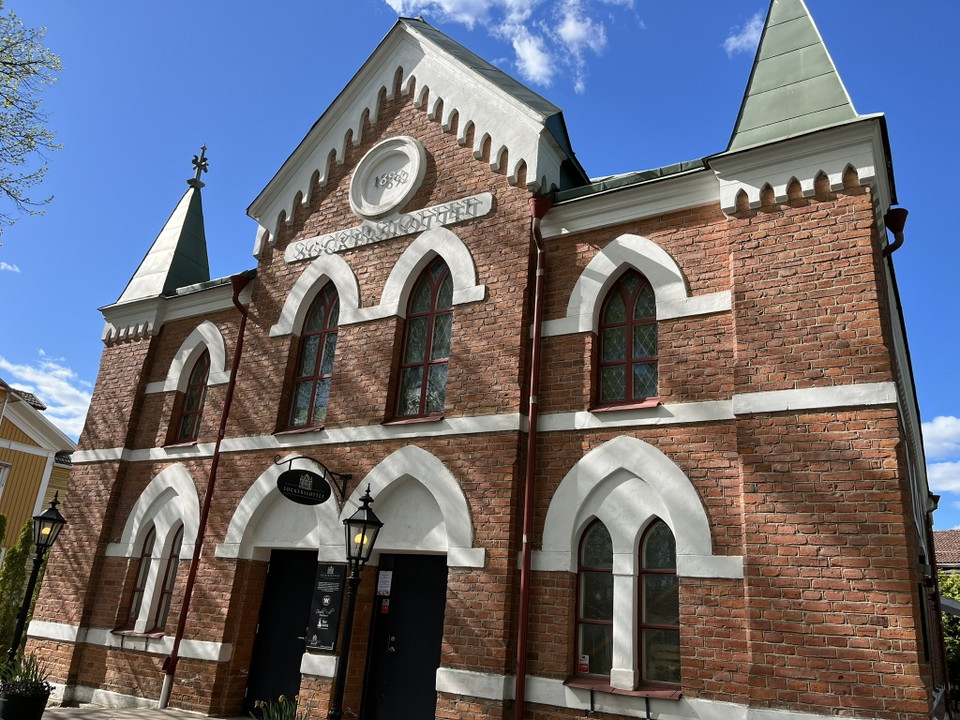
Today this building is a café, hotel and chocolate factory. It was originally built as a Baptist church.
Designed by the architectural firm Jakobsson & Eriksson of Sundsvall, the church was completed in 1892. Its pointed windows and decorative details are inspired by the Neo-Gothic style.
Inside there was a church hall, a baptism pool and living quarters for both the caretaker and the evangelist.
When the congregation later merged with Broängskyrkan, the church closed.
The building was given a new life and a new name: Sockerslottet – "The Sugar Castle."
13. Fabriksgatan 9 – A Stone Villa Among Wooden Houses
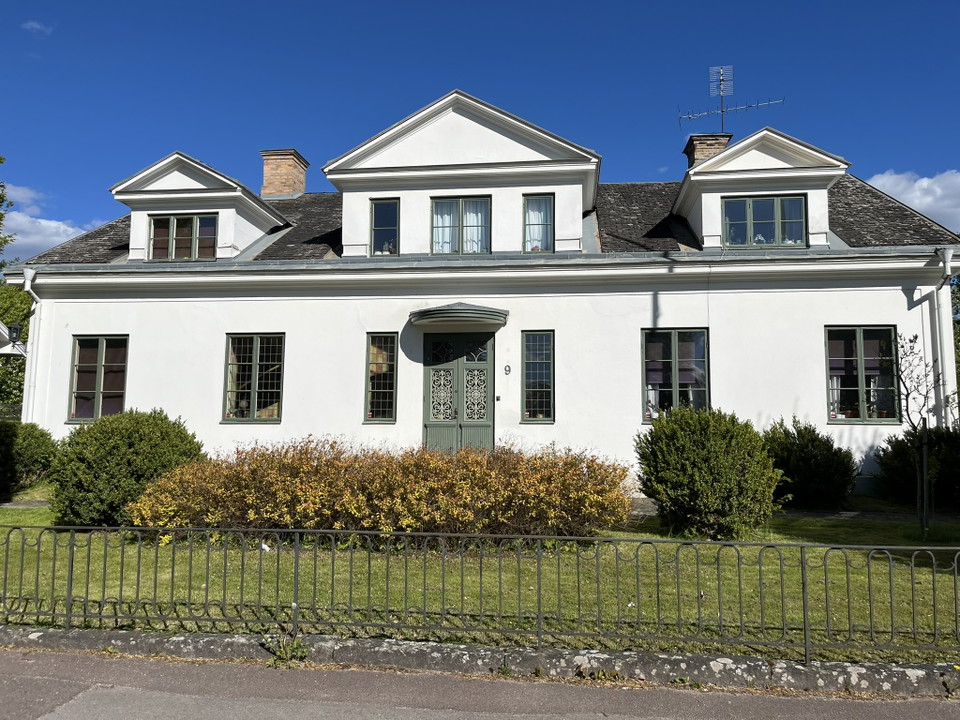
Most houses on this street are built of wood, making this elegant stone villa stand out.
The house was built in 1870 on what was then the edge of the town. At that time, Kristinehamn was beginning to expand beyond its original centre.
The villa has around 300 square metres of living space, not including the basement, garage or storage areas.
Take a close look at the beautifully cast patterns on the entrance doors. Similar details can be found on several historic buildings throughout the town, so keep your eyes open as you continue your walk.
14. Träslottet – The Wooden Castle
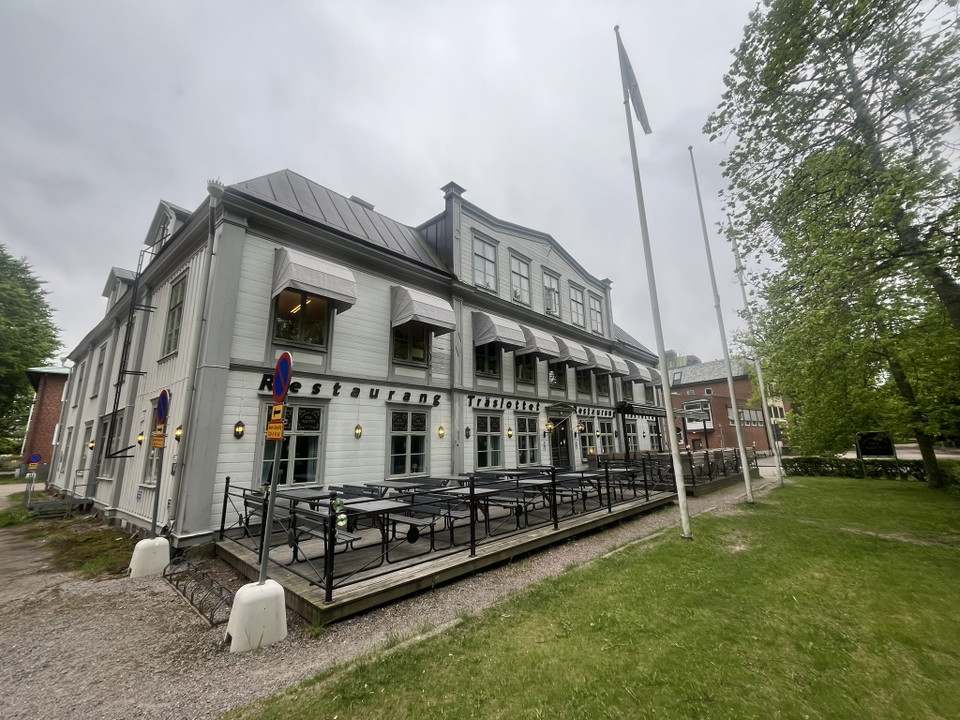
After the great fire of 1777, this large timber building was constructed as the town's coaching inn, where travellers could eat, rest and spend the night.
Originally it stood on what is now the South Market Square. When the Town Hotel was built, the entire building was carefully moved to its present location.
The building has a U-shaped layout and many original architectural details. Notice the oval windows with their small protective roofs, a feature found on several older houses in Kristinehamn.
Today Träslottet contains a restaurant, offices and apartments, but it still feels like a place where people meet and pass through, just as they did more than two centuries ago.
As your walk continues along Tullportsgatan towards the Travel Centre, feel free to take a short detour, visit one of the shops or cafés, or simply enjoy the atmosphere of the historic town centre. You are not only following a route—you are walking through living history.
15. Morabyrån – A Touch of Paris in Kristinehamn
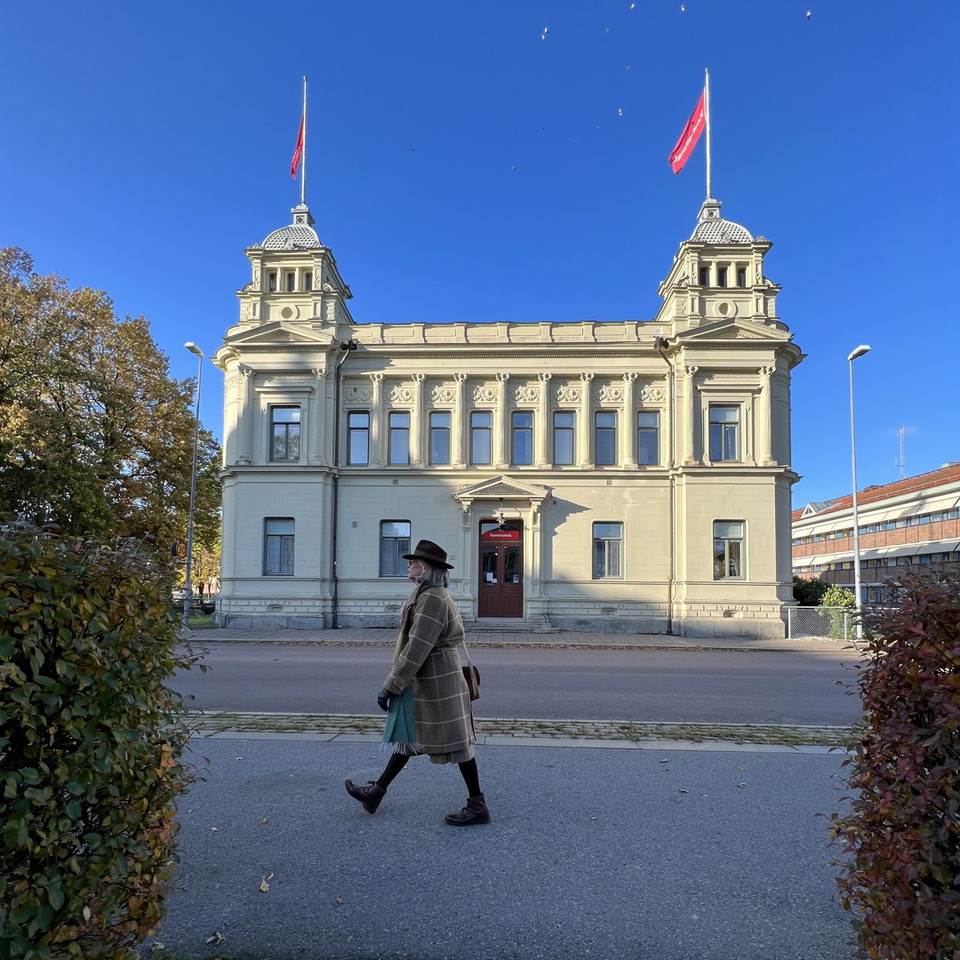
When Jacques Wallner, traffic director of the Inland Railway, returned from the World Fair in Paris in 1889, he was inspired by the city's magnificent architecture.
Those ideas became Morabyrån, a building unlike any other in Kristinehamn. Inspired by the Paris Opera House, it was designed with towers, lion heads, half-columns and decorative patterns.
The building was completed in 1895 and designed by architect Carl Österman. It combines the elegance of the Neo-Renaissance with rich decorative details.
For many years it served as the headquarters of the Mora–Vänern and Eastern Värmland Railway companies.
Today Morabyrån is recognised as one of the most remarkable historic buildings in the province of Värmland.
16. The Courthouse – A Temple of Justice
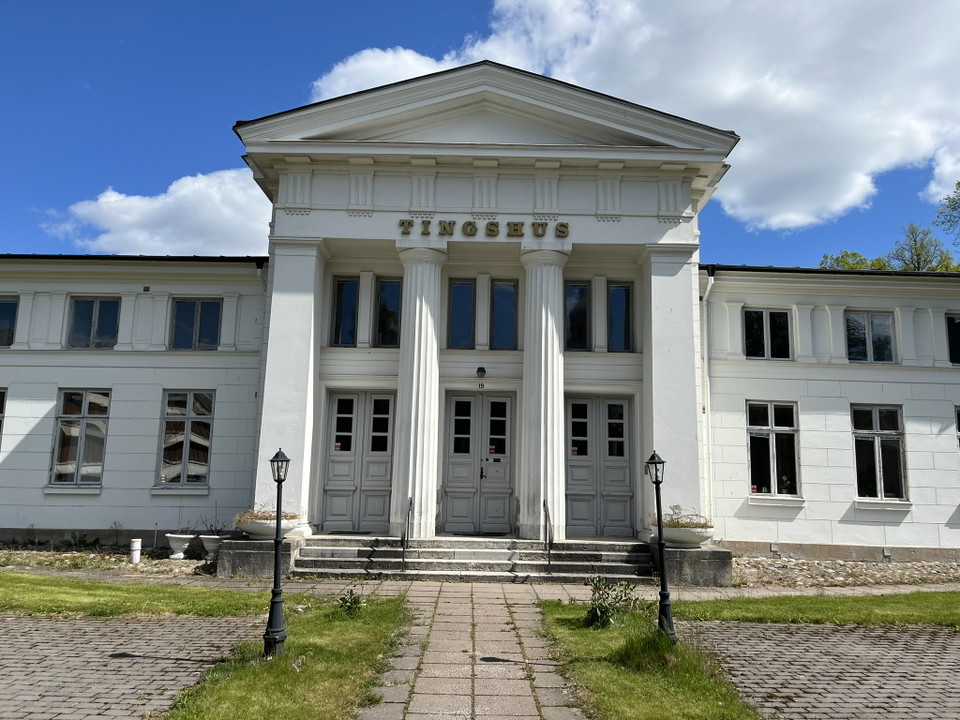
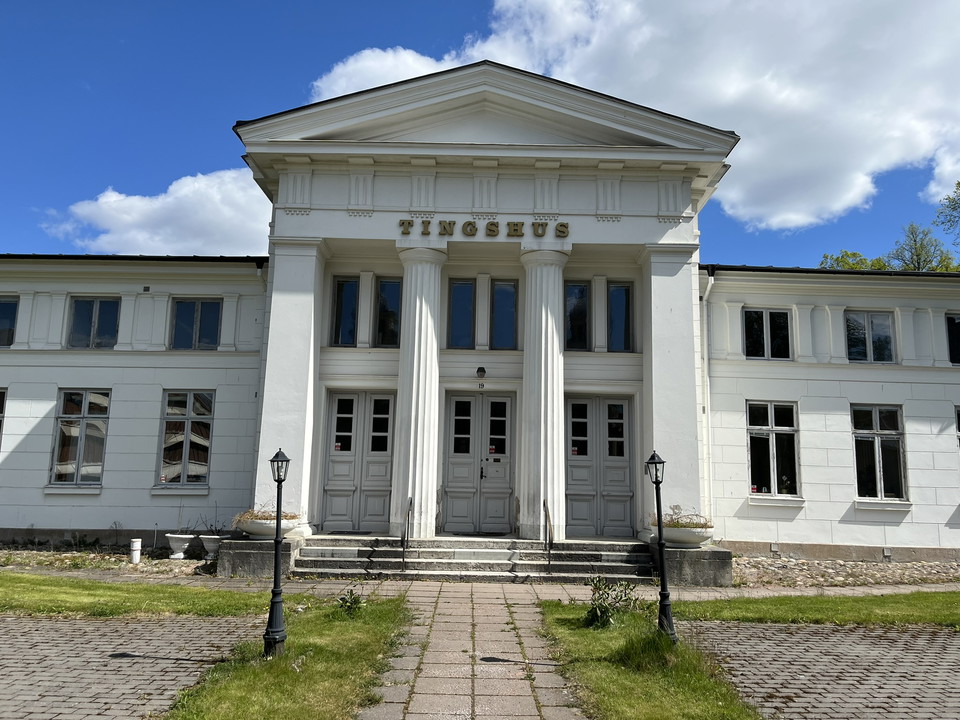
Standing like a classical Greek temple in the middle of town, the Courthouse was completed in 1883.
It was designed by the famous architects Axel and Hjalmar Kumlien, who also designed the Town Hotel and Marieberg Hospital.
At the back of the building you can see a semicircular extension. This was the original courtroom. On the wall, the motto of King Charles XV is still painted in gold:
"The nation shall be built on law."
The painting was created by the local master painter August Lundgren.
Today the building is privately owned and used as offices, but its impressive architecture still reminds visitors of justice, tradition and fine craftsmanship.
17. The Town Hotel – The Town's Grand Meeting Place
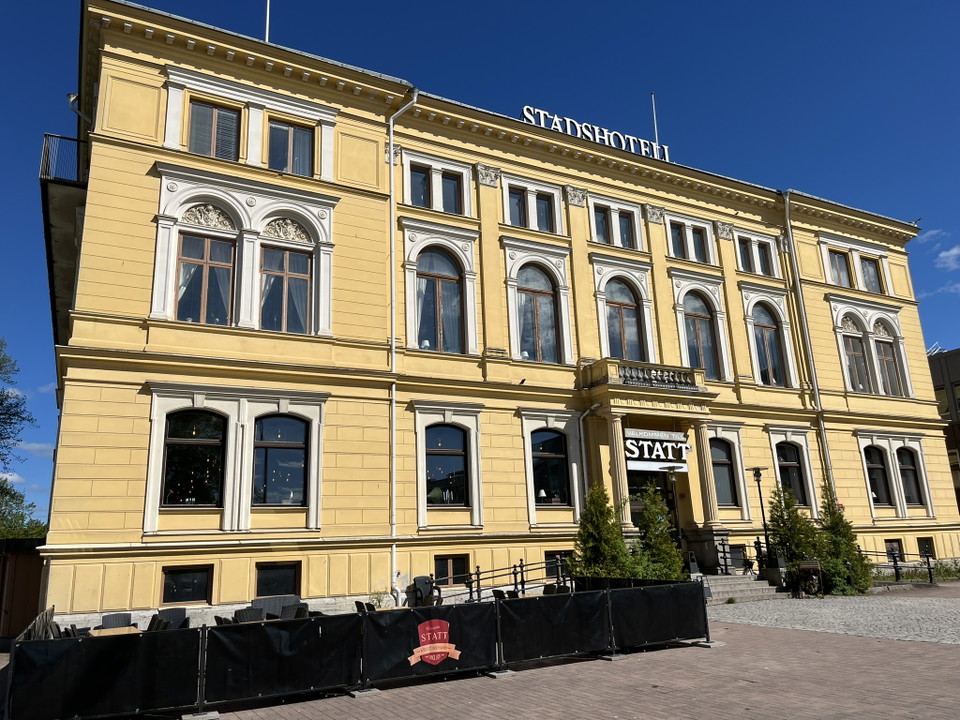
With its elegant design and rich decoration, the Town Hotel is one of the finest examples of Neo-Renaissance architecture in Kristinehamn.
It was built in 1878 and designed by the brothers Axel and Hjalmar Kumlien, who also designed the Courthouse and Marieberg Hospital.
Inside is Kristina Hall, one of Sweden's most beautiful banquet halls. It features large chandeliers, an orchestra balcony and a richly decorated ceiling. The ceiling is believed to be one of the main reasons why the building was given protected heritage status in 1985.
Two oil portraits can be seen in the ceiling. According to local tradition, they show the children of the hotel's first restaurant manager.
Before the hotel was built, the old coaching inn known as Träslottet stood on this site. Although the inn was moved, the Town Hotel has remained an important meeting place for both local people and visitors.
18. Krukmakeriet, The Pottery House – Three Doors, Three Stories
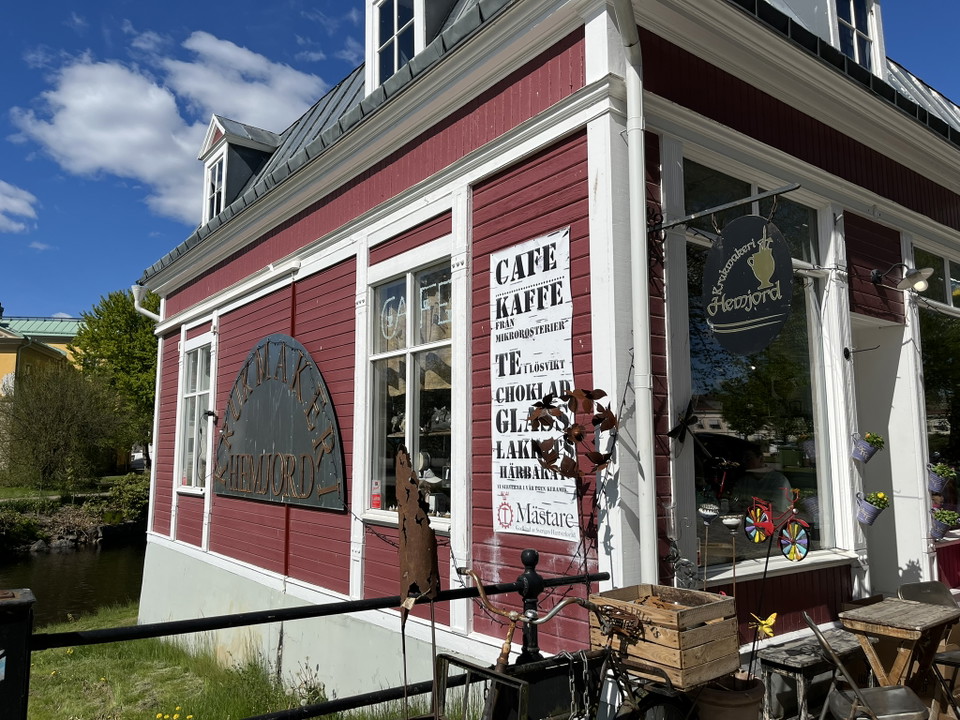
After the great fire of 1893 destroyed the town's main shopping street, new business premises were urgently needed.
This simple building was quickly constructed with three small shops under one roof. It was meant to be temporary—but more than a century later, it is still here.
The building became known as "The Bazaar." Over the years it has housed many different businesses, selling meat, fruit, cigars, yarn and handmade greeting cards.
Look at the three entrance doors and the three attic windows. They show the building's original design with three separate shops.
Today the building is home to a café, a pottery workshop and a gift shop, continuing its long tradition as a place of trade and craftsmanship.
19. Hasselbladsgården – Colour, Craft and Community
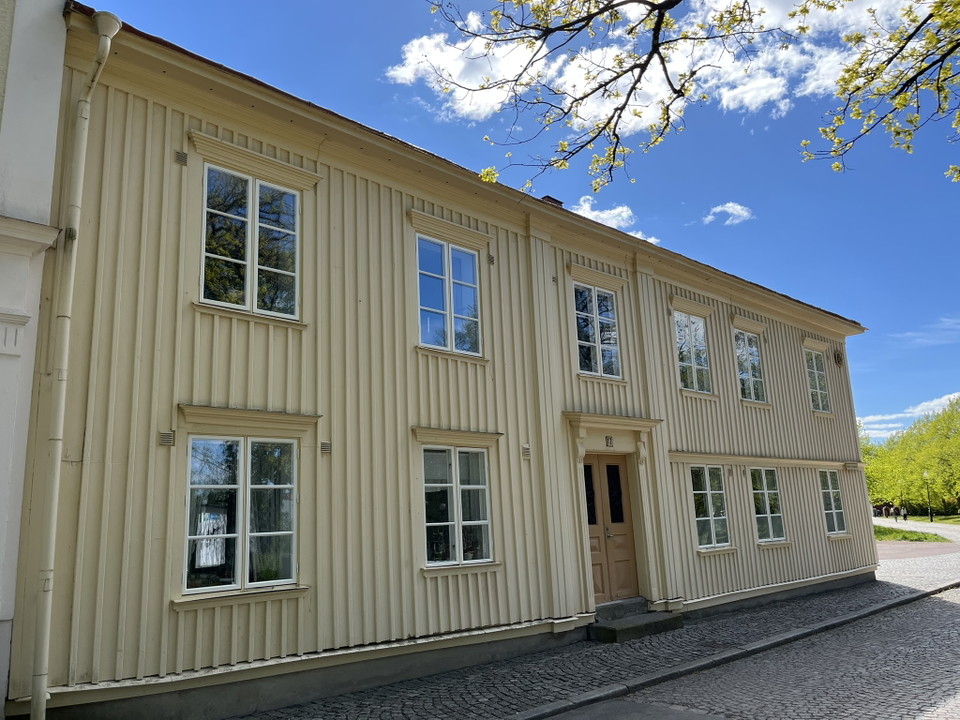
This is one of the last remaining enclosed farmyards in Kristinehamn.
The timber house was built in the early 19th century. The street side is painted yellow with decorative trim, while the courtyard side is painted traditional Falun red. Using different colours on different sides of the building was common at the time.
The granite foundation gives the house both strength and character.
Many people have lived and worked here over the years. Market traders and the well-known sweet seller known as "Plutta" are said to have lived here.
Many shops have occupied the corner of the building, including "Elis på hörnan", a favourite shop among local residents.
20. The Old Church Site – Remembered in Stone
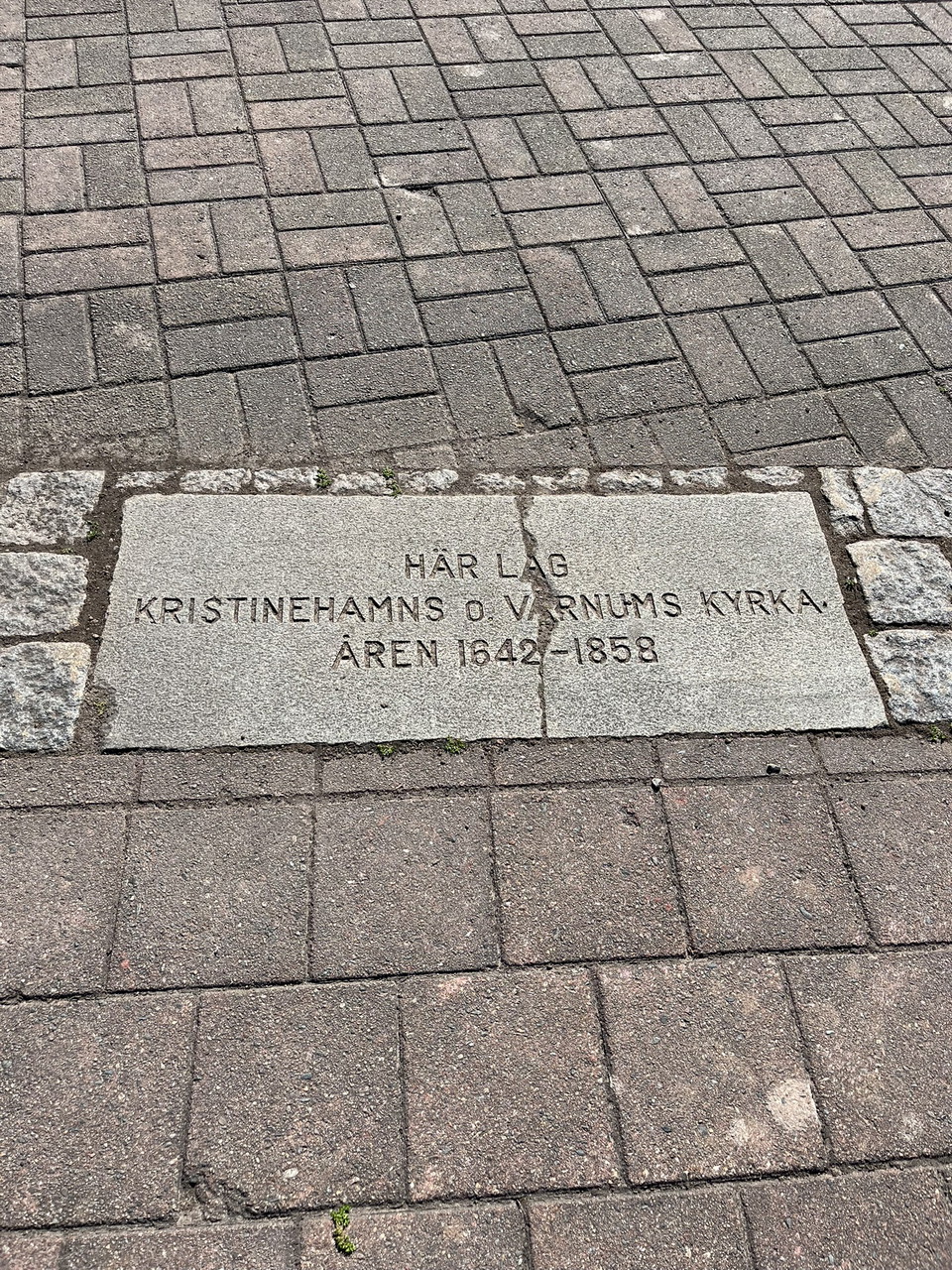
Here, in the school playground, the outline of Kristinehamn's old wooden church has been recreated with paving stones.
Stand by the information plaque, which marks the position of the chancel, and look towards the river. You can clearly imagine the shape of the church in front of you.
The church had a cross-shaped floor plan and was one of the few buildings to survive the great fire of 1777.
The street leading from the church to the market square was originally called Church Street. When the new church was completed, it became Old Church Street (Gamla Kyrkogatan).
This simple stone outline is a quiet reminder that history can still be seen, even after the buildings themselves have disappeared.
21. Kristinehamn Church – A New Church with Ancient Treasures
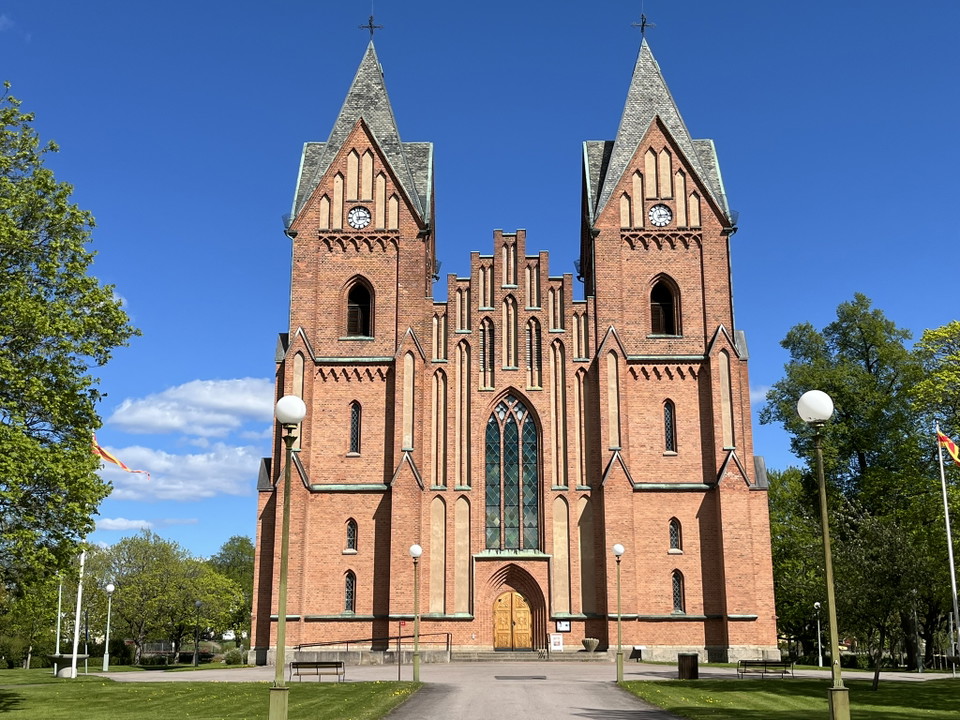
When Kristinehamn Church was completed in 1858, it stood outside the old town boundary. The former town fence once followed today's North, South, East and West Staketgatan streets.
The church was designed by Professor Carl Georg Brunius in the Neo-Gothic style.
Inside, however, you will find treasures that are much older than the building itself. The baptismal font dates from the 13th century, the triumphal crucifix from the 14th century, and many of the church's silver objects and textiles are several hundred years old.
Most of these historic items were moved here from the town's old wooden church.
A small museum is located in the gallery above the chancel, and the church is open to visitors on most days.
Here, many centuries of history come together in a peaceful setting.
22. Frödinggården – The Childhood Home of Gustaf Fröding
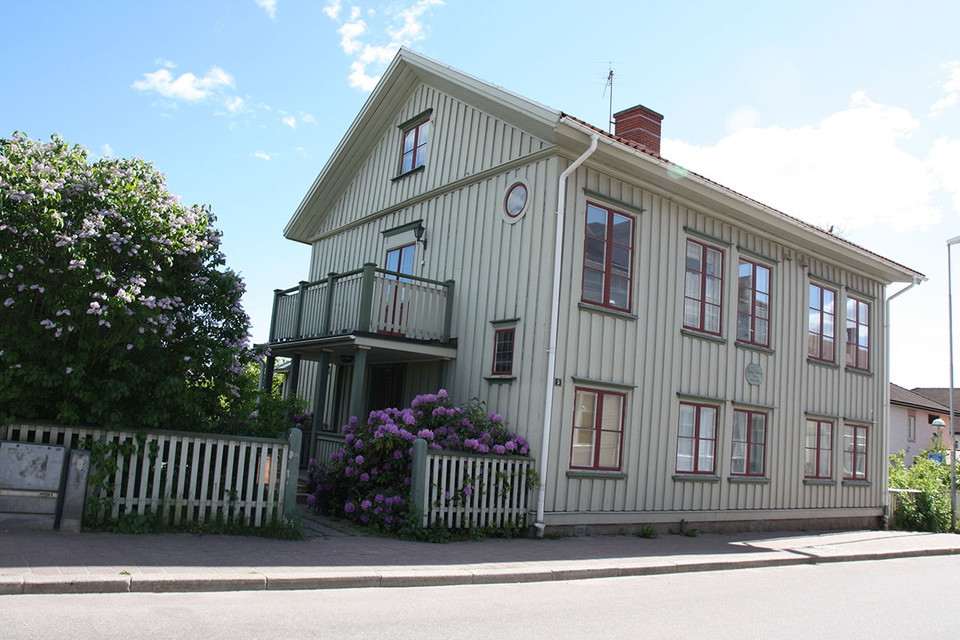
Frödinggården is a beautiful green wooden house where the famous Swedish poet Gustaf Fröding spent his childhood.
The house was built in 1867 by the church caretaker and carpenter J.P. Westbom. It became known as Frödinggården after the Fröding family moved here in 1868.
The family included Gustaf's parents, Emilia and Ferdinand, and his sisters Cecilia, Anna Matilda and Hedda. Gustaf was eight years old when they moved in.
He lived here for twelve years before leaving for Uppsala to study. His childhood bedroom is the room in the left-hand gable on the upper floor.
Frödinggården is a good example of the type of home that was common in Kristinehamn during the second half of the 19th century.
The original entrance doors, with their beautifully patterned ironwork, are still in place. A memorial plaque was added to the house in 1929.
23. Assemblégatan – A Street Named After a Famous Meeting Hall
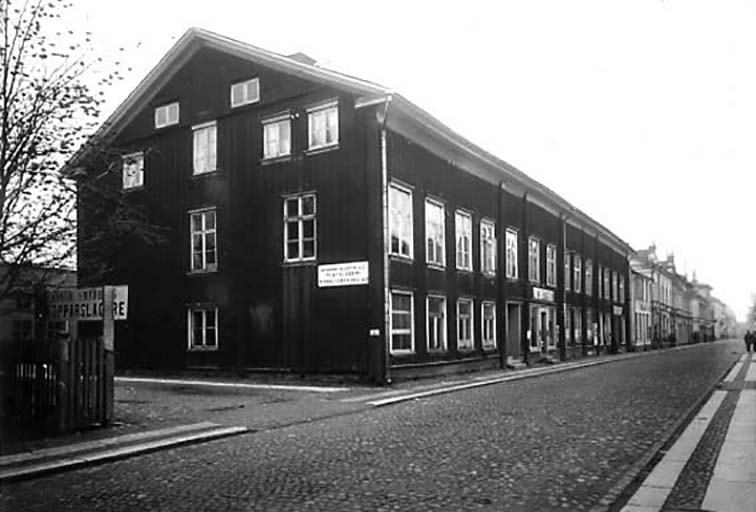
The name of this street remembers an important building that once stood here.
The Assembly House was built in 1786 and became the town's main meeting place. It was also home to the annual iron market, where merchants, industrialists and officials gathered to do business.
The word "assemblé" comes from French and simply means "assembly" or "gathering." French was the fashionable language of the time.
Many important events took place here. Jonas Alströmer visited the building, and several important organisations were founded here, including the Värmland Agricultural Society, the Vänern Navigation Board and Wermlands Provincial Bank.
The engineer Nils Ericson also presented his plans for Sweden's railways here.
Upstairs, as many as 300 guests from the ironworks community danced together on the wide wooden floor.
When the iron trade became less important, the Assembly House gradually lost its role. It was destroyed by fire in 1955.
Today the building is gone, but the street name keeps its memory alive.
24. A.G. Petersson's House – Built on Strong Foundations
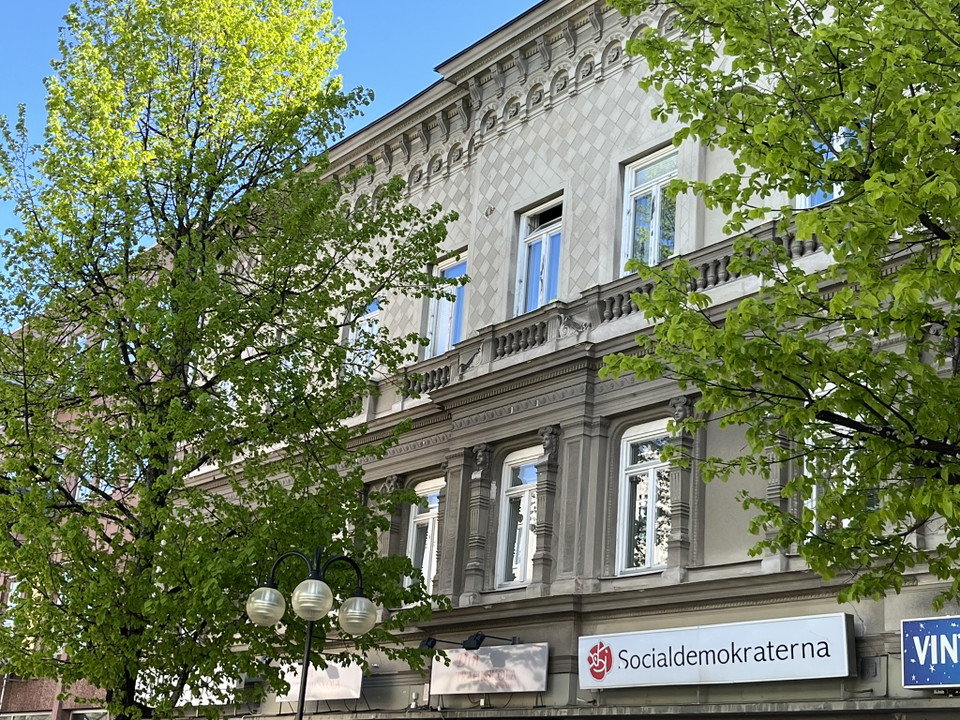
After the great fire of 1893 destroyed the town's main shopping street, Kungsgatan was widened and many new stone buildings were constructed.
Architect Carl Österman designed this building, completed with elegant horizontal stone bands and, most importantly, a strong foundation built on wooden piles.
The neighbouring corner building, known as Kjellman's Corner, was not built on piles. Over time, it sank so much that the lowest step of the entrance staircase disappeared below ground. Eventually, the building had to be demolished.
A.G. Petersson's House, however, still stands firmly today. It is also known locally as "Tidningspelles hus" ("The Newspaper House"), because the offices of the Kristinehamns-Tidningen newspaper were once located here.
25. Oliveriet – A House of Fine Food
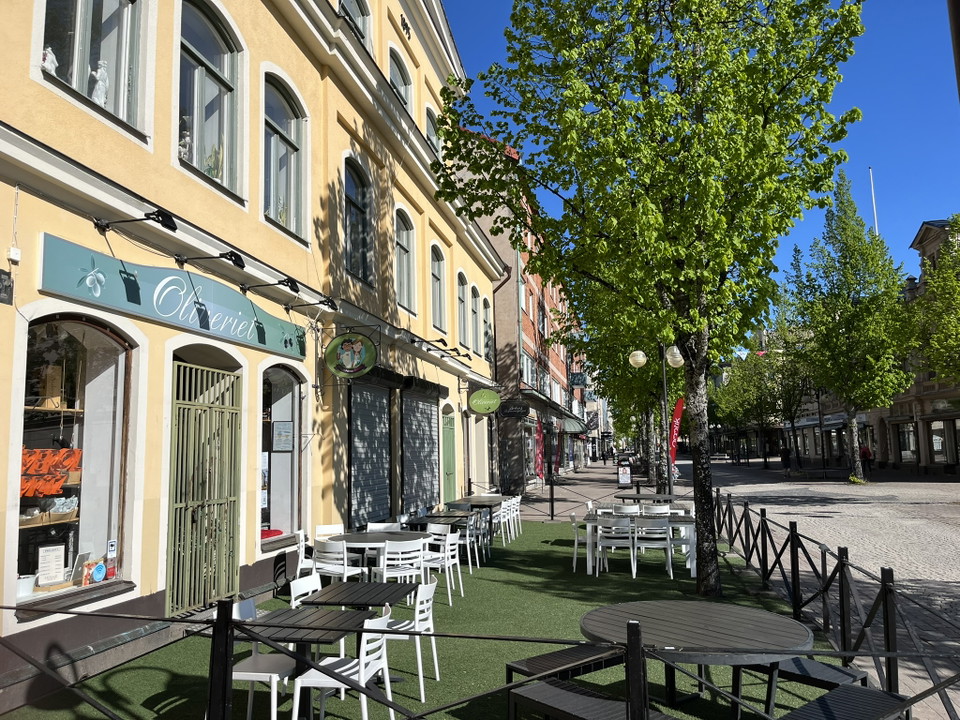
This building was completed in 1895, and the year can still be seen on its façade.
It was once home to Pettersson's Confectionery, famous for its beautifully decorated interior and delicious pastries. According to local stories, parts of the original interior may still be hidden behind more modern walls.
The neighbouring plot was once used to grow potatoes.
Today the building is home to an Italian restaurant where visitors can enjoy fine food and delicacies.
In the stone paving just north of the building, look for the image of a traditional sailing ship made from cobblestones. The ship is a bojort, the vessel shown in Kristinehamn's coat of arms. It honours the town's long connection with trade and shipping and recalls the town charter granted by Queen Christina in 1642.
26. The Salvation Army Citadel – A Scottish Castle in the Town Centre
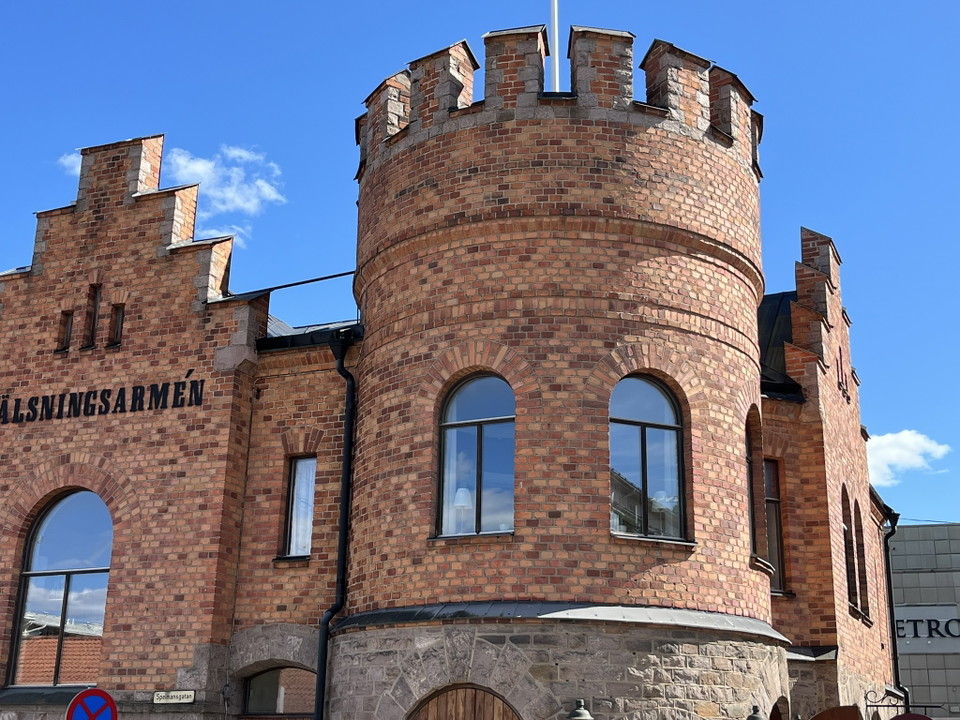
After the fire of 1893, the Salvation Army decided to build a new headquarters in stone.
The result was an unusual building inspired by medieval Scottish architecture. Notice the stepped gables and the small corner towers with battlements, giving the building the appearance of a small fortress.
This style was popular among the British upper classes during the late 19th century and gives the building its unique character.
Since 1977, the building has been home to modern meeting rooms and a café, welcoming visitors behind its strong stone walls.
27. The Musmagasinet Storehouse
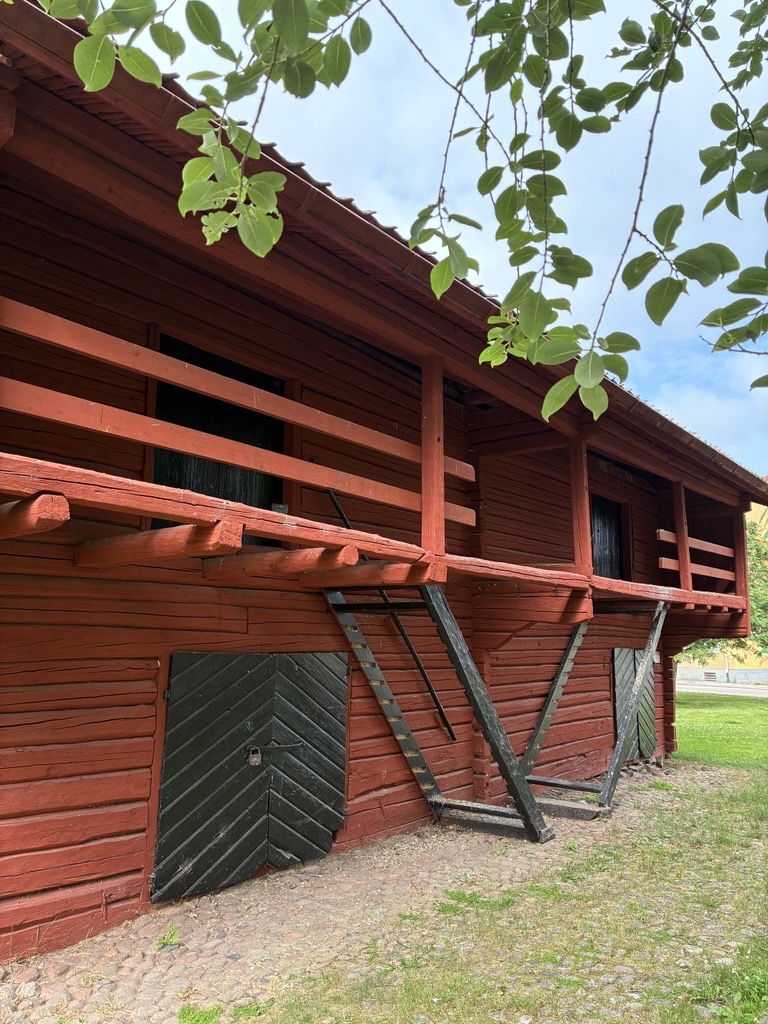
The Mouse Storehouse is one of the oldest buildings in Kristinehamn, dating from the late 18th century.
Over the years it has had several different uses. One of its most important functions was as a grain storehouse. Grain was stored here before being loaded onto boats travelling along the Löt River, which flows beside the building.
Today the storehouse remains an important reminder of Kristinehamn's long history of trade, transport and river traffic.
Aktiviteter og faciliteter
- Gåtur
- Kultursti
Tilgængelighed
- Barnevognvenligt
- Tæt på offentlig transport
Kontakt
Adresse
+46 (0)550 88187
E-mailadresse
Kristinehamns turistbyrå
Organisationens logotype

Jeg har været her
Jeg vil gerne derhen
Spørgsmål og svar
Stil et spørgsmål til andre Naturkartan-brugere.
Anmeldelser
0 anmeldelser
- 5 :
- 4 :
- 3 :
- 2 :
- 1 :
Brugernes billeder
Der er endnu ingen brugerbilleder. Vær den første til at dele et!