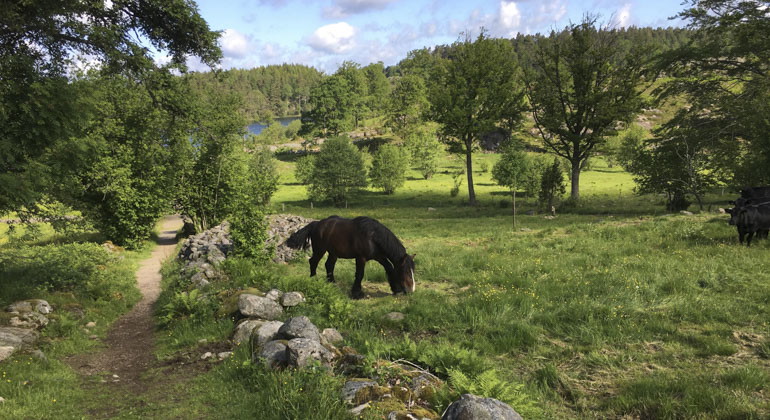
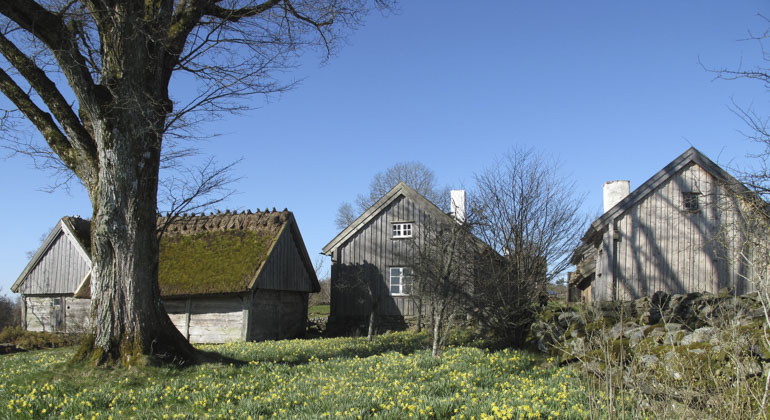
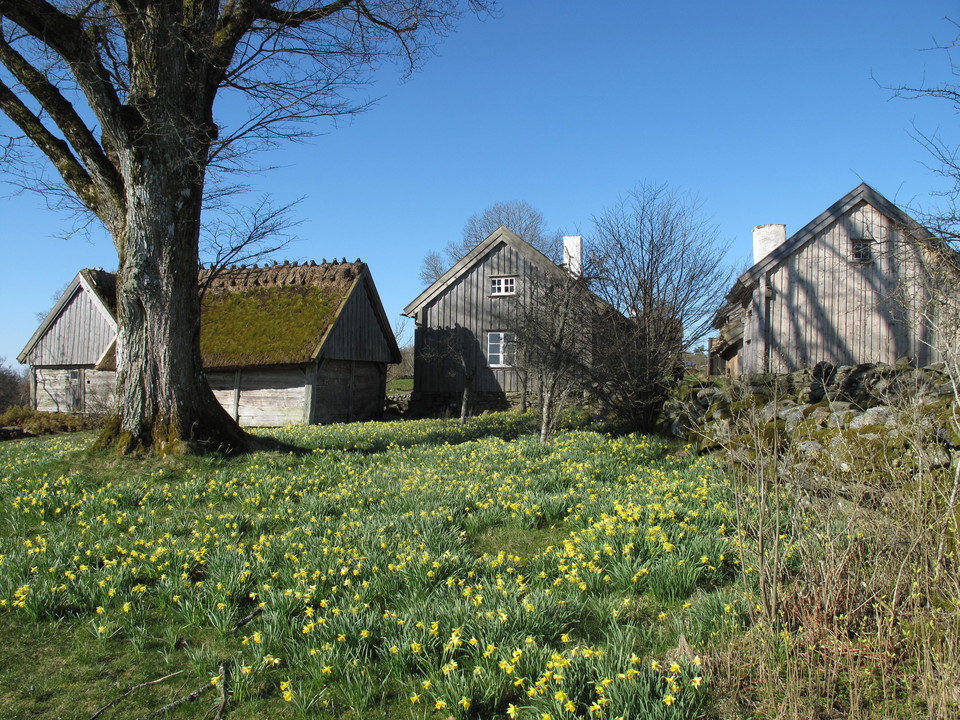
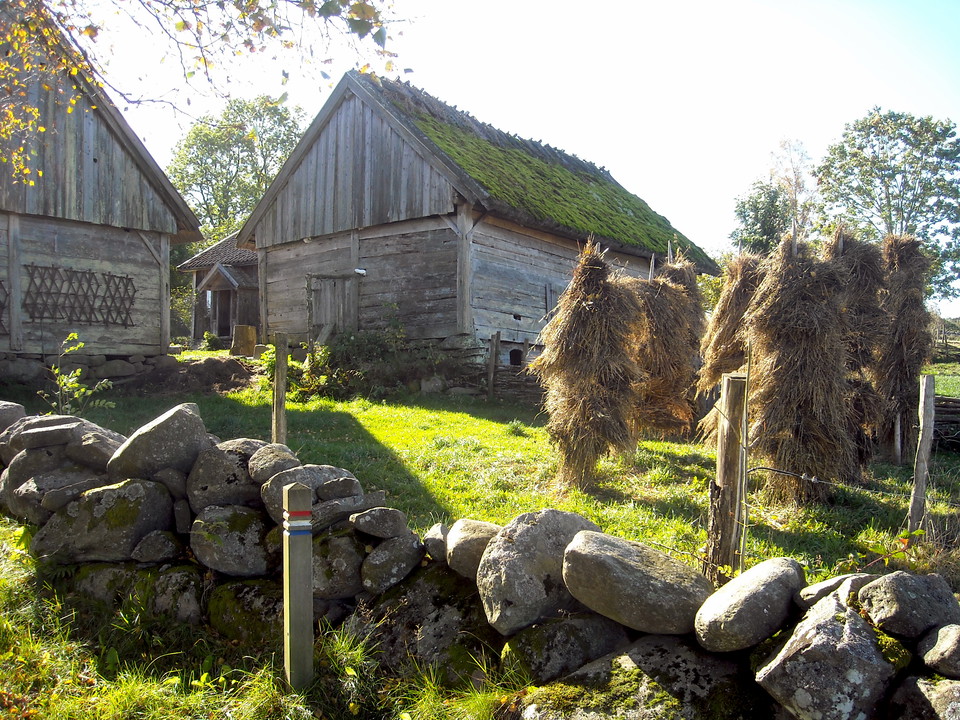
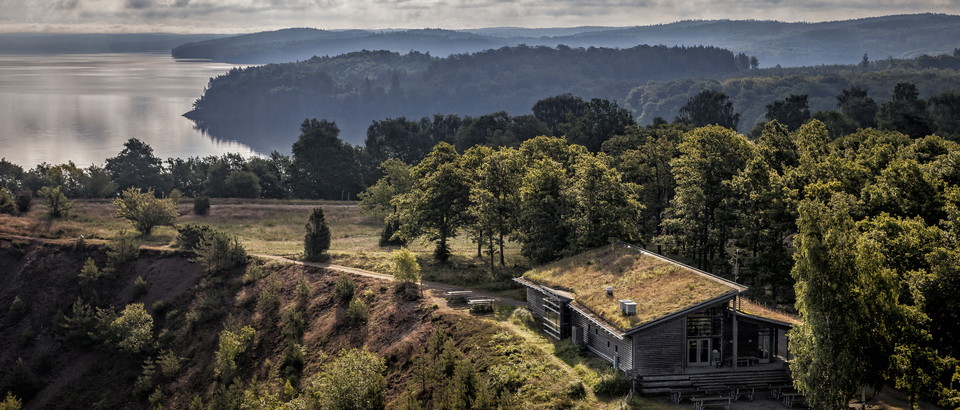
As you follow the road up towards Äskhults village, it feels as if time has stood still for a couple of hundred years. On your left is the old hay meadow with towering junipers. On the right hand, old country varieties thrive in the garden land. Here you can stroll around between timbered cottages and ancient stone fences or take a turn around the lake. In the summer, you can enjoy a home-made coffee in the coffee house or join a guided walk.
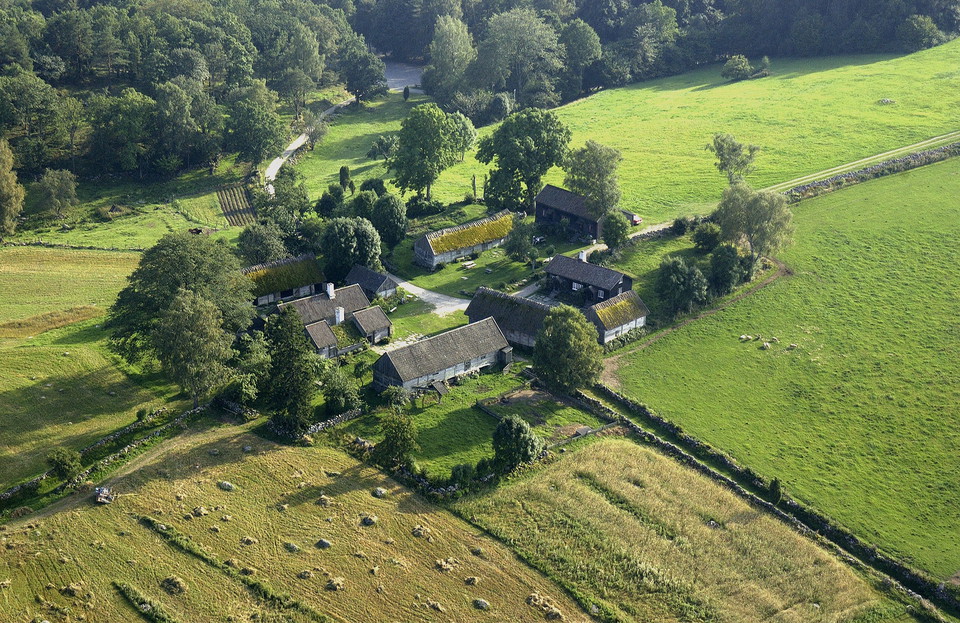
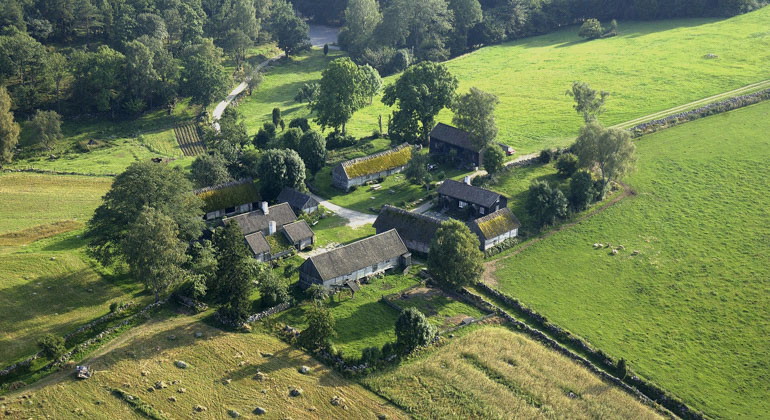
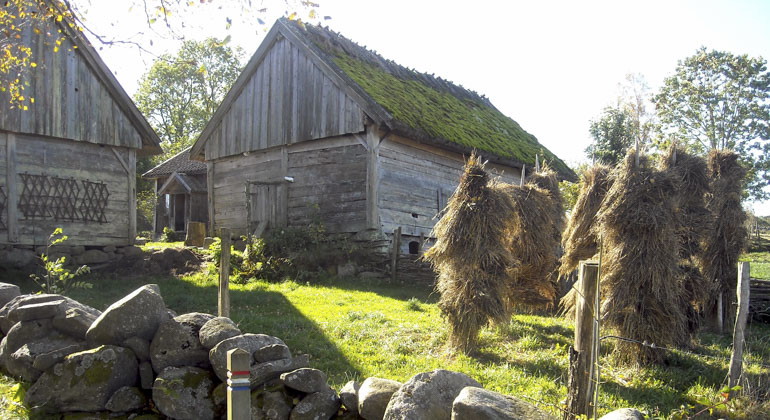
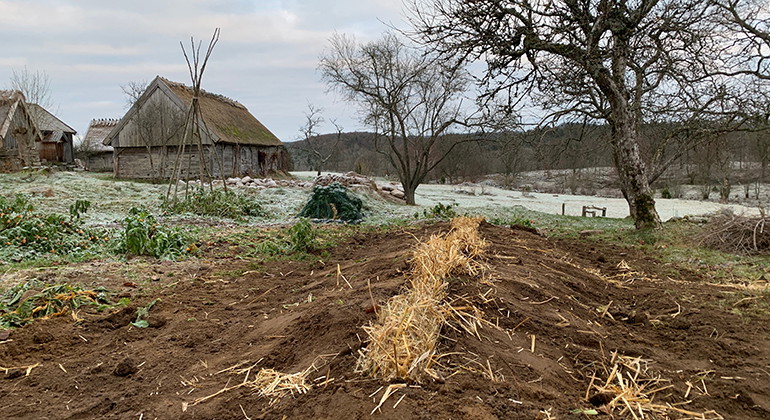
The village of Äskhult is unique in that the old-fashioned settlement was never moved out of the village center in connection with the 19th-century shift. The dense buildings around the village square have a clear 18th century character, which is reinforced by the surrounding landscape with common fields, cabbage gardens (kitchen gardens) and pollarded trees.
The village consists of four farms built tightly around a village square. Three of the houses were built in the 18th and 19th centuries, while the fourth and oldest was moved here in the 1970s. The farms Göttas, Jönsas and Bengts were named after owners in the 18th century. The fourth farm is called Derras, which means neighbor. The village was first mentioned in 1592, under the name Escholt.
Äskhults village attracts many visitors
Äskhult is one of the major visitor destinations in Halland and there are extensive public activities here. Themed walks, Midsummer celebrations, children's day, harvest festival, storytelling café, Christmas market and more are part of the extensive program activities. For school classes, there is a special program with themes that vary between the history of the village, landscape development, try-on crafts and folklore with superstitions and legends. Daily guided tours are held during the summer months, when the café in Bengt's manor house is also open. An entrance fee is charged during the times when the village is staffed.
Opening hours and program can be found on Äskhult village's own websiteLink to another website, opens in new window.
The trails are always open
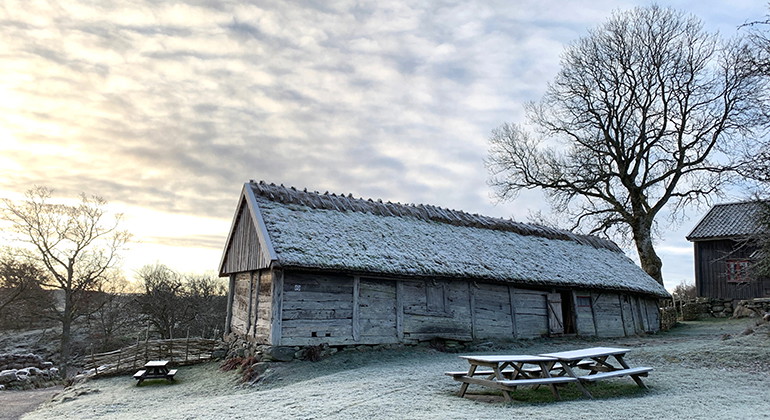
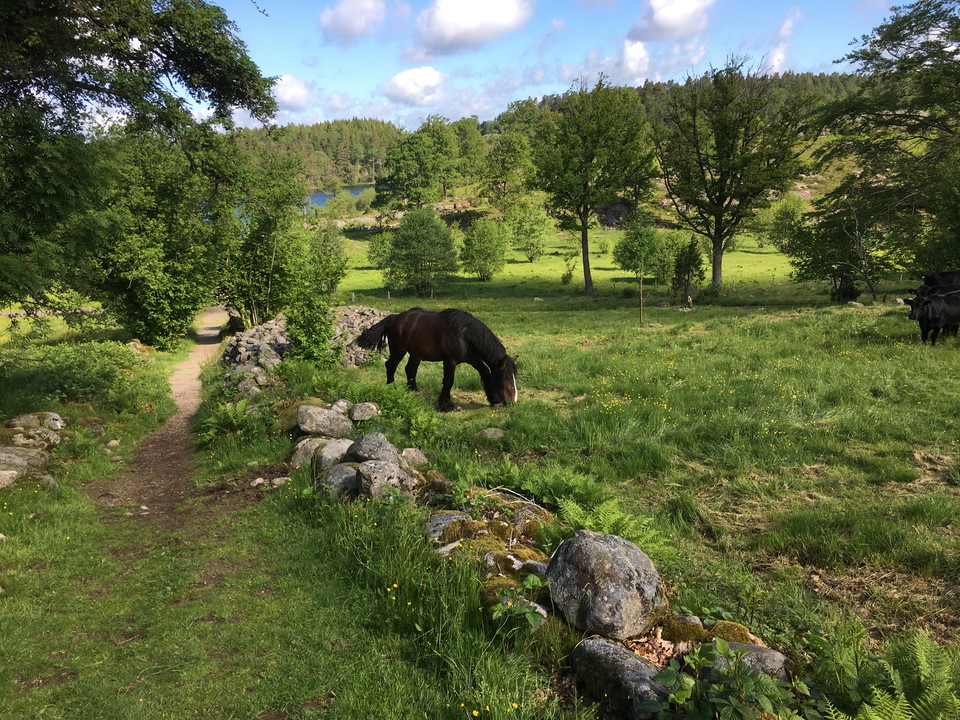
You can always walk and stroll around the village and the area even when the houses are closed. In Äskhult there are four historic paths of varying lengths. Along the trails there are a number of stations that tell about the history and cultural landscape of the place. There are fine viewpoints in the central and northern parts of the cultural reserve. You will get the most out of the walk if you bring the booklet "Äskhult's historical paths", which is available to buy when Äskhult village is open, but at the information board in Äskhult there are also simpler brochures that you can pick up. In the southern part of the reserve, where the Hallandsleden trail passes, there is a shelter.
Conservation and restoration
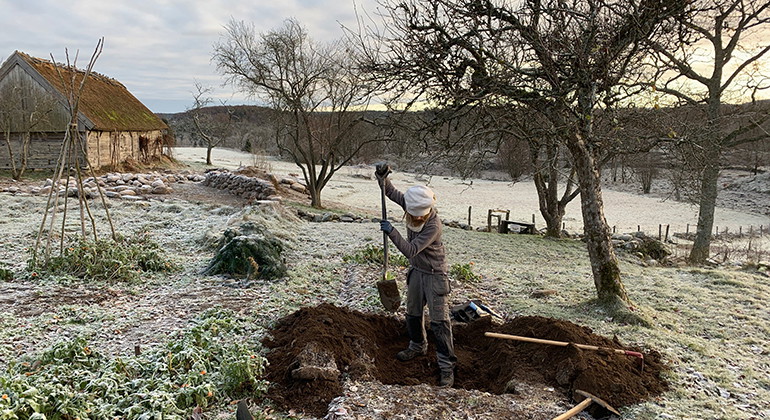
The Äskhult nature reserve was established in 1997. Since the reserve was established, extensive restoration work has been carried out in the reserve. Fields have been plowed up, trees have been replanted, cabbage farms have been recreated and part of the forested outfield has been felled and a heather moor recreated. The work has led to a new decision and a new management plan, and since 2004 Äskhult has been a cultural reserve.
Horses instead of tractors
The overall vision for Äskhult is that the visitor should get a complete experience of what life in a farming village could be like in the early 1800s. The houses are continuously maintained and instead of tractors, the land is farmed with the help of horses. Traditional farm breeds such as Linderödssvin and Åsbohöns bring life to the village during the summer months, while older varieties of barley, oats, rye and flax are once again waving in the wind in the village fields. Old field grasses such as cleavers and cornflowers also flourish here - species that have almost completely disappeared in the modern agricultural landscape.









Finna miljöer som drivs som för i tiden.