
-
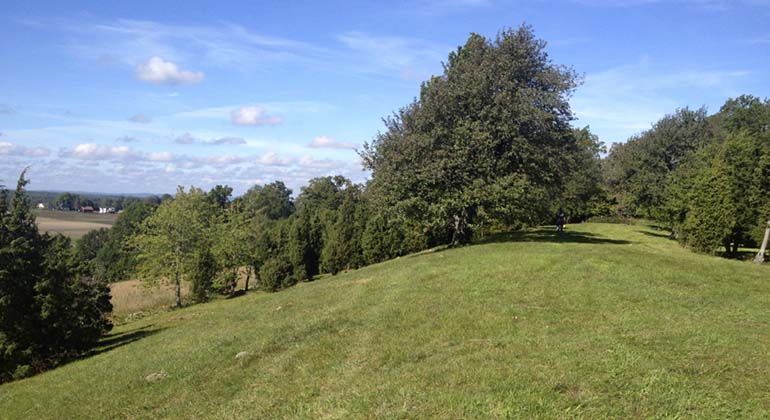
Oxaryggen strax efter sensommarens slåtter.
Foto: Karin Sund
Oxaryggen, Naturreservat
- Naturreservat
- Landsdel: Örebro län
Handlinger
Beskrivelse
The nature reserves Oxaryggen, Nalavibergs ekäng and Broby äng are three nature reserves located next to each other along a drumlin ridge. A marked path leads through the reserves through oak groves and groves. The three nature reserves are an important part of a drumlin area of national interest.
Meadows and deciduous forest
Oxaryggen is an open meadow with rich dry meadow flora. A visit during the summer is recommended. This is when many of the traditional meadow flowers that we associate so much with the Swedish summer bloom. North of Oxaryggen is the Nalaviberg oak meadow nature reserve, where there are plenty of old gnarled oaks and a rich grove flora. The old oaks are home to the leatherback beetle, an endangered and rare beetle. A little further north is the Broby äng nature reserve, where the previously open landscape has gradually become overgrown since grazing ceased in the late 1970s. Today, Broby äng consists of a closed, grove-like deciduous forest with oak, hazel, ash, aspen, elm, maple and wild apple. In the eastern part of Broby äng, by the parking lot, there is a former field that is now managed as a meadow and every summer is mowed with a scythe by volunteers.
Drumlin area
The nature reserves belong to the so-called drumlin area, which includes parts of Knista, Edsberg and Hackvad parishes in Lekeberg municipality and parts of Hardemo and Viby parishes in Kumla and Hallsberg municipalities respectively. The area is of national interest for both nature conservation and cultural environment conservation. The landscape is characterized by elongated or oval ridges of moraine, so-called drumlins, with intermediate flat depressions. The drumlins were formed during the Ice Age and were formed when the ice sheet melted.
Iron Age burial grounds
The area has a long history of human use. Finds such as a stone axe and a flint arrowhead indicate that people were already living in the area during the Stone Age, around 4,000-6,000 years ago. On the crest of the drumlin, in the southern part of the reserve, there are two prehistoric burial grounds with a total of at least 70 graves. They consist of low, round stone circles and probably date from the Early Iron Age, around 500 BC-550 AD. In the northern part of Nalaviberg's oak meadow is the county's largest burial ground with at least 200 graves, both mounds and round stone circles. Finds from this burial ground show that it probably dates from the Late Iron Age, around 550-1050.
Oak forest for thousands of years
There has been a forest of oaks here since the so-called Warm Period around 8,000 years ago, when the climate was warmer here than today. Today's oak landscape, however, has been shaped by man's long-term and continuous use of the area.
Plants and fungi
The open dry meadow of the oxbow is managed with annual mowing. Yellow poppy, bluebell, huckleberry, chickweed and chickweed spread out here like a colorful carpet. There are also tar flowers, wild strawberry, cowslip, spearmint, wood anemone, red clover and sweet woodruff. In Nalaviberg's oak meadow you will find a variety of plants, such as long fescue, witch hazel and small-leaved wormwood. In addition to oaks, there are elements of aspen, sweet cherry, birch, hawthorn and hazel. A rich and exciting fungal flora is associated with the oaks, including oxeye daisy, oak tick and white tick, white fungus and fire fungus. The large oaks are home to a rich wildlife, and many threatened and unusual insects also thrive there. Twenty-four more or less endangered beetles have been found here, including the leatherback beetle, a beetle that is adapted to living in hollow oak trees older than 200 years.
Birds
There are plenty of birds in the area. The hollow oaks provide good nesting sites for wood pigeons, barn owls and nuthatches. There are also several different tits, thrushes, warblers and finches. A characteristic species among the finches is the stonechat.
Sign-interpreted information
Aktiviteter og faciliteter
- Naturreservat
Fakta
Municipality: Hallsberg
Year established: 1997
Area: 4 hectares
Landowners: Individual
Manager: County Administrative Board
Reserve creator: County Administrative Board
Natura 2000: The area is part of the EU's network of protected nature, SE0240057 Nalavibergs ekäng
Rutevejledning
From Örebro, take the E20 south. Take the exit towards Viby and Östansjö and continue towards Viby at the intersection. Turn right towards "Brändåsen 6" immediately after the interchange. After a few kilometers there is parking and a sign.
Regler
In the nature reserve Oxaryggen it is not allowed to:
- damage the surface of the ground
- disturb wildlife
- pick flowers or wood-living fungi or otherwise damage the vegetation by picking or digging
- make fires
- camping
- use a radio, tape recorder or CD player in a disruptive manner
- drive a motorized vehicle or ride a bicycle
- putting up a board, poster, poster, sign, inscription or similar
- organize marked trails
Kontakt
E-mailadresse
Organisationens logo

Jeg har været her 3


Jeg vil gerne derhen 2
Spørgsmål og svar
Stil et spørgsmål til andre Naturkartan-brugere.
Anmeldelser
0 anmeldelser
- 5 :
- 4 :
- 3 :
- 2 :
- 1 :
Brugernes billeder
Der er endnu ingen brugerbilleder. Vær den første til at dele et!