
-
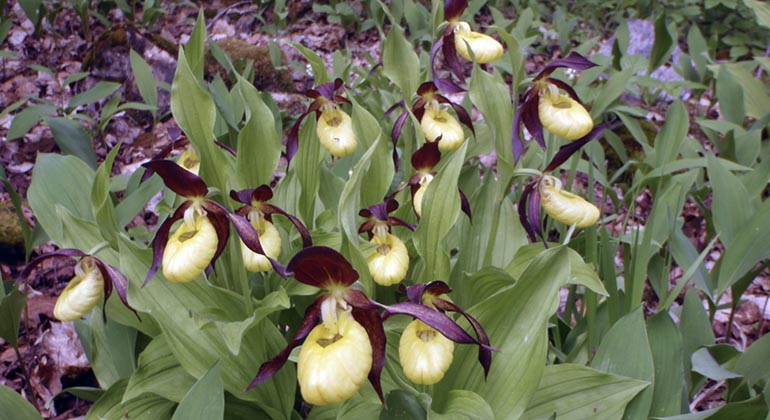
Guckuskor.
Foto: Åsa Forsberg -
-
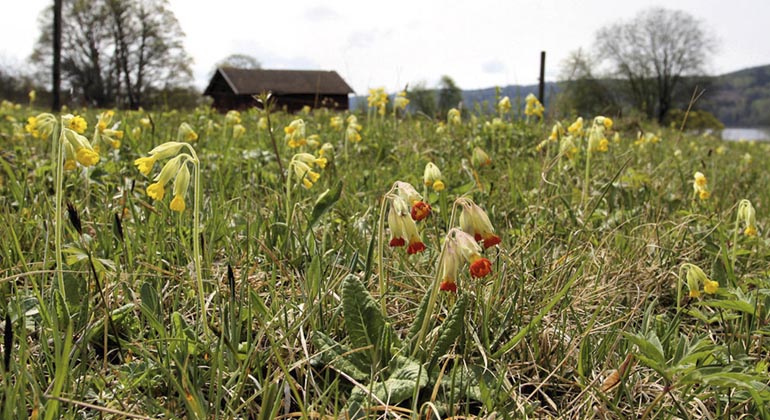
Gullvivor, Björskogsnäs.
Foto: Kjell Store -
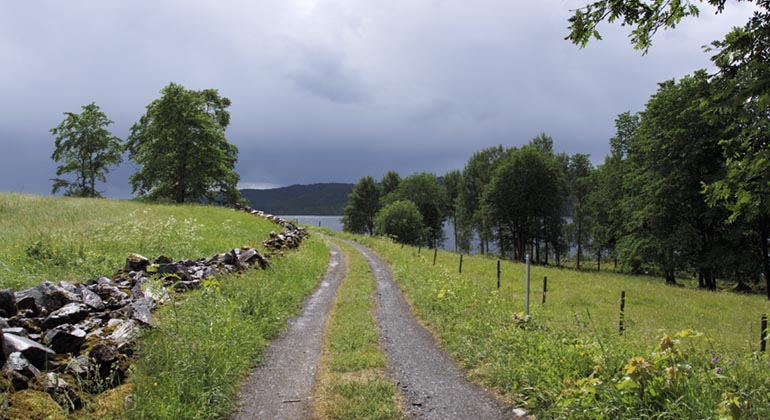
Björskogsnäs.
Foto: Kjell Store -
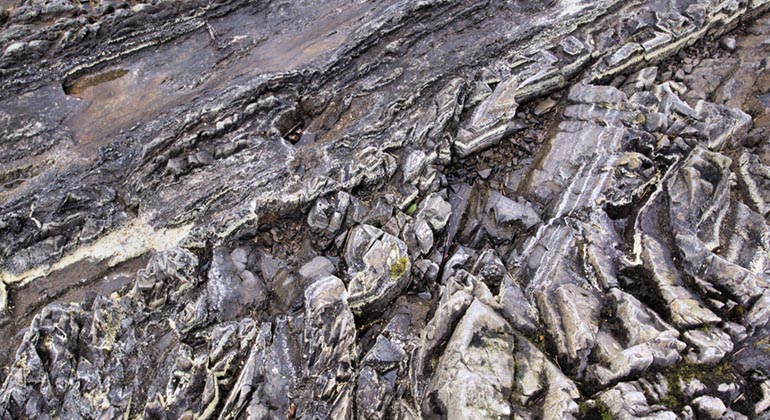
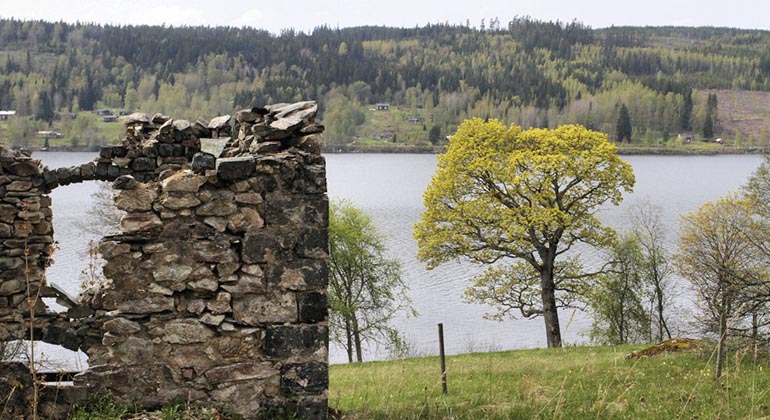
Kalkstensklippor vid stranden i Björskogsnäs.
Foto: Kjell Store
Björskogsnäs, Naturreservat
- Naturreservat
- Amt: Örebro län
Handlinger
Beskrivelse
The stately orchid guckusko attracts many visitors every year to the ancient agricultural landscape of Björskogsnäs. The flower-rich fields are home to several beautiful and special plants. A richness of species shaped by centuries of mowing and grazing, but also the rich supply of lime from the bedrock. The Björskogsnäs farm was originally a Finnish settlement. Help us preserve the meadow - stick to the marked trails!
Flowering meadows
Here in Björskogsnäs, the meadows have been mown for many hundreds of years. The haymaking has shaped a species-rich and special flora, with plants such as buttercups, field gentian and sedge. The flora is also characterized by the limestone-rich bedrock. Many orchids are favored by lime and here in the reserve there are both bride's spurge and night violet and guckusko. The guckusko grows both in the forest and in the meadows. Nowhere else in the county is there as much guckusko as here in Björskogsnäs. Flowering is usually most abundant in early June. In the forest out on the headland, shade-tolerant and lime-favored plants grow, such as spring pea, lesser celandine and purple coneflower.
Grazing and mowing
For the guckuscon and meadow plants to thrive, the land must be managed annually. Just as in the past, the meadow is mowed every year and the hay is removed so as not to fertilize the soil. Cuckoos do not thrive when it is too dark. In addition to mowing, grazing is also an effective way to keep the land open. Today, animals are grazed both out on the headland and in the more wooded areas. In the hay meadow itself, the animals are only let out after mowing, when the grasses and herbs have had time to germinate. The trampling of the cows' hooves reveals the soil here and there. The exposed soil makes it easier for many seeds to germinate. Remember to keep your dog on a leash when walking in the reserve and close the gates behind you!
Tough conditions make room for more
Many of the meadow's species are in various ways specially adapted and picky. They are easily outcompeted by fast-growing species but are all the better at coping with harsh conditions such as nutrient deficiency, being cut back regularly - and tolerating the lime that is abundant in the soil here. Low growth, early seed dispersal or various shortcuts to access nutrients are examples of different strategies to circumvent all the trials of the meadow. Orchids, for example, rely on fungi to access the nutrients they need through their underground network called mycorrhiza. The result of this tough growing environment is that many different species of plants and fungi can thrive. All the flowering herbs also attract a host of bumblebees, bees, butterflies and other insects - which birds and bats like to eat.
Limestone and ironworking
The limestone bedrock is part of an ancient mountain range. In the past, limestone was of great importance for iron processing in the region. Lime was used to extract the iron from the iron ore. There is both an old limestone quarry and the ruins of a lime kiln. Out on the headland, long periods of lapping waves have chiseled out beautiful patterns in the soft and slightly eroded limestone. The beach rocks are home to several different species of lichen favoring limestone. For example, the multilobed jelly lichen, Collema multipartitum, which otherwise occurs mainly on Öland and Gotland.
Finnish new construction
The Björskogsnäs farm was originally a Finnish settlement and has been farmed and inhabited since the late 16th century. In the early 1800s, all the land on the headland belonged to the village. At the beginning of the 20th century, the headland was still unforested, but later haymaking was abandoned and the meadows began to grow again. Today, some of the meadows are deciduous forest. Other parts have been restored and managed with mowing to preserve the species-rich flora. The fields are grazed or used for growing grass - the modern form of hay production.
Two well-preserved loft sheds
There are two farmsteads on the site, with residential and farm buildings of varying ages. Each farm has a loft, a once common type of building that is becoming increasingly rare today. One of the lofts is also unusually long, perhaps the longest in the county? The loft was once the only building built on two floors. Along the long side of the upper floor runs a partly built-in passage. This passage leads to the small storage rooms on the upper floor. An external staircase leads to the attic. It was common for the upper rooms to be used as temporary bedrooms during the summer.
Accessibility
From the parking lot it is a 1 km walk to the nature reserve. For those who have difficulty walking, there is a smaller parking lot closer to the nature reserve. Contact Hällefors municipality to get the code for the road barrier on tel 0591-641 00 (weekdays). A 1.3 km circular trail then leads you around the nature reserve. The path through the open meadows is easy to follow. Stick to the path before the meadow is beaten. Both the guckuskon and other meadow plants are sensitive to trampling! There are picnic tables at the farm and a barbecue area by the beach on the headland. Accessible toilets are available at the parking lot.
Is there firewood?
Firewood is available at the fireplace. Remember to burn in moderation, so that the wood is enough for future guests. The firewood is replenished regularly, but we cannot guarantee availability at all times. If you want to be sure to be able to make a fire - bring your own firewood. It is not allowed to burn sticks and branches from the forest in the reserve.
Take care of the flowers!
In the summer, many people visit the reserve to enjoy the flowers. Remember that it is forbidden to walk in the meadow and on the old fields before haymaking. Stick to the orange-marked path, so that future visitors can also enjoy the reserve's rich vegetation.
Sign language information
About hay meadows in Björkskogsnäs
About summer excursions in Björskogsnäs nature reserve
Aktiviteter og faciliteter
- Naturreservat
Fakta
Municipality: Hällefors
Year established: 1973, expanded in 2008
Area: 15 hectares
Landowner: Hällefors municipality
Manager: County Administrative Board
Reserve creator: County Administrative Board
Natura 2000: parts of the area are part of the EU's network of protected nature, SE0240035 Björskogsnäs
Rutevejledning
In Grythyttan, take road 205 towards Karlskoga. Sign towards the reserve after 5 km. From the parking lot it is 1 km walk into the reserve.
Regler
In the nature reserve it is forbidden to:
- entering fields and hay meadows before the grass has been cut,
- damage vegetation or damage the ground and rocks,
- damage or remove dead trees or parts of trees
- make a fire other than in a designated place
- camp or set up a caravan other than in any designated place,
- collect animals, plants, mosses, lichens and fungi without the permission of the County Administrative Board,
- without the permission of the County Administrative Board, put up a board, poster, sign, inscription or similar device.
Kontakt
E-mailadresse
Organisationens logotype
Jeg har været her 4


Jeg vil gerne derhen 4
Spørgsmål og svar
Stil et spørgsmål til andre Naturkartan-brugere.
Anmeldelser
0 anmeldelser
- 5 :
- 4 :
- 3 :
- 2 :
- 1 :
Brugernes billeder
Der er endnu ingen brugerbilleder. Vær den første til at dele et!