Mörbylånga kommun - Öland
Välkommen till vårt fantastiska friluftsliv i v...

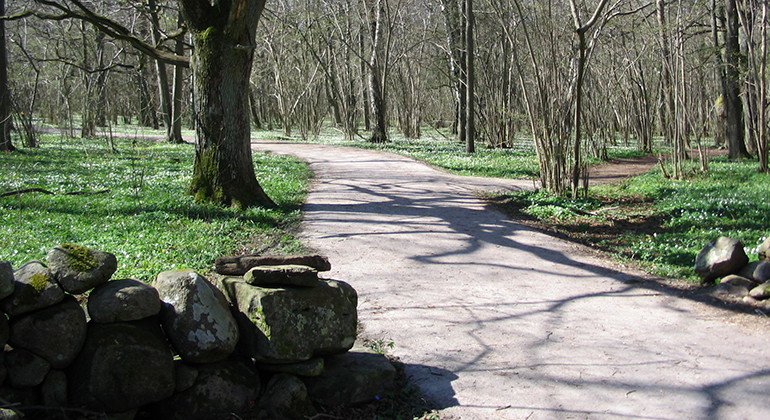
"The most beautiful groves ever seen." This is how Linnaeus described what he saw when he rode through Vickleby in 1741. Since then, a large part of the deciduous forest that then lined the entire west coast of Öland has been cultivated. Only fragments remain, like this one in Vickleby deciduous forest. This green oasis attracts many visitors, especially in spring when the fields are in full bloom.
The nature reserve is characterized by a diversity of deciduous trees and large hazel bushes. Here you can see most of our deciduous trees. Oak is the most common, but elm, ash, lime and maple also grow here. Many of the trees are large. And they have high crowns, because in the grove there is great competition for light. There is a constant struggle to reach the sunlight above the dense canopy.
In spring, the nature reserve shows its best side. The ground is sprinkled with white, blue and yellow cowslips, along with the occasional purple coneflower and spring pea. The experience is enhanced by a host of small birds that have busy times this time of year. They join in a noisy chorus that inspires spring feelings in everyone who steps under the budding foliage
The blue onion spider mite and the yellow-browed fly agaric are unusual fungi that can appear in the calcareous soil. They have an intimate relationship with the grove's deciduous trees, called mycorrhiza. Most of the fungi are found underground in the form of thin threads - mycelium - which are connected to the roots of the trees. The mycelium supplies the roots with nutrients and in exchange the fungus receives carbohydrates. The fruiting body that the fungus shoots above ground, the part we see, is short-lived. But underground, the mycelium can live on for decades. Provided the trees remain standing!
Decision year: 1988 and 2009
Area: 93 hectares
Municipality: Mörbylånga
Landowner: Individual
Administrator: Kalmar County Administrative Board
The reserve is located within the World Heritage Site of Southern Öland's cultivated landscape
The reserve is located just south of Färjestaden. From the harbor in Färjestaden, take the coastal road towards Mörbylånga. The reserve is located directly next to the road after about 7 km, on the right side of the road. There is a parking lot, picnic table and toilet in the nature reserve. The toilet is not accessible. South of the parking lot is the entrance to a short hiking trail where visitors can experience deciduous forest with a rich plant and animal life. The cycle path between Färjestaden and Mörbylånga passes through the reserve.
In the nature reserve you are not allowed:
C. Regulations for the public according to Chapter 7, Section 30 of the Environmental Code on the right to travel and stay in the reserve and on order in general within the reserve.
It is forbidden to enter the reserve:
The regulations under C do not apply to owners or holders of special rights to property or holders of other rights.
Per Markus Jönsson



Stil et spørgsmål til andre Naturkartan-brugere.
0 anmeldelser
Der er endnu ingen brugerbilleder. Vær den første til at dele et!